Growing Cannabis in Small Spaces: A Complete Guide
One of the biggest myths in cannabis cultivation is that you need a huge amount of space to get a great result. As someone who started experimenting on a tiny apartment balcony, I can tell you that’s absolutely not true! With the right genetics and techniques, you can achieve amazing results in a space as small as a computer tower.
This guide will walk you through everything you need to know to succeed with a small-space grow.
Quick Answer: Small Space Growing Essentials
- 🌱 Choose Compact Strains: Indica-dominant and autoflower strains are your best friends.
- 🪴 Use Small Pots: 5-10 litre fabric pots are ideal to control plant size.
- ✂️ Train Your Plants: Techniques like LST (Low Stress Training) are essential to create a flat, even canopy.
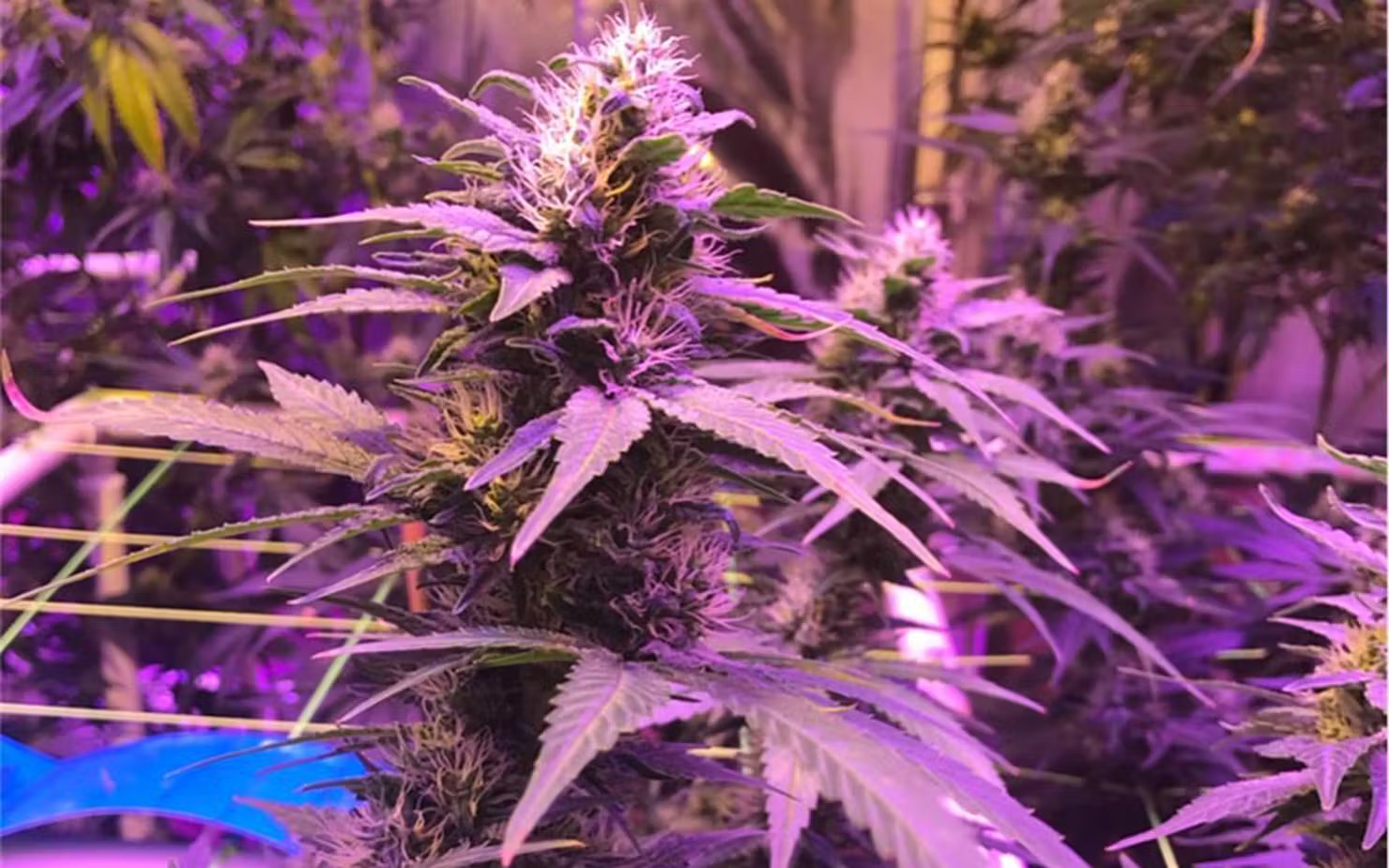
- 💡 Use Efficient Lighting: Modern LED lights run cool and are perfect for small, enclosed spaces.
- 💨 Manage Airflow: Good ventilation is critical to prevent heat buildup and mould.
Step 1: Choosing the Right Strain for Your Small Space
This is the most important decision you’ll make. You can’t fight genetics. Trying to grow a giant Sativa in a small tent is a recipe for frustration. You need strains that are naturally compact and manageable.
Best Strain Types for Small Spaces:
- Autoflowers: This is my #1 recommendation. They are genetically programmed to stay small (typically under 1 metre) and finish fast (10-12 weeks). Their compact size is perfect for small tents or stealth grows. Check out our Autoflower vs Photoperiod guide for more info.
- Indica-Dominant Strains: Indicas are naturally short, bushy, and compact, unlike their tall, stretchy Sativa cousins. Strains with Afghani or Kush genetics are famously small and dense. Northern Lights is a classic example.
Strains to Avoid for Small Spaces:
- Pure Sativas: Strains like Amnesia Haze or Kali Mist can stretch to over 2 metres tall. They are not suitable for small indoor setups.
Step 2: The Perfect Pot Size
The pot size directly controls the final size of your plant. A bigger pot means a bigger root system and a bigger plant. For small spaces, we want to intentionally limit the root zone.
- Ideal Pot Size: 5-10 litres (1-2.5 gallons). This is the sweet spot for a healthy but compact plant.
- Pot Type: Fabric pots are fantastic for small spaces. They promote a healthier root system through “air-pruning” and make it much harder to overwater.
Step 3: Training Your Plant to Stay Low and Wide
Training is not optional in a small space—it’s essential. The goal is to break the plant’s natural tendency to grow straight up (apical dominance) and instead create a flat, wide canopy where all bud sites get equal light.
Low Stress Training (LST) – Your Best Friend:
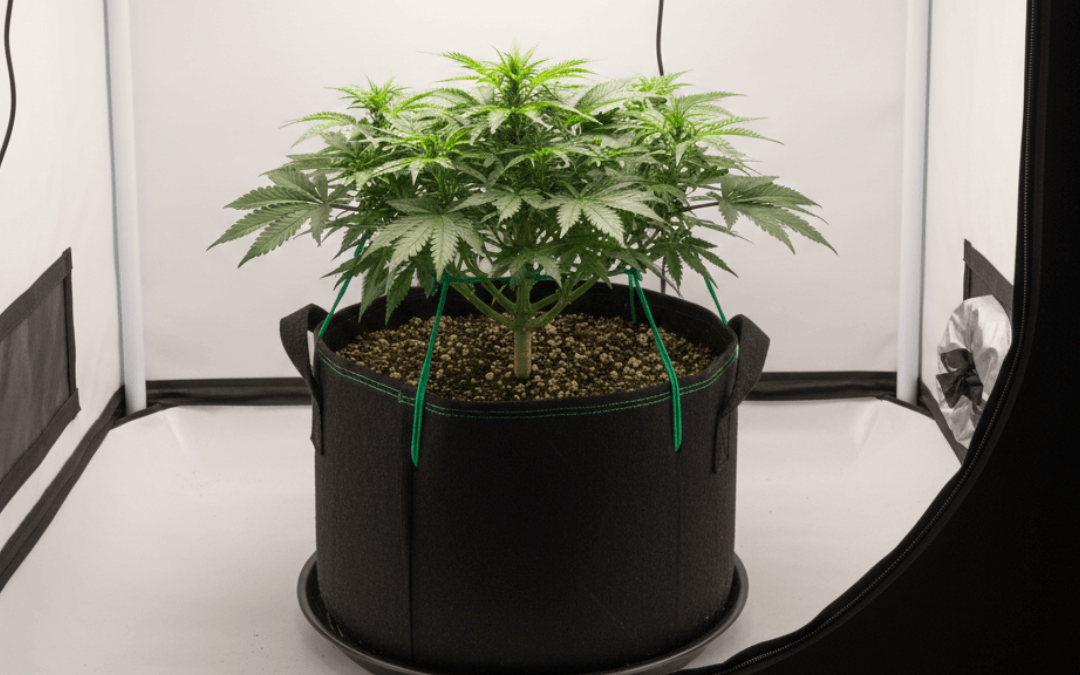
LST is the perfect technique for beginners and small spaces. It involves gently bending and tying down the main stem and side branches to create an even canopy.
- How it works: Start when the plant has 4-5 sets of leaves. Gently bend the main stem over so it’s parallel to the soil and secure it with a soft plant tie. As side branches grow upwards towards the light, continue to tie them down and away from the centre.
- The Result: Instead of one main cola, you get multiple, evenly-sized colas, all at the same height, maximizing your light exposure and yield in a small footprint.
Topping (for Photoperiods Only):
Topping involves cutting off the very top of the main stem. This encourages the plant to grow two new main stems, making it bushier. It’s a great technique but should only be done on photoperiod plants during the vegetative stage. Do not top autoflowers, as they don’t have time to recover from the stress.
Step 4: Lighting and Ventilation
In a small, enclosed space, heat management is critical.
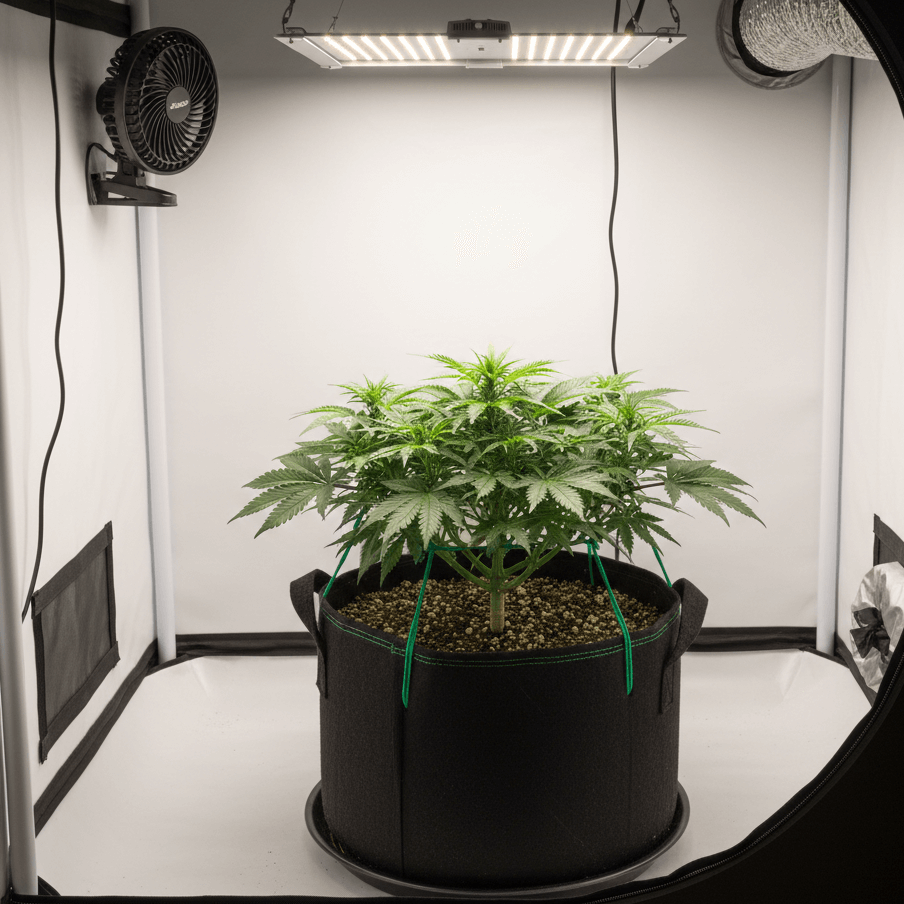
- Lighting: Modern full-spectrum LED lights are the only way to go. They produce very little heat compared to older HPS lights, allowing you to place them closer to your plants without causing light burn. A quality 100-150 watt LED is more than enough for a small tent.
- Ventilation: You need at least one small clip-on fan for internal air circulation and a small exhaust fan to pull hot air out and bring fresh air in. This is non-negotiable for preventing heat stress and mould.
→ Ready to start your small-space collection? Browse our full range of compact autoflower and indica seeds.
❓ Frequently Asked Questions
What is the smallest space I can realistically grow in?
You can get great results in a space as small as 40x40x120cm. People have even converted computer towers and small cabinets (“space buckets”) for micro-grows.
How much can I yield in a small space?
With good technique and genetics, it’s realistic to aim for 30-60 grams (1-2 ounces) from a single, well-trained plant in a small tent.
Is it better to grow one trained plant or multiple small plants?
For beginners in a small space, I recommend starting with one plant and training it well (LST). This is easier to manage than multiple plants competing for light and resources.
What is a “Sea of Green” (SOG) setup?
SOG involves growing many small plants in small pots with very little to no vegetative time. The goal is to create a “sea” of single colas. It’s an advanced technique that can be effective in small spaces but requires more plants.
How do I control the smell in a small space?
A carbon filter attached to your exhaust fan is essential. It will scrub the air of any odours before it’s vented out of your space.
Can I use a regular desk lamp to grow?
No. Regular light bulbs do not provide the correct light spectrum or intensity for cannabis plants to photosynthesise properly. You need a dedicated full-spectrum LED grow light.
My tent is short, what should I do if my plant gets too tall?
If your plant is stretching too much, you can try “super-cropping.” This involves carefully pinching and bending the stem 90 degrees to reduce its height. It’s a high-stress technique, so only use it as a last resort on healthy plants.
Are autoflowers always the best choice for small spaces?
99% of the time, yes. Their compact size and fast lifecycle are perfect. However, a well-trained Indica photoperiod can also work if you have slightly more height and want more control over the vegetative phase.