The cannabis entourage effect is the reason two strains with identical THC percentages can produce completely different experiences. It’s also the reason experienced growers pay close attention to terpene profiles rather than just cannabinoid numbers — and why the 25% THC figure on a seed bank’s product page tells you less about what you’ll actually experience than the dominant terpenes in that strain’s chemical fingerprint.
The concept was first formally described by researchers Raphael Mechoulam and Shimon Ben-Shabat in 1998, and the scientific evidence supporting it has grown substantially since. The core idea is straightforward: the hundreds of compounds in cannabis — cannabinoids, terpenes, flavonoids — don’t operate independently. They interact with each other and with the body’s endocannabinoid system in ways that produce effects none of them could produce alone. Understanding the cannabis entourage effect changes how you think about strain selection, terpene profiles, and what THC percentage actually means.
In this guide:
- What the entourage effect actually is
- Cannabinoid interactions — THC, CBD, and the minor players
- Terpenes — how they modify cannabinoid effects
- The endocannabinoid system — the biological foundation
- Scientific evidence for synergistic interactions
- Why indica/sativa tells you less than terpene profile
- What this means for strain selection
- FAQ
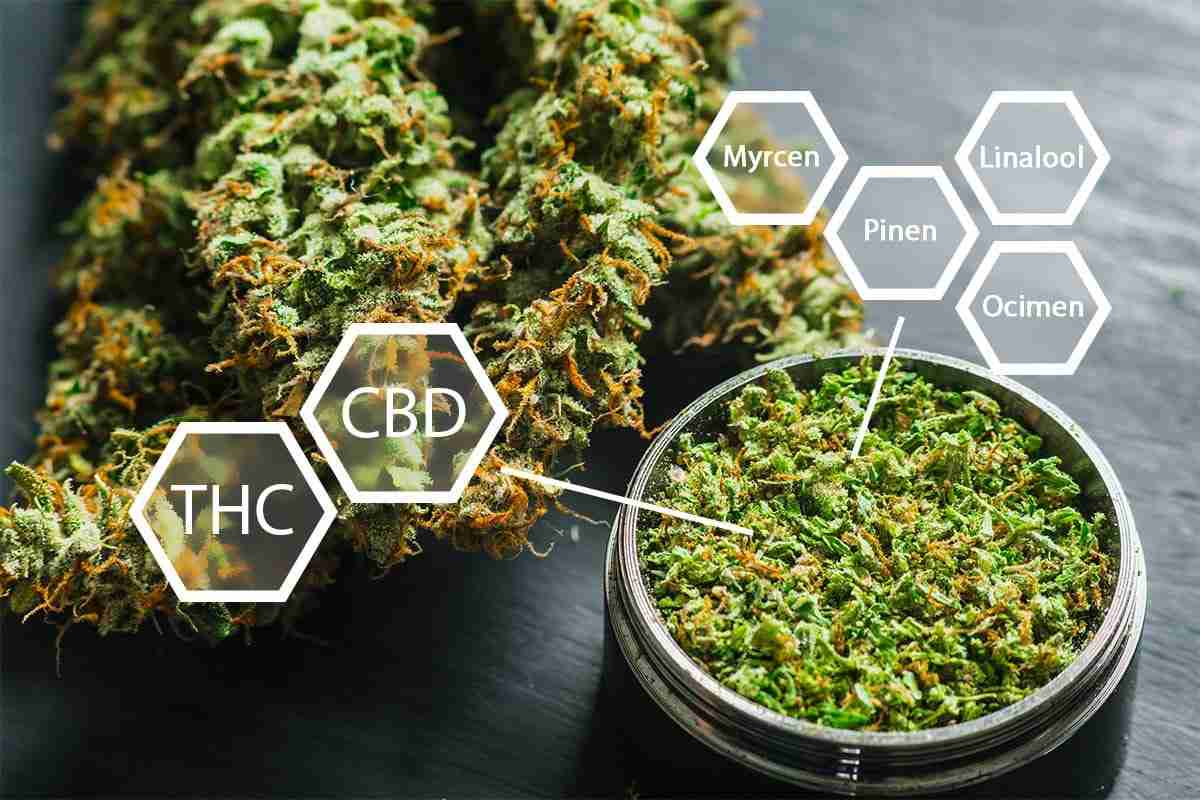
What the Cannabis Entourage Effect Actually Is
For years, cannabis research focused almost entirely on isolated cannabinoids — THC and CBD in particular. This made scientific sense: isolating variables is the foundation of controlled research. But it produced a persistent problem. Whole-plant cannabis preparations consistently demonstrated different therapeutic profiles and experiential qualities compared to isolated compounds, even at equivalent cannabinoid doses. The reductionist model couldn’t account for what anyone who’d spent time with actual cannabis already knew — that two strains with identical THC could be profoundly different.
The entourage effect is the framework that explains this. When multiple cannabis compounds interact simultaneously, they produce effects that wouldn’t be achievable from any single component. They enhance each other’s beneficial properties, mitigate each other’s unwanted effects, improve bioavailability, and engage biological pathways that isolated compounds can’t access alone. The result is a “chemical fingerprint” unique to each strain — the specific combination and concentration of cannabinoids, terpenes, and flavonoids that determines what that strain actually does.
🧠 Jason — On Why Terpenes Matter More Than THC Percentages
I’ve been saying for years that chasing THC percentage is the wrong way to select genetics. The entourage effect is the science behind why. A strain with 18% THC and high myrcene content will hit harder and sedate more effectively than a 24% THC strain with a terpinolene-dominant profile — not because the percentages are wrong, but because myrcene facilitates THC crossing the blood-brain barrier and synergises with CB1 receptor activation in ways that raw THC content doesn’t capture. When I describe a strain’s terpene profile in a grow guide, this is why it matters. The terpenes aren’t just the flavour. They’re part of what the plant actually does.
Cannabinoid Interactions — THC, CBD, and the Minor Players
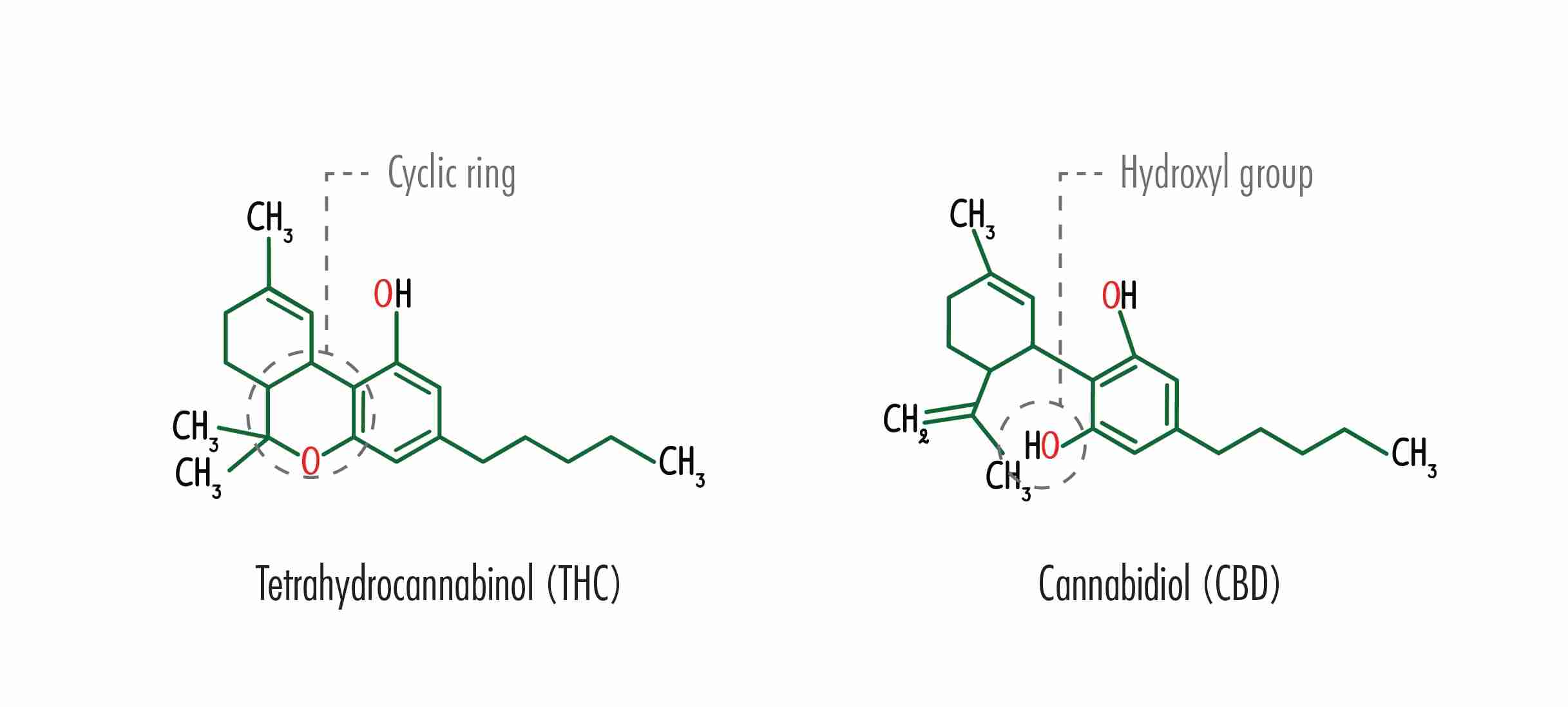
Cannabis contains over 100 different cannabinoids. THC and CBD receive the most attention because they’re present in the highest concentrations, but the interactions between all the cannabinoids — including the minor ones — meaningfully influence the character of a strain’s effects.
THC and CBD — the primary interaction
The ratio between THC and CBD is the most significant single variable in predicting cannabis effects. CBD acts as a negative allosteric modulator of the CB1 receptor — it changes the receptor’s shape when THC attempts to bind, reducing THC’s psychoactive effects while maintaining its therapeutic properties. This is the molecular mechanism behind the commonly observed phenomenon of CBD softening a THC experience. At higher CBD ratios the psychoactivity becomes more muted; at lower ratios the THC expression is more pronounced.
CBD also inhibits CYP2C9, the liver enzyme primarily responsible for metabolising THC, which extends THC’s duration in the system. And CBD engages serotonin receptors (5-HT1A) in ways that counter THC-induced anxiety — a separate pathway that explains why CBD-rich preparations produce less anxiety than equivalent high-THC preparations even when the THC content is identical.
In practice: high-THC, low-CBD strains like Gorilla Glue or Godfather OG produce stronger psychoactive and sedative effects. Balanced THC:CBD preparations moderate the psychoactivity while enhancing pain and inflammation relief. High-CBD, low-THC strains like White Widow CBD produce minimal psychoactivity with pronounced anti-inflammatory and anxiolytic properties.
The minor cannabinoids — supporting roles that matter
CBG (Cannabigerol) is the chemical precursor to most other cannabinoids — THC, CBD, and CBC all derive from CBGA during plant development. In the finished plant CBG is typically present in low concentrations, but it demonstrates its own receptor activity and synergises with other cannabinoids to enhance muscle-relaxant effects.
CBC (Cannabichromene) shows significant anti-inflammatory activity and promotes neurogenesis — the growth of new brain cells — in ways that neither THC nor CBD do independently. It works synergistically with THC for pain management and shows particular promise in combination with other cannabinoids for neurological applications.
CBN (Cannabinol) forms as THC degrades over time — it’s the oxidation product of THC and is why properly stored cannabis produces different effects to poorly stored material. CBN has mild sedative properties that become more pronounced when combined with myrcene, and it contributes meaningfully to the deeper sedation of late-harvest, amber-trichome cannabis where the THC-to-CBN conversion is more advanced. This is the mechanism behind harvesting at 20–25% amber for maximum sleep effect — covered in detail in the cannabis for sleep guide.
THCV (Tetrahydrocannabivarin) acts as a CB1 antagonist at low doses — the opposite of THC — producing appetite suppression, focus enhancement, and energy rather than the sedation and hunger that high-myrcene THC produces. It’s the compound responsible for the characteristically clear-headed, energising quality of Durban Poison and other THCV-rich African sativa genetics. The full THCV profile is covered in the THCV guide.
Terpenes — How They Modify Cannabinoid Effects
Terpenes are aromatic compounds found throughout the plant kingdom — they’re what gives lavender its scent, pine forests their smell, and cannabis its enormous variation in aroma and flavour. In cannabis they’re produced in the same trichomes as cannabinoids, and they do considerably more than contribute to aroma. They modify cannabinoid activity through multiple pharmacological mechanisms: altering blood-brain barrier permeability, influencing neurotransmitter levels, modulating receptor activity, and in the case of caryophyllene, directly activating cannabinoid receptors themselves.
Primary Cannabis Terpenes and Their Mechanisms
Myrcene — earthy, musky, herbal. The most abundant terpene in most modern cannabis varieties. Myrcene increases cell membrane permeability, facilitating THC crossing the blood-brain barrier and producing faster, more pronounced onset. It synergises with THC at CB1 receptors to amplify sedative effects and enhance analgesia. High myrcene content is what distinguishes a deeply sedating indica from a moderately relaxing one at the same THC percentage. Found in: Northern Lights, Godfather OG, Granddaddy Purple, Blue Dream.
Caryophyllene — spicy, peppery, fuel-adjacent. The only terpene known to directly activate cannabinoid receptors — specifically CB2, the receptor primarily associated with anti-inflammatory and immune effects. This makes caryophyllene unique among terpenes: it contributes to the cannabis experience through a cannabinoid receptor pathway independent of THC. It enhances the anti-inflammatory properties of CBD and works with THC for pronounced physical pain relief. Found in: Gorilla Glue, GSC, OG-lineage strains including Godfather OG.
Limonene — citrus, bright, uplifting. Elevates mood through serotonin pathway modulation and enhances CBD’s anxiolytic effects. Improves absorption of other terpenes through skin and mucous membranes. At the concentrations found in limonene-dominant strains it can offset THC-induced anxiety — one mechanism behind why some high-THC strains produce less anxiety than others at equivalent doses. Found in: Sativa-dominant and Cookies-lineage strains with citrus profiles.
Linalool — floral, lavender-like. Known for anxiolytic and sedative properties through GABA modulation — the same mechanism as benzodiazepine anxiolytics, though with significantly weaker effect. Enhances the anticonvulsant properties of cannabinoids and works synergistically with CBN for improved sleep quality. The combination of myrcene and linalool in strains like Granddaddy Purple produces one of the more pronounced sleep-promoting terpene profiles in the catalogue. Found in: Granddaddy Purple, some Afghani-lineage indicas.
Pinene — fresh pine, clean. Improves alertness and counteracts some of THC’s short-term memory effects through acetylcholinesterase inhibition. Works synergistically with CBD for anti-inflammatory effects and helps open bronchial pathways. The clean, alert quality of strains like Jack Herer and Blue Dream is partly attributable to the pinene contribution alongside the Haze sativa genetics.
Humulene — earthy, herbal, woody. Synergises with THCV to produce appetite suppression — the two compounds working through different mechanisms toward the same outcome. Enhances anti-inflammatory effects in combination with caryophyllene. Found in hops (Cannabis’s closest botanical relative), and in cannabis strains with earthy, herbal aroma profiles including White Widow.
🧠 Jason — On Terpene Biochemistry in Practice
The caryophyllene mechanism is the one I find most interesting because it’s pharmacologically unusual. Most terpenes influence the cannabis experience indirectly — through membrane permeability, neurotransmitter levels, receptor modulation. Caryophyllene actually binds to CB2 receptors directly. It’s technically a dietary cannabinoid as well as a terpene. When I talk about the anti-inflammatory and analgesic character of OG-lineage strains like Gorilla Glue and Godfather OG, the caryophyllene dominance is a significant part of what produces that. It’s not just the THC. The physical body effect in those strains is caryophyllene working through CB2 while the myrcene amplifies the THC at CB1. Understanding that changes how you think about what makes a strain genuinely effective for pain rather than just strongly psychoactive.
The Endocannabinoid System — The Biological Foundation
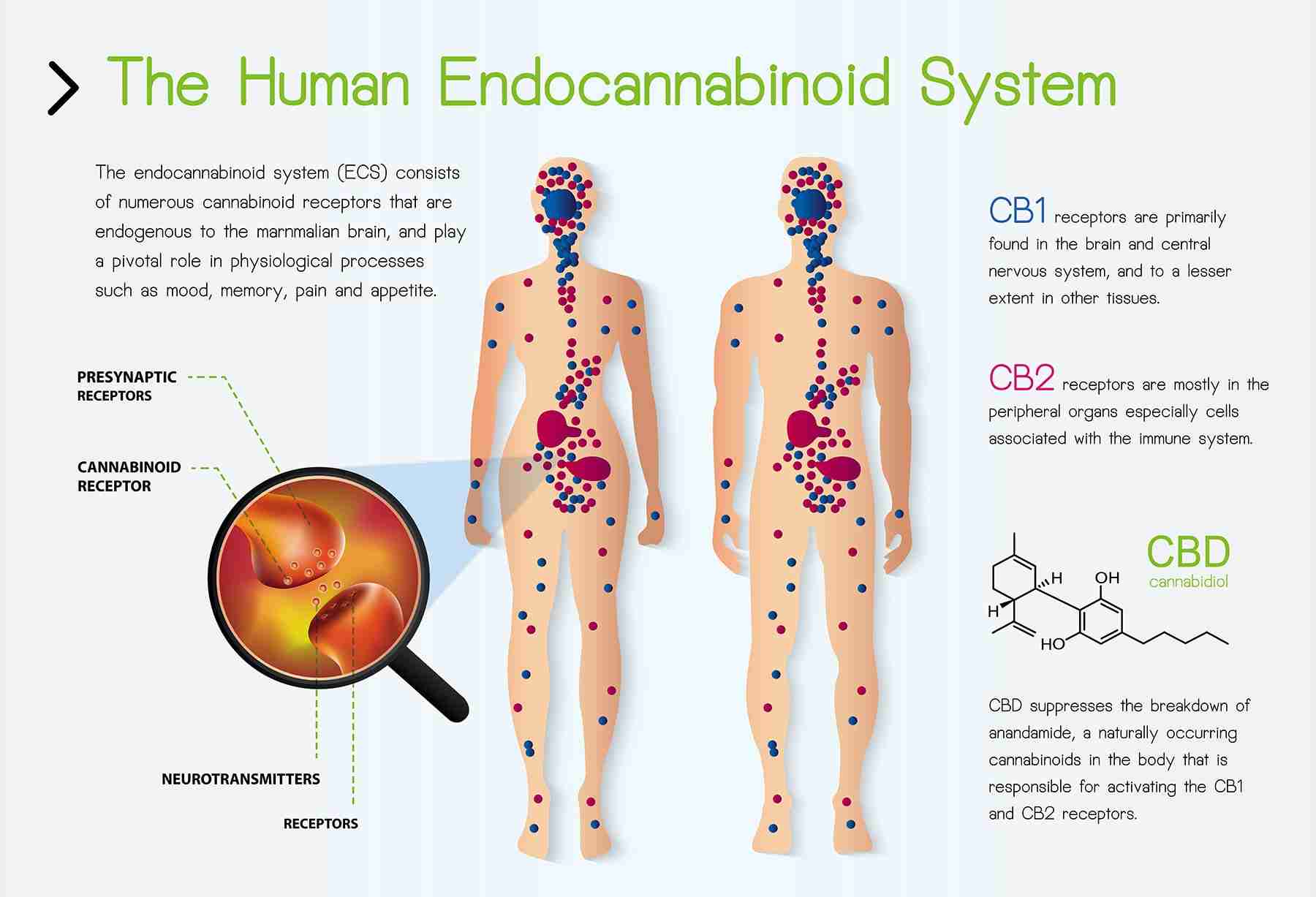
The endocannabinoid system (ECS) is a biological regulatory network present in all vertebrates. It consists of endocannabinoids — natural cannabis-like molecules produced by the body — along with the receptors they bind to and the enzymes that synthesise and break them down. The ECS regulates an extraordinary range of physiological processes: pain perception, mood, appetite, sleep, immune function, memory, and more. This breadth of function is why cannabis compounds, which interact directly with this system, produce such diverse effects.
The two primary cannabinoid receptors are CB1 and CB2. CB1 receptors are concentrated in the brain and central nervous system — they’re responsible for THC’s psychoactive effects and for cannabis’s role in pain perception, mood, and memory. CB2 receptors are primarily in immune tissue and the peripheral nervous system — they’re the site of cannabis’s anti-inflammatory and immunomodulatory effects.
But the entourage effect stems from cannabis compounds engaging far more than just these two receptor types. CBD acts on serotonin receptors (5-HT1A) — relevant to anxiety and mood. THC and CBD both interact with TRPV1 receptors involved in pain and temperature sensation. Minor cannabinoids and terpenes engage GPR55 receptors, PPAR receptors, and multiple neurotransmitter systems. The simultaneous engagement of this multi-receptor landscape is what produces the distinct experiential quality of whole-plant cannabis that isolated compounds can’t replicate — because isolated compounds access only a subset of these pathways.
Scientific Evidence for Synergistic Cannabis Interactions
The entourage effect moved from theoretical framework to scientifically supported phenomenon through a series of well-designed studies. These are the key ones worth knowing.
Russo (2019) — the most cited paper on the entourage effect — made the case for conventional breeding of cannabis strains with specific chemotypes rather than isolated compound development. The argument: because whole-plant preparations consistently outperform isolated compounds in clinical contexts, the breeding focus should be on producing consistent chemotypes rather than on isolating and purifying individual molecules. Published in Frontiers in Plant Science and directly linked from the journal’s open access repository.
Pamplona et al. (2018) demonstrated in an analysis of epilepsy patients that CBD-rich cannabis extracts were approximately four times more potent than purified CBD at equivalent doses — requiring significantly lower doses for seizure control. This dose-potency difference is a clean demonstration of synergistic interaction: the minor cannabinoids and terpenes present in the extract amplifying the CBD’s effectiveness in ways that weren’t present in the isolate. Published in Frontiers in Neurology.
LaVigne et al. (2021) demonstrated directly in animal models that cannabis terpenes enhance THC’s pain-relieving effects — showing that terpenes combined with cannabinoids required lower doses for effective pain relief than either alone. The terpenes showed “cannabimimetic” activity — producing cannabis-like effects through mechanisms separate from direct cannabinoid receptor binding. Published in Scientific Reports.
Blasco-Benito et al. (2018) found that whole cannabis extracts showed superior anti-tumour effects compared to THC alone in preclinical breast cancer models, identifying specific synergies between cannabinoids and terpenes. Published in Biochemical Pharmacology.
The consistent finding across this body of research is that whole-plant preparations outperform isolated compounds — at lower doses, with reduced side effects, and with greater efficacy across a range of applications. The science increasingly supports what growers working with quality whole-plant genetics have understood experientially for decades.
Why Indica/Sativa Tells You Less Than Terpene Profile
The indica/sativa classification system has practical value as a rough shorthand — indica-dominant genetics tend toward certain growth patterns and effect qualities, sativa-dominant toward others. But the entourage effect research reveals why this shorthand is an unreliable predictor of a specific strain’s experience.
Modern cannabis strains are almost universally complex hybrids with Afghani, Southeast Asian, African, South American, and other genetic contributions in varying proportions. The “indica” and “sativa” labels describe morphological and growth characteristics more accurately than they predict chemical composition. Genetic analysis of strains sold as indicas and sativas frequently shows more chemical similarity between strains across those categories than within them.
What actually predicts a strain’s experience is its chemotype — the specific combination and concentration of cannabinoids and terpenes in its chemical profile. A myrcene-dominant, high-THC strain will produce sedative, body-heavy effects regardless of whether it’s labelled indica or sativa. A terpinolene-dominant strain with THCV content will produce uplifting, clear-headed effects regardless of its classification. This is why experienced growers look at terpene profiles when choosing genetics, and why the sativa vs indica guide addresses the limitations of the classification alongside its practical usefulness.
What the Entourage Effect Means for Strain Selection
Understanding the entourage effect changes strain selection from “choose the highest THC” to “choose the right terpene-cannabinoid combination for the experience or outcome you’re seeking.” These are the practical implications.
For sleep: Prioritise myrcene-dominant, high-THC indicas harvested at the later end of the trichome window where CBN content is higher. Northern Lights, Godfather OG, Granddaddy Purple, and Black Domina all fit this profile. The myrcene amplifies THC’s CB1 sedation; the CBN adds its own mild sedative effect; the linalool in GDP adds anxiolytic action through GABA pathways. The combination produces deeper sleep support than any of these compounds alone.
For daytime functional use: Prioritise pinene and limonene-dominant strains where the terpene profile counteracts THC’s memory and cognitive effects while maintaining mood elevation. Jack Herer and Blue Dream both sit in this space — the sativa genetics and terpene profiles produce a more alert, functional experience than the myrcene-heavy indicas at equivalent THC.
For pain with minimal psychoactivity: A balanced THC:CBD ratio with caryophyllene dominance engages both CB1 (via THC) and CB2 (via caryophyllene and CBD’s indirect action) while CBD moderates the psychoactivity. This is why White Widow CBD and similar balanced strains are useful for pain management where staying functional matters.
For potency-focused recreational use: High myrcene, high caryophyllene, high THC — the combination that makes GG4 and Godfather OG hit harder than their raw THC percentage suggests. The terpene-cannabinoid synergy amplifies the experience beyond what the cannabinoid numbers alone predict. This is why GG4 at 24–28% THC with a caryophyllene-myrcene profile hits differently to a 28% THC strain with a terpinolene-limonene profile.
Want to find the right terpene profile for your goals?
Answer six questions and Jess will match you to three strains based on your setup, experience, and goals.
Key Takeaways — The Cannabis Entourage Effect
The entourage effect describes synergistic interactions between cannabis compounds — cannabinoids, terpenes, and flavonoids — that produce effects impossible from any single component alone. It explains why identical THC percentages produce different experiences and why whole-plant preparations consistently outperform isolated compounds in research settings. Terpenes are not just aroma compounds: myrcene facilitates THC crossing the blood-brain barrier; caryophyllene directly activates CB2 receptors; linalool modulates GABA; pinene counteracts THC’s memory effects. The THC:CBD ratio is the most significant cannabinoid interaction — CBD as a negative allosteric modulator of CB1 reduces THC’s psychoactivity while maintaining therapeutic properties. Minor cannabinoids — CBG, CBC, CBN, THCV — each contribute distinct effects and synergies that influence the overall character of a strain’s experience. The indica/sativa classification is a less reliable predictor of experience than terpene profile — chemotype determines effects more accurately than morphological category. For strain selection, the practical application is matching terpene-cannabinoid profiles to desired outcomes rather than maximising THC percentage.
Cannabis Entourage Effect — Frequently Asked Questions
What exactly is the cannabis entourage effect?
The entourage effect describes synergistic interactions between the hundreds of compounds in cannabis — cannabinoids, terpenes, and flavonoids — that work together to produce effects greater than any single compound could achieve alone. It explains why whole-plant cannabis preparations consistently demonstrate different therapeutic and experiential profiles compared to isolated compounds like pure THC or CBD, even at equivalent doses. The concept was first formally described by Raphael Mechoulam and Shimon Ben-Shabat in 1998 and is supported by a growing body of peer-reviewed research.
Do all cannabis products produce the entourage effect?
Only full-spectrum preparations — containing the complete range of naturally occurring cannabinoids, terpenes, and flavonoids — produce the full entourage effect. Broad-spectrum products containing multiple cannabinoids but no THC offer a partial version. Isolates containing only a single purified compound — CBD isolate, THC isolate — don’t produce the entourage effect at all. Growing your own cannabis from quality genetics and consuming the whole-plant material is the most direct way to access the full spectrum of compounds and their interactions.
Why do strains with the same THC percentage produce different effects?
Because THC percentage is only one variable in a complex chemical profile. A 20% THC strain with myrcene and linalool dominance will produce heavy sedation and pronounced body effect. A 20% THC strain with terpinolene and THCV content will produce uplifting, clear-headed, appetite-suppressing effects. The terpenes modify how cannabinoids interact with the endocannabinoid system, alter blood-brain barrier permeability, influence neurotransmitter levels, and in some cases (caryophyllene) directly activate cannabinoid receptors themselves. THC percentage predicts potency ceiling; terpene profile predicts experiential character.
Is there scientific proof of the entourage effect?
Yes — substantial peer-reviewed evidence supports it. Pamplona et al. (2018) found CBD-rich whole-plant extracts were approximately four times more potent than purified CBD in epilepsy patients at equivalent doses. LaVigne et al. (2021) demonstrated directly that terpenes enhance THC’s pain-relieving effects in animal models. Blasco-Benito et al. (2018) showed whole cannabis extracts outperformed isolated THC in anti-tumour applications. Russo’s (2019) comprehensive review in Frontiers in Plant Science — openly available here — remains the most cited paper on the subject.
What is caryophyllene’s role in the entourage effect?
Caryophyllene is pharmacologically unusual among terpenes because it directly activates CB2 receptors — the same receptor type engaged by cannabinoids. This makes it the only terpene that functions simultaneously as a cannabinoid through the endocannabinoid system. It contributes to anti-inflammatory and analgesic effects through the CB2 pathway while also enhancing CBD’s anti-inflammatory properties and modifying the physical character of high-THC strains. The pronounced body effect and pain-relieving quality of OG-lineage strains like Gorilla Glue and Godfather OG is partly attributable to their caryophyllene dominance working through CB2 alongside THC’s CB1 activation.
How does myrcene affect the cannabis experience?
Myrcene increases cell membrane permeability, facilitating THC crossing the blood-brain barrier more readily and producing faster, more pronounced onset. It synergises with THC at CB1 receptors to amplify sedative effects beyond what the THC content alone would produce. High myrcene content is the primary terpene-level explanation for why indica-dominant strains produce heavier sedation than sativa-dominant strains at equivalent THC — the myrcene is amplifying the THC’s sedative effect. It’s the most abundant terpene in most modern cannabis varieties and the dominant compound in the terpene profiles of strains like Northern Lights, Godfather OG, and Granddaddy Purple.
Does the entourage effect explain why cannabis affects people differently?
Partly. The entourage effect explains why different strains produce different experiences. Why the same strain produces different experiences in different people involves additional variables: individual endocannabinoid tone (baseline ECS activity varies significantly between people), genetic variations in cannabinoid receptor density and sensitivity, liver enzyme activity affecting cannabinoid metabolism, tolerance from prior cannabis use, and individual neurochemistry affecting how terpene-neurotransmitter interactions manifest. The entourage effect is the strain-level explanation; individual variation sits on top of that.
Related Reading
Cannabis terpenes — what they are and why they matter — the full terpene guide covering every major terpene, its aroma, and its specific effects on the cannabis experience.
THCV — the cannabinoid that works differently — the minor cannabinoid with CB1 antagonist activity and its role in the entourage effect in African sativa genetics.
Cannabis for sleep in Australia — the entourage effect applied to sleep specifically — why myrcene, linalool, CBN, and harvest timing combine to produce the most effective sleep-supporting profiles.
Sativa vs indica cannabis seeds — why the classification has practical value while being a less precise predictor of effects than terpene profile.
Browse all cannabis seeds — feminised, autoflower, and photoperiod strains shipped from Australia.
References
Russo, E. B. (2019). The Case for the Entourage Effect and Conventional Breeding of Clinical Cannabis. Frontiers in Plant Science, 9. doi.org/10.3389/fpls.2018.01969
Pamplona, F. A., da Silva, L. R., & Coan, A. C. (2018). Potential Clinical Benefits of CBD-Rich Cannabis Extracts Over Purified CBD in Treatment-Resistant Epilepsy. Frontiers in Neurology, 9. doi.org/10.3389/fneur.2018.00759
LaVigne, J. E. et al. (2021). Cannabis sativa terpenes are cannabimimetic and selectively enhance cannabinoid activity. Scientific Reports, 11(1). doi.org/10.1038/s41598-021-87740-8
Blasco-Benito, S. et al. (2018). Appraising the “entourage effect”: Antitumor action of a pure cannabinoid versus a botanical drug preparation. Biochemical Pharmacology, 157. doi.org/10.1016/j.bcp.2018.06.025
Ferber, S. G. et al. (2020). The “Entourage Effect”: Terpenes Coupled with Cannabinoids for the Treatment of Mood Disorders. Current Neuropharmacology, 18(2). doi.org/10.2174/1570159X17666190903103923
McPartland, J. M., & Russo, E. B. (2014). Cannabis and Cannabis Extracts: Greater Than the Sum of Their Parts? Journal of Cannabis Therapeutics, 1(3-4). doi.org/10.1300/J175v01n03_08
Seeds are sold strictly as novelty collector’s items. They contain no THC or CBD. This page does not constitute medical or legal advice. By purchasing you agree to our terms and conditions. Always check local laws before germinating or cultivating cannabis.