The paper towel method is how we germinate cannabis seeds at Sacred Seeds — every batch, before dispatch, at 22°C. It’s the method we recommend to growers because it gives you something no other germination approach offers: visual confirmation that a seed has germinated before it ever contacts soil. You can see the taproot emerging, assess its health, and plant with confidence rather than hoping something is happening underground. This guide covers the paper towel method for cannabis seeds from setup through to transplanting — including the troubleshooting scenarios that catch people out.
Where this guide fits in the germination series
This is the deep-dive on the paper towel method. If you’re new to germination and weighing up your options, start with the complete cannabis seed germination guide — it covers all three methods with honest assessments. If your seeds have already failed and you need to troubleshoot, see why cannabis seeds aren’t germinating. If germination worked but your seedlings are dying in the first two weeks, the damping off and stem rot guide covers what’s happening.
Please note: we write this guide specifically for growers in the ACT where personal cultivation is permitted, and for growers in legal jurisdictions overseas. Seeds sold by Sacred Seeds Australia are sold strictly as souvenir and collectable items in accordance with Australian law.
Paper Towel Method — At a Glance
| Ideal temperature | 22–25°C consistent — heat mat recommended |
| Water to use | Filtered, distilled, or collected rainwater at pH 6.0–6.5 — never tap water |
| Paper towel moisture | Damp throughout — not dripping when lifted |
| Seed spacing | 2–3 cm apart — room for taproots to emerge without tangling |
| Typical timeframe | 24–72 hours for most viable seeds — up to 5 days for older seeds |
| When to plant | When taproot is 0.5–1 cm long — don’t wait for 2 cm+ |
| Planting depth | 0.5–1 cm — taproot pointing down, covered lightly |
In this guide:

Why the Paper Towel Method Works for Cannabis Seeds
The paper towel method works because it delivers the three conditions a germinating cannabis seed requires — warmth, consistent moisture, and darkness — in a controlled, visible environment. Unlike direct planting in soil, you can see exactly what’s happening at every stage. That visibility is the method’s primary advantage over alternatives.
A moist paper towel maintains even moisture contact with the seed coat throughout the germination process — more consistent than soil, which can have dry and wet pockets depending on how evenly it was moistened. The enclosed environment of a bag or between two plates maintains humidity without requiring constant attention. And because the taproot emerges in open air rather than into soil, you can assess its health — length, colour, vigour — before committing the seed to a growing medium.
The method also works well for a wide range of seeds beyond cannabis — herbs, vegetables, and flowers with longer germination times all respond well to the controlled moisture and warmth environment. But for cannabis specifically, where the seeds represent a meaningful investment and germination rate matters, the paper towel method’s visibility advantage is particularly valuable.
🧠 Jason — Why We Use This Method
We use the paper towel method at 22°C to test every seed batch before it leaves us. It’s the most reliable way to confirm germination rate before seeds go out to growers. What I’ve learned from doing this consistently is that the method itself is almost foolproof when the variables are right — the right temperature, the right water, the right moisture level in the towel. When germination fails, it’s almost always one of those three things, not the method. The visibility is what makes it useful for testing — you know within 72 hours whether the seeds are performing as expected, and you can identify individual seeds that are slower or faster without disturbing the rest of the batch.
Water Quality — The Most Overlooked Variable in the Paper Towel Method
The water you use is not a minor detail. Australian tap water contains chlorine or chloramines (disinfectants added by municipal water authorities), fluoride, and in areas with older pipe infrastructure, trace heavy metals. These compounds interfere with the enzyme systems that initiate germination and can damage the beneficial microbiology that supports seedling development — all at exactly the point when the seed is most sensitive to those disruptions.
Use filtered water, collected rainwater, or distilled water. Adjust pH to 6.0–6.5 before use — a basic pH meter and pH adjustment solution are inexpensive and remove pH as a variable. If you’re on a chlorinated municipal supply, leaving tap water uncovered for 24 hours allows chlorine to off-gas. If you’re on a chloraminated supply — Sydney Water uses chloramination — standing water overnight does nothing, and carbon filtration is needed to remove the chloramines.
For the full explanation of what’s in Australian tap water and how it affects germination, the water quality and seed germination guide covers it in detail. The short version: use the best water you have access to, and tap water straight from the tap is the option most likely to undermine an otherwise correct germination setup.
Step-by-Step: The Paper Towel Method for Cannabis Seeds
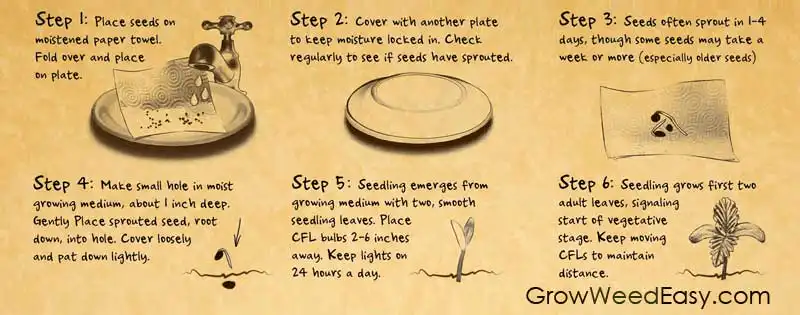
The Paper Towel Method — Six Steps
Step 1 — Optional pre-soak (6–12 hours): For seeds with particularly hard or thick coats, a brief soak in a small cup of clean, lukewarm water (22–25°C) in a dark spot can help moisture penetrate the seed coat before the paper towel stage. Not required for most seeds — skip this step unless you’ve had seeds be slow to respond in previous grows.
Step 2 — Moisten the paper towel: Dampen a paper towel thoroughly with clean, pH-adjusted water. It should be moist throughout — damp and consistent when you hold it up. Not dripping, not just surface-damp. Squeeze out any excess water if it drips when lifted. The moisture level here is the most important variable you control directly.
Step 3 — Place seeds and fold: Lay seeds on one half of the paper towel with 2–3 cm of space between each one. Fold the other half over to cover them. Place the folded towel between two plates — creating a dome that maintains humidity — or inside a zip-lock bag. Both work; the plate method allows slightly more airflow, the bag maintains humidity more consistently.
Step 4 — Find the right location: Place the setup in a warm, dark location. A drawer, a cupboard, or on top of a seedling heat mat covered with something opaque. Target 22–25°C consistently. In Australia, a north-facing windowsill is the sunniest indoor position — but the paper towel setup needs darkness, not light, so keep it away from windows. On top of a heat mat with a consistent thermostat is the most reliable setup regardless of ambient temperature.
Step 5 — Monitor daily: Check the setup every 12–24 hours without disturbing it significantly. You’re looking for the white taproot emerging from the seed — typically within 24–72 hours for viable seeds in correct conditions. If the paper towel has dried out, remoisten lightly with clean water. If there’s condensation building up inside the bag or on the plates, crack it slightly for a few hours to allow airflow.
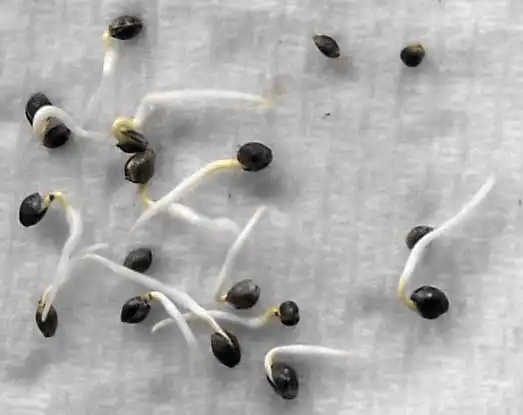
Step 6 — Plant when ready: Once the taproot is 0.5–1 cm long it’s time to plant. Don’t wait until the taproot is 2 cm+ — longer taproots are more fragile and more likely to be damaged during transplanting. Handle the seed by its body, not the taproot. The transplanting process is covered in detail in the next section.
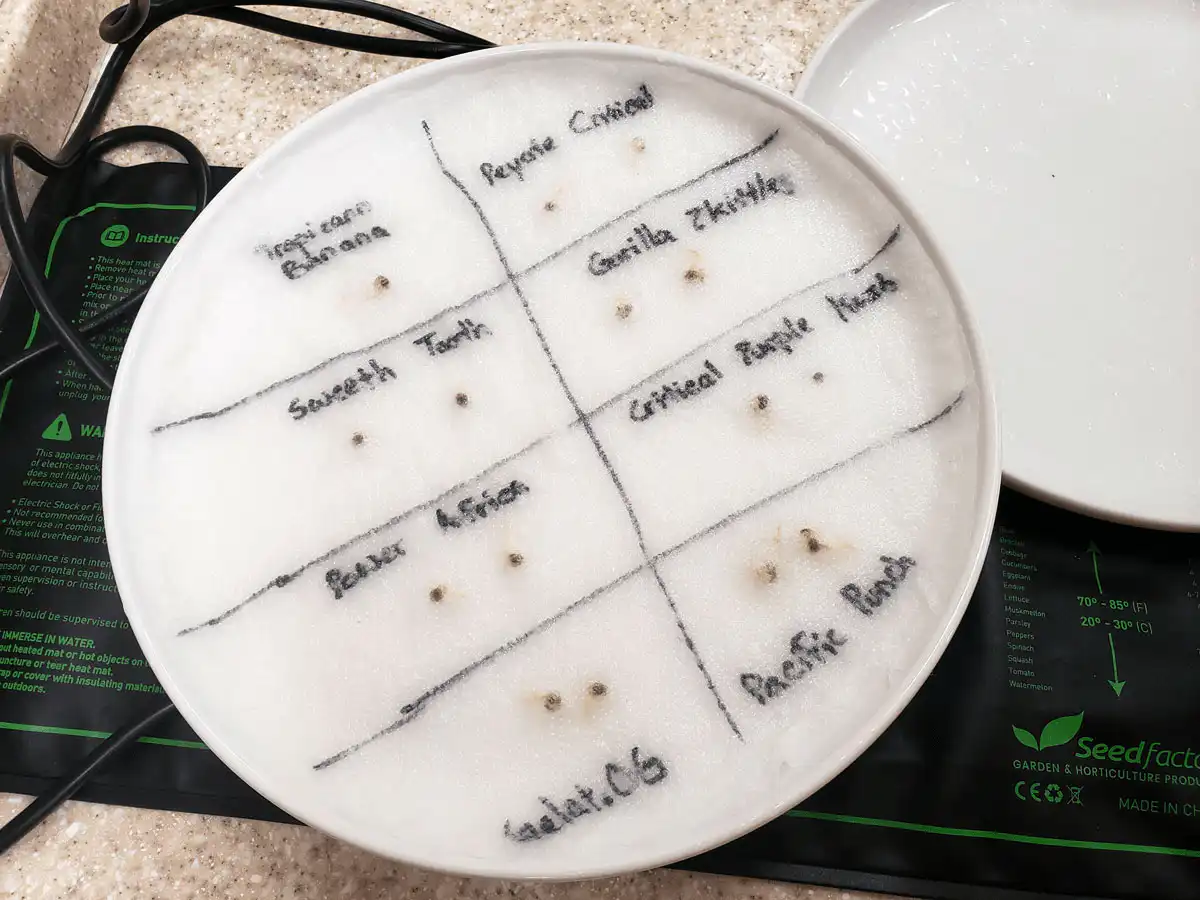
🧠 Pro Tip — Labelling Multiple Varieties
If you’re germinating several different strains at once, divide the paper towel into clearly labelled sections using a waterproof pen before you place the seeds. Mark each section with the strain name. This sounds basic but it’s worth doing — germination timelines vary between strains and between individual seeds, and mixing up varieties at planting is an easy mistake that’s impossible to correct later.
Transplanting Germinated Cannabis Seeds into Growing Medium
Transplanting is where most paper towel germination attempts go wrong — not because the method failed but because the handling at this stage damaged the taproot. The taproot emerging from a germinated cannabis seed is fragile. Any bending, breaking, or compression of it at this stage ends the plant’s development.
Prepare your growing medium before you open the paper towel. Pre-moisten the medium so it’s evenly damp throughout — not wet, not dry. Poke a small hole 0.5–1 cm deep in the centre of the container using a pencil or similar. Have everything ready before you handle the germinated seed.
Pick up the germinated seed by its body — not the taproot. Tweezers are useful here but they must be used with extreme care; gripping the taproot with tweezers is one of the most common causes of transplant damage. If you use tweezers, grip the seed coat only. Lower the seed into the hole taproot-first, pointing downward. The taproot goes into the medium, the seed body sits just below the surface. Cover lightly with growing medium — a thin layer, not packed down.
Do not water immediately after planting. The pre-moistened medium contains enough moisture to sustain the seedling for the first several days. Adding water on top of an already moist medium creates exactly the oversaturated conditions that lead to damping off. Wait until the surface of the medium lightens in colour slightly before the first post-planting watering.
Troubleshooting Common Paper Towel Method Problems
This section covers the problems specific to the paper towel method itself. For broader germination troubleshooting — seeds not germinating at all, diagnosing whether it’s the seeds or the setup — the cannabis seeds not germinating guide covers it in full.
Seeds not germinating after 72 hours
Check the three variables in order. Temperature first — is the setup actually at 22–25°C, or are you assuming room temperature is adequate? A thermometer placed in the setup for an hour will tell you. Moisture second — is the paper towel still damp, or has it dried out since you last checked? It should be consistently moist throughout, not just in the centre. Water quality third — if you used tap water, the chlorine or chloramines may be the problem. Remoisten with filtered or distilled water and give the seeds another 24–48 hours.
Older seeds may take up to five days rather than the typical 72 hours. If seeds haven’t shown any sign of germination after seven days in correct conditions, they’re unlikely to be viable. Seeds that are pale, white, or soft when pressed between your fingers before germination are unlikely to succeed regardless of method or conditions.
Paper towel too wet — seeds at risk of rot
If you can see standing water in the bag or the paper towel drips significantly when lifted, it’s too wet. Open the setup, allow it to drain slightly, and reseal with less moisture. Seeds sitting in saturated conditions for extended periods are at risk of fungal infection — the same pathogens that cause damping off in seedlings are active in overly wet germination media. Moist and damp is correct; wet and dripping is too far.
Roots growing into the paper towel
This happens when a seed is left in the paper towel longer than necessary — the taproot, having nowhere else to go, begins to penetrate the paper fibres. The best fix is to not let it happen: check daily and plant when the taproot reaches 0.5–1 cm. If roots have already grown into the paper, don’t try to separate them. Cut around the embedded roots and plant the seed along with the small piece of paper — it will break down in the soil without harming the plant. Coffee filters are worth using as an alternative to standard paper towels — their tighter weave makes root embedding significantly less likely.
Helmet head — seed shell stuck on the emerging seedling
Helmet head occurs when the seed coat fails to separate cleanly as the seedling emerges from the growing medium. The cotyledons (first seed leaves) are trapped inside the shell, unable to open. The instinct is to pull the shell off — resist it. The cotyledons are attached to the inside of the shell and pulling forcefully will tear them.
Mist the shell lightly with clean water two or three times a day and leave it. In most cases the moisture softens the shell enough for it to detach on its own within 24–48 hours. If it hasn’t detached after three to four days and the seedling is clearly struggling, you can very gently attempt to loosen it with tweezers — but only once the shell is visibly softened by moisture, and with extreme care. A successful cotyledon stage is critical to early seedling development — damaging them trying to remove a stuck shell causes more harm than the shell itself.
Lack of oxygen in a sealed bag
Seeds sealed in a zip-lock bag for several days can experience reduced oxygen levels that slow or inhibit germination. If you’re using the bag method and seeds haven’t germinated within 48 hours, open the bag briefly once or twice a day to allow fresh air exchange. This is less of an issue with the plate method, which allows slight airflow around the edges of the plates.
Not sure which strain to germinate?
Answer six questions and Jess will match you to three strains based on your setup, experience, and goals.
Key Takeaways — Paper Towel Method for Cannabis Seeds
The paper towel method is Sacred Seeds’ recommended germination approach because it provides visual confirmation of germination before the seed contacts soil. The three variables that determine success are temperature (22–25°C consistently — heat mat recommended), water quality (filtered, distilled, or rainwater at pH 6.0–6.5 — not tap water), and paper towel moisture level (damp throughout, not dripping). Plant when the taproot is 0.5–1 cm — not before, not significantly after. Handle the seed by its body not the taproot during transplanting, into pre-moistened medium at 0.5–1 cm depth, taproot pointing down. Don’t water again immediately — the pre-moistened medium will sustain the seedling for the first few days. For troubleshooting beyond germination — damping off, seedling care — see the damping off guide and the seedling care guide.
Paper Towel Method Cannabis Seeds — Frequently Asked Questions
Should I plant cannabis seeds directly in soil instead of using the paper towel method?
Direct planting into a container of growing medium works and has the advantage of not requiring the seedling to be handled during its most fragile stage. The limitation is visibility — you can’t confirm germination has occurred until the seedling breaks the surface, which takes longer and means any seeds that fail to germinate are only discovered after several days of waiting. For growers who want confirmation before committing seeds to a container, the paper towel method is preferable. The one situation to avoid is planting ungerminated seeds directly into outdoor garden soil — drainage, oxygen levels, and pathogen exposure in uncontrolled outdoor soil create conditions that make germination unreliable. The complete germination guide compares all three methods if you’re still deciding.
Can I use the paper towel method for seeds other than cannabis?
Yes — the paper towel method works for vegetables, herbs, and flowers, particularly those with longer germination times or hard seed coats. It’s commonly used for chilli peppers, tomatoes, and various herb seeds where pre-germination allows growers to identify viable seeds before committing growing space. The same principles apply: consistent moisture, 22–25°C, darkness, and clean water.
What is the ideal location for the paper towel method in Australia?
A warm, dark location with stable temperature — a drawer, a cupboard, or on top of a seedling heat mat. In Australia, north-facing positions get the most sun indoors (the opposite of the Northern Hemisphere), but the paper towel setup needs darkness not light, so keep it away from windows. The most reliable setup is a seedling heat mat with a thermostat set to 22–25°C, covered with something opaque — this delivers consistent temperature regardless of seasonal ambient temperature changes.
My seeds aren’t germinating — what could be the problem?
Check temperature first — is it actually 22–25°C, or are you assuming room temperature is adequate? Then moisture — has the paper towel dried out since you last checked? Then water quality — tap water chlorine or chloramines may be inhibiting germination. Older seeds may take up to five days rather than the typical 72 hours. If seeds show no signs of germination after seven days in correct conditions, they are unlikely to be viable. The full germination troubleshooting guide covers each cause and the exact fix.
The roots have grown into the paper towel — what should I do?
Cut around the embedded roots and plant the seed into growing medium along with the small piece of paper — it will break down in the soil without harming the plant. To avoid this in future, check seeds daily and plant when the taproot reaches 0.5–1 cm rather than allowing it to extend further. Coffee filters are worth using as an alternative to standard paper towels — their tighter weave significantly reduces root embedding.
How do I know when to transfer the germinated seed to soil?
When the taproot is 0.5–1 cm long. This is long enough to confirm successful germination and handle the seed safely, but short enough that the root is still rigid and undamaged. Don’t wait until the taproot is 2 cm or longer — longer taproots curl and tangle in the paper towel and are more easily damaged during transplanting.
Why should I use a heat mat for cannabis seed germination?
A heat mat provides consistent, gentle warmth that removes temperature as a variable — the most commonly underestimated factor in germination failures. Room temperature in Australian homes varies significantly with season and air conditioning, and what feels comfortable to a person (20°C) is below the optimal germination range for cannabis seeds. A basic seedling heat mat set to 22–25°C ensures the seeds are in the right temperature environment regardless of what’s happening in the rest of the room.
Related Reading
How to germinate cannabis seeds — the complete guide — all three germination methods covered with honest assessments of each. The hub article for the cluster.
Why aren’t my cannabis seeds germinating? — diagnostic guide for failed germination attempts. Covers temperature, water quality, seed age, and the common scenarios that cause seeds to crack but not sprout.
Water quality and seed germination — why Australian tap water undermines germination rates and what to use instead.
Why seedlings die — damping off and stem rot — the most common cause of seedling failure in the first two weeks after germination.
Cannabis seedling care in Australia — what comes after successful germination.
Sacred Seeds germination guarantee — how we test every seed batch before dispatch using this method.
Browse all cannabis seeds — feminised, autoflower, and photoperiod strains shipped from Australia.
Seeds are sold strictly as novelty collector’s items. They contain no THC or CBD. This page does not constitute medical or legal advice. By purchasing you agree to our terms and conditions. Always check local laws before germinating or cultivating cannabis.