If your cannabis seeds are not germinating, the problem is almost certainly environmental rather than the seeds themselves. After testing thousands of seed batches over the years, the pattern is consistent: germination failures come down to temperature, moisture, or water quality — in that order of frequency. Bad genetics cause germination problems far less often than growers assume. The same seeds that failed in one setup will often germinate perfectly when the variables are corrected.
This guide is for growers who’ve already attempted germination and hit a problem. It covers the specific causes of cannabis seeds not germinating, how to diagnose which one you’re dealing with, and exactly what to fix.
Where this guide fits in the germination series
This is the troubleshooting deep-dive — diagnosing why germination has failed and what to do about it. If you’re starting from scratch and want the overview of all three methods, see the complete cannabis seed germination guide. For the full step-by-step on the recommended method, see the paper towel germination guide. If water quality specifically is the suspected issue, the water quality guide covers what’s in Australian tap water and how to fix it. If germination worked but your seedlings are now dying in the first two weeks, see the damping off and stem rot guide.
Germination Troubleshooting — Quick Checklist
| Temperature | 22–25°C consistently — not ambient room temperature but actual temperature at the seed |
| Water quality | Filtered, distilled, or rainwater at pH 6.0–6.5 — not tap water |
| Paper towel moisture | Damp throughout like a wrung-out sponge — not dripping, not dry |
| Darkness | Seeds need complete darkness — no light exposure during germination |
| Timing | 24–72 hours typical — up to 5 days for some strains, up to 7 days for older seeds |
| Seed viability | Dark, firm seeds with intact shells — pale, white, or soft seeds rarely germinate |
| Oxygen | If using a sealed bag, open briefly once or twice daily for air exchange |
In this guide:
Temperature — The Most Common Reason Cannabis Seeds Don’t Germinate
Temperature is the variable growers most consistently underestimate — and the one most responsible for germination failures in Australian conditions. The issue isn’t that people don’t know seeds need warmth. It’s that they assume room temperature is adequate when it often isn’t, particularly in winter, in air-conditioned rooms, or in any space where the ambient temperature feels comfortable to a person but is actually below the 22–25°C optimal range for cannabis germination.
Seeds need consistent warmth at the germination site — not the ambient temperature of the room, but the actual temperature at the seed itself. A room that feels warm at 20°C is below the optimal range. A room that’s heated to 22°C during the day but drops to 16°C overnight is outside the optimal range for half the germination period. Fluctuation is as damaging as being consistently low — the enzyme systems that initiate germination slow significantly below 20°C and the risk of fungal infection increases as the seed sits in moist conditions at a temperature that slows its development.
The fix is straightforward: a seedling heat mat under the germination setup, set to 22–25°C with a thermostat if possible. This delivers consistent warmth at the seed regardless of what’s happening in the room around it. A heat mat is the single most cost-effective germination investment a grower can make — it removes the most common failure variable entirely.
🧠 Jason — On Temperature and Germination
I learned something about temperature from watching traditional cannabis farmers in Nepal. They placed seeds in warm spots near cooking fires — not because of any scientific understanding of enzyme kinetics, but because generations of experience had taught them that consistent warmth was what made seeds come to life. The science confirms what they knew intuitively: below a certain temperature threshold, germination slows and eventually stops. In Australia, especially during winter months, I see growers germinating in cold garages or on cool benchtops and wondering why nothing happens. Measure the actual temperature at the seed with a thermometer rather than estimating from how the room feels. Then get a heat mat. It’s not complicated.
Water Quality and Moisture Level — Two Separate Problems
Water causes germination failures in two distinct ways that are worth separating clearly: the quality of the water used, and the moisture level of the germination medium. Both matter and they have different fixes.
Water quality
Australian tap water contains chlorine or chloramines (disinfectants), fluoride, and in older pipe infrastructure, trace heavy metals. These compounds interfere with the enzyme activation and cellular division processes that drive germination. The seed is at maximum sensitivity to water chemistry during the imbibition phase — the initial water uptake that triggers the entire germination sequence — and whatever is in that water is in direct contact with the seed’s internal structures from that first moment.
Use filtered water, collected rainwater, or distilled water at pH 6.0–6.5. If you’ve been using tap water and seeds aren’t germinating, switch to filtered or distilled water, remoisten the paper towel, and give the seeds another 48 hours before drawing conclusions. For a full explanation of what’s in Australian tap water and how it affects germination, the water quality and germination guide covers it in detail.
Moisture level
The paper towel needs to be consistently damp — like a wrung-out sponge — throughout the germination period. Two moisture problems are common and they’re opposite to each other.
Too wet: If the paper towel is dripping or there’s standing water in the bag or between the plates, the seed is sitting in saturated conditions that deprive the embryo of oxygen and create the anaerobic environment that favours the pathogens responsible for seed rot. Seeds that don’t germinate in very wet setups often show softening or darkening of the seed coat — a sign of fungal infection rather than failed germination.
Too dry: If the paper towel has dried out since the last check — particularly overnight — the imbibition process may have stalled mid-way through germination. A seed that has begun absorbing water and then lost that moisture source can fail to complete the process. Check the setup every 12–24 hours and remoisten if the towel has dried. In Australian summer conditions, paper towels can dry faster than expected even in a sealed bag.
Seed Age and Storage — When the Problem Started Before Germination
Some germination failures originate before the grower does anything — in how the seeds were stored before purchase, or in the age of the seeds relative to their viability window. This is worth understanding because the diagnostic is different: if seeds have failed in a correctly managed germination environment, the problem may be the seeds themselves rather than the setup.
Cannabis seeds stored correctly — cool, dry, dark, airtight — retain meaningful viability for two to five years. Seeds stored improperly lose viability significantly faster. Heat and humidity are the most damaging storage conditions: seeds exposed to summer temperatures in an unsealed container, or stored in a humid environment, will decline in viability within months. Light accelerates degradation further.
The visual signs of compromised seed viability overlap with healthy seed appearance more than people expect — a seed can look normal and still have low viability if storage was poor. However, seeds that are pale green or white, very small, or soft when pressed between fingers are unlikely to succeed regardless of how correct the germination setup is. These seeds lack the stored energy to complete the germination process even if they begin it.
At Sacred Seeds, seeds are stored in airtight containers at controlled temperature and humidity from the moment they arrive until they ship. Every batch is tested using the paper towel method at 22°C before dispatch — confirmed viable seed is what gets sent out. If you’ve received seeds from us recently and they’re not germinating in a correctly managed setup, the issue is almost certainly the setup rather than the seeds.
Seeds Cracking But Not Sprouting
A seed that cracks open but doesn’t produce a taproot is a specific failure mode with a specific cause. The seed coat has softened and split — the imbibition process worked — but the embryo hasn’t developed the taproot that indicates active germination.
The most common cause is temperature being too low at the critical moment. The seed has absorbed enough water to crack the coat, but the enzyme systems responsible for the next stage of development — cellular division and taproot elongation — are operating too slowly in cool conditions to make visible progress. The result is a cracked seed that sits without developing further.
The second cause is seed energy depletion — older seeds that have partially lost viability may have enough stored energy to initiate germination but not enough to complete it. The seed cracks, begins the process, and then stalls because the embryo has run out of the energy reserves required to push the taproot through the seed coat.
If you see cracked seeds without taproot development, raise the temperature to 24–25°C and hold it consistently for another 48 hours before concluding the seed isn’t viable. If there’s still no taproot development after that, the seed is unlikely to progress further.
Planting Depth — Why Seedlings Sometimes Don’t Emerge
A germinated seed planted too deep uses its energy reserves reaching the surface rather than establishing a root system and beginning photosynthesis. Cannabis seeds planted at 2–3 cm depth in dense soil may germinate successfully but exhaust their stored energy before the seedling breaks the surface — producing a germinated seed with no visible plant.
The correct depth is 0.5–1 cm. At this depth the seedling has a short journey to the surface and can begin photosynthesis quickly, switching from stored energy to solar energy before the reserves run out. Deeper planting in loose, well-aerated growing medium can sometimes work, but the risk increases significantly with depth in denser media.
If seeds consistently germinate in the paper towel but seedlings don’t emerge after planting, planting depth and medium density are the first variables to check. Pre-moisten the growing medium before planting so it’s evenly damp throughout, and plant at 0.5–1 cm depth consistently.
How to Assess Cannabis Seed Viability Before Germinating
Visual assessment of seeds before germination won’t give you certainty — a healthy-looking seed can have low viability from poor storage, and some strains consistently produce smaller or lighter seeds that germinate well. But there are indicators worth checking before spending time on a germination attempt.
Signs of likely viability: Dark colouration — brown, grey-brown, or striped tan and brown. Firm when pressed between finger and thumb — no give. Intact seed coat with no cracks. Slight waxy sheen on the surface. Size appropriate for the strain — cannabis seeds vary naturally in size across varieties.
Signs of likely low viability: Pale green or white colouration. Soft when pressed — compresses rather than resisting. Cracked or damaged seed coat. Very small and shrivelled appearance. Seeds that were clearly exposed to heat or humidity during storage.
The float test — placing seeds in water to see which sink (viable) and which float (not viable) — is unreliable. Some viable seeds float because of air pockets in the seed coat rather than because of low viability. Don’t use it as a definitive test.
The most reliable viability indicator is purchasing from a source that batch-tests seeds before dispatch. The Sacred Seeds quality guarantee is backed by paper towel testing at 22°C on every batch — confirmed germination rate before seeds leave the facility.
Key Takeaways — Cannabis Seeds Not Germinating
Germination failures are almost always environmental rather than genetic. Temperature is the most common cause — verify the actual temperature at the seed with a thermometer and use a heat mat to maintain 22–25°C consistently. Water quality is the second most common cause — filtered, distilled, or rainwater at pH 6.0–6.5, not tap water. Moisture level needs to be consistently damp like a wrung-out sponge — not dripping, not drying out between checks. Seeds cracking without developing a taproot usually indicates temperature too low at the critical development stage, or seed energy depletion in older seeds. Seedlings not emerging after germination usually indicates planting depth too great — plant at 0.5–1 cm consistently. Seed age and storage conditions affect viability before the grower does anything — dark, firm seeds with intact coats from a batch-tested source are the most reliable starting point. If you’ve corrected all environmental variables and seeds still aren’t germinating after seven days, the seeds themselves may not be viable.
Cannabis Seeds Not Germinating — Frequently Asked Questions
How long should cannabis seeds take to germinate?
Most viable seeds in correct conditions — 22–25°C, consistent moisture, darkness — show a taproot within 24–72 hours. Some varieties, particularly older landrace genetics, can take up to five to seven days. If there’s no sign of germination after ten days in correctly managed conditions, the seed is unlikely to be viable. Don’t give up at 24 hours — 72 hours is the realistic window for most genetics in a correct setup.
What temperature is best for germinating cannabis seeds?
22–25°C consistently at the seed — not ambient room temperature. Use a seedling heat mat under the germination setup to deliver consistent warmth regardless of seasonal room temperature changes. Below 20°C germination slows significantly. Above 28°C the enzyme systems involved in germination become heat-stressed. Temperature fluctuation is as damaging as being consistently outside the optimal range.
Should I soak cannabis seeds before germinating?
Optional, and most useful for seeds with particularly hard or thick coats. A 12–24 hour soak in clean, lukewarm water (22–25°C) in a dark location can help moisture penetrate difficult seed coats. Don’t exceed 24 hours — seeds left in water after the taproot begins to emerge will drown. For most seeds from quality genetics, the paper towel method without pre-soaking is sufficient. The paper towel method guide covers the full step-by-step.
Why are my seeds cracking but not sprouting?
Two main causes. Temperature too low at the critical taproot development stage — the seed coat has softened enough to crack but the enzyme systems driving the next stage of development are operating too slowly. Raise to 24–25°C and hold consistently for 48 hours. Alternatively, seed energy depletion — older seeds may have enough stored energy to initiate germination but not enough to complete it. If there’s no taproot development after 48 hours at correct temperature, the seed is unlikely to progress.
Can I germinate seeds directly in soil?
Yes — direct planting into a container of pre-moistened growing medium works and has the advantage of not requiring transplanting during the seedling’s most fragile stage. Plant at 0.5–1 cm depth, maintain consistent moisture and 22–25°C temperature, and keep dark until the seedling emerges. The limitation is visibility — you can’t confirm germination has occurred until the seedling breaks the surface. The paper towel method’s visual confirmation is useful when troubleshooting germination problems. The complete germination guide compares all three methods.
How do I know if my cannabis seeds are still viable?
Dark colouration (brown, grey-brown, or striped), firm when pressed, intact seed coat, and slight waxy sheen are indicators of likely viability. Pale, green, white, soft, or cracked seeds are unlikely to germinate. The float test (viable seeds sink, non-viable float) is unreliable — some viable seeds float due to air pockets in the seed coat. Purchasing from a source that batch-tests seeds before dispatch is the most reliable viability assurance.
What’s the best water to use for germinating cannabis seeds?
Filtered, collected rainwater, or distilled water at pH 6.0–6.5. Tap water contains chlorine or chloramines, fluoride, and potentially trace heavy metals that interfere with the enzyme activation process during germination. If using a chlorinated supply, leaving tap water uncovered for 24 hours allows chlorine to off-gas — but chloramines (used by Sydney Water) don’t off-gas and require carbon filtration to remove. The water quality germination guide covers this in full.
Do cannabis seeds need light to germinate?
No — cannabis seeds germinate best in complete darkness. Light is only needed once the seedling has emerged from the growing medium and begins photosynthesis. Keep the germination setup in a drawer, cupboard, or covered location throughout the germination period. Exposure to light during germination doesn’t help and in some cases actively inhibits the process.
My seedling emerged but the seed shell is stuck on it — is that a germination problem?
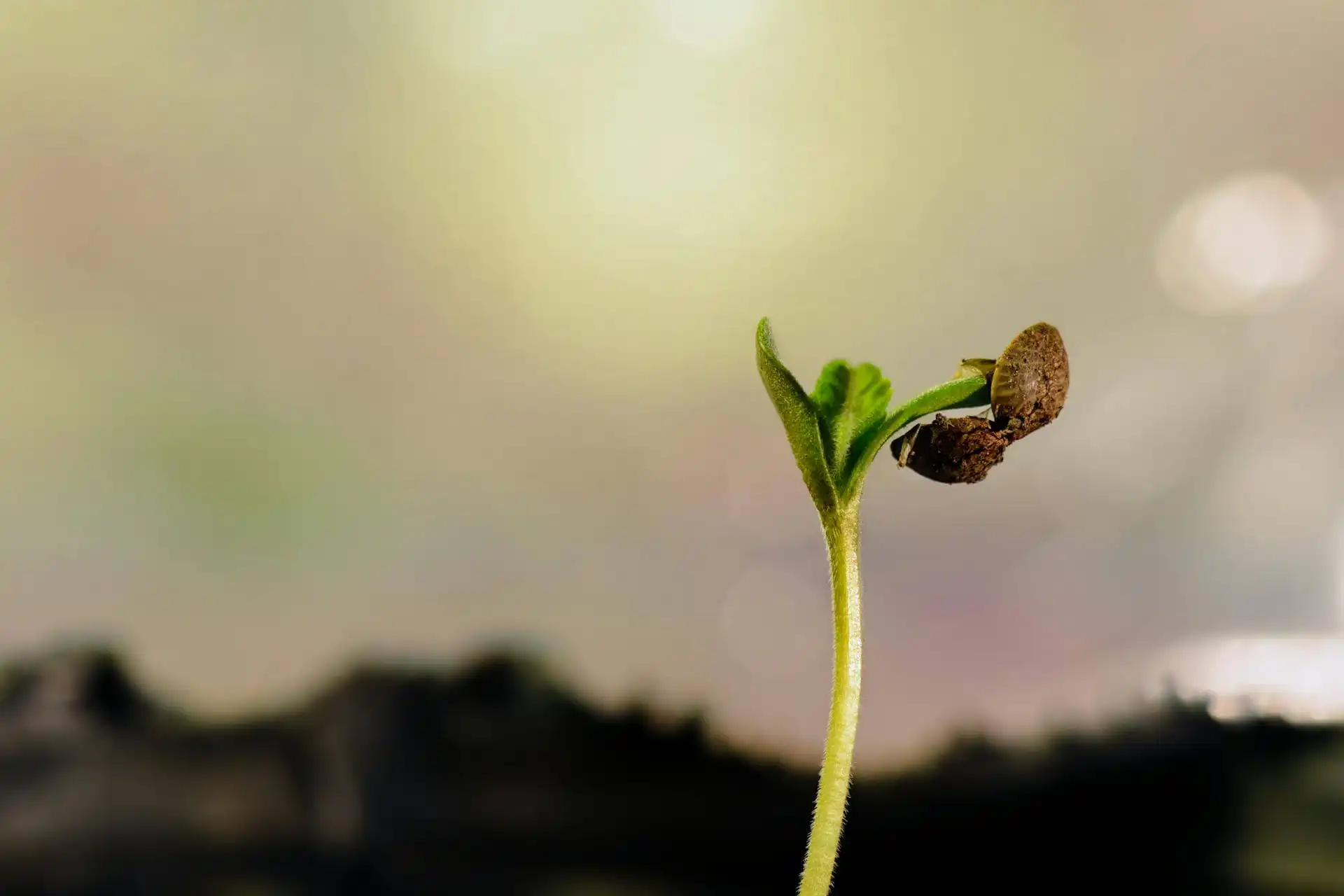
No — this is called helmet head and it’s a post-germination issue. The seed germinated successfully but the seed coat failed to separate cleanly as the seedling emerged. Mist the stuck shell lightly with clean water twice a day and leave it — in most cases it softens and detaches on its own within 24–48 hours. Don’t try to pull it off forcefully; the cotyledons inside are attached to the shell and pulling them tears the seedling.
Related Reading
How to germinate cannabis seeds — the complete guide — all three germination methods with honest assessments of each. The hub article for the cluster.
Paper towel germination method — the complete step-by-step guide to the method Sacred Seeds uses to batch-test every seed line.
Water quality and seed germination — why Australian tap water undermines germination rates and what to use instead.
Why seedlings die — damping off and stem rot — if germination succeeded but the seedling died in the first two weeks, this is the likely explanation.
Cannabis seedling care in Australia — what comes after successful germination.
Sacred Seeds germination guarantee — how we test every seed batch before dispatch.
Browse all cannabis seeds — feminised, autoflower, and photoperiod strains shipped from Australia.
Seeds are sold strictly as novelty collector’s items. They contain no THC or CBD. This page does not constitute medical or legal advice. By purchasing you agree to our terms and conditions. Always check local laws before germinating or cultivating cannabis.
🧑🎓 Need helping choosing what to buy? Have a read of this strain guide.
🧑🎓 Learn here how we test our seeds and the best way to store seeds.