🌿 Auto Blue Dream Seeds: Key Info
| 🏷️ Lineage |
Autoflower adaptation of Blue Dream, the California classic |
| 🧬 Genetics |
(Blueberry × Haze) × Ruderalis |
| 🍬 Also Known As |
Auto BD, Blue Dream Auto, Auto Blueberry Haze |
| 🌱 Type |
Feminised Autoflower
70% Sativa / 30% Indica |
| 🔥 THC / 💧 CBD |
THC ~19–24% • CBD <1% |
| ⏱ Seed to Harvest |
~70–77 days (10–11 weeks), fixed timeline |
| 🌾 Yield (Guide) |
Indoor: up to 450 g/m² • Outdoor: 90–140 g/plant |
| 📏 Height |
Medium (80–120 cm), sativa stretch in early flower |
| 🍇 Flavour & Aroma |
Sweet blueberry, earthy haze, citrus notes |
| 🧪 Terpene Profile |
Myrcene (dominant) • Pinene • Caryophyllene • Limonene |
| 🌤 Outdoor Harvest (AU) |
Any season, ~70–77 days from seed regardless of light cycle |
| 🌱 Experience |
Accessible (resilient genetics, plan for the sativa stretch) |
| 📦 Handling |
Batch-tested at ~22 °C (paper towel method). Stored cold/dry prior to dispatch. Learn how we test seeds here. |
| ⚠️ Legal Notice |
Sold strictly as souvenirs/collectibles in accordance with local laws. |
🌿 Auto Blue Dream Seeds: The California Classic on a Fixed Timeline
Auto Blue Dream seeds carry the Blueberry × Haze genetics that made Blue Dream the most popular strain in California dispensaries for over a decade, on a fixed 70 to 77 day seed-to-harvest timeline that flowers automatically without a light schedule change.
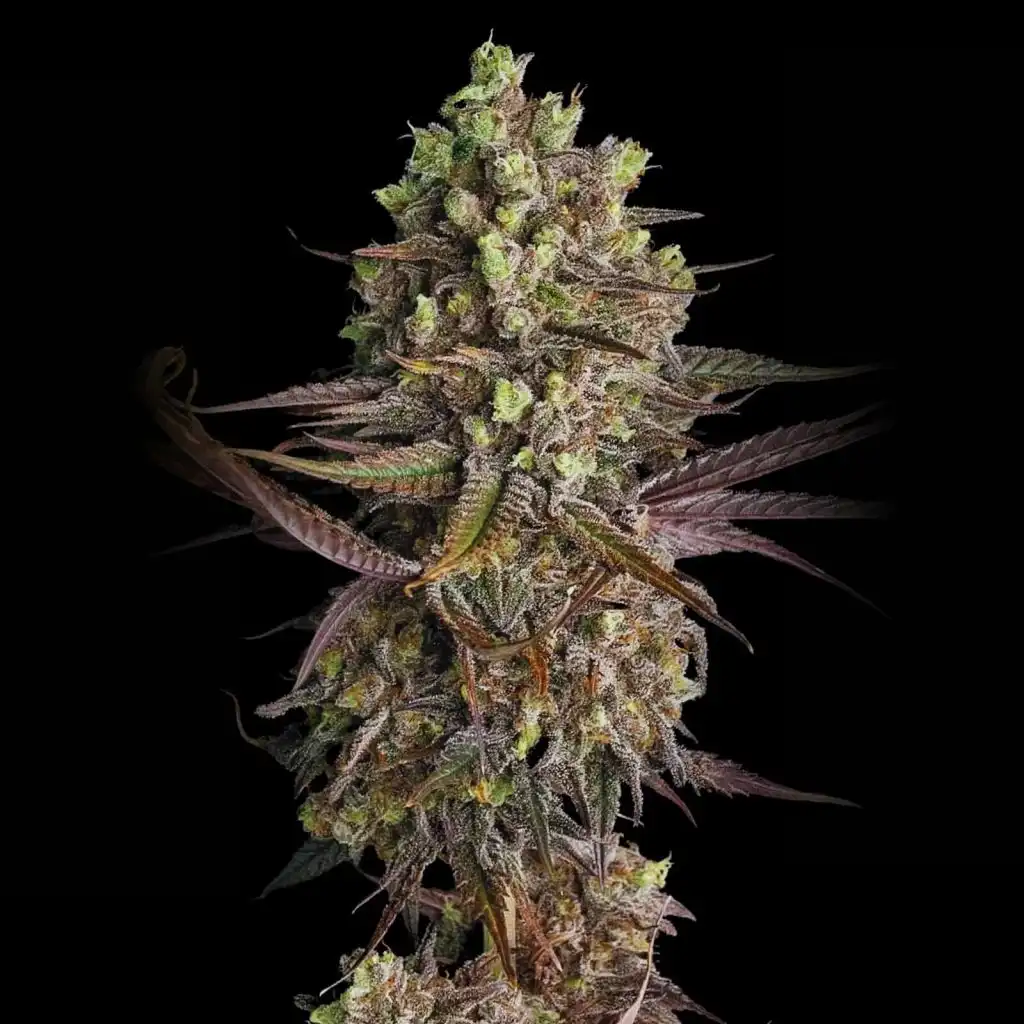
Blue Dream earned its reputation through a combination that sounds simple but was difficult to achieve: genuine blueberry sweetness from the Blueberry side, real cerebral energy from the Haze component, and an effect balance that worked across a wide range of users and contexts. The auto preserves all of that. The sweet blueberry aroma is intact, the balanced sativa-dominant effect carries through the ruderalis cross, and at 19 to 24% THC the potency matches the photoperiod rather than dropping, which is unusual for an auto conversion. As one of the more approachable high-THC sativa-leaning autos in the catalogue, it suits daytime use without tipping into edginess. For the full origin story, the genetics, and a deeper look at the effect, see our Blue Dream strain review and grow guide.
What the ruderalis cross changes: potency holds at 19 to 24% THC, the same as the photoperiod, so the trade-off is yield, not strength. Indoor yield sits at up to 450 g/m² versus higher potential for the photoperiod with extended veg and SCROG, and outdoor yield per plant is lower at 90 to 140 g versus the photoperiod's 500 to 800 g with a full Australian summer veg. The sweet blueberry terpene profile carries through well with a proper flush and cure.
What Auto Blue Dream seeds do well:
- Faithful Blueberry × Haze terpene profile: the sweet blueberry, earthy haze undertones, and citrus brightness of the original carry through the ruderalis cross with a proper cure, a faithfulness that is uncommon with berry genetics in auto format
- Balanced sativa-dominant effect: alert mind, mildly relaxed body, functional across a wider range of times and contexts than purely indica-dominant autos
- Full photoperiod potency: 19 to 24% THC, genuinely effective and not diluted by the auto conversion
- Resilient genetics: the ruderalis component adds genuine robustness to temperature variation and minor cultivation inconsistencies
- Multiple outdoor cycles: the 70 to 77 day fixed timeline allows two to three complete outdoor runs between September and April in most Australian states
Auto Blue Dream Lineage
Blueberry
Sweet berry, body ease
×
Haze
Cerebral sativa lift
×
Ruderalis
Autoflower trait
↓
Auto Blue Dream
California classic, autoflowering
↓
Blue Dream (Blueberry × Haze) crossed with ruderalis for the autoflower trait.
↻ Want maximum yield and full plant control? The same genetics come as
Blue Dream feminised seeds, the photoperiod version: 9 to 10 week flower plus veg time, up to 500 to 800 g per plant outdoors, and the ability to hold in veg and course-correct.
🌿 Auto Blue Dream Seeds Effects and Experience
At 70% sativa, Auto Blue Dream produces one of the more versatile effect profiles in the auto catalogue, alert enough for daytime use, physically relaxed enough for an evening wind-down, and potent enough at 19 to 24% THC to be genuinely effective. It is not a one-context strain the way heavy indicas and pure sativas both are.
Onset (5–10 minutes): a gentle cerebral lift, mood brightens, focus sharpens slightly, energy increases. Mental clarity is intact from the start. The Haze genetics drive the onset, clean, upward, functional, a smooth, clear-headed beginning rather than the fast-hitting weight of a high-THC indica.
Early phase (15–45 minutes): mental stimulation at its peak, with creativity and motivation building. The Blueberry genetics contribute a gradual body ease underneath, the body settling and physical comfort arriving without heaviness. The myrcene-dominant profile enhances the calming physical component without pulling the effect toward the couch.
Mid-phase (45–120 minutes): the 30% indica character becomes more present. Physical relaxation deepens while mental clarity persists, good for sustained creative work, outdoor activity, or social engagement. At moderate doses this is the most functional window, alert, comfortable, present. The pinene component supports clarity and keeps the sativa character from fading too quickly.
Late-phase (2+ hours): a gradual taper with no harsh drop. Residual physical ease persists as the cerebral component fades. Higher doses lean more physically relaxing toward an evening wind-down, while at typical daytime levels it stays clear.
Duration: 2 to 3 hours at typical doses. The balanced genetics produce a more even experience than either dominant extreme.
Potency: at 19 to 24% THC this is genuinely potent but on the more approachable end of the auto catalogue. The sativa-leaning effect makes it feel less overwhelming than equivalent THC in a heavy indica. New users should start with one to two hits, the onset is smooth but the potency builds.
Flavour: sweet blueberry dominates, fruity, clean, true to the name. Earthy haze undertones add complexity from the Haze parentage, with light citrus notes on the exhale from the limonene. Smooth, pleasant smoke that is gentle on the throat. With a proper 3 to 4 week cure the blueberry character sharpens noticeably, so the profile benefits from patience in the jar.
🍇 Terpene Profile
The sweet, balanced character comes from a myrcene-led profile:
- Myrcene: the dominant terpene, carrying the sweet, ripe-fruit base and the gentle body component
- Pinene: a fresh, sharp note that supports the clear-headed, focused side of the effect
- Caryophyllene: a peppery spice that rounds out the haze undertones
- Limonene: the citrus brightness on the exhale that lifts the profile
For how these compounds shape flavour and effect, see our cannabis terpenes guide.

🌱 Growing Auto Blue Dream Seeds in Australia
(Strictly for ACT residents with a licence or those overseas where cultivation is legal.)
Experience level: accessible. The ruderalis component gives Auto Blue Dream genuine resilience compared to more sensitive auto genetics, temperature variation and minor feeding inconsistencies that would stress OG-derived or haze-dominant autos are better tolerated here. The standard auto rules still apply, and the fixed timeline means early mistakes carry through to harvest, but a grower with one successful auto run behind them will find this strain consistent and rewarding. The one thing to plan for is the sativa stretch. Our cannabis seedling care guide covers a strong start.
Critical auto rules, before germination:
- Start in the final container: 11 to 15 L indoors, 15 to 20 L outdoors. Transplanting autos costs development time the fixed timeline cannot recover from
- No transplanting: non-negotiable
- Feed at quarter strength from week one: overfeeding is the most common auto mistake, and nutrient burn in weeks 1 to 3 affects the plant all the way to harvest
- LST only, no topping: the short veg phase does not allow recovery from high-stress techniques. Gentle LST from week 2 to 3 is the correct approach
Flowering: Auto Blue Dream initiates flowering at 3 to 4 weeks from germination. Seed to harvest runs approximately 70 to 77 days. The sativa genetics produce moderate stretch in early flower, expect a 30 to 50% height increase from pre-flower, more than compact indica autos. Check trichomes from week 9 and harvest at 15 to 20% amber for the characteristic balanced Blue Dream effect, or later (20 to 30% amber) for a more physically relaxing finish. Our amber trichomes guide covers reading them.
Height and structure: medium at 80 to 120 cm, taller than most indica-dominant autos but manageable in standard tent heights. One central cola with moderate side branching. LST from week 2 to 3, before the stretch begins, opens the canopy and improves light penetration to the lower bud sites. Topping is not recommended, since the short veg phase does not give enough recovery time for a net benefit.
Harvest and cure: the blueberry terpene profile and the balanced effect both develop fully only at 15 to 20% amber, so do not harvest at cloudy-only trichomes. After harvest, the sweet blueberry character develops in the jar over 3 to 4 weeks. Our drying and curing guide covers the finish.
🏠 Indoor Growing (Australia)
- Seed to harvest: 70 to 77 days fixed, no light flip required
- Yield: up to 450 g/m² under quality lighting with LST
- Container: start and finish in 11 to 15 L, no transplanting. Fabric pots work well
- Light: 18/6 recommended, 20/4 marginally better for yield
- Height: 80 to 120 cm, taller than indica autos. Standard tent heights accommodate this with LST, so account for the sativa stretch when positioning lights
- Training: LST from week 2 to 3, before the stretch begins
- Airflow: important from week 6, with 50% RH or below from mid-flower
- Aroma: sweet blueberry from week 5 to 6 onward, so carbon filtration is needed indoors from mid-flower
- Cycles per year: 5 to 6 complete indoor runs annually
🌿 Outdoor Growing (Australia)
- Timing: ~70 to 77 days from planting, not season-dependent. Plant September through March for warm-weather runs
- Yield: 90 to 140 g per plant, larger containers (15 to 20 L) and full sun approach the upper end
- Container: 15 to 20 L minimum, start in the final pot, no transplanting
- Site: full sun, 6+ hours direct light minimum, the sativa genetics reward good light intensity. Our Australian climate strain guide covers regional timing
- Multiple runs: plant September for a November to December harvest, plant November or December for a January to February harvest, plant January for a March to April harvest
- Climate: the ruderalis genetics add tolerance for Australian heat, handling up to 32 to 33 °C without significant stress. The sweet blueberry expression is best in moderate temperatures, and extreme summer heat (35 °C+) affects flavour development
- Aroma: sweet blueberry from mid-flower, noticeable nearby but manageable given the compact size
🧪 Auto Blue Dream Seeds EC and Feeding Guide: Soil and Coco
Auto Blue Dream seeds sit in the moderate-feeder range, more robust than OG-derived or pure haze genetics and less demanding than high-potency modern autos. The Blueberry parentage has moderate nutrient requirements that carry through the auto version. Start at quarter strength regardless of the nutrient label and build on plant response only. The myrcene-dominant sweet blueberry profile benefits significantly from conservative nitrogen in late flower and a proper flush, since excess nitrogen in weeks 7 to 9 mutes the blueberry character noticeably.
All EC values assume quality base nutrients. Australian tap water typically runs 0.2 to 0.5 EC, so factor that into your target and measure after mixing.
📊 EC and pH Target Table: Soil vs Coco
| Phase / Week |
Soil EC |
Coco EC |
Soil pH |
Coco pH |
Notes |
Weeks 1–2
Seedling |
0.4–0.6 |
0.5–0.8 |
6.2–6.5 |
5.8–6.0 |
Start conservative. The fixed timeline means overfeeding here cannot be corrected later. Plain water in week 1. |
Weeks 3–4
Early veg / pre-flower |
0.8–1.2 |
1.0–1.4 |
6.0–6.5 |
5.8–6.2 |
Nitrogen-forward. LST in progress before the stretch. Pre-flowers around day 21 to 28. Watch tips. |
Weeks 4–5
Pre-flower transition |
1.0–1.4 |
1.2–1.6 |
6.0–6.5 |
5.8–6.2 |
Reduce nitrogen, introduce bloom nutrients. Begin potassium support, important for the sweet blueberry terpene expression. |
Weeks 5–8
Peak flower |
1.2–1.6 |
1.4–1.8 |
6.0–6.5 |
5.8–6.2 |
High P and K. Back off nitrogen from week 6, excess N in late flower mutes the blueberry character noticeably with these genetics. |
Weeks 9–10
Late flower / ripening |
1.0–1.4 |
1.2–1.6 |
6.0–6.5 |
5.8–6.2 |
Reduce overall EC. Plant drawing on reserves. Monitor runoff EC. Check trichomes from day 63. |
Final 7–10 days
Flush |
0.0–0.4 |
0.0–0.5 |
6.2 |
5.8–6.0 |
Plain pH water until runoff EC drops below 0.5. A proper flush followed by a full cure makes a material difference to the blueberry flavour. |
🌱 Soil-Specific Notes
Pre-loaded nutrients: quality potting mix typically runs 1.0 to 1.5 EC on its own in weeks 1 to 3, so plain water or very light feeding is correct for the seedling phase. The Blueberry genetics have moderate requirements, and the medium provides more than enough early on. Feed only when runoff EC drops below 0.8.
Runoff monitoring: water to 10 to 20% runoff and measure EC. Runoff more than 0.4 above feed-in indicates salt buildup, so flush with twice the pot volume of plain pH water before resuming.
Watering: every 2 to 3 days in veg, every 1 to 2 days in peak flower. The sativa structure pulls water actively in mid-to-late flower, and the pot will feel noticeably lighter between waterings by week 6 to 7. Lift the pot to assess moisture.
🥥 Coco-Specific Notes
Feeding frequency: once daily in veg, twice daily in peak flower. Coco must not dry out between waterings, since consistent hydration in weeks 5 to 8 directly supports the blueberry terpene development in that window.
pH in coco: 5.9 to 6.1 at every feed. The myrcene-dominant sweet blueberry profile is sensitive to pH drift. Below 5.8 phosphorus and calcium uptake drops, and the sweet fruit character diminishes before visible deficiency appears.
CalMag in coco: 1 to 2 ml/L from week 1 through flush. Coco binds calcium and magnesium, and brown spots on mid-canopy leaves are often a calcium shortfall, so check pH first, then CalMag, before reducing EC.
Nitrogen in late flower: back off firmly from week 6. With the Blueberry genetics specifically, excess late-flower nitrogen suppresses the myrcene expression, the sweet blueberry character that defines this strain, faster in coco than soil.
📋 EC Troubleshooting
| What You're Seeing |
Likely Cause |
Action |
| Tip burn weeks 1 to 3 |
EC too high for the seedling, or pre-loaded soil plus added feed |
Drop to plain water for one or two waterings. Check whether the medium is already feeding before adding more. Resume at lower EC. |
| Sweet blueberry aroma muted in late flower |
Excess nitrogen suppressing myrcene, the most strain-specific issue with Blue Dream genetics |
Back off nitrogen from week 6 regardless of plant colour. If flat at harvest, jar 3 to 4 weeks before assessing, the blueberry character develops during cure. |
| Dark green clawing leaves mid-flower |
Nitrogen too high relative to P and K |
Reduce EC by 0.2 to 0.3 and cut the nitrogen proportion. Switch the feed ratio toward bloom emphasis. |
| Slow growth despite correct EC and pH |
Environmental inconsistency, temperature swings or overwatering in soil |
Stabilise temperature and let the soil dry slightly more between waterings. These genetics are resilient but still respond to consistency. |
| Runoff EC well above feed-in |
Salt buildup in the medium |
Flush with twice the pot volume of plain pH water. Target runoff below 1.0 before resuming. |
💡 Feeding Key Principles
- Quarter strength from week one: overfeeding is the most common auto mistake regardless of genetics. Start conservative and build on plant response only
- Nitrogen back-off is the key strain-specific action: excess nitrogen in weeks 7 to 9 suppresses the sweet blueberry myrcene expression that defines this strain. Back off firmly from week 6
- Potassium supports the blueberry terpenes: consistent K through the peak flower window supports both bud density and the myrcene development
- Flush for flavour: the sweet blueberry character is one of the profiles most improved by a clean finish. Flush 7 to 10 days until runoff drops below 0.5, then cure 3 to 4 weeks minimum
🗓️ Auto Blue Dream Seeds Week-by-Week Grow Guide
Auto Blue Dream runs 70 to 77 days with a sativa-dominant structure that stretches more than compact indica autos. The defining points are LST timing before the stretch begins and harvest patience, since the blueberry character and balanced effect both develop fully in the final week.
| Phase / Week |
What's Happening |
Key Actions |
Watch Out For |
Weeks 1–2
Seedling |
Taproot establishing. First true leaves emerging. The sativa structure showing early, wider internode spacing than indica autos. |
Plain water or quarter strength. 18/6. 60 to 70% RH. Final container from day one, no transplanting. |
Overfeeding, the most common auto mistake. Week 1 to 2 damage cannot be corrected later. |
Weeks 3–4
Early veg / pre-flower |
Strong vegetative growth. Pre-flowers around day 21 to 28. Sativa structure expanding, taller and more open than indica autos. |
Begin LST before the stretch starts. Build to half strength. EC 0.8 to 1.2 soil. 50 to 60% RH. |
Missing the LST window, the stretch makes canopy management harder once flowering begins. |
Weeks 5–7
Early-mid flower / stretch |
Height increasing, a 30 to 50% gain from pre-flower. Bud sites forming across the canopy. The sweet blueberry aroma building from week 5 to 6. |
Transition to bloom nutrients. EC 1.2 to 1.6 soil. K boost from week 5. Carbon filter from week 6. RH 45 to 50%. Adjust light distance for the stretch. Back off nitrogen from week 6. |
Light distance, the sativa stretch brings the canopy closer to the LED faster than with indica autos. Excess nitrogen will mute the blueberry terpenes. |
Weeks 8–10
Late flower / ripening |
Buds fattening. Sweet blueberry aroma intensifying. Trichomes transitioning. The classic Blue Dream bud appearance, medium-density and resinous. |
Check trichomes from day 56. RH 40 to 45%. Begin flush at 10 to 15% amber. Harvest at 15 to 20% amber for the balanced effect. |
Harvest timing, cloudy trichomes alone are not the target. Wait for 15 to 20% amber for the Blue Dream experience. |
Days 70–77
Flush & harvest |
Final ripening. Dense, aromatic buds. Natural leaf yellowing. Sweet blueberry aroma at peak. |
Plain pH water 7 to 10 days. Harvest at 15 to 20% amber. Slow dry at 15 to 18 °C, 55 to 60% RH for 10 to 14 days. |
Rushing the dry, the myrcene blueberry terpenes are volatile. A fast dry loses the character. |
Post-harvest
Cure |
The full sweet blueberry expression develops in the jar. Fresh-dried is decent, but after 3 to 4 weeks the character is sharper and fuller, when it tastes like Blue Dream. |
Jar at 60 to 65% RH. Burp daily for two weeks, then seal. 3 weeks minimum, 4 to 5 for full complexity. |
Assessing fresh-dried material. The profile develops during cure, so judge at 4 weeks, not 1. |
🧠 Jason's Tip: Growing Auto Blue Dream
The biggest mistake with autoflowers is treating them like photoperiods. Do not overfeed, do not over-train, and do not transplant after germination. Start seeds directly in their final containers, 11 to 15 L indoors, 15 to 20 L outdoors, and do not move them. Transplant shock wastes development time the fixed timeline cannot recover.
Keep nutrients light, especially in the first three weeks. Quarter strength is the correct starting point. Autos have smaller root systems and shorter lifecycles, so they process nutrients differently and have a much narrower margin for error on overfeeding. When in doubt, feed less, a slightly underfed auto outperforms an overfed one consistently. And get the LST on early, before the stretch, because the sativa side of Blue Dream will run taller than people expect from an auto.
On harvest timing, this is a California strain Jess and I knew well from picking on the West Coast, and the blueberry terpene and the balanced effect both come in during the final week. I see growers chop at cloudy trichomes because it looks done, then wonder why it does not taste like Blue Dream. Wait for 15 to 20% amber under a loupe. The difference between day 63 and day 75 with these genetics is significant in aroma, flavour, and the quality of the balanced effect.
⚖️ Auto Blue Dream vs Blue Dream Feminised: Which Suits You
| Feature |
Auto Blue Dream
(this page) |
Blue Dream Feminised |
| Type |
Autoflower |
Photoperiod |
| Seed to harvest |
70–77 days fixed |
9–10 wk flower + veg |
| Indoor yield |
Up to 450 g/m² |
Up to 600 g/m² |
| Outdoor yield |
90–140 g/plant |
500–800 g/plant |
| THC |
~19–24% |
~19–24% |
| Height |
80–120 cm |
Large sativa, can exceed 180 cm outdoors |
| Light schedule |
Any, no flip required |
12/12 to flower |
| Cycles per year |
5–6 indoor / 2–3 outdoor |
3–4 indoor / 1 outdoor |
| Best for |
Fixed timeline, multiple cycles, compact grows |
Maximum yield, full plant control |
Both carry the same Blueberry × Haze character and the same 19 to 24% potency. Choose Auto Blue Dream for a fixed 70 to 77 day timeline, multiple outdoor cycles per season, and compact height without light management. Choose the Blue Dream Feminised for maximum yield, the ability to course-correct problems, and the full size of the original photoperiod.
🎯 Is Auto Blue Dream Right for Your Grow?
✅ Auto Blue Dream is the right choice if:
- You want the sweet blueberry profile and balanced sativa-dominant Blue Dream effect on a fixed 70 to 77 day timeline
- Multiple outdoor cycles per season matter, two to three runs between September and April
- You need a compact grow without managing a 12/12 light flip
- Height is manageable at 80 to 120 cm, suiting balconies, standard tents, and small setups
- The added resilience of the ruderalis genetics suits your grow situation
- A balanced effect, alert mind and mild body relaxation, is the goal rather than a heavy indica finish
❌ Consider the alternatives if:
- Maximum outdoor yield is the priority, 500 to 800 g per plant for the photoperiod versus 90 to 140 g for the auto is a large gap
- Maximum indoor yield matters, up to 600 g/m² for the photoperiod versus 450 g/m² for the auto
- You want to hold the plant in veg and course-correct problems before flowering
- A single large harvest per season suits you better than multiple smaller cycles, or you want a quicker finish from the autoflower range
Still comparing options? Our full strain lineup guide covers the range, or browse the autoflower range, the sativa-dominant range, or the complete cannabis seeds catalogue.
🌿 Real User Experiences
⭐⭐⭐⭐⭐ "The blueberry scent is real and strong, fruity, clean, and smooth on the exhale. Tastes like the photoperiod version. I was worried the auto would lose flavour but it is the same profile. Best of both worlds on a fast timeline." Indoor grower, Australia
⭐⭐⭐⭐⭐ "Started three seeds in October, harvested in December, 110 g total from a balcony grow in Queensland. Straightforward run, no major issues. The effect is balanced and functional, exactly what Blue Dream should be. Already planted another round." Outdoor grower, Queensland
Paraphrased from verified customer reviews and grower communications.
❓ Frequently Asked Questions: Auto Blue Dream Seeds
Is Auto Blue Dream good for daytime use?
Yes, this is one of the few auto genetics genuinely suited to sustained daytime use. With 70% sativa genetics, Auto Blue Dream delivers focused energy and creativity alongside mild body relaxation without the couch at moderate doses. The balanced effect, alert mind and physically comfortable, works across a wider range of contexts than purely indica-dominant autos.
How does the auto compare to photoperiod Blue Dream in flavour?
Very close with a proper cure. The sweet blueberry, earthy haze undertone, and citrus brightness of the original carry through the ruderalis cross, and the myrcene and pinene profile is faithfully preserved, so experienced Blue Dream growers recognise the aroma in the tent from week 5 to 6. The full expression needs a 3 to 4 week cure in sealed jars, since fresh-dried material does not represent the genetics fairly. Our Blue Dream strain review covers the background in depth.
How long do Auto Blue Dream seeds take from seed to harvest?
Approximately 70 to 77 days (10 to 11 weeks) from germination on a fixed timeline. Flowering begins automatically around week 3 to 4 based on age rather than light schedule. For the characteristic balanced effect, harvest at 15 to 20% amber trichomes. Later (20 to 30% amber) shifts toward more body relaxation and less mental clarity.
How many outdoor harvests per season in Australia?
Two to three. Plant September for a November to December harvest, plant November or December for a January to February harvest, plant January for a March to April harvest. The 70 to 77 day fixed timeline makes planning predictable. Each run needs the same preparation and attention, since rushing setup between cycles is where multiple-harvest strategies produce diminishing results.
What yields can I realistically expect?
Indoors, up to 450 g/m² under quality LED or HPS lighting with LST and attentive management, with 300 to 380 g/m² typical for growers still learning the auto format. Outdoors, 90 to 140 g per plant. Full sun, 15 to 20 L containers, consistent watering, and conservative feeding determine where in that range you land.
Do you ship Auto Blue Dream seeds across Australia?
Yes, with fast domestic shipping and discreet packaging, and most orders arrive within a few business days. All seeds are batch-tested with the paper towel method at ~22 °C and stored cold and dry to preserve viability.










Keep up the good work
Great customer service.
Beans popped within 48hrs .
Out of the media on 3rd day been going great ever since.
Big healthy plants very nice structure.
Very happy looking forward to final results in few weeks time .
I feel like I'm finally living in a beautiful blue dream. Fully feminised and ready for peace to break out across the world. Happy gardening.
Thank you, Sacred Seeds.
Highly recommend.
The buds are dense, frosty, and the uplifting effect is exactly what I wanted — smooth, creative, and daytime-friendly. Sacred Seed Australia delivered fast with no issues. Highly recommend for anyone chasing top-shelf Blue Dream genetics!
A++ communication
7 are now growing very nicely.
Time will tell.
Can not wait.
Very exciting.
Highly recommend
Not long until sampling.
Thanks guys n gurls
Growing perfectly with dense buds not far off from harvest!! I can't wait.
100% success rate.
Thanks Sacred seeds 😘
Thanks to the sacred seeds crew and Jess! Absolutely beautiful products, the autos are fantastic I've had 28yrs growing experience and these are definitely amazing seeds, no mucking around seed to soil 100% success rate.
Thanks again S.. I shall be back.
Happy times
Marc
Very happy
Very nice looking plant.
2 of 3 are following the sun.
Unfortunately only 1 of the 2 seeds germinated.
The little seedling is going strong!
Great customer service