Blue Dream is Jess’s second favourite strain — and she’s grown and smoked a lot of cannabis. Amnesia Haze holds the top spot, but Blue Dream sits directly behind it for a reason that’s hard to argue with: it’s the strain that delivers a genuinely functional, mood-lifting, creative experience without the edge that pure sativas can carry. Where Amnesia Haze is a commitment — a full-throttle sativa that demands your attention — Blue Dream is more forgiving, more versatile, and more useful across a wider range of situations. Morning, afternoon, social, solo. It handles all of it.
This is a complete Blue Dream strain review and grow guide — genetics, effects, terpene profile, full Australian grow guide with week-by-week table, outdoor timing by state, and a comparison with the strains it’s most often measured against. Both the Blue Dream feminised photoperiod and the Auto Blue Dream are in the catalogue.
Blue Dream — Strain Specs
| Genetics | Blueberry (DJ Short) × Haze |
| Origin | Santa Cruz, California — early 2000s |
| Type | 60% Sativa / 40% Indica — Feminised Photoperiod |
| THC | 17–24% |
| CBD | <1% |
| Flowering time | 9–10 weeks from 12/12 flip |
| Indoor yield | 500–600 g/m² under optimised conditions |
| Outdoor yield | 600–900 g/plant in full season |
| Height | 100–180 cm — moderate to tall with sativa stretch |
| Outdoor harvest (AU) | North: late March • Mid: early April • South: mid April |
| Terpene profile | Myrcene (dominant) • Pinene • Caryophyllene |
| Aroma | Sweet blueberry, herbal, faint floral — clean and inviting |
In this review:
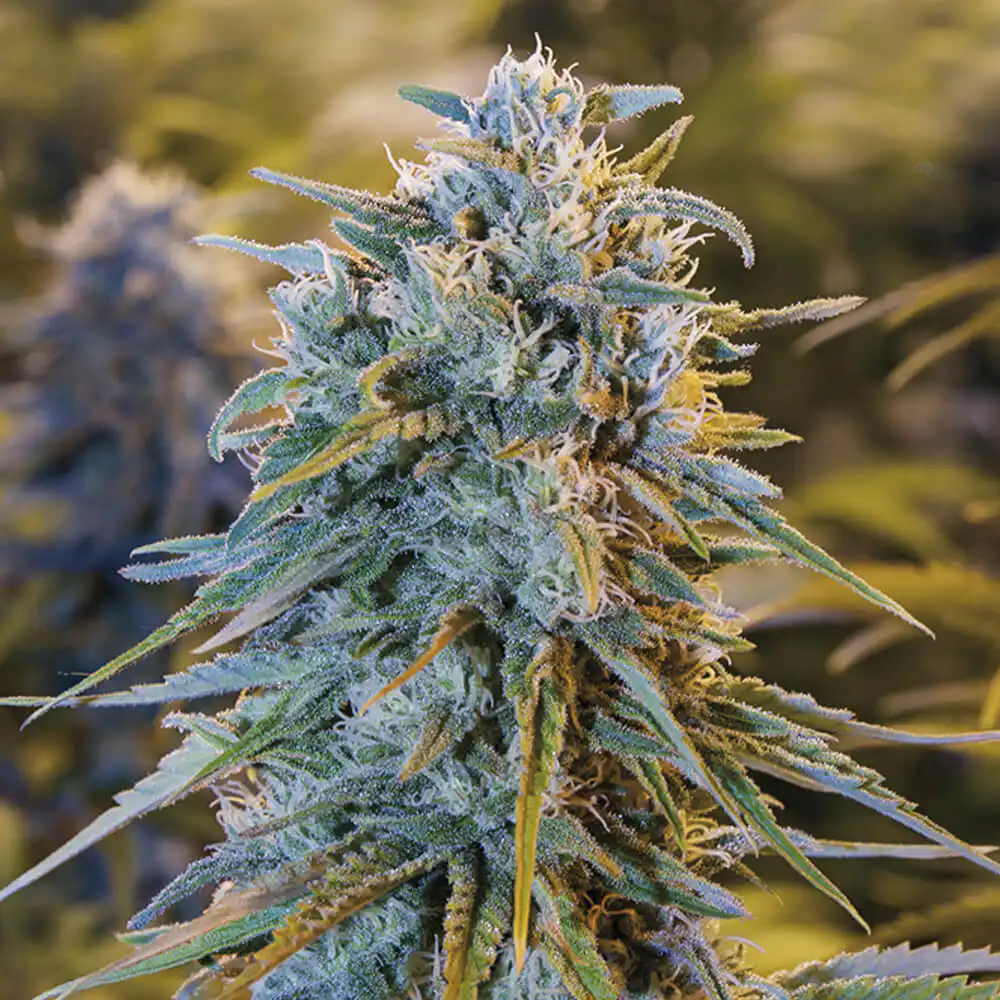
Blue Dream Strain Review: Genetics, Origin, and What Makes It Different
Blue Dream traces its origin to Santa Cruz, California, around 2003 — a period when the California medical cannabis scene was producing some of the most influential genetics of the modern era. The cross that produced Blue Dream brought together two very different parents: Blueberry and Haze.
Blueberry is DJ Short’s classic indica — one of the most revered breeding achievements in cannabis history. Short spent years selecting and stabilising the strain from Thai, Afghan, and Purple Thai landrace genetics, and what he produced was an indica with an unusually sweet berry terpene profile, mellow body relaxation, and striking purple phenotype expression. As a breeding parent, Blueberry contributes exactly what Blue Dream needed: the body ease, the sweet aromatic character, and the indica foundation that stops the Haze side from becoming too much.
Haze is the other parent — one of the most genetically influential sativas ever developed, tracing its lineage to landrace genetics from Mexico, Colombia, Thailand, and India. Haze genetics are responsible for the cerebral, energetic, creative uplift that defines Blue Dream’s effect profile. Without them it would be a pleasant indica. With them it’s something genuinely different.
The combination spread through California via Oaksterdam University, the cannabis education institution that played a central role in distributing quality genetics across the state’s medical dispensary network. From there, Blue Dream became one of the defining strains of its era — and two decades later it remains one of the most consistently in-demand strains globally, which is a harder achievement than most newer genetics appreciate.
🌿 Jess — On Blue Dream
Amnesia Haze is my all-time favourite — it always will be — but Blue Dream is the strain I probably reach for most often in practice. The reason is simple: it fits more situations. Amnesia Haze is a commitment. Blue Dream is more flexible. I can have it in the afternoon before I need to do something, or in the evening when I want to wind down, or on a morning when I want to feel genuinely good without losing the day. The blueberry flavour is distinctive and immediately recognisable. And it grows beautifully. The plants are a pleasure to work with.
Blue Dream Effects — What the Terpene Profile Produces
Blue Dream’s effect profile is the reason it’s lasted twenty years in a market that constantly chases novelty. The combination of Haze-derived cerebral energy and Blueberry-derived body ease is genuinely difficult to replicate — most strains tip too far in one direction or the other. Blue Dream stays balanced in a way that makes it actually useful rather than just impressive.
The terpene profile and what it does
Myrcene is the dominant terpene — earthy, herbal, and responsible for the mellow body component that stops Blue Dream from being a racy sativa. Myrcene facilitates THC crossing the blood-brain barrier, which contributes to the physical ease that sits underneath the cerebral effect. At Blue Dream’s THC range (17–24%), a high-myrcene profile produces a rounded, full experience rather than a sharp one.
Pinene is the secondary terpene and the source of the fresh, clean quality in the aroma. Pinene counteracts some of the short-term cognitive fog associated with high-myrcene strains — it’s part of what keeps Blue Dream on the functional, clear-headed side rather than producing the body-heavy sedation of a pure indica. It also contributes the subtle herbal freshness that sits alongside the sweet berry note.
Caryophyllene adds the faint spice in the aroma and activates CB2 receptors directly — contributing to the anti-inflammatory and muscle-relaxing body effect. It’s the terpene that gives Blue Dream its usefulness for physical discomfort without the full sedative load of a myrcene/linalool-dominant indica.
Effect progression
Onset (10–20 min): Clear, motivated cerebral lift. Mood elevates noticeably. Focus sharpens rather than scattering. There’s no anxious edge to the Haze influence at moderate doses — it’s purposeful rather than racy.
Early phase (20–60 min): The sativa and indica elements are operating simultaneously. Mentally engaged and creatively energised while physically comfortable and tension-free. This is the window where Blue Dream is genuinely functional — tasks, conversation, physical activity, creative work all feel enhanced rather than impaired.
Mid-to-late phase (60–120 min): The body relaxation deepens as the cerebral lift settles. At moderate doses this is still fully functional — a comfortable, eased state rather than sedation. At higher doses the indica side becomes more prominent and the experience moves toward relaxation rather than activity.
Duration: 2–3 hours at typical doses. Long-lasting relative to many hybrids, which contributes to its usefulness for sustained mood support or extended social situations.
🌿 Jess — On the Blue Dream Experience
What I love about Blue Dream is that it doesn’t demand anything from you. Amnesia Haze asks you to show up — you need to be ready for it. Blue Dream just lifts you. You feel better, the world feels a bit lighter, your body stops holding whatever tension it was holding, and you can do whatever you were going to do anyway. That’s rare. Most strains change what you’re doing. Blue Dream enhances it. The flavour is also genuinely beautiful — I don’t think there’s a strain that smells better coming out of the jar.
Growing Blue Dream Seeds — Complete Guide
Blue Dream is one of the more forgiving strains to grow — a significant reason for its enduring popularity beyond the effect profile. The Blueberry indica genetics provide resilience and structural stability while the Haze sativa influence drives vigorous growth and generous yields. It handles variation in temperature, humidity, and feeding better than most sativa-dominant genetics at this THC level, while still responding well to skilled cultivation with noticeably better results.
The honest caveat: “forgiving” doesn’t mean undemanding. Blue Dream grows large, stretches significantly in early flower, and produces dense heavy buds that need humidity management in the final weeks. Setting up correctly before the flip is more important than reactive problem-solving during flower.
Structure and training
Blue Dream grows tall — 100–180 cm finished height with significant stretch in early flower, typically 50–75% height increase from flip. The Haze genetics drive this stretch and it needs to be accounted for before the flip. Indoors, flip when the plant is at 40–50% of your available height. Outdoors, early training is essential to manage the structure before it becomes difficult.
Topping at week three to four of veg produces a multi-cola structure that maximises the natural yield potential. SCROG suits Blue Dream well indoors — the vigorous lateral branching fills a screen efficiently and the structure supports the heavy buds that develop without additional staking. LST from early veg opens the canopy and improves light penetration to lower bud sites. Defoliation in early flower — a moderate pass at week two and week four — manages the dense canopy and improves airflow through the bud sites that are most susceptible to mould in late flower.
Feeding strategy
Seedling (days 1–14): Plain pH-adjusted water or 1/4 strength maximum. EC below 0.6. Blue Dream seedlings establish quickly and don’t need pushing early.
Early veg (weeks 2–4): Build to full strength by week three. EC 1.0–1.4, nitrogen-forward. The vigorous Haze-influenced growth in veg benefits from consistent nitrogen — watch for glossy dark leaves as the first sign to ease back before toxicity accumulates.
Late veg (weeks 4–6): EC 1.2–1.6. Maintain nitrogen, begin adding CalMag particularly if running coco or RO water. Blue Dream is a magnesium-hungry strain — deficiency shows as interveinal chlorosis on mid-canopy leaves and is the most common feeding problem in this cultivar.
Early flower / stretch (weeks 1–3 of 12/12): Transition to bloom nutrients. Reduce nitrogen, build phosphorus. EC 1.4–1.8. The stretch in Blue Dream is pronounced — manage height actively during this phase. CalMag support continues through early flower.
Mid flower (weeks 4–7 of 12/12): Full bloom profile. EC 1.6–2.0. Potassium support from week five improves resin density and terpene expression. The myrcene and pinene profile develops strongly in this window — keep temperatures below 26°C to preserve the terpene quality that makes Blue Dream distinctive.
Late flower / pre-flush (weeks 7–9 of 12/12): Begin tapering nutrients as natural leaf yellowing starts. Reduce EC to 1.0–1.2.
Flush (final 10–14 days): Plain pH-adjusted water only. The sweet berry terpene profile of Blue Dream is particularly responsive to a thorough flush — properly flushed and cured Blue Dream is noticeably cleaner and more flavourful than material that wasn’t flushed.
Climate
Temperature: 22–26°C through veg and early flower. Drop to 20–24°C from week five of flower. Cool nights of 18–20°C in the final two weeks improve terpene expression and can trigger purple phenotype development in some plants — a characteristic inherited from the Blueberry parent that becomes more pronounced with temperature differentials.
Humidity: Seedling 65–70% RH. Veg 55–65% RH. Early flower 50–55% RH. Mid-to-late flower 40–50% RH, dropping to 40–45% in final two weeks. The dense buds Blue Dream produces are susceptible to botrytis if humidity climbs above 55% from week five of flower — airflow management and consistent RH monitoring are important.
Light: 18/6 veg, 12/12 flower. PPFD targets: 400–600 µmol/m²/s veg, 800–1000 µmol/m²/s flower. Blue Dream responds well to high light intensity in flower — the dense bud structure and generous trichome production both benefit from adequate PPFD.
🌿 Jess — On Growing Blue Dream
The main thing to know about growing Blue Dream is the stretch. If you haven’t grown a Haze-influenced strain before, the height increase from flip to mid-flower will surprise you. I’ve had plants that nearly touched the light before I got the training right. Flip earlier than you think you need to. Outdoors it’s less of an issue — you’ve got room — but indoors, account for that stretch before you flip. Once you do, the grow is genuinely satisfying. The plants are vigorous and respond well. And the smell in the final weeks of flower is extraordinary — the blueberry comes through very early and stays throughout.
Blue Dream Week-by-Week Grow Guide
| Phase / Week | What’s Happening | Key Actions | Watch Out For |
|---|---|---|---|
| Weeks 1–2 Seedling |
Taproot establishing. First true leaves emerging. Vigorous early growth typical of Haze genetics. | Plain water or 1/4 strength. 18/6 light. Humidity 65–70% RH. pH 6.0–6.5 soil. | Overwatering — the most common early mistake. Water in a ring around the seedling. Wait until top 2 cm is dry. |
| Weeks 3–4 Early veg |
Rapid growth. Multiple lateral branches. Structure beginning to show sativa influence — internodal spacing slightly longer than pure indica. | Build to full strength nutrients. EC 1.0–1.2. Begin LST — tie main stem to open canopy. Top or FIM at week 3–4. | Glossy dark leaves signal nitrogen excess. CalMag watch begins — early interveinal chlorosis is the first sign of Mg deficiency. |
| Weeks 5–6 Late veg |
Vigorous canopy development. Training paying off with multiple productive bud sites. Height management critical before flip. | EC 1.2–1.6. Fill SCROG screen or continue LST. Flip when plant is at 40–50% of available height — no later. | Height — the stretch ahead is significant. Flipping too late is the most common Blue Dream indoor mistake. |
| Weeks 1–3 of flower Stretch |
50–75% height increase. Pre-flowers developing. Blueberry aroma beginning to emerge from week 2 of flower. | Transition to bloom nutrients. EC 1.4–1.8. Reduce nitrogen. Light defoliation of shading fan leaves. Monitor height daily. | Height management — keep training during stretch. Any plant getting close to lights needs immediate attention. |
| Weeks 4–6 of flower Early-mid flower |
Buds stacking rapidly. Sweet blueberry aroma intensifying. Heavy trichome production beginning. Height gain complete. | Full bloom nutrients. EC 1.6–2.0. Potassium support from week 5. Carbon filter essential. Drop RH to 45–50%. | Humidity — dense buds vulnerable from week 4 onward. RH above 55% raises botrytis risk significantly. Airflow is critical. |
| Weeks 7–8 of flower Late flower |
Buds fattening and hardening. Full blueberry-herbal aroma. Trichome production at peak. Pistils darkening. | Check trichomes from day 49. Taper nutrients to EC 1.0–1.2. Drop RH to 40–45%. Cool nights 18–20°C for terpene expression. | Harvest timing — milky trichomes for more cerebral effect, 10–20% amber for more balanced body effect. Check daily from week 8. |
| Weeks 9–10 of flower Flush and harvest |
Final ripening. Fan leaves yellowing naturally. Dense resinous colas. Some phenotypes showing purple tones with cool nights. | Plain pH-adjusted water for 10–14 days. Harvest at target trichome window. Slow dry at 15–18°C, 55–60% RH for 10–14 days. | Rushing the dry — Blue Dream’s blueberry terpene profile is volatile. A slow dry and 4-week minimum cure produces the full flavour. |
| Post-harvest Cure |
The full blueberry and herbal terpene profile develops in the jar. Fresh Blue Dream is good. Properly cured Blue Dream is exceptional. | Jar at 60–65% RH. Burp daily for two weeks. 4 weeks minimum. 6 weeks ideal for full flavour expression. | Opening too early. The characteristic sweet blueberry aroma that makes this strain distinctive fully develops only after a proper cure. |
Indoor Growing — Blue Dream
- Flowering time: 9–10 weeks from 12/12 flip
- Yield: 500–600 g/m² under optimised lighting with training
- Container: 15–20 L — robust root system needs adequate space
- Light schedule: 18/6 veg → 12/12 flower
- PPFD: 400–600 veg / 800–1000 flower
- Height: 100–180 cm finished — flip at 40–50% of available height
- Training: SCROG recommended — vigorous branching fills screens well. Top at week 3–4 veg. LST throughout veg.
- Temperature: 22–26°C veg and early flower; cool to 20–24°C from week 5 flower
- Humidity: 65–70% seedling → 55–65% veg → 45–50% early flower → 40–45% late flower
- CalMag: Supplement throughout — particularly in coco or RO water environments
- Aroma: Carbon filtration from week 2 of flower — the blueberry builds early and is distinctive
Growing Blue Dream Outdoors in Australia
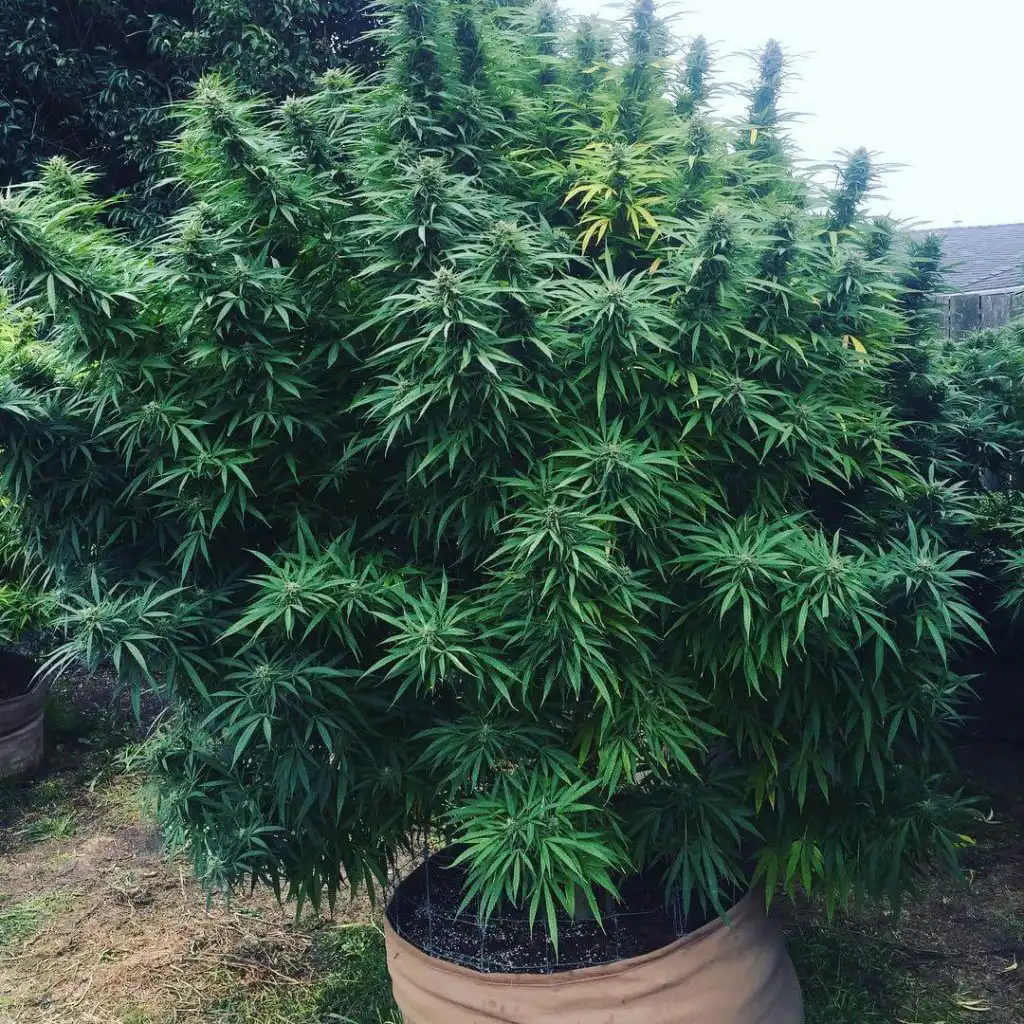
Blue Dream suits Australian outdoor growing well — the warm climate, long days, and generous light suit both the Haze sativa vigour and the indica-influenced bud development. The 9–10 week flower from flip and significant plant size mean outdoor growers need to plan for the harvest window and the space requirements before they plant.
Queensland and Northern NSW
Blue Dream thrives in the Queensland and Northern NSW climate. Plant from mid-September, target late March harvest. The long warm season suits the Haze genetics and the plants get genuinely large — 150–200 cm is realistic in full sun with good soil. Coastal humidity from February onward requires airflow management around the dense buds. Harvest: late March to early April.
NSW and VIC — Temperate
Plant late September through early October. The 9–10 week flower from flip means plants trigger naturally around mid-February and target an early to mid-April harvest — within the safe window before consistent autumn rains. Space is important — these plants need room. Training from early in the season manages structure and improves yield. Harvest: early to mid April.
Tasmania and Southern VIC
Blue Dream is workable in southern climates but the 9–10 week flower makes the timing tight. Plant October, target mid-April harvest hard deadline. In TAS particularly, the Auto Blue Dream is a more practical choice — the fixed 75–80 day timeline removes the harvest window anxiety entirely. For growers committed to the photoperiod version in TAS, early planting and active training to keep the plant manageable are essential. Harvest: mid April maximum.
WA and SA
The drier climate suits the dense Blue Dream bud structure — mould risk is significantly lower than on the east coast and the plants handle the warm dry days well. Standard timing: plant September–October, harvest early to mid April. Full sun position, adequate spacing between plants for airflow, 20–30 L containers minimum for the root system Blue Dream develops outdoors.
Blue Dream vs Other Classic and Hybrid Strains
| Strain | THC | Flower time | How it differs from Blue Dream |
|---|---|---|---|
| Blue Dream | 17–24% | 9–10 weeks | The reference point — balanced sativa/indica, sweet berry profile, functional anytime use |
| Amnesia Haze | 20–25% | 10–12 weeks | More demanding sativa — higher THC, longer flower, less body ease, more intense cerebral effect. Jess’s number one. |
| Girl Scout Cookies | 20–25% | 9–10 weeks | More indica-dominant, deeper body effect, complex Cookies terpene profile vs Blue Dream’s sweeter berry character |
| Gorilla Glue #4 | 26–28% | 8–9 weeks | Significantly heavier — more potent, more sedating, heavier resin. Not a daytime strain in the way Blue Dream is. |
| Northern Lights | 18–22% | 7–9 weeks | Pure indica experience — faster flower, more sedating, earthy not sweet. Evening strain where Blue Dream is anytime. |
| Runtz | 22–28% | 8–9 weeks | Newer genetics, more complex candy terpene profile, higher THC ceiling. Blue Dream is more consistent and versatile. |
Ready to grow Blue Dream?
Feminised photoperiod and autoflowering seeds shipped from Australia. Batch-tested genetics, express delivery nationwide.
Key Takeaways — Blue Dream
Blueberry × Haze. 17–24% THC. Myrcene, pinene, caryophyllene. 9–10 week flower. The strain that genuinely delivers on the “anytime” promise — cerebral uplift and physical ease operating simultaneously without either dominating. Sweet blueberry terpene profile that’s immediately recognisable and develops fully only after a proper cure. Significant stretch in flower requires height management before flip — flip at 40–50% of available height indoors. Dense buds need humidity management from week four of flower. Rewarding outdoor grow across all Australian climate zones; Auto Blue Dream is the better choice for Tasmania and southern Victoria where the harvest window is tightest. For the full catalogue of sativa-dominant genetics see the sativa-dominant seeds page, and for the photoperiod and auto product pages see Blue Dream feminised and Auto Blue Dream.
Blue Dream — Frequently Asked Questions
What are Blue Dream seeds?
Blue Dream is a sativa-dominant hybrid (60% sativa / 40% indica) bred from DJ Short’s Blueberry crossed with Haze — originating in Santa Cruz, California around 2003. It tests at 17–24% THC with a myrcene-dominant terpene profile producing a characteristically sweet blueberry aroma and a balanced cerebral-and-body effect. Available from Sacred Seeds as feminised photoperiod and Auto Blue Dream.
What does Blue Dream smell and taste like?
Sweet blueberry with an herbal, slightly piney undertone from the pinene, and a faint floral quality in well-grown and properly cured examples. The blueberry character from the DJ Short Blueberry parent comes through clearly and is one of the most immediately recognisable aromas in the hybrid catalogue. The full flavour develops after a minimum four-week cure — fresh-dried Blue Dream doesn’t fully represent the genetics.
Is Blue Dream a daytime or evening strain?
Genuinely both at appropriate doses. At moderate doses the balanced sativa/indica effect is functional — suitable for morning, afternoon, social situations, or creative work. At higher doses the indica side becomes more pronounced and the experience moves toward relaxation. It’s one of the few strains that earns the “anytime” label honestly. For a pure evening or sleep-focused strain, Northern Lights or Godfather OG are more appropriate.
How long does Blue Dream take to flower?
9–10 weeks from the 12/12 light flip indoors. Outdoors in Australia, plants triggered by the natural autumn light cycle harvest late March in Queensland through to mid April in southern states. Check trichomes from week eight — harvest at mostly milky for a more energising effect, 10–20% amber for a more balanced body effect.
Is Blue Dream easy to grow?
It’s more forgiving than most sativa-dominant genetics at this quality level — the Blueberry parent provides resilience and structural stability. The main challenges are height management (significant stretch requires early training and flipping at the right time), magnesium nutrition (supplement CalMag consistently), and humidity in late flower (dense buds are botrytis-susceptible above 55% RH from week four of flower). Growers who set up correctly before the flip will find it a rewarding and generous plant.
Can I grow Blue Dream outdoors in Australia?
Yes — Blue Dream suits Australian outdoor conditions well. In Queensland and NSW, plant from mid-September and target a late March to early April harvest. In VIC and SA, plant October and target early to mid April. In Tasmania and southern VIC, the Auto Blue Dream is a more practical choice given the shorter season. The Australian climate strain guide covers regional timing in detail.
How does Blue Dream compare to Amnesia Haze?
Amnesia Haze is a more demanding and more intense sativa — higher THC (20–25%), longer flower (10–12 weeks), less body ease, and a more full-throttle cerebral effect that requires more from the user. Blue Dream is more versatile and more forgiving — a better daytime option across a wider range of situations. Jess rates Amnesia Haze as her all-time favourite and Blue Dream as her second — the distinction being that Amnesia Haze is a commitment and Blue Dream is more flexible.
Is there an autoflowering version of Blue Dream?
Yes — Auto Blue Dream carries the same Blueberry × Haze genetics in an autoflowering format, completing seed to harvest in approximately 75–80 days on a fixed timeline regardless of light schedule. Well-suited to Australian outdoor conditions where multiple runs per season are practical or where light control isn’t available.
Related Reading
Sativa-dominant cannabis seeds — the full range of energising and functional genetics including Blue Dream and Amnesia Haze.
Balanced hybrid cannabis seeds — strains that combine sativa and indica effects without either dominating.
Best cannabis strains for Australian conditions — regional strain selection and seasonal timing for outdoor growers across all states.
Autoflower vs photoperiod seeds — if you’re deciding between Blue Dream feminised and Auto Blue Dream, the format differences explained in full.
How to dry cannabis in Australia — the slow dry that preserves Blue Dream’s blueberry terpene profile.
Browse all cannabis seeds — over 50 feminised, autoflower, and photoperiod strains shipped from Australia.
Seeds are sold strictly as novelty collector’s items. They contain no THC or CBD. This page does not constitute medical or legal advice. By purchasing you agree to our terms and conditions. Always check local laws before germinating or cultivating cannabis.