🍇 Granddaddy Purple Seeds: Key Info
| 🏷️ Breeder |
Ken Estes (2003, California Bay Area) |
| 🧬 Genetics |
Purple Urkle × Big Bud |
| 🍇 Also Known As |
GDP, Granddaddy Purp, Grand Daddy Purple |
| 🌱 Type |
Feminised Photoperiod
70% Indica / 30% Sativa |
| 🔥 THC / 💧 CBD |
THC ~20–27% • CBD <1% |
| ⏱ Flowering Time |
8–10 weeks from the 12/12 flip (indoor) |
| 🌾 Yield (Guide) |
Indoor: up to 500 g/m² • Outdoor: up to 600 g/plant |
| 📏 Height |
Medium (70–120 cm indoor, 120–150 cm outdoor), compact bushy structure |
| 🍇 Flavour & Aroma |
Sweet grape, mixed berry, floral, earthy undertones |
| 🧪 Terpene Profile |
Myrcene (dominant) • Caryophyllene • Pinene |
| 🌤 Outdoor Harvest (AU) |
North: late March • Mid: early April • South: mid-April |
| 🌱 Experience |
Intermediate (dense canopy needs airflow management in late flower) |
| 📦 Handling |
Batch-tested at ~22 °C (paper towel method). Stored cold/dry prior to dispatch. Learn how we test seeds here. |
| ⚠️ Legal Notice |
Sold strictly as souvenirs/collectibles in accordance with local laws. |
🏆 1st Place Best US Indica, High Times Cannabis Cup 2015 (Denver). Bred by Ken Estes, Granddaddy Purple defined the purple cannabis category and has stayed a benchmark for indica genetics for over two decades.
🍇 Granddaddy Purple Seeds: The Strain That Defined Purple Cannabis
Granddaddy Purple feminised seeds carry the genetics that changed what growers and consumers expected from indica cannabis: a 2015 High Times Cannabis Cup Best US Indica winner, bred by Ken Estes to deliver deep full-body relaxation with an unusually clear head.
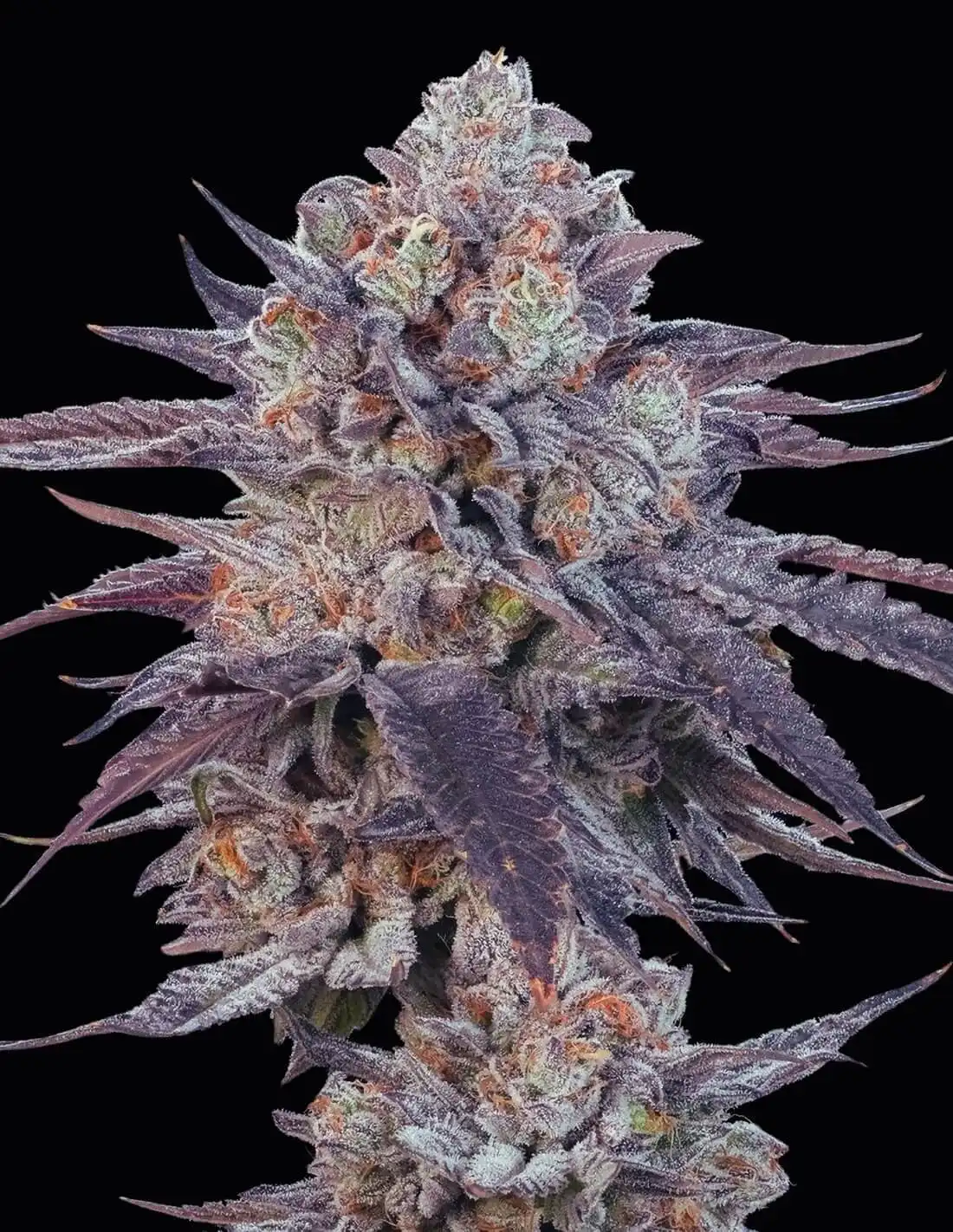
In 2003, Ken Estes, a former motocross athlete with access to California Bay Area genetics, set out to breed a heavy indica with a specific brief: deep physical relaxation that did not cloud the head the way most potent indicas of the era did. He crossed Purple Urkle with Big Bud, and the result became Granddaddy Purple, one of the standout indica-dominant strains in the catalogue. Our Granddaddy Purple strain review covers the breeding story and the Bay Area scene it came out of in full.
Why the design shows: most strains are bred for potency, yield, or looks. GDP was bred around a specific effect, heavy body relaxation without the mental fog, and that intention is visible in the experience: complete physical sedation with surprising mental clarity for the potency level. It is the trait the strain has always been known for.
What made GDP a cultural landmark: before GDP, purple cannabis was an inconsistent novelty, a trait some growers chased but could not reliably produce. Granddaddy Purple changed that. The deep purple to near-black colouration develops predictably from its anthocyanin genetics whenever night temperatures drop to 15 to 18 °C. It gave growers a reliable path to visually spectacular flowers and gave the market a purple benchmark everything since has been measured against. Paired with a grape terpene profile so accurate it is routinely compared to grape candy, GDP spread through California before social media existed, by word of mouth, clone trades, and underground networks in the mid-2000s.
What the genetics contributed:
- Purple Urkle: a California indica known for intense grape flavour, natural purple from high anthocyanin production, and a deep relaxing effect. The flavour and colour in GDP come primarily from this parent
- Big Bud: legendary 1980s genetics developed for massive flower production and dense structure. The yield and commercial viability of GDP (up to 500 g/m² indoor, 600 g outdoor) come from this parent
- The result: a 70/30 indica-dominant photoperiod with the colour and flavour of Purple Urkle and the production capacity of Big Bud, exactly the effect-and-yield combination Estes was after
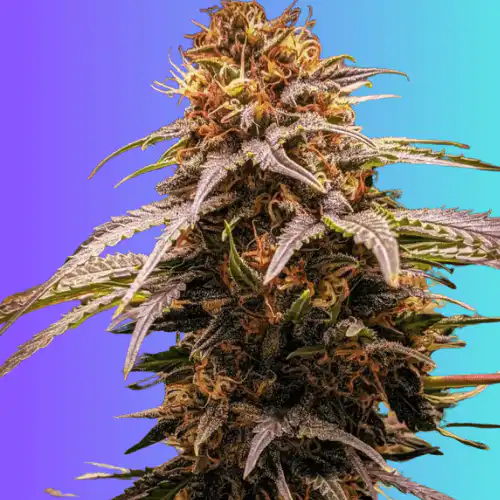
What you get today: deep purple to near-black flowers with fiery orange pistils and dense trichome coverage, one of the most visually distinctive harvests in the catalogue. The aroma from mid-flower onward is unmistakably grape and berry, on dense, heavy colas that justify the Big Bud heritage. The effect has held up for over twenty years because the genetics are consistent.
Growing GDP in Australia: the Australian autumn is almost ideally suited to GDP's purple expression. Temperatures across most of the country in March and April hit the 15 to 18 °C range that triggers maximum anthocyanin production without any intervention, and the 8 to 10 week flowering period lines up with that autumn timing. Growers in Queensland, NSW, Victoria, SA, and WA consistently report deep colour and strong results from an October planting through an April harvest. For the full seasonal picture, see our guide to growing cannabis outdoors in Australia.
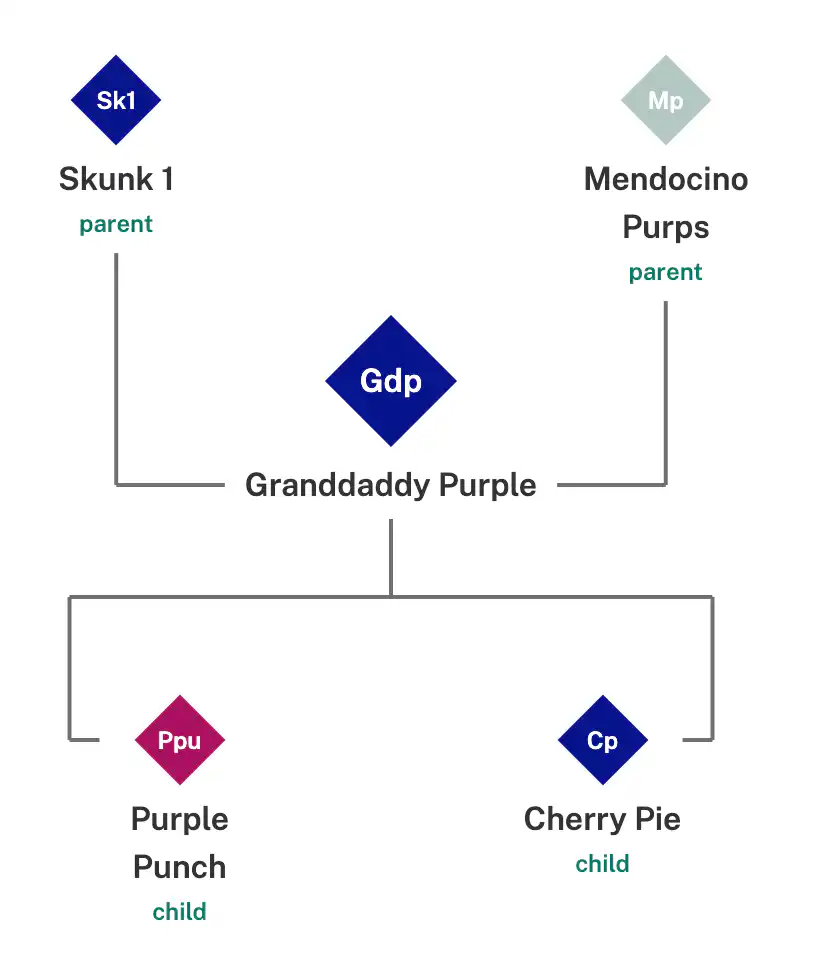
Granddaddy Purple Lineage
Purple Urkle
Grape flavour, anthocyanin colour
×
Big Bud
Dense colas, heavy yield
↓
Granddaddy Purple
Ken Estes, Bay Area, 2003
↓
The reliable purple benchmark most modern purple indicas trace back to.
↻ Looking for a different format? Auto Granddaddy Purple runs the same Purple Urkle and Big Bud genetics on a fixed 9 to 10 week seed-to-harvest timeline, compact at 60 to 100 cm, with no light schedule to manage.
🌿 Granddaddy Purple Seeds Effects and Experience
Onset (10–15 minutes): Gentle rather than sudden. A mild euphoria arrives first, mood brightens and a calm settles in that signals what is coming. No cerebral rush, no racing thoughts, just a quiet shift downward before the body effects establish themselves.
Peak (30–90 minutes): Full indica body effects dominate. The body settles into deep relaxation and physical tension releases. The couch-lock is genuine: you can move if you need to, but the motivation to drops sharply. What sets GDP apart from heavier indicas is that the head stays unusually clear at this stage. The physical relaxation is complete without the cognitive fog that strains like Northern Lights or Godfather OG produce at equivalent doses. That clarity alongside heavy body relaxation is the GDP signature.
Duration: 2 to 3 hours of peak effects, with residual relaxation extending 4 to 6 hours. The long, smooth tail makes it an end-of-evening and pre-sleep strain rather than something that drops off abruptly.
Mental state: Calm, introspective, peaceful. This is not a creative or productive strain. It is an end-of-day choice for situations where physical relaxation is the goal: evening wind-down, quiet pursuits like music or reading, and settling before sleep. Avoid it for anything needing coordination or sustained mental output.
Potency note: at 20 to 27% THC, GDP is genuinely potent and sits in our high-THC range. The onset is gradual but the destination is heavy, so anyone newer to strong indicas should start conservatively. Higher doses produce real couch-lock and the chance of next-morning grogginess.
Flavour: sweet grape dominates the inhale, unmistakably fruity and genuinely close to grape candy rather than a subtle hint. Mixed berry notes follow with floral undertones, and an earthy myrcene base grounds the sweetness. The smoke is smooth for the potency level. The flavour is one of GDP's enduring draws, one of the most accurately fruit-flavoured strains in the catalogue.
Best suited to: evening relaxation, winding down after physical work, quiet downtime, and settling before sleep. A classic end-of-day strain rather than a daytime one.
🍇 Terpene Profile
The grape and berry signature comes from a myrcene-led profile:
- Myrcene (dominant): the earthy, fruity base that drives the heavy body character GDP is known for
- Caryophyllene: a peppery depth that grounds the sweetness, and the one terpene that binds directly to CB2 receptors
- Pinene: a fresh, faintly piney note that supports the surprising mental clarity
The grape itself comes from anthocyanin pigments rather than terpenes. For how these compounds shape flavour and effect, see our cannabis terpenes guide.
🌱 Growing Granddaddy Purple Seeds in Australia
(Strictly for ACT residents with a licence or those overseas where cultivation is legal.)
Experience level: Intermediate. GDP is more forgiving than many high-THC indicas, with stable genetics and a manageable structure, but the dense bushy canopy needs consistent airflow in late flower to avoid mould, and the cost of getting that wrong in week 8 or 9 is high. It is a good second or third strain rather than a first grow. The main areas to watch are canopy airflow and harvest timing. For the early weeks, our cannabis seedling care guide covers getting a plant established well.
Best environments: performs well indoors and outdoors. The compact bushy structure suits most indoor setups, and outdoors it is particularly well-matched to Australian conditions: warm summers for veg and cool autumn nights that trigger the purple naturally.
Flowering time: 8 to 10 weeks from the 12/12 flip, with most phenotypes around 9 weeks. Do not harvest early, since the final week is where trichome production peaks and the purple intensifies most. Watch trichomes from week 7 and harvest at 20 to 30% amber for the characteristic relaxation-with-clarity effect (later harvests deepen the sedation and reduce the clarity). Our amber trichomes guide covers reading them.
Total grow time:
- Standard indoor: 4 to 6 weeks veg plus 8 to 10 weeks flower, so 12 to 16 weeks total
- SOG: 2 to 3 weeks veg plus 8 to 9 weeks flower, so 10 to 12 weeks total
- Outdoor: late October plant to early April harvest, roughly 22 to 24 weeks with a full Australian summer veg
Height and structure: medium and bushy, classic indica architecture with strong lateral branching. Indoor plants typically reach 70 to 120 cm with a moderate 30 to 40% stretch from flip height, and outdoor plants reach 120 to 150 cm with a full summer veg. The bushy growth creates a dense canopy that needs opening for airflow and light penetration.
Purple colouration, how it works: the deep purple to near-black colour is produced by anthocyanins, the same pigments in blueberries and red grapes, and it is triggered by cool temperatures. Drop night temps to 15 to 18 °C for the final 2 to 3 weeks of flower and the colour develops reliably. No pH manipulation, nutrient starvation, or stress techniques are needed or recommended. Indoors this needs climate control, while outdoors in Australia April's natural cool nights do the work. The colour is not cosmetic: it indicates full genetic expression, including the complete terpene and flavonoid profile. The strain review goes further into where GDP's purple genetics came from and why they proved so much more reliable than what came before.
Training:
- SCROG: the most efficient indoor technique. The bushy branching fills a net well with 4 to 5 weeks of veg, and even canopy distribution produces the upper end of the yield range
- Topping: recommended, topping once at the 4th to 5th node for multiple main colas. GDP recovers in roughly 4 to 5 days and the result is a more even canopy with better light penetration
- LST: works alongside topping, tying branches down to open the canopy and expose lower bud sites, useful for managing the width of the bushy structure
- SOG: effective with minimal veg given the compact structure, cycling efficiently on a 2 to 3 week veg and 8 to 9 week flower
🧪 Feeding
GDP is a moderate-to-heavy feeder, since the Big Bud genetics reward consistent nutrition, and the dense bud development benefits from phosphorus and potassium support.
- Veg: start at half strength for the first 2 weeks, building to full by week 4. EC 1.4 to 1.8 in hydro or coco. Moderate nitrogen, and watch for dark green, clawed leaves. CalMag helps in coco or with RO water
- Early flower (weeks 1 to 3): transition nutrients, reducing nitrogen and building P and K. EC 1.6 to 2.0. The Big Bud genetics reward adequate nutrition through early flower
- Mid-to-late flower (weeks 4 to 9): peak feeding for bud density and trichomes. EC 1.8 to 2.2. Back off nitrogen firmly from week 6, since excess N late produces harsh smoke and delays ripening. A potassium boost from week 5 supports both bud swell and trichome production
- Final flush (last 10 to 14 days): plain pH-adjusted water only. This matters for the grape and berry profile, since a proper flush improves the clean fruit flavour noticeably. Natural leaf yellowing is expected. Our drying and curing guide covers the finish
🌡️ Climate and Airflow
- Temperature: 22 to 26 °C veg (day), 20 to 25 °C flower (day), 18 to 20 °C nights, dropping to 15 to 18 °C for the final 2 to 3 weeks for maximum purple and terpene tightening
- Humidity: 50 to 60% veg, 45 to 50% early flower, 40 to 45% mid-to-late flower, below 40% for the final 2 weeks, since the dense buds are vulnerable to mould
- Airflow: critical, since the bushy canopy restricts natural air movement. Run oscillating fans on the canopy with adequate extraction, and light defoliation at the flip and again at week 3 to open the inner canopy. Carbon filtration is essential from week 5, since the grape aroma is strong and early
Common issues: mould in late flower is the main risk (the dense buds trap humidity without airflow, so prevention beats cure, and you should check inner bud sites from week 7), harvesting too early chasing the purple (let the trichomes finish at 20 to 30% amber), nitrogen excess in late flower (back off from week 6), and trying to force purple with stress or pH (unnecessary and damaging, since the anthocyanin expression is genetic and temperature-triggered).
🏠 Indoor Growing
- Flowering: 8 to 10 weeks under 12/12, most phenotypes finishing at 9 weeks, and do not rush the final week
- Yield: up to 500 g/m² under quality lighting with SCROG or topping
- Veg: 4 to 6 weeks for standard grows, 2 to 3 weeks for SOG
- Height: flip at 50 to 60 cm for final heights around 80 to 100 cm, with a moderate 30 to 40% stretch
- Container: 12 to 18 L for soil or coco, 7 to 10 L for SOG
- Training: SCROG is optimal, with topping plus LST also very effective and SOG good for efficient cycling
- Purple: drop nights to 15 to 18 °C for the final 2 to 3 weeks, which needs climate control but produces near-black buds
🌿 Outdoor Growing (Australia)
GDP is one of the better-matched strains in the catalogue to the Australian outdoor season, since the flowering window lands naturally on the cool autumn nights that drive the colour. Our outdoor growing calendar sets out planting and harvest timing in more detail.
- Harvest windows: Queensland and Northern NSW late March to early April, Central NSW and ACT early to mid-April, Victoria and SA mid-April, WA (Perth area) early to mid-April, Tasmania mid-April (the cool climate suits GDP, and the purple is exceptional)
- Yield: 400 to 600 g/plant, with in-ground plants from October regularly reaching the upper range
- Planting: late October to early November, giving a full summer veg before natural day length triggers flowering in late January or February
- Purple: April nights across most states hit 15 to 18 °C naturally, so the colour develops without intervention, one of the best-matched strains in the catalogue to Australian seasonal timing
- Climate: excellent across most states, with WA, SA, and inland NSW ideal, and coastal growers needing to manage airflow around dense buds in humid conditions. Our Australian climate strain guide breaks this down by region
- Site and support: full sun, 8+ hours, with good drainage and wind protection. Stake main branches from week 5 to 6, since the heavy colas can stress branches in wind
- Pests: caterpillars are the main concern in late summer and early autumn. Inspect weekly from February and use a preventive BT spray in early flower, since the dense bud sites are vulnerable to the damage that leads to rot
🗓️ Granddaddy Purple Seeds Week-by-Week Grow Timeline
GDP is an 8 to 10 week photoperiod with a distinctive final phase where the purple develops and trichome production peaks together. Patience in the final two weeks is the difference between good and exceptional.
| Phase / Week |
What's Happening |
Key Actions |
Watch Out For |
Veg weeks 1–3
Seedling / early veg |
Roots establishing. The bushy indica structure beginning to show. First true leaves developing |
Start at half-strength nutrients. 18/6 light. Humidity 55 to 65%. Top at the 4th to 5th node once established |
Overfeeding early. Tip burn is the first signal to back off before damage accumulates |
Veg weeks 4–6
Mid-late veg / training |
Lateral branching developing strongly from topping. Plant filling its space. SCROG branches trained through the net |
Progressive LST to open the canopy. Build to full nutrients. Flip when the screen is 60 to 70% full, or at the desired height for other methods |
Crowding. The bushy structure needs space, and airflow through the canopy from veg helps prevent late-flower mould |
Flower weeks 1–3
Stretch / early flower |
A 30 to 40% height increase from flip height. Bud sites establishing across the even canopy. A faint grape aroma beginning |
Transition to bloom nutrients, reducing N and building P and K. EC 1.6 to 2.0. Light defoliation at the flip to open the inner canopy |
Height. Tuck or supercrop any branches pushing above the canopy |
Flower weeks 4–6
Mid flower / bud development |
Dense buds stacking rapidly. The grape and berry aroma now strong and distinctive. Carbon filtration essential from week 5 |
Peak feeding, EC 1.8 to 2.2. Potassium boost from week 5. Drop RH to 40 to 45%. Second light defoliation at week 3 if dense. Back off N firmly from week 6 |
Stagnant air in the dense canopy. Run oscillating fans continuously, since this is when mould risk begins. Check inner bud sites weekly |
Flower weeks 7–9
Late flower / purple development |
Purple developing visibly as nights cool. Trichome production at peak. Buds hardening. GDP at its most spectacular |
Drop night temps to 15 to 18 °C, the trigger for maximum purple. Check trichomes from day 49. Drop RH below 40%. Begin the flush at 10 to 15% amber |
Harvesting too early. The final week is where trichome production peaks alongside the colour, so check trichomes, not the calendar |
Flush & harvest
Days 56–70 |
Deep purple to near-black buds with orange pistils and dense trichome coverage, one of the most visually impressive harvests in the catalogue |
Plain pH-adjusted water for 10 to 14 days. Harvest at 20 to 30% amber. Slow dry at 15 to 18 °C, 55 to 60% RH for 10 to 14 days |
Rushing the dry. The grape and berry terpenes are volatile, so a fast hot dry destroys the flavour |
Post-harvest
Cure |
The grape profile sharpens and sweetens in the jar. The flavour at 4 to 6 weeks of cure is materially better than at 2 weeks |
Jar at 60 to 65% RH. Burp daily for two weeks, then seal. Minimum 4 weeks, with 6 noticeably better for full grape expression |
Opening jars too early. The grape candy aroma does not fully develop until a proper cure is complete |
🧠 Jason's Tip: Growing Granddaddy Purple
The purple that made GDP famous develops naturally with the right temperature, 15 to 18 °C at night through the final 2 to 3 weeks. You do not force it, you do not stress the plant into it, and you do not manipulate pH or starve nutrients. You drop the night temperature and let the anthocyanins express. Indoors that is climate control. Outdoors in Australia, that is just April.
Here is what most people miss: the colour is not only aesthetic. The anthocyanins behind the purple are part of the full terpene and flavonoid expression, so deep purple to near-black colour is a sign of full genetic expression, not just bag appeal. That is why growing it at the right temperature matters beyond looks.
The other thing, and it costs more growers a harvest than anything else, is airflow in that bushy canopy. Do not crowd plants. Use oscillating fans. Light defoliation at the flip and again at week 3 opens the inner canopy to air movement. The buds get heavy and dense by week 7, which is exactly what you want from Big Bud genetics, but stagnant air in there is how you lose a harvest to mould in the final week. I have seen beautiful GDP make it to week 9 and lose yield in the last few days because someone backed off the fans when the plants looked healthy. Keep the air moving all the way to harvest.
⚖️ Granddaddy Purple vs Auto GDP: Which Format Suits You
| Feature |
GDP Photo
(this page) |
Auto GDP |
| Type |
Photoperiod |
Autoflower |
| Seed to harvest |
Light-cycle dependent |
~9–10 weeks fixed |
| Indoor yield |
Up to 500 g/m² |
Up to 400 g/m² |
| Outdoor yield |
Up to 600 g/plant |
80–150 g/plant |
| THC |
20–27% |
~18–20% |
| Height |
70–150 cm |
60–100 cm |
| Light schedule |
12/12 to flower |
Any, no flip |
| Cloning |
Yes, keep mother plants |
Not practical |
| Best for |
Maximum yield, full control, mother plants |
A fixed timeline, season flexibility, compact grows |
Choose this photoperiod for maximum yield, full control over plant development, and the ability to keep mother plants. Choose the Auto GDP for a fixed timeline, compact height, or outdoor season flexibility without managing a light flip.
🎯 Is Granddaddy Purple Feminised Right for Your Grow?
✅ GDP Feminised is the right choice if:
- Maximum yield is a priority, up to 600 g outdoor versus the auto's 80 to 150 g
- You want full control over veg time and plant size before triggering flower
- You plan to keep mother plants and clone for consistent genetics across runs
- You are growing outdoors in Australia, where April timing aligns naturally with cool nights for purple expression
- You want the full potency of the original Ken Estes genetics, 20 to 27% THC versus the auto's ~18 to 20%
- You are comfortable with 12/12 light management and a controlled environment
❌ Consider Auto GDP if:
- You want a fixed seed-to-harvest timeline without managing a light flip
- You are growing outdoors without light control, on a balcony, shared space, or flexible planting windows
- Height is a constraint, since Auto GDP stays at 60 to 100 cm versus the photoperiod's 70 to 150 cm
- You want multiple outdoor runs per season rather than one large harvest
- Maximum yield per plant matters less than scheduling flexibility
Still comparing options? Our full strain lineup guide covers the range, or browse the indica-dominant range, the balanced hybrid range, the feminised photoperiod range, or the complete cannabis seeds catalogue.
🌟 Granddaddy Purple Customer Experiences
Paraphrased from verified customer reviews and grower communications.
⭐⭐⭐⭐⭐ "As soon as I cracked the jar I knew it was real GDP: pure grape soda smell and dark purple buds that were almost black. The relaxation hits in waves without any mental fog. Exactly what I remember from California years ago. One I'll keep growing.", Indoor grower, Melbourne
⭐⭐⭐⭐⭐ "Relaxes every muscle without messing with my head: I can still think clearly, just without the physical tension. One of the only indicas that doesn't leave me groggy the next morning.", Verified customer (paraphrased)
⭐⭐⭐⭐⭐ "Planted mid-October in Sydney, harvested early April. Grew to about 130 cm with minimal training. The buds turned deep purple naturally from the cool April nights, no tricks needed. Pulled 520 g off one plant in a 30 L pot.", Outdoor grower, Sydney
⭐⭐⭐⭐⭐ "Ran it SCROG in a 1.2 m tent, 5 weeks veg, 9 weeks flower, and got 480 g from 2 plants. The colour after dropping night temps was extraordinary, near black with orange hairs through the trichome layer. Properly cured, the grape flavour is exactly what the reputation promises.", Indoor grower, Brisbane
❓ Frequently Asked Questions: Granddaddy Purple Seeds
What is Granddaddy Purple and who bred it?
Granddaddy Purple (GDP) is a 70/30 indica-dominant hybrid bred by Ken Estes in California's Bay Area in 2003. A former motocross athlete, Estes crossed Purple Urkle with Big Bud to create a heavy indica that delivered deep body relaxation without the mental fog most potent indicas of the era produced. The result won 1st Place Best US Indica at the 2015 High Times Cannabis Cup and became the strain that defined the purple cannabis category, a benchmark that has held for over two decades.
Will the buds turn purple like the photos?
Yes, reliably, with cool nights. GDP's purple comes from anthocyanins, pigments that activate when night temperatures drop to 15 to 18 °C during the final 2 to 3 weeks of flower. Indoors this needs climate control, while outdoors in Australia April's natural cool nights do the work across most states. No pH manipulation, nutrient starvation, or stress techniques are needed. The genetics are present and reliable, and temperature is the only trigger required.
Does purple mean more potent?
Not directly. Purple colour indicates anthocyanin expression, not THC content. In GDP the purple and the potency are both present because of the genetics, but they are separate traits, and a GDP grown warm without purple will have comparable THC to one with full colour. The colour is a reliable indicator of full genetic expression in this specific strain, but it does not cause potency on its own.
How long does GDP take from seed to harvest?
8 to 10 weeks of flowering from the 12/12 flip, plus your chosen veg period, with most phenotypes around 9 weeks. Total from seed is typically 12 to 16 weeks depending on veg length. Outdoor growers in Australia planting in late October and harvesting in early April run roughly 22 to 24 weeks with a full summer veg. Do not rush harvest, since the final week is where trichome production peaks alongside the purple.
What yields can I expect from GDP?
Up to 500 g/m² indoors under quality lighting with SCROG or topping, which is achievable for competent growers rather than a theoretical maximum. Outdoor plants in good conditions produce 400 to 600 g, with in-ground plants from October regularly reaching the upper range. The Big Bud genetics make GDP one of the stronger-yielding indica-dominant strains in the catalogue for its potency level.
Is GDP suitable for less experienced growers?
It is more forgiving than many high-THC indicas, but not genuinely beginner-friendly. The main challenge is airflow in the dense bushy canopy, since inadequate circulation in late flower leads to mould, and losing a harvest in week 9 to poor airflow is the most common GDP failure. Growers who have completed a successful run of a forgiving indica like Northern Lights will find GDP a natural next step. True beginners should build that experience first.
How strong is GDP compared to other indicas?
At 20 to 27% THC it sits in the upper tier of indica potency, comparable to Black Domina and above most mid-range commercial indicas. What sets the effect apart is the mental clarity at peak body relaxation: most strains at this potency produce cognitive fog alongside the body effect, while GDP keeps the head unusually clear, which is part of why it became a benchmark.
When is the outdoor harvest in Australia?
Late March to mid-April depending on region, not the September or October date copied onto many seed bank pages from Northern Hemisphere sources. The Australian April timing actually works in GDP's favour, since the cool nights that arrive then are exactly what triggers the purple, often giving better natural colour than a Northern Hemisphere October finish. Our Australian climate strain guide sets out harvest windows region by region.
Why is GDP the "grandfather of all purple strains"?
Before GDP, purple cannabis was inconsistent, a trait some genetics showed occasionally that breeders could not reliably reproduce. The Purple Urkle cross gave breeders a dependable anthocyanin source that produced predictable, temperature-triggered colour. After GDP, purple became a breeding goal that dozens of later strains were built around, and most reliable purple indicas in modern cannabis trace their colour genetics back to GDP or Purple Urkle. Our GDP strain review traces that influence through the strains that followed.
Can I clone GDP?
Yes, and this is one of the photoperiod version's main advantages. GDP clones reliably with standard techniques, with a good strike rate and full parent characteristics retained. Keeping a GDP mother lets you run consistent genetics across multiple cycles without buying new seeds each time, which many growers do specifically with this strain.
How strong is the grape smell during flowering?
Very strong from week 5 to 6 onward, intensifying through harvest, and it carries well beyond the grow space, so indoor growers need carbon filtration running before week 5. The aroma is fruity rather than skunky, which some growers find easier to manage, but it is present at high intensity in the final weeks regardless.
Fem or Auto GDP, which should I choose?
Choose feminised for maximum yield (up to 600 g outdoor), full control over plant development, and the ability to clone. Choose Auto GDP for a fixed seed-to-harvest timeline, compact height, or outdoor season flexibility without a light flip. The auto carries the same genetics at reduced yield and slightly lower THC (~18 to 20% versus 20 to 27%).








Strong consistent strains, quality!
GOING AND IT PERLING A LONG I CAN'T WAIT TO SEE WHAT COMES
So far a magnificent plant and it can only gets better.
Beautiful plants produced!
Excellent quality and Jess is extremely helpful
Would 100% recommend
Jess is very helpful. Highly recommend