🍇 Auto Granddaddy Purple Seeds: Key Info
| 🏷️ Origin |
GDP genetics by Ken Estes (2003, California Bay Area) |
| 🧬 Genetics |
Purple Urkle × Big Bud × Ruderalis |
| 🍬 Also Known As |
Auto GDP, GDP Auto, Auto Granddaddy Purp |
| 🌱 Type |
Feminised Autoflower
70% Indica / 30% Sativa |
| 🔥 THC / 💧 CBD |
THC ~18–22% • CBD <1% |
| ⏱ Seed to Harvest |
~63–70 days (9–10 weeks), fixed timeline |
| 🌾 Yield (Guide) |
Indoor: up to 400 g/m² • Outdoor: 80–120 g/plant |
| 📏 Height |
Compact (60–100 cm indoor, 80–120 cm outdoor) |
| 🍇 Flavour & Aroma |
Sweet grape, mixed berry, floral, earthy undertones |
| 🧪 Terpene Profile |
Myrcene (dominant) • Caryophyllene • Pinene |
| 🌤 Outdoor Harvest (AU) |
Any season, ~63–70 days from seed regardless of light cycle |
| 🌱 Experience |
Intermediate (GDP feeding sensitivity early, dense canopy needs airflow, fixed timeline) |
| 📦 Handling |
Batch-tested at ~22 °C (paper towel method). Stored cold/dry prior to dispatch. Learn how we test seeds here. |
| ⚠️ Legal Notice |
Sold strictly as souvenirs/collectibles in accordance with local laws. |
🏆 Award pedigree: Granddaddy Purple won Best US Indica at the 2015 Cannabis Cup in Denver. Auto Granddaddy Purple carries that same Purple Urkle × Big Bud genetic line on a fixed autoflower timeline.
↻ Want maximum yield and veg control? The same genetics come as
Granddaddy Purple Feminised, the photoperiod version: 20 to 27% THC, up to 600 g per plant outdoors, full veg control, and the ability to keep mother plants for cloning.
🍇 Auto Granddaddy Purple Seeds: GDP Genetics on a Fixed Timeline
Auto Granddaddy Purple seeds carry the Purple Urkle × Big Bud genetics that made GDP a 2015 Cannabis Cup Best US Indica winner, on a fixed 63 to 70 day seed-to-harvest timeline that flowers automatically without a light schedule change.
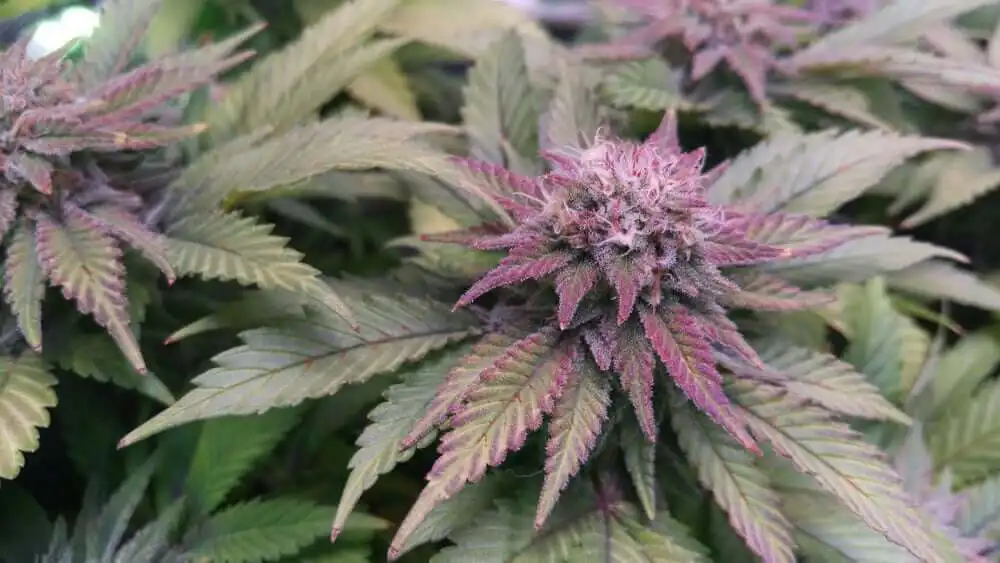
The ruderalis cross reduces yield and THC relative to the photoperiod, real-world grows produce ~18 to 22% versus 20 to 27% for the photoperiod, and indoor yield sits at up to 400 g/m² versus 500. What it preserves is the GDP character: the grape and berry terpene profile that made the strain famous, the deep purple colouration triggered by cool nights, and the deeply relaxing indica body effect the genetics are known for, bred by Ken Estes in California's Bay Area in 2003. That origin and the Purple Urkle lineage behind it are covered in the full Granddaddy Purple story.
Why choose the auto over the photoperiod: the fixed timeline is the whole point. Outdoor growers without light control cannot reliably trigger photoperiod GDP's flowering on natural day length unless the planting window aligns precisely with the season. The auto removes that constraint, plant when conditions suit and harvest 63 to 70 days later. For indoor perpetual setups, the fixed cycle allows staggered harvests without separate veg and flower spaces, and the compact 60 to 100 cm height suits balconies, small tents, and discreet outdoor situations where full-size photoperiod plants are not practical.
What the ruderalis cross costs: THC eases from 20 to 27% down to ~18 to 22%, so the body effect is genuine and present but lighter than the photoperiod at equivalent doses. Outdoor yield per plant drops significantly, 80 to 120 g against up to 600 g for the photoperiod with a full Australian summer veg. The grape terpene profile carries through well with a proper flush and cure, just at reduced intensity. This is the right choice when the timeline or grow situation makes the photoperiod impractical, not when maximum potency or yield is the brief.
What Auto GDP does well:
- Grape terpene profile: the sweet grape and berry character that defines GDP carries through the ruderalis cross reliably, and with a proper cure the flavour is recognisably Granddaddy Purple
- Purple expression: the anthocyanin genetics are present in the auto. Cool nights (15 to 18 °C) in the final 2 to 3 weeks trigger deep purple to near-black colouration, and a January planting harvesting in late March or April benefits from natural Australian autumn temperatures
- Strong body effect for an auto: at ~18 to 22% THC with myrcene-dominant terpenes, the relaxing body effect is substantial, lighter than the photoperiod but well above most auto indicas
- Season flexibility: plant September through March in Australia and harvest on a 63 to 70 day fixed schedule, with two or three outdoor runs per season achievable
- Compact footprint: 60 to 100 cm suits small indoor tents and discreet outdoor situations, with no light flip required
Auto Granddaddy Purple Lineage
Purple Urkle
Grape, purple colour
×
Big Bud
Yield, dense structure
×
Ruderalis
Autoflower trait
↓
Auto Granddaddy Purple
Autoflower, 70% indica
↓
Sweet grape terpenes, deep purple colour, and a relaxing body effect, on a fixed autoflower timeline.
Purple colouration in the auto: the anthocyanin genetics that produce GDP's signature deep purple are fully present. Temperature triggers them the same way as the photoperiod, 15 to 18 °C nights for the final 2 to 3 weeks. For maximum colour outdoors, a January planting in most Australian states targets a late March or April harvest when natural night temperatures hit that range. Summer harvests still produce quality buds with good flavour and potency, but colour development is less dramatic without the cool nights. For a deeper look at the anthocyanin genetics behind GDP's colour, the strain review covers what temperature is actually doing inside the plant.
🌿 Auto Granddaddy Purple Seeds Effects and Experience
Onset (10–20 minutes): gradual rather than sudden. Thoughts slow, the mind settles, a quiet calm arrives before the body effects establish themselves. No rush. The GDP character, gentle mental settling before heavy physical relaxation, is present in the auto.
Early phase (20–45 minutes): body relaxation begins spreading, the body settles and tension eases. At moderate doses this is still functional, the auto's slightly lower THC means the relaxation builds more gradually. Good for quiet evening activities and winding down.
Mid-phase (45–90 minutes): the 70% indica genetics dominate and body relaxation is deep and complete. Motivation for active tasks drops significantly, while the mental state stays clearer than many heavy indicas at this potency, the mental clarity alongside physical calm that distinguishes GDP, though less pronounced than the full-potency photoperiod.
Late-phase (90–150 minutes): deep, full body relaxation, settling naturally toward rest and an end-of-night wind-down. Appetite tends to pick up. The progression is gradual rather than a sudden switch-off, an extended settle into ease.
Duration: 2 to 4 hours at typical doses with residual relaxation extending beyond, a long, gentle tail that suits evening and end-of-night use.
Potency note: at ~18 to 22% THC, Auto GDP is solid to strong by auto standards, noticeably lighter than the photoperiod at equivalent doses but meaningfully above most ruderalis-heavy autos. The myrcene-dominant profile amplifies the relaxing effect beyond what the raw THC figure alone suggests.
Flavour: sweet grape on the inhale, fruity and candy-like, genuinely close to the photoperiod's signature aroma, with mixed berry, floral, and earthy undertones following. With a proper 3 to 4 week cure the grape expression sharpens significantly, so do not assess the flavour from fresh-dried material, the terpenes are not fully developed until the cure is complete.
🍇 Terpene Profile
GDP is myrcene-dominant, which is why the body side of the effect is so pronounced for the THC level:
- Myrcene (dominant): the earthy, musky base that drives the deep body relaxation and grounds the sweetness
- Caryophyllene: a peppery, spicy depth, and the one terpene that binds to CB2 receptors
- Pinene: a fresh, sharp note that lifts the grape and keeps the mind a little clearer than a pure couch strain
For how these compounds shape flavour and effect, see our cannabis terpenes guide. The sweet grape character comes from the Purple Urkle side, not from the purple colour itself, the two are separate genetic traits.
🌱 Growing Auto Granddaddy Purple Seeds in Australia
(Strictly for ACT residents with a licence or those overseas where cultivation is legal.)
Experience level: intermediate, not a beginner strain despite the autoflower format. The GDP genetics carry some nutrient sensitivity, and the fixed timeline means mistakes in the first three weeks, overwatering, overfeeding, transplant stress, follow through to harvest without recovery. Growers who have completed a successful auto run before will find Auto GDP manageable and rewarding, while true beginners should build experience with a more ruderalis-robust auto first. Our cannabis seedling care guide covers a strong start.
Critical auto rules, before germination:
- Start in the final container: germinate into the finishing pot, 10 to 15 L indoors, 15 to 20 L outdoors. Transplanting causes stress the fixed timeline cannot recover from
- Feed light in weeks 1 to 3: start at quarter strength, the GDP genetics show nutrient sensitivity faster than ruderalis-dominant autos
- Manage airflow: the bushy indica structure creates a dense canopy that needs air movement from early flower onward
- LST, no topping: gentle LST from week 2 to 3, the fixed timeline does not allow recovery from high-stress training
Height and structure: compact and bushy at 60 to 100 cm with the classic GDP architecture, a sturdy central cola with dense lateral branching. LST from week 2 to 3 opens the canopy and meaningfully improves both yield and airflow, with more productive bud sites to expose than single-cola auto genetics.
Airflow: the dense GDP bud structure traps humidity. Oscillating fans running continuously from week 5, light defoliation at pre-flower to open the inner canopy, and humidity below 45% from week 5 prevent the most common late-harvest failure. This matters more here than with lighter, more open autos.
Temperature and purple: run 22 to 26 °C through veg and early flower, 20 to 24 °C in mid-to-late flower, then drop nights to 15 to 18 °C for the final 2 to 3 weeks to trigger the purple. Do not go below 12 °C, overly cold temperatures slow growth and raise mould risk in dense buds.
Harvest: flowering initiates at 3 to 4 weeks from germination and finishes around 63 to 70 days. Check trichomes from day 56 but plan for day 65 to 70, since GDP Auto runs toward the longer end and the full body effect and grape flavour develop in the final week. Harvest at 20 to 30% amber. Our amber trichomes guide covers reading them, and the drying and curing guide covers the slow dry these volatile grape terpenes need.
🏠 Indoor Growing
- Seed to harvest: 63 to 70 days fixed, no light flip required
- Yield: up to 400 g/m² under quality lighting with LST
- Container: start and finish in 10 to 15 L, no transplanting
- Light: 18/6 recommended, flowers on any schedule, 20/4 marginally better for yield
- Height: 60 to 100 cm, suits tents from 60 × 60 cm upward
- Training: LST from week 2 to 3, the bushy GDP structure responds well
- Temperature: drop nights to 15 to 18 °C for the final 2 to 3 weeks for purple
- Airflow: continuous fans from week 5, humidity below 45%
- Cycles: 5 to 6 complete indoor runs a year, and carbon filtration from week 6, the grape aroma is strong
🌿 Outdoor Growing (Australia)
The fixed timeline changes how you plan an outdoor season, since planting date rather than day length determines the harvest window. Our guide to growing cannabis outdoors in Australia covers site selection, seasonal timing, and the humidity management that dense indica buds demand.
- Timing: ~63 to 70 days from planting, not season-dependent. Plant September through March for warm-weather runs
- Yield: 80 to 120 g per plant, the compact size limits total production compared to the photoperiod
- Container: 15 to 20 L minimum, started in the final pot, no transplanting
- Site: full sun, 6-plus hours direct light, good drainage, airflow around the plant
- Multiple runs: up to three per season achievable, a September planting (November harvest), a January planting (March harvest), and a late-March planting for a June harvest in warmer states
- Purple: for maximum colour, plant December or January and target a late March or April harvest when nights drop to 15 to 18 °C. Our Australian climate strain guide covers regional timing
- Best climates: handles Australian conditions well, warm summer days suit the veg phase, but watch humidity in coastal QLD and NSW from week 5 of flower given the dense buds
🧪 Auto Granddaddy Purple Seeds EC and Feeding Guide: Soil and Coco
Auto GDP carries some nutrient sensitivity from the GDP genetics, more than ruderalis-dominant autos, so start conservative and build on plant response. The Big Bud side tolerates slightly higher feeding than the lightest autos, but the grape terpene profile suffers from excess nitrogen in late flower, so back off nitrogen firmly from week 6. A proper flush is what gives GDP its clean grape finish.
All EC values assume quality base nutrients. Australian tap water typically runs 0.2 to 0.5 EC, so factor that into your target and measure after mixing.
📊 EC and pH Target Table: Soil vs Coco
| Phase / Week |
Soil EC |
Coco EC |
Soil pH |
Coco pH |
Notes |
Weeks 1–2
Seedling |
0.4–0.6 |
0.5–0.8 |
6.2–6.5 |
5.8–6.0 |
Plain water or quarter strength. GDP genetics show nutrient stress faster than ruderalis-heavy autos. Water in a ring around the seedling. |
Weeks 3–4
Early veg / pre-flower |
0.8–1.2 |
1.0–1.4 |
6.0–6.5 |
5.8–6.2 |
Build to half strength. Nitrogen-forward. LST in progress. Pre-flowers around day 21 to 25. Watch tips, any browning means back off. |
Weeks 4–5
Pre-flower transition |
1.0–1.4 |
1.2–1.6 |
6.0–6.5 |
5.8–6.2 |
Reduce nitrogen, introduce bloom nutrients. Begin potassium support for bud density and grape terpene development. |
Weeks 5–7
Peak flower |
1.2–1.6 |
1.4–1.8 |
6.0–6.5 |
5.8–6.2 |
High P and K, do not push beyond this. Back off nitrogen firmly from week 6, excess N mutes the grape character and delays ripening. |
Weeks 8–9
Late flower / purple |
1.0–1.4 |
1.2–1.6 |
6.0–6.5 |
5.8–6.2 |
Taper EC down. Drop nights to 15 to 18 °C for purple. Check trichomes from day 56. Monitor runoff EC. |
Final 7–10 days
Flush |
0.0–0.4 |
0.0–0.5 |
6.2 |
5.8–6.0 |
Plain pH water until runoff EC drops below 0.5. The grape terpene profile is noticeably cleaner after a proper flush. |
🌱 Soil-Specific Notes
Pre-loaded nutrients: quality potting mix runs 1.0 to 1.5 EC on its own in weeks 1 to 3, so plain water or quarter strength is correct early. Feed only once runoff EC drops below 0.8, and given the GDP sensitivity, adding feed too soon is the most common cause of early tip burn.
Runoff monitoring: water to 10 to 20% runoff and measure it. Runoff more than 0.4 above feed-in indicates salt buildup, so flush with twice the pot volume of plain pH water before resuming.
Watering frequency: every 2 to 3 days in veg, every 1 to 2 days in peak flower, letting the top 2 to 3 cm dry between waterings. Overwatering in the dense root zone is more damaging than underwatering with GDP genetics.
🥥 Coco-Specific Notes
Feeding frequency: once daily in veg, twice daily in peak flower. Never let coco dry out completely, consistent hydration through weeks 5 to 7 supports grape terpene development.
pH in coco: 5.9 to 6.1 at every feed. Coco has no buffering capacity, so below 5.8 phosphorus and calcium uptake drops, which shows up as slow bud development.
CalMag in coco: 1 to 2 ml/L from week 1 through flush. Coco binds calcium and magnesium, so check pH first when brown spots appear on mid-canopy leaves before assuming overfeeding.
Nitrogen in late flower: back off firmly from week 6. Excess N mutes the grape character and delays ripening, faster in coco than soil given the absence of buffering.
📋 EC Troubleshooting
| What You're Seeing |
Likely Cause |
Action |
| Tip burn weeks 1 to 3 |
EC too high for GDP genetics, or pre-loaded soil plus added feed |
Drop to plain water for one watering, then resume lower. These genetics show it faster than ruderalis-heavy autos, do not push early. |
| Grape aroma flat in late flower |
Excess nitrogen, pH drift, or insufficient cure |
Check pH first, back off nitrogen from week 6. If flat at harvest, cure 3 to 4 weeks, the grape develops in the jar. |
| Dark green, clawing leaves mid-flower |
Nitrogen toxicity, N not backed off from week 6 |
Reduce EC and the nitrogen proportion. GDP wants P and K in flower, not N. |
| Moisture in dense buds weeks 6 to 9 |
Airflow, not feeding, the dense indica canopy traps humidity |
Increase fan coverage to the inner canopy and drop RH below 45%. Do not cut EC in response. |
| Runoff EC well above feed-in |
Salt buildup in the medium |
Flush with twice the pot volume of plain pH water, aiming for runoff below 1.0 before resuming. |
💡 Feeding Key Principles
- Conservative in weeks 1 to 3: GDP genetics show nutrient stress faster than most autos, start at quarter strength and build on plant response
- Back off nitrogen from week 6: excess N in late flower mutes the grape character and delays ripening, the most strain-specific feeding action here
- Airflow is separate from feeding: late-flower moisture in the dense buds is an airflow problem, fix the fans and humidity, do not cut EC
- Flush for the grape finish: 7 to 10 day flush until runoff drops below 0.5, then a 3 to 4 week cure, both matter for the clean grape flavour
🗓️ Auto Granddaddy Purple Seeds Week-by-Week Grow Guide
Auto GDP runs on a fixed 63 to 70 day timeline. The dense bushy indica structure makes airflow management more important here than with lighter autos, and setup before germination matters more than problem-solving during the grow.
| Phase / Week |
What's Happening |
Key Actions |
Watch Out For |
Weeks 1–2
Seedling |
Taproot establishing, first true leaves emerging. The bushy GDP indica structure showing early. |
Plain water or quarter strength only. 18/6. 60 to 70% RH. Final container from day one. |
Overwatering and overfeeding. GDP genetics are more sensitive than ruderalis-heavy autos. Water in a ring, no full-strength nutrients. |
Weeks 3–4
Early veg / pre-flower |
Rapid bushy growth. Pre-flowers around day 21 to 25. Strong lateral branching establishing. |
Begin gentle LST from week 2 to 3. Build to half strength by week 3. EC 0.8 to 1.2. 50 to 60% RH. |
Do not top or FIM. Watch tips, any browning means back off nutrients immediately. |
Weeks 5–7
Early-mid flower |
Dense buds stacking on the laterals. The grape and berry aroma building from week 5 to 6. Height gain mostly complete by week 6. |
Transition to bloom nutrients. EC 1.2 to 1.6. Carbon filter from week 6. Drop RH to 45 to 50%. Back off nitrogen from week 6. Fans running continuously. |
Stagnant air in the dense canopy. GDP restricts airflow more than most autos, so oscillating fans must run. High humidity plus poor airflow in weeks 6 to 7 is how a late harvest is lost. |
Weeks 8–9
Late flower / purple |
Purple developing as nights cool. Trichomes moving clear to cloudy. Buds hardening, grape aroma at peak. |
Check trichomes from day 56. Drop nights to 15 to 18 °C for purple. Drop RH below 40%. Begin flush at 10 to 15% amber. |
Harvesting too early. The body effect and full terpene profile develop in the final week, so wait for 20 to 30% amber. |
Days 60–70
Flush & harvest |
Final ripening, natural leaf yellowing. Deep purple buds with orange pistils and heavy trichome coverage, one of the more striking auto harvests in the catalogue. |
Plain pH water for 7 to 10 days. Harvest at 20 to 30% amber. Slow dry at 15 to 18 °C, 55 to 60% RH for 10 to 14 days. |
Rushing the dry. The grape terpenes are volatile, a fast hot dry destroys the flavour. Slow and cool is non-negotiable. |
Post-harvest
Cure |
The sweet grape and berry profile develops and sharpens in the jar. Fresh-dried does not taste like GDP, properly cured does. |
Jar at 60 to 65% RH, burp daily for two weeks. 3 to 4 weeks minimum, 5 to 6 weeks noticeably better for full grape expression. |
Opening jars early. The flavour gap between one week and five weeks of cure is among the most dramatic of any auto in the catalogue. |
🧠 Jason's Tip: Growing Auto Granddaddy Purple
Two things separate good Auto GDP grows from disappointing ones: airflow and harvest timing. On airflow, GDP's bushy indica structure is denser than most autos and restricts air movement through the canopy more than lighter genetics. From week 5 onward, stagnant air in those dense buds is how you get mould in week 8 just before harvest. Run oscillating fans continuously, defoliate lightly at pre-flower to open the inner canopy, and hold humidity below 45% from week 5. Do not ease off the fans when the buds look healthy, that is exactly when to keep them running.
On harvest timing, this auto runs toward the longer end of its window and the body effect genuinely develops in the final week. I have seen growers chop at day 63 thinking mostly cloudy is fine and wonder why the depth is not there. The trichomes are the benchmark, not the calendar, so wait for 20 to 30% amber under a loupe. That final week is where the depth the genetics are capable of actually develops.
On the cure, the grape profile does not tell its full story until 3 to 4 weeks in the jar. It is tempting to open after a week and assess, but what you taste then is not representative. Burp daily for two weeks, then seal and leave it. The difference between one week and five weeks of cure with Auto GDP is one of the more dramatic improvements you will see from post-harvest patience with any auto in the catalogue.
⚖️ Auto GDP vs Granddaddy Purple Feminised: Which Suits You
| Feature |
Auto GDP
(this page) |
Granddaddy Purple Feminised |
| Type |
Autoflower |
Photoperiod |
| Seed to harvest |
63–70 days fixed |
Light-cycle dependent |
| THC |
~18–22% |
20–27% |
| Indoor yield |
Up to 400 g/m² |
Up to 500 g/m² |
| Outdoor yield |
80–120 g/plant |
Up to 600 g/plant |
| Height |
60–100 cm |
70–150 cm |
| Light schedule |
Any, no flip required |
12/12 to flower |
| Cloning |
Not practical |
Yes, keep mother plants |
| Best for |
Fixed timeline, compact grows, season flexibility |
Maximum yield and potency, mother plants |
Choose the auto for a fixed 63 to 70 day timeline, compact height, or outdoor season flexibility. Choose the Granddaddy Purple Feminised for maximum yield, the fullest potency, and the ability to keep mother plants.
🎯 Is Auto GDP Right for Your Grow?
✅ Auto GDP is the right choice if:
- You need a fixed seed-to-harvest timeline without managing a 12/12 light flip
- You are growing outdoors without light control, on a balcony, in a shared space, or with flexible planting windows
- Height is a constraint, 60 to 100 cm versus the photoperiod's 70 to 150 cm
- You want multiple outdoor runs per season, up to three with the 63 to 70 day timeline
- A January planting suits you, a late March or April harvest aligns with natural cool nights for maximum purple
- You want GDP's grape flavour and relaxing body effect at a slightly more accessible potency
❌ Consider Granddaddy Purple Feminised if:
- Maximum potency is the priority, 20 to 27% versus ~18 to 22% is a meaningful difference
- Outdoor yield matters, up to 600 g per plant versus 80 to 120 g is a significant gap
- You want to keep mother plants and clone for consistent genetics across runs
- You have the setup to manage a 12/12 flip and want full control over veg time
- You want the fullest, deepest body effect of the full-potency version
Still comparing options? Our guide to the best cannabis strains in Australia covers the range, or browse the autoflower range, the indica-dominant range, or the complete cannabis seeds catalogue.
🍇 Auto Granddaddy Purple Customer Experiences
Paraphrased from verified customer reviews and grower communications.
⭐⭐⭐⭐⭐ "Like grape bubblegum and wild berries in one hit. The buds turned nearly black after a flush with cool nights, absolutely stunning in the jar. The flavour after a 5-week cure matches the hype completely. One of the best autos I have run.", Indoor grower, Sydney
⭐⭐⭐⭐⭐ "Grew outdoors in Melbourne, planted January, harvested early April. The cool autumn nights brought out incredible purple naturally, no tricks needed. Got 110 g off one plant in a 20 L pot. Smooth, deeply relaxing, and the grape flavour is exactly what I remember from dispensary GDP.", Outdoor grower, Victoria
⭐⭐⭐⭐ "Took patience, I nearly chopped at day 62 but let it go to day 70. That last week made a noticeable difference to the body effect. The purple came through strongly and the 5-week cure produced genuine GDP grape flavour. Worth the wait.", Indoor grower, Brisbane
❓ Frequently Asked Questions: Auto Granddaddy Purple Seeds
What is Auto Granddaddy Purple?
Auto Granddaddy Purple seeds are an autoflowering version of the award-winning GDP strain, the Purple Urkle × Big Bud cross bred by Ken Estes in California's Bay Area in 2003. Ruderalis genetics trigger flowering automatically at 3 to 4 weeks from germination regardless of light cycle, with seed to harvest running roughly 63 to 70 days. The signature GDP terpene profile, sweet grape, mixed berry, earthy undertones, and the deep purple colouration both carry through with a proper flush and cure. Our Granddaddy Purple strain review covers the breeding history and the strain's place in Californian cannabis in more depth.
How long does Auto GDP take from seed to harvest?
Approximately 63 to 70 days (9 to 10 weeks) from germination on a fixed timeline. GDP Auto tends toward the longer end, so check trichomes from day 56 but plan for day 65 to 70. Harvest at 20 to 30% amber, the full body effect and grape expression develop in the final week, so do not harvest early.
How does the potency compare to the photoperiod GDP?
Around 18 to 22% THC for the auto against 20 to 27% for the photoperiod, a real and noticeable difference at equivalent doses. The auto is a solid, effective indica, but for the fullest potency and the deepest body effect the Granddaddy Purple Feminised photoperiod is the right choice.
Will the buds turn purple like the photoperiod GDP?
Yes, with cool nights. The anthocyanin genetics are fully present and temperature triggers them the same way, drop nights to 15 to 18 °C for the final 2 to 3 weeks and the purple develops naturally. Outdoors, a January planting targeting a late March or April harvest aligns with natural Australian cool nights for maximum expression, and our outdoor growing calendar sets out the planting windows state by state. You do not need to stress the plant or manipulate pH, temperature is the only trigger needed.
Is Auto GDP easy to grow?
Intermediate, not beginner-friendly despite the autoflower format. The GDP genetics carry moderate nutrient sensitivity, and the fixed timeline means mistakes in the first three weeks follow through to harvest. Start in the final container (no transplanting), feed light in weeks 1 to 3, manage airflow in the dense canopy from week 5, and do not harvest early. Growers with one or two successful auto runs behind them will do well.
What yields can I expect?
Up to 400 g/m² indoors under good lighting with LST, and 80 to 120 g per plant outdoors. These are realistic figures. The compact size limits per-plant production, but the 63 to 70 day timeline allows 5 to 6 indoor runs a year and up to three outdoor runs per season, which changes the per-year total significantly.
Does Auto GDP taste like the photoperiod?
With a proper cure, yes, recognisably. The sweet grape and berry character carries through the ruderalis cross with a 7 to 10 day flush and a 3 to 4 week cure in sealed jars. Fresh-dried material does not represent the genetics well, the cure is essential for GDP terpene expression in any format.
Which Australian climates suit Auto GDP best?
Temperate and cool-temperate zones give the best purple expression, since autumn nights fall into the 15 to 18 °C range without intervention. Warmer subtropical and tropical zones still produce good flavour and potency, but humidity from week 5 of flower is the constraint to plan around given the dense bud structure. Our Australian climate strain guide breaks the country down by region.
Do you ship Auto GDP seeds across Australia?
Yes, with fast domestic shipping and discreet packaging, and most orders arrive within a few business days. All seeds are batch-tested with the paper towel method at ~22 °C and stored cold and dry to preserve viability.











I have lost 3 of them because I didn’t read your tips, and next 3 are not doing well I think after 1 month should be bigger and healthier I was following your advice how to grow properly.
Could tell me what sort of food I can use to bust them.
In need of a bit more bulk. Aiming for sedative qualities rather than just high THC.
well packaged
All germinated, will review again
one looks amazing
Delivery on point.
Will be buying from here again.
I have only just planted my seed and don’t expect any problems. Looking forward to having some plants again’
All germinated.
A little bit slow due to cool weather, but all looking healthy.
Very happy
Chris S