




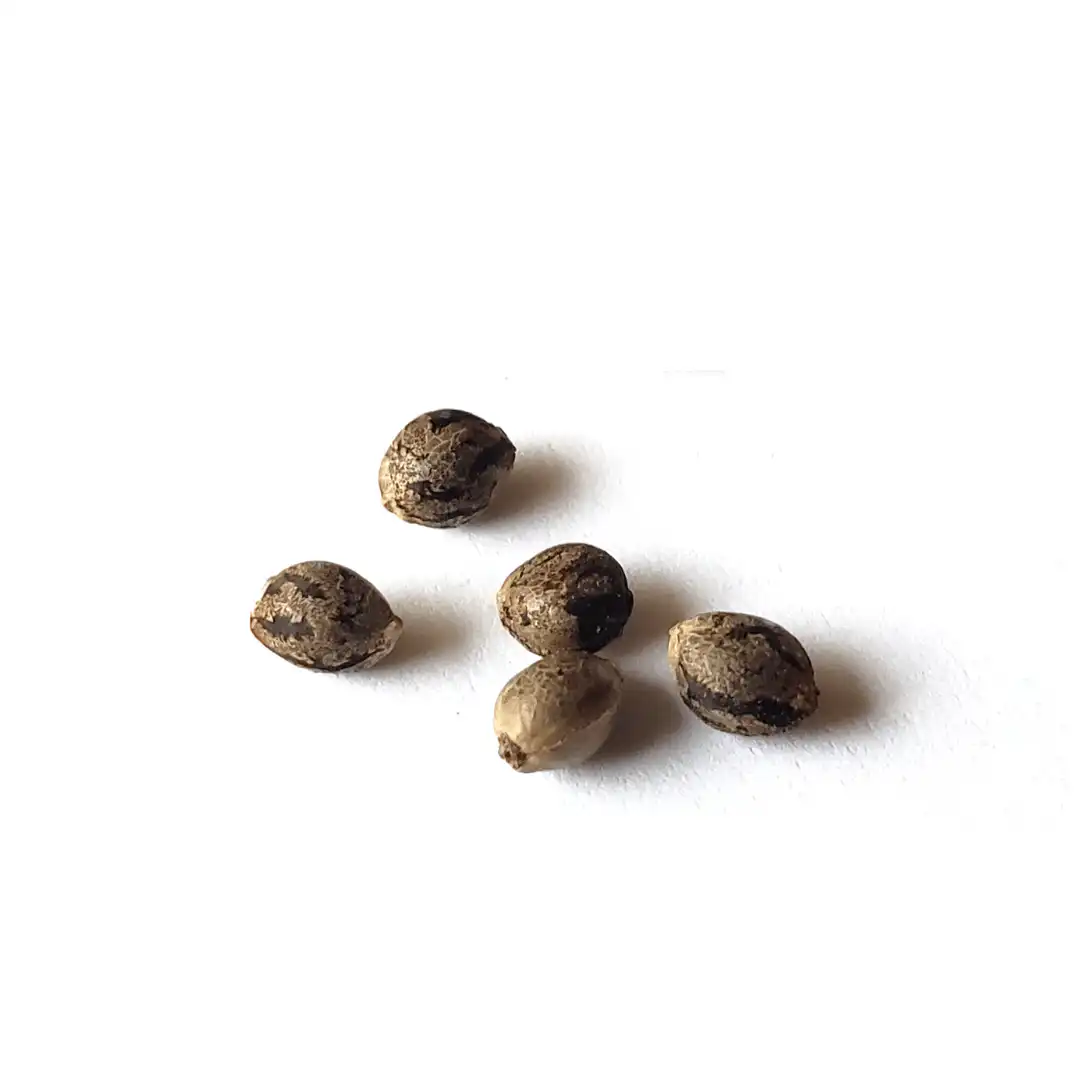
Auto Gorilla Zkittlez Feminized Seeds
From Original price was: $80.00.$75.00Current price is: $75.00.
Auto Gorilla Zkittlez seeds combine GG4’s legendary resin production with Zkittlez’ tropical candy terpenes in a fast-finishing autoflower. Frosty, fruity, and surprisingly potent at around 20% THC. If Gorilla Glue and a bag of lollies had a very successful offspring, this would be it.
Every order ships with bonus seeds. One free seed per five purchased — added automatically, no catch. Contact us for bulk order pricing.
🍬 Auto Gorilla Zkittlez Seeds: Cali Flavour on a Fixed Timeline
Auto Gorilla Zkittlez seeds bring Barney's Farm's GG4 × Zkittlez cross into an autoflowering format: a 75% indica-dominant plant running ~20% THC, finishing in roughly 75 days from germination on any light schedule, with the Zkittlez tropical-fruit aroma intact.

Barney's introduced their BF Super Auto #1 ruderalis line into the cross so the plant runs on a fixed timeline regardless of light schedule. The two headline parents are both celebrated Californian genetics: Gorilla Glue #4, famous for its resin density and structural vigour, and Zkittlez, the Emerald Cup-winning strain prized for its tropical-fruit terpenes. The trade-off versus the photoperiod is a lower yield ceiling and reduced THC, around 20% against 24 to 26%, but the terpene profile and effect character are recognisably the same genetics. For the full background on the GG4 × Zkittlez cross, the parent cup pedigree, and a closer look at the effect, see our Gorilla Zkittlez strain review.
What you get is a compact, dense, resinous plant with the Zkittlez tropical-fruit aroma carried through, finishing in roughly 75 days. The GG4 structural influence keeps trichome production high for an autoflower. If the photoperiod is the full-season outdoor plant, the auto is the same flavour on a fixed, predictable schedule.
Each parent contributes something specific:
- Gorilla Glue #4: potency, trichome density, resin production, and structural vigour
- Zkittlez: the tropical-fruit terpene profile, dense colourful bud structure, and Emerald Cup pedigree
- BF Super Auto #1: Barney's in-house autoflowering line, introducing the ruderalis flowering trigger plus vigorous rooting and resistance to stress and pests
Why growers choose Auto Gorilla Zkittlez:
- Fixed timeline: ~75 days seed to harvest with no light schedule to manage, the plant drives its own flowering cycle
- Compact structure: 80 to 100 cm keeps it manageable in tighter indoor spaces or discreet outdoor positions
- Zkittlez terpenes intact: the tropical-fruit aroma carries through from the photoperiod, this is not a stripped-back auto, it smells like the genetics it came from
- Strong indoor yield for an auto: 400 to 500 g/m² is at the upper end of autoflower production
- Multiple runs per season: the fixed 75-day cycle lets warm-climate outdoor growers fit more than one run between spring and autumn
- Resilient genetics: the ruderalis line contributes genuine resistance to stress, pests, and mould, handling variable conditions better than most photoperiods
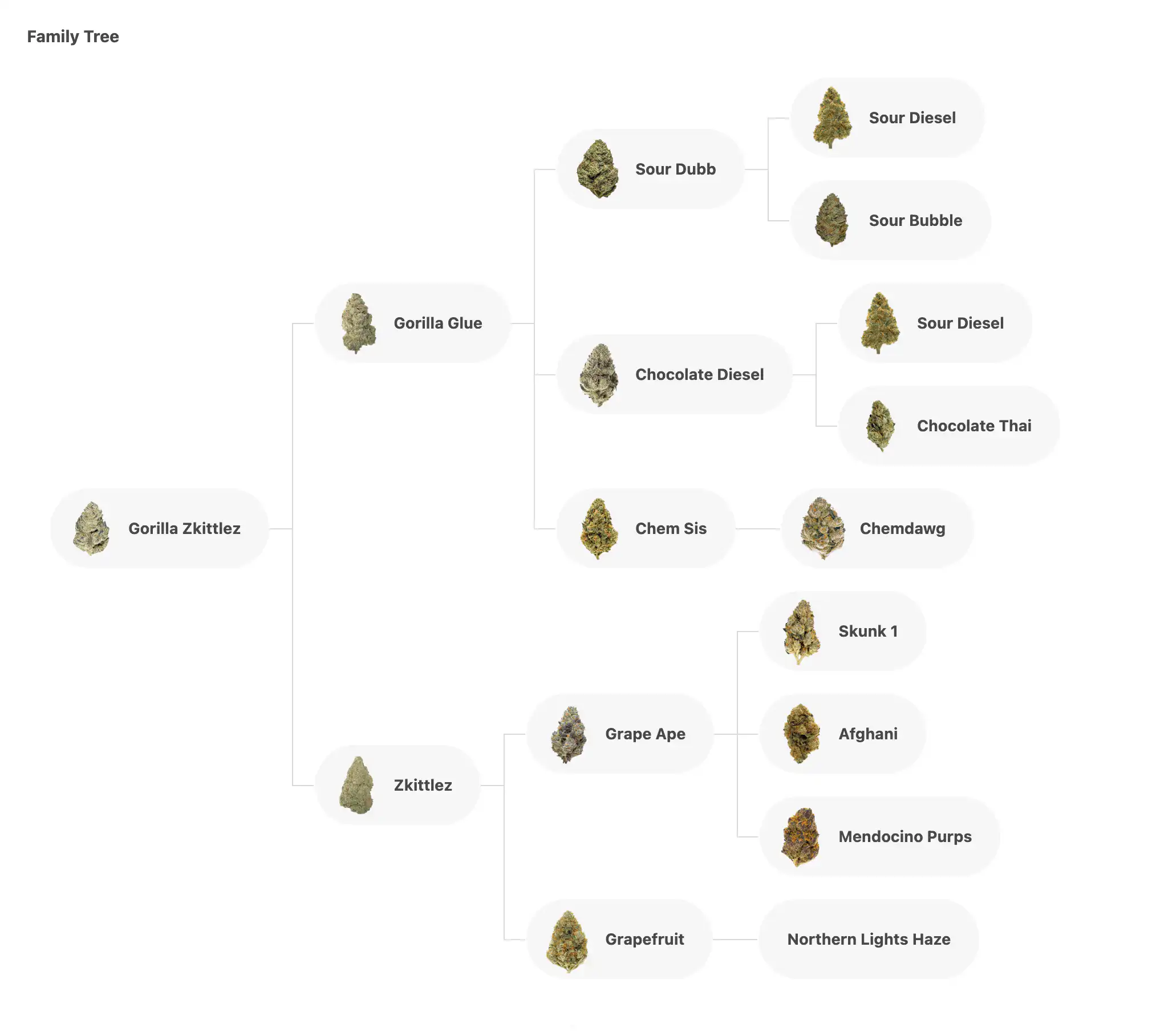
Auto Gorilla Zkittlez Lineage
🌿 Auto Gorilla Zkittlez Seeds Effects and Experience
Onset (5–10 minutes): a warm, settling calm. The Zkittlez genetics bring a brief window of mild euphoria and sensory clarity before the indica body effect takes over. Not a jarring onset, but it moves quickly.
Peak (30–60 minutes): physical relaxation builds steadily. The body settles, mental chatter quiets. The effect is grounding and heavy rather than foggy, present but disinclined to move. At 20% THC this is still a genuinely potent experience, particularly for less regular users.
Mental state: calm and contemplative, with a focused quality early that the Zkittlez side seems to contribute, some find a creative window before the indica body effect settles in fully. Higher doses shorten that window and lean more toward the couch.
Duration: 2 to 3 hours for most, tapering cleanly rather than cutting off abruptly. Residual body ease can linger longer.
When it suits: better matched to late afternoon and evening than to daytime tasks needing focus or energy, an end-of-day wind-down strain.
Potency note: 20% THC is meaningful, this is not a light strain just because it is an auto. Pace yourself if you are not used to indica-dominant effects in this range, the body relaxation can build harder than expected if you front-load the dose.
Flavour: sweet tropical fruit, mango, pineapple, citrus, with earthy diesel underneath. The Zkittlez side leads on aroma and the initial taste, the GG4 lineage grounds the finish. Smooth smoke for the potency level, with good density on the exhale.
🍊 Terpene Profile
The aroma builds from mid-flower and is genuinely fruity, candy-sweet tropical notes over the earthy diesel depth GG4 brings to the cross. For an autoflower, the terpene expression is notably strong:
- Myrcene: earthy, musky base that grounds the sweeter top notes and underpins the body-leaning effect
- Caryophyllene: spicy, peppery depth, the structural backbone inherited from the GG4 side
- Limonene: bright citrus lift, responsible for the tangerine and tropical-fruit character from Zkittlez
- Linalool: a soft floral undertone that adds to the calming quality
For how these compounds shape flavour and effect, see our cannabis terpenes guide.
🌱 Growing Auto Gorilla Zkittlez Seeds in Australia
(Strictly for ACT residents with a licence or those overseas where cultivation is legal.)
Experience level: beginner-friendly. Multiple sources note these genetics as resilient and resistant to stress, pests, and mould, which makes this one of the more forgiving autos to run. The one discipline that matters most is conservative feeding, the compact size and fixed cycle mean nutrient needs are lower than the photoperiod, and overfeeding is the most common mistake. And as with any auto, the fixed timeline gives no recovery window for early errors. Our cannabis seedling care guide covers a strong start.
Structure: compact and well-branched, 80 to 100 cm indoors, up to 120 cm outdoors with good sun. The 75% indica genetics keep the plant manageable, with a Christmas-tree shape and tight internodal spacing that stacks buds efficiently, and moderate lateral branching that fills out without aggressive training.
Training: the fixed timeline changes the approach, there is no recovery time built in the way a photoperiod has, so any stress during the vegetative window costs days you cannot get back. Gentle LST from early veg works well, bend and tie rather than cut. Topping is possible only if you are experienced with autos and start early (node 3 to 4). SCROG and heavy defoliation do not suit this format.
Feeding: start in the final container, since transplanting an autoflower causes stress while the plant is already committing to its flowering timeline. Feed lightly through veg, build toward a phosphorus-forward feed at the transition to flower, and keep EC conservative throughout. This is a leaner feeder than most, and overfeeding shows up faster and recovers more slowly on a fixed timeline.
Airflow: the genetics resist mould well, but the bud structure is dense and the GG4 trichome coverage is heavy, so humidity management in late flower still matters. Keep humidity under 45% from week 7 onward and maintain good canopy circulation. Our amber trichomes guide covers reading the harvest window, and the drying and curing guide covers protecting the fruity terpenes.
🏠 Indoor Growing
- Seed to harvest: ~75 days (10 to 11 weeks), no light flip required
- Yield: 400 to 500 g/m² under good conditions, high for an autoflower
- Light: 18/6 or 20/4 from seed to harvest, more light hours through veg supports faster development and better yield
- Container: start and finish in 10 to 15 L, no transplanting
- Feeding: keep EC lower than the photoperiod, especially through veg, building gradually toward peak bloom
- Late flower: humidity under 45% from week 7, increase airflow, the resin production is strong for the format
🌿 Outdoor Growing (Australia)
- Season flexibility: the fixed 75-day cycle means you are not tied to a single photoperiod window, run from September through May in warm climates
- Multiple runs: QLD and northern NSW growers can fit two full cycles between September and May, starting the second run in late January for an April finish
- Yield: 100 to 200 g per plant, variable with container size, sun hours, and conditions
- Container: start in the final position, 15 to 20 L outdoors, autos do not transplant well
- Site: full sun, 8-plus hours minimum, the compact size suits spots where a full photoperiod plant would be impractical. Our Australian climate strain guide covers regional fit
- Southern states: the 75-day cycle lets you start after the last frost (September) and finish before autumn humidity arrives, a real advantage over waiting for a late-March photoperiod harvest
🧪 Auto Gorilla Zkittlez Seeds EC and Feeding Guide: Soil and Coco
The defining feeding point for Auto Gorilla Zkittlez is restraint. This is a leaner feeder than many high-yield autos, and on a fixed timeline overfeeding shows up faster and recovers more slowly than it would with a photoperiod. Build EC gradually, watch the plant rather than the schedule, and shift phosphorus-forward at the flower transition.
All EC values assume quality base nutrients. Australian tap water typically runs 0.2 to 0.5 EC, so factor that into your target and measure after mixing.
📊 EC and pH Target Table: Soil vs Coco
| Phase / Week | Soil EC | Coco EC | Soil pH | Coco pH | Notes |
|---|---|---|---|---|---|
| Weeks 1–2 Seedling |
0.4–0.6 | 0.5–0.8 | 6.2–6.5 | 5.8–6.0 | Plain water or quarter strength. Water in a ring around the seedling. Overfeeding here is the most common early mistake. |
| Weeks 3–4 Early veg / pre-flower |
0.8–1.0 | 1.0–1.3 | 6.0–6.5 | 5.8–6.2 | Build slowly to half strength. Nitrogen-forward but lean. Pre-flowers around day 21. Begin gentle LST. |
| Weeks 4–5 Pre-flower transition |
1.0–1.3 | 1.2–1.5 | 6.0–6.5 | 5.8–6.2 | Reduce nitrogen, introduce bloom nutrients, shift phosphorus-forward. Keep EC conservative. |
| Weeks 5–8 Peak flower |
1.2–1.5 | 1.4–1.7 | 6.0–6.5 | 5.8–6.2 | Peak feed, but lower than heavier-feeding autos. P and K forward, nitrogen well back. Watch tips for the first sign of excess. |
| Weeks 9–10 Late flower / ripening |
1.0–1.3 | 1.2–1.5 | 6.0–6.5 | 5.8–6.2 | Taper EC down. The plant draws on reserves. Monitor runoff EC. Check trichomes from day 63. |
| Final 7–10 days Flush |
0.0–0.4 | 0.0–0.5 | 6.2 | 5.8–6.0 | Plain pH water until runoff EC drops below 0.5. A proper flush noticeably cleans up the fruity terpene expression. |
🌱 Soil-Specific Notes
Pre-loaded nutrients: quality potting mix runs 1.0 to 1.5 EC on its own in weeks 1 to 3, so plain water or quarter strength is correct early. Feed only once runoff EC drops below 0.8. With a lean feeder like this, it is easy to push too soon, let the medium do the early work.
Runoff monitoring: water to 10 to 20% runoff and measure it. Runoff EC more than 0.4 above feed-in indicates salt buildup, so flush with twice the pot volume of plain pH water.
Watering frequency: every 2 to 3 days in veg, every 1 to 2 days in peak flower. Lift the pot to judge moisture rather than following a schedule. Overwatering restricts root oxygen and stresses an auto on a tight clock.
🥥 Coco-Specific Notes
Feeding frequency: once daily in veg, twice daily in peak flower. Never let coco dry out completely. Even though this is a lean feeder, coco still needs consistent low-EC feeding rather than occasional heavy doses.
pH in coco: 5.9 to 6.1 at every feed. Coco has no buffering capacity, so what goes in at the wrong pH hits the roots at the wrong pH. Below 5.8, phosphorus and calcium uptake drops.
CalMag in coco: 1 to 2 ml/L from week 1 through flush. Coco binds calcium and magnesium, so do not assume your base line covers it.
Runoff monitoring in coco: target runoff EC within 0.3 of feed-in, and flush if it runs more than 0.5 above. Because the peak EC here is conservative, salt creep is less likely than with heavy feeders, but check anyway.
📋 EC Troubleshooting
| What You're Seeing | Likely Cause | Action |
|---|---|---|
| Tip burn in veg | Overfeeding, the most common mistake with this lean-feeding strain | Drop to plain water for one watering, then resume at lower EC. Build back up slowly. |
| Dark green, clawing leaves | Nitrogen too high, especially into flower | Back off nitrogen from the flower transition. This strain wants P and K in bloom, not N. |
| Slow, stalled growth early | Often overwatering or transplant stress rather than feeding | Check moisture and roots first. Never transplant an auto; start in the final container. |
| Runoff EC above feed-in | Salt buildup | Flush with twice the pot volume of plain pH water. Recheck runoff before resuming. |
| Moisture in dense bud sites late flower | Airflow, not feeding, the buds are dense even though the genetics resist mould | Increase canopy circulation and drop RH below 45%. Do not cut EC in response. |
💡 Feeding Key Principles
- Feed lean: this strain rewards restraint. Overfeeding is the single most common Auto Gorilla Zkittlez mistake, and it is harder to correct on a fixed timeline
- Phosphorus-forward at the transition: shift toward bloom nutrients as pre-flowers appear, nitrogen well back from then on
- Flush for flavour: the fruity terpene character is noticeably cleaner after a 7 to 10 day flush with plain pH water
- pH before EC, always: check pH every feed in coco, every second feed in soil, since incorrect pH makes EC management incomplete
🗓️ Auto Gorilla Zkittlez Seeds Week-by-Week Grow Guide
Auto Gorilla Zkittlez runs around 75 days on a consistent timeline. Setup before germination matters more than reactive problem-solving during the grow, and conservative feeding through the first few weeks decides how the run goes.
| Phase / Week | What's Happening | Key Actions | Watch Out For |
|---|---|---|---|
| Weeks 1–2 Seedling |
Taproot establishing, first true leaves emerging. The vigorous Super Auto rooting gives a strong start. | Plain water or quarter strength. 18/6 or 20/4. 50 to 60% RH. Final container from day one. | Overwatering and overfeeding. This is a lean feeder, so keep nutrients light. Water in a ring around the seedling. |
| Weeks 3–4 Early veg / pre-flower |
Compact, well-branched growth. Pre-flowers around day 21. The Christmas-tree structure establishing. | Begin gentle LST. Build slowly to half strength. EC 0.8 to 1.0 soil / 1.0 to 1.3 coco. 50 to 60% RH. | Do not top unless experienced and early. No transplanting. Any veg stress costs days you cannot recover. |
| Weeks 5–7 Early-mid flower |
Dense bud sites stacking. The tropical-fruit aroma builds from mid-flower. Trichome production strong for an auto. | Shift phosphorus-forward. EC 1.2 to 1.5 soil / 1.4 to 1.7 coco. Carbon filter on. Drop RH to 45 to 50%. | Overfeeding. Tips burning means back off, not push on. The aroma is loud, so filtration is essential indoors. |
| Weeks 8–10 Late flower / ripening |
Buds fattening to full density, coated in resin. Tropical-fruit aroma at full intensity. Pistils darkening. | Check trichomes from day 63. Drop RH below 45%. Begin flush at 15 to 20% amber. Keep canopy circulation up. | Harvesting early. The resin and aroma peak in the final week. Harvest by trichomes, not the calendar. |
| ~Day 75 Flush & harvest |
Final ripening, natural leaf yellowing. Dense, resinous, fruity colas at peak. | Plain pH water for 7 to 10 days. Harvest at the trichome ratio you want. Slow dry at 15 to 18 °C, 55 to 60% RH for 10 to 14 days. | Rushing the dry. The fruity terpenes are volatile, so slow and cool preserves them. |
| Post-harvest Cure |
The full tropical-fruit complexity develops in the jar over the first few weeks. | Jar at 60 to 65% RH, burp daily for two weeks. 3 to 4 weeks minimum for the best aroma. | Judging the genetics from fresh-dried material. The fruit comes forward properly only after a cure. |
🧠 Jason's Tip: Growing Auto Gorilla Zkittlez
The fixed timeline is the thing that changes everything with an auto. You cannot veg longer to recover from a slow start, and you cannot push feeding harder mid-flower to compensate for an underfed veg. Every decision in the first three weeks matters more than it would with a photoperiod, because there is no buffer.
Start in the final container, get your environment dialled before you germinate, and feed light until you see the first signs of flower. This one runs leaner than most, so when in doubt, feed less. From there, treat it like any indica-dominant flower: phosphorus up, nitrogen down, airflow strong. The Zkittlez terpenes start coming through properly around week 7 and build right to harvest.
Outdoors, the 75-day clock gives genuine scheduling flexibility. In Queensland or northern NSW you can run two cycles and harvest the second in cooler autumn conditions, which is often when the terpene expression is at its best anyway.
⚖️ Auto Gorilla Zkittlez vs Gorilla Zkittlez Feminised: Which Suits You
| Feature | Auto Gorilla Zkittlez (this page) |
Gorilla Zkittlez Feminised |
|---|---|---|
| Type | Autoflower | Photoperiod |
| Seed to harvest | ~75 days fixed | 8–9 week flower + veg |
| THC | ~20% | 24–26% |
| Indoor yield | 400–500 g/m² | Up to 600 g/m² |
| Outdoor yield | 100–200 g/plant | 1,000–2,000 g/plant |
| Light schedule | Any, no flip required | 12/12 to flower |
| Veg control | None, fixed timeline | Full control |
| Best for | Fixed timeline, multiple cycles, compact grows | Maximum yield and the full potency expression |
Want a fixed timeline without managing light schedules? The auto is your plant. Want to maximise outdoor yield and control plant size? See the Gorilla Zkittlez Feminised photoperiod.
🎯 Is Auto Gorilla Zkittlez Right for Your Grow?
✅ Auto Gorilla Zkittlez is the right choice if:
- You want the GG4 × Zkittlez flavour on a fixed ~75 day timeline with no light flip
- You are new to autos and want resilient, forgiving genetics to learn on
- Multiple fast cycles matter, indoors back-to-back or two outdoor runs a warm-climate season
- Space is tight, the 80 to 100 cm compact structure suits small tents and discreet spots
- You want strong fruity terpenes and above-average resin for an autoflower
- You can keep feeding lean and manage late-flower humidity on the dense buds
❌ Consider the photoperiod if:
- Maximum outdoor yield is the priority, 1,000 to 2,000 g per plant versus 100 to 200 g is a huge gap
- You want the higher 24 to 26% THC the photoperiod reaches
- You have the setup for a 12/12 flip and want full control over veg time and plant size
- You want to run SCROG for the full indoor yield potential
- A single large seasonal harvest suits you better than multiple smaller cycles
Still comparing options? Our full strain lineup guide covers the range, or browse the autoflower range, the indica-dominant range, or the complete cannabis seeds catalogue.
🌟 Auto Gorilla Zkittlez Customer Experiences
Paraphrased from verified customer reviews and grower communications.
⭐⭐⭐⭐⭐ "Genuinely surprised how fruity this auto smells. From about day 45 the tropical sweetness starts building and it stays all the way to harvest. Buds are dense and sticky, more resin than I expected from an autoflower.", Indoor grower
⭐⭐⭐⭐⭐ "Ran two back-to-back indoors. Both finished on schedule at 74 to 76 days. Very consistent plant, same height, structure, and harvest window each run. Makes planning straightforward.", Indoor grower
⭐⭐⭐⭐⭐ "Ran one late January outdoors in northern NSW, harvested end of April, about 150 g from a 20 L pot in full sun. The smell in the last two weeks was loud, would not run this without a plan for that. Strong for an auto, very much an evening one.", Outdoor grower, Northern NSW
❓ Frequently Asked Questions: Auto Gorilla Zkittlez Seeds
What is Auto Gorilla Zkittlez?
Auto Gorilla Zkittlez, also called Auto Gorilla Z, is an autoflowering feminised strain bred by Barney's Farm: a three-way cross of Gorilla Glue #4, Zkittlez, and BF Super Auto #1. The result is a 75% indica-dominant autoflower running ~20% THC, finishing in roughly 75 days from germination on any light schedule, with the Zkittlez tropical-fruit aroma carried through. Our Gorilla Zkittlez strain review covers the genetics and the parent cup pedigree in depth.
How long does it take from seed to harvest?
Approximately 75 days (10 to 11 weeks) from germination. Unlike a photoperiod, this timeline is fixed, the plant flowers on age rather than light cycle. Environmental stress can extend it; good conditions keep it on schedule.
Do I need to transplant?
No, and you should not. Start in the final container from germination, since transplanting an autoflower causes stress while the plant is already committing to its flowering timeline, and that stress costs days you cannot recover. Use 10 to 15 L indoors, 15 to 20 L outdoors.
How does the potency compare to the photoperiod?
The auto runs ~20% THC against 24 to 26% in the Gorilla Zkittlez Feminised photoperiod. The effect character is similar, indica-dominant and body-heavy, but the ceiling is lower. It is still a potent plant by any measure, particularly for less regular users.
What yields can I expect?
Indoors, 400 to 500 g/m² under good conditions, strong for an autoflower. Outdoors, 100 to 200 g per plant depending on container size, sun hours, and conditions. Starting in a large container (15 to 20 L) in full sun pushes toward the upper end.
Is Auto Gorilla Zkittlez easy to grow?
It is one of the more beginner-friendly autos. The genetics are resilient and resistant to stress, pests, and mould, so the plant handles variable conditions well. The main discipline is conservative feeding, this strain runs leaner than most and overfeeding is the common mistake, and as with any auto the fixed timeline gives no recovery window. Start in the final container, feed light, and keep airflow strong in late flower.
Does it still smell like the photoperiod?
Yes. The Zkittlez terpene profile, tropical fruit, mango, citrus, carries through from the photoperiod genetics. From mid-flower the aroma is noticeable, and by week 9 to 10 it is strong, so indoor growers need carbon filtration and outdoor growers should factor the smell into site choice.
Do you ship Auto Gorilla Zkittlez seeds across Australia?
Yes, with fast domestic shipping and discreet packaging, and most orders arrive within a few business days. All seeds are batch-tested with the paper towel method at ~22 °C and stored cold and dry to preserve viability.
7 reviews for Auto Gorilla Zkittlez Feminized Seeds
Not sure this is the right strain for you?
Answer six quick questions and we will give you three strains we feel best for you based on your setup, experience, and goals.
Related products
-
 AUTO
AUTOHi-Vibe Sativa Cannabis Seed Bundle Auto-Feminised – 20 seeds
Original price was: $315.00.$240.00Current price is: $240.00. -
 AUTO
AUTOClassic Mix-Auto Feminised cannabis seeds
Original price was: $320.00.$240.00Current price is: $240.00. -

Moby Dick Feminized Seeds
From Original price was: $80.00.$75.00Current price is: $75.00. -

White Widow Feminised Seeds
From Original price was: $80.00.$75.00Current price is: $75.00. -
 AUTO
AUTOAuto Gorilla Glue Feminized Seeds
From Original price was: $80.00.$75.00Current price is: $75.00. -

Jack Herer Feminized Seeds
From Original price was: $80.00.$75.00Current price is: $75.00. -
 AUTO
AUTOAuto Northern Lights Feminized Seeds
From Original price was: $80.00.$75.00Current price is: $75.00. -
 AUTO
AUTOAuto White Widow Feminized Seeds
From Original price was: $80.00.$75.00Current price is: $75.00.

Sacred Seeds living upto their reputation of quality products and professionalism.
The plants are tuff little buggers
They took a hammering from the rain and we thought we'd list them But they hung in there and sprang back