The Northern Lights strain is one of those genetics I keep coming back to. I have grown a lot over the years. I have chased potency ceilings, run complex modern hybrids, and spent time with landrace genetics from places that take weeks to reach. But Northern Lights sits in a different category for me. It is the one I reach for when I want to wind down properly at the end of a long day, and it is one of the most rewarding plants I have worked with consistently: stable, predictable, and genuinely beautiful to grow.
Northern Lights strain at a glance: Northern Lights is a classic indica-dominant cannabis strain descended primarily from Afghani landrace genetics. Best known through the Northern Lights #5 phenotype, it typically sits around 18–22% THC and has an earthy, sweet and pine-forward terpene profile dominated by myrcene. Its stable genetics, fast flowering and deeply relaxing effects helped make Northern Lights one of the most influential cannabis strains ever bred.
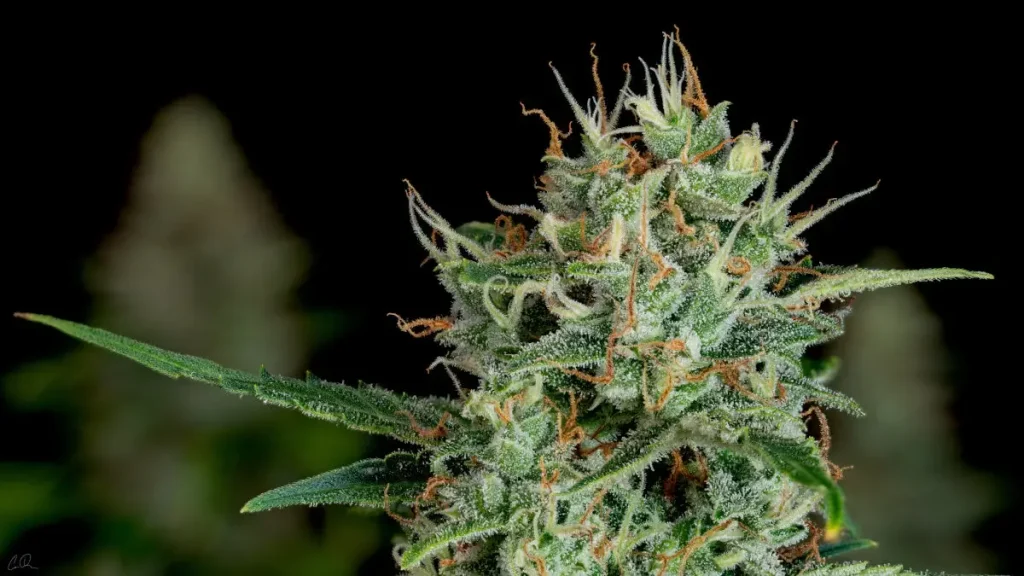
This is a full review of the Northern Lights feminised seeds we stock: the genetics, the breeding history, the culture that grew up around it, the terpene profile, and the effect it produces. For the complete grow detail, the feeding, the yields and the Australian outdoor timing, the product page sets all of that out. If you want a fixed-timeline version, we also stock Auto Northern Lights.
The Northern Lights Strain: Genetics, History and What Makes It Different
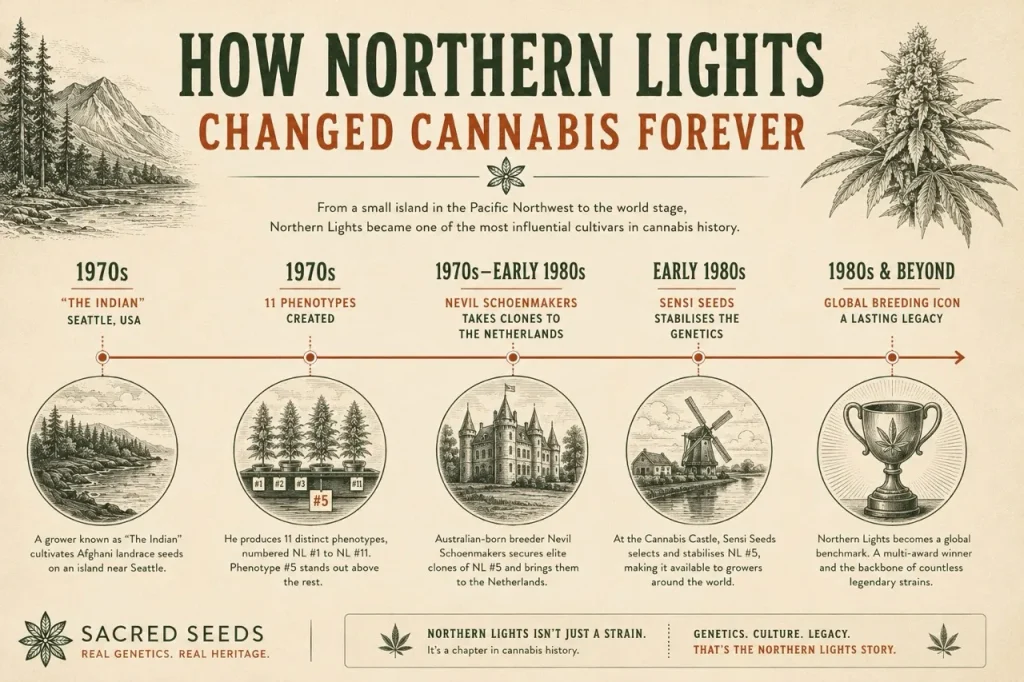
The origin story of the Northern Lights strain is one of the more genuinely interesting in cannabis genetics. The most documented account traces it back to a grower known as “The Indian,” who cultivated the original plants from Afghani landrace seeds on an island near Seattle in the 1970s. He produced 11 phenotypes, numbered NL #1 through #11, of which #5 became the definitive expression: exceptional resin production, fast flowering, compact structure, and a deeply relaxing effect profile that set the benchmark for what an indica could be. The identity of “The Indian” has never been definitively confirmed, which is part of why the origin story has stayed somewhat mythologised. Some accounts suggest the original genetics may have included Thai and other landrace crosses beyond pure Afghani, which would explain the phenotypic variation across the 11 numbered plants.
The reason #5 won out over #1 is worth understanding. NL #1 was the pure Afghani inbred, essentially hashplant genetics with almost no sativa influence: dense, resinous, fast, but a very one-dimensional effect. #5 carried just enough Thai to give it the euphoric opening phase that made it more versatile and more interesting as a smoke. That distinction is what separated a connoisseur’s strain from a commercially significant one, and it is why #5 became the global standard while #1 remained a specialist’s choice.
The strain reached a global audience when Australian-born breeder Nevil Schoenmakers transported female clones to the Netherlands in the late 1970s or early 1980s. What Schoenmakers did next is worth noting. He effectively built the modern cannabis seed bank industry from scratch, operating out of what became known as the Cannabis Castle in Den Haag and establishing the first commercial mail-order seed business. Northern Lights was central to that original catalogue. Working with Ben Dronkers at Sensi Seeds from 1985, Schoenmakers stabilised the genetics and produced the variants that went on to win multiple Cannabis Cup awards. Without that combination of the Pacific Northwest genetics and the Dutch breeding infrastructure, Northern Lights would likely have remained a regional strain rather than the global benchmark it became.
What makes the lineage worth understanding is what each parent contributes. The Afghani landrace brings the dense, resinous bud structure, the fast flowering, the compact indica growth pattern, and the dominant myrcene terpene profile that drives the heavy body effect. The Thai sativa influence introduces the subtle euphoric lift that prevents Northern Lights from being a pure couch-lock strain. NL #5 carries just enough Thai to make the experience dynamic rather than simply heavy.
Jason: I have been growing Northern Lights on and off for longer than most of the strains in our current catalogue have existed. There is something about working with genetics that have been properly stabilised over decades. You know what you are getting. The phenotype variation is minimal and the end product is consistently what you want it to be. For me that is as valuable as anything a newer hybrid can offer. The myrcene expression in particular is remarkably consistent across NL #5 plants, where modern hybrids can vary significantly in terpene profile between individual seeds from the same pack. That is the result of forty years of stabilisation work, and it is not something you can replicate quickly.

Northern Lights Strain: Breeding Legacy and Cultural Status
If you want to understand why Northern Lights still matters four decades on, look at what came out of it rather than just what went into it. Once Sensi Seeds stabilised the genetics, NL #5 became one of the most heavily used breeding parents in the business. It is the indica backbone of Shiva Skunk, where it was crossed with Skunk #1. It sits in the lineage of Super Silver Haze, the multiple Cup-winning sativa that paired it with Skunk and Haze. And it is half the foundation of Jack Herer, where the NL and Shiva Skunk base was crossed into Haze to produce one of the defining strains of the era. If you want the strain it is most often crossed with, the classic Super Skunk shows that Skunk side of the family.
That is the pattern. When a breeder needed a stable, predictable indica to anchor a cross, Northern Lights was the genetics they reached for. It contributes structure, resin and flowering speed without dragging unpredictability into the mix, which is exactly what you want from a parent. Its DNA runs quietly through dozens of modern hybrids that never carry its name.
The Cup pedigree built the reputation. Sensi’s Northern Lights variants were dominant at the early High Times Cannabis Cups, taking titles through the late 1980s and into the 1990s at a point when those awards genuinely shaped what the world grew. That run cemented NL as the reference indica, the strain other indicas were measured against. Combine the competition record with the slightly mythologised Pacific Northwest origin and you get something rare: a strain that is both a workhorse breeding tool and a piece of cannabis folklore. Newer growers chasing the latest exotic often discover Northern Lights later and realise they have been tasting its influence the whole time.
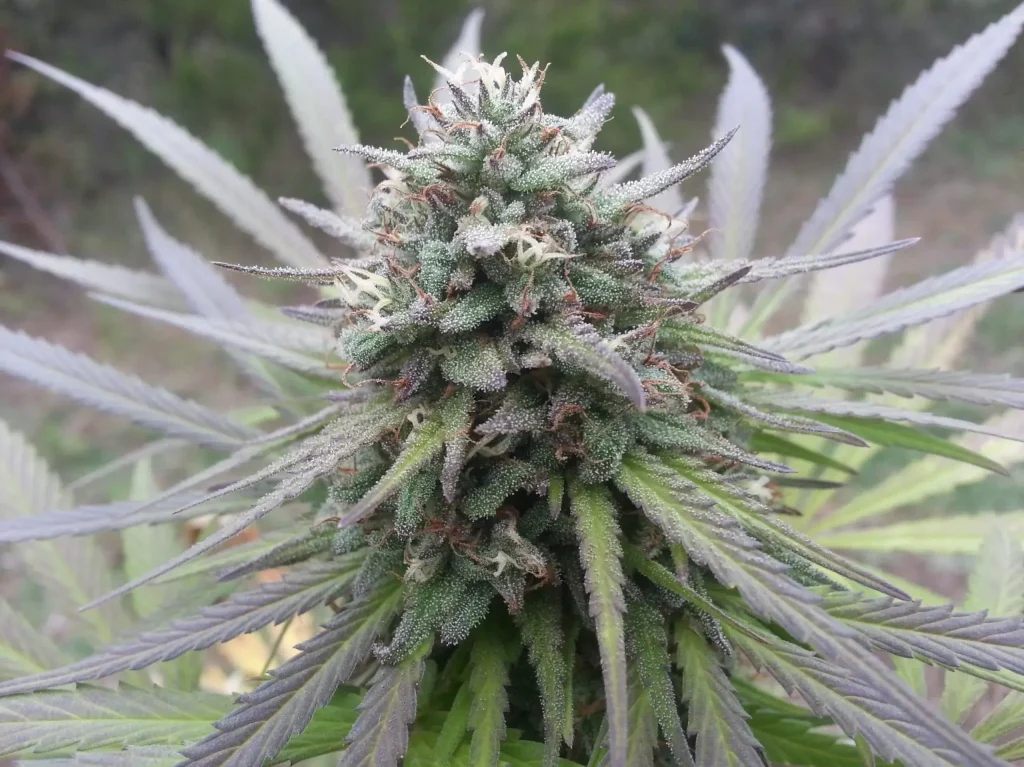
On the plant, NL #5 can flush deep purple in cooler conditions, a recognised and prized look that surprises growers expecting an ordinary green indica. It is the aroma and the effect that define the strain, but the purple expression is part of why it has such an enduring visual reputation too. If that look is what draws you, our guide to the best purple cannabis strains explains what actually causes it, and the Granddaddy Purple strain review covers the strain that turned that reliable purple flush into a category of its own.
Northern Lights strain Effects: What the Terpene Profile Produces
Northern Lights is an evening strain. That is not a limitation, it is the point. The myrcene-dominant terpene profile drives a deeply physical, relaxing effect that builds over 45 to 90 minutes and lands you exactly where you want to be at the end of the day: comfortable, relaxed, unhurried. This is the one I reach for when I want to genuinely switch off.
The terpene profile and what it does
If you want the background on how these compounds shape a strain, our guide to cannabis terpenes covers it in full. Myrcene is dominant and responsible for the characteristic earthy, musky sweetness in the aroma and the heavy body effect. Some people believe that myrcene helps THC cross the blood-brain barrier, which is part of why Northern Lights lands heavier than its THC percentage alone would suggest. At 18 to 22% THC with high myrcene, the body load is substantial. What is notable about Northern Lights specifically is how consistent that myrcene expression is across plants, where modern hybrids can vary significantly between individual seeds from the same pack. That reliability is a direct consequence of the decades of stabilisation work, and it is something growers who have run both classic and modern genetics will notice straight away.
Caryophyllene adds the spicy, peppery note to the aroma. It is the terpene behind the warm, grounding quality of the experience and part of why Northern Lights feels heavier and more bodily than its THC figure alone suggests. It is also what gives the smoke its faint savoury edge over the sweetness.
Pinene is the tertiary terpene and adds the clean pine note that distinguishes Northern Lights from heavier, earthier indicas. Pinene also takes some of the edge off the foggy quality of high-myrcene strains, which is what keeps Northern Lights on the comfortable side of relaxing rather than disorienting.
Effect progression
Onset (10 to 20 min): A mild euphoric lift. The Thai sativa influence in NL #5 makes itself felt early. Mood brightens, tension releases. The effect at this stage is warm and pleasant rather than heavy.
Early phase (20 to 60 min): The indica genetics assert themselves. Body relaxation spreads steadily, muscles ease, tension recedes. At moderate doses this is still functional. You can hold a conversation, watch something, be present. The experience is comfortable rather than incapacitating.
Mid-to-late phase (60 to 120 min): Full body relaxation at typical doses. The myrcene load comes through completely. Appetite picks up. The mind goes quiet, and the whole thing settles into an easy, unhurried calm.
Duration: 2 to 3 hours at typical doses, with a clean finish and no notable grogginess the following morning at moderate use.
Jason: Northern Lights is what I smoke when I want the day to be over. Not in a negative sense, but in the sense that it marks the transition from work to rest better than almost anything else I have tried. One session, early evening, and I am genuinely relaxed in a way that does not happen from just sitting on the couch. The myrcene load is real and it does exactly what you want it to do. This is my go-to for switching off.
What to Expect
A 90/10 indica-dominant classic at 18 to 22% THC, with a myrcene-led earthy-sweet profile and notes of pine and faint spice. A mild euphoric lift up front from the Thai side, then a steady, deeply relaxing body effect that suits the evening. Decades-stable, so plant-to-plant consistency is exceptional. Comfortable rather than overwhelming, and a clean finish the next morning.
Northern Lights vs Other Classic and Hybrid Strains
| Strain | THC | How it differs from NL |
|---|---|---|
| Northern Lights | 18 to 22% | The reference point: earthy-sweet terpene profile, reliable relaxation, stable and classic |
| Godfather OG | 22 to 28% | Higher THC and heavier, a deeper physical effect. The choice when maximum potency is the brief |
| Black Domina | 20 to 24% | 95% indica, heavier and more physical than NL and less euphoric, with a darker, more complex aroma |
| Granddaddy Purple | 20 to 27% | The purple benchmark, heavier and grape-forward against NL’s earthy-sweet, and the reliable-colour classic rather than the reliable-structure one |
| Gorilla Glue #4 | 26 to 28% | Significantly higher THC, a more complex caryophyllene-driven profile and heavier resin, with less of NL’s euphoric opening |
| Jack Herer | 18 to 22% | NL is a parent. Jack Herer is the sativa expression of what NL contributes: uplifting and functional against NL’s relaxing and physical |
Who It Suits
Northern Lights suits growers who want a stable, forgiving, fast-finishing plant with a genuine pedigree, first-timers very much included, and it suits people who want a dependable, classic evening effect over chasing the newest high-THC genetics. It is for anyone who values reliability and that earthy-sweet profile, and for growers who like the chance of a deep purple flush in cool conditions. It is not the pick if you want a bright daytime sativa or the loud candy flavours of the modern hybrids.
Not sure Northern Lights is the right fit? Our strain finder takes six quick questions and matches you to three strains based on your setup, your experience and the effect you are after.
Northern Lights strain review: Key Takeaways
A true benchmark indica. The Northern Lights strain is an Afghani-led classic carrying a touch of Thai in the definitive #5, at 18 to 22% THC, with a myrcene-dominant, body-first evening effect and a mild euphoric opening.
Foundational genetics. Stabilised by Nevil Schoenmakers and Sensi Seeds, it became one of the most-used breeding parents in the business, behind Shiva Skunk, Super Silver Haze and Jack Herer.
Decades-stable. Minimal phenotype variation and a consistent earthy-sweet profile, the payoff of forty years of stabilisation work, plus the chance of a deep purple flush in cool conditions.
The evening classic. For people who value a reliable, dependable experience over the newest genetics. Available as feminised photoperiod or autoflower seeds.
Frequently Asked Questions
What is the Northern Lights strain?
Northern Lights is a feminised, indica-dominant cannabis strain bred from Afghani landrace genetics with a touch of Thai, stabilised by Nevil Schoenmakers and Sensi Seeds in the Netherlands from 1985. NL #5 is the most widely distributed phenotype, the one most seed banks including Sacred Seeds work from. It tests at 18 to 22% THC with a myrcene-dominant terpene profile and an earthy-sweet aroma.
What is Northern Lights #5?
Northern Lights #5 is the most famous and widely distributed phenotype from the original 11 numbered plants grown by “The Indian” near Seattle. It became the definitive expression through Nevil Schoenmakers and Sensi Seeds’ work in the Netherlands, chosen for its exceptional resin production, fast flowering, dense bud structure and balanced effect. When a seed bank lists “Northern Lights” without a number, they are almost always working from #5 genetics.
Is Northern Lights indica or sativa?
Strongly indica, at roughly 90% indica to 10% sativa. The small Thai sativa influence in NL #5 shows up as a mild euphoric lift early in the experience, but the overall character is an indica-dominant, body-first, evening effect. If the labels themselves are new to you, our sativa vs indica guide explains what they do and do not tell you.
Why is Northern Lights so important to cannabis breeding?
Because it became one of the most trusted breeding parents in the business. Its stable Afghani structure, heavy resin and fast flowering make it an ideal indica anchor for a cross, and breeders used it to build strains like Shiva Skunk, Super Silver Haze and Jack Herer. Combined with its dominance at the early Cannabis Cups, that breeding role is why Northern Lights is regarded as the benchmark indica.
What does Northern Lights smell and taste like?
Earthy, sweet pine with a faint spicy note from the caryophyllene and a woody undertone. The myrcene dominance gives it the musky earthiness characteristic of Afghani-lineage genetics. It is a classic, immediately recognisable profile: not the layered complexity of modern OG-lineage hybrids, but clean and distinct.
What effect does Northern Lights have?
A mild euphoric lift up front from the Thai side, then a steady, deeply relaxing body effect that builds over 45 to 90 minutes. The high-myrcene profile drives a substantial body load, so it settles into an unhurried, comfortable calm that suits the end of the day. It is an evening strain rather than one for daytime use where function is required.
Why does Northern Lights turn purple?
NL #5 can flush deep purple when night temperatures drop in late flower, which brings out anthocyanin pigments already present in the plant. It is a prized look, though it is cosmetic rather than a sign of extra potency. Our guide to the best purple cannabis strains explains the science behind it, and the Granddaddy Purple strain review works through the same anthocyanin genetics on the strain that made the trait famous.
Is Northern Lights a landrace?
Not quite. It descends directly from Afghani landrace genetics, with some Thai in the mix, but Northern Lights itself is a stabilised hybrid rather than a pure landrace. That stabilisation is exactly what made it so valuable, since it reproduces its traits reliably from seed in a way a raw landrace does not. Our explainer on cannabis seed genetics from landrace to hybrid covers how that works.
How does Northern Lights compare to Godfather OG?
Godfather OG is heavier and more potent, at 22 to 28% THC against 18 to 22% for NL, with a more complex OG terpene profile. Northern Lights is the more approachable, classic experience with a reliable relaxing effect that does not rely on maximum THC. If maximum potency is the brief, Godfather OG. If a dependable, classic evening effect is the brief, Northern Lights.
Is Northern Lights easy to grow?
Yes, genuinely, which is part of why it is a good first photoperiod. It tolerates mistakes, stays compact, finishes fast, resists mould reasonably well and does not stretch or herm easily. Decades of stabilisation mean plant-to-plant consistency is excellent, so you get very few surprises from a pack of seeds. It regularly features in our roundup of the best beginner cannabis strains in Australia.
Can I grow Northern Lights outdoors in Australia?
Yes. Northern Lights suits Australian outdoor growing well thanks to its fast finish, compact structure and good resilience across climate zones. For the seasonal timing, our guide to growing cannabis outdoors in Australia sets out the calendar, and for regional fit, yields and the full grow breakdown, see the product page and the Australian climate strain guide.
Does Northern Lights have an autoflowering version?
Yes. Auto Northern Lights carries the same classic genetics in an autoflowering format on a fixed timeline regardless of light schedule. The auto version suits Australian outdoor conditions where multiple runs per season are practical or where light control is not available. For the full comparison, see our autoflower vs photoperiod guide.
What strains come from Northern Lights?
Some of the most important in the business. It is the indica backbone of Shiva Skunk (with Skunk #1), it sits in Super Silver Haze, and it is half the foundation of Jack Herer, whose full story we tell separately. Its genetics also run quietly through many modern hybrids that never carry its name.
Sacred Seeds Australia sells cannabis seeds strictly as souvenirs and for genetic preservation, in accordance with local laws. In Australia it is illegal to germinate cannabis seeds unless you are in the ACT or hold a specific licence. Nothing in this article is medical advice.
Related reading: browse the full range of cannabis seeds Australia, our indica-dominant range, the Black Domina guide for another heavy Sensi-era indica, and the guide to the best cannabis strains for the Australian climate.