Cannabis Seeds Guide: Types, Storage, Germination & Selection (Australia)

Cannabis Seeds Guide: Types, Storage, Germination & Selection (Australia)


Whether you’re a dedicated collector or simply curious about botanical preservation, understanding cannabis seeds is essential for building a quality collection. This comprehensive cannabis seeds guide explores everything from seed genetics and types to proper storage techniques and selection criteria specific to Australian conditions. With the right knowledge, you can confidently navigate the world of seed collecting and preservation.

At its core, selecting quality cannabis seeds requires understanding the fundamental differences between seed types, recognizing quality indicators, and knowing how to preserve genetic material properly. Feminised seeds produce only female plants, regular seeds offer both male and female genetics, and autoflowering varieties flower based on age rather than light cycles. Proper storage in cool, dark, dry conditions can preserve seed viability for years, while quality seeds display dark coloration, firm shells, and waxy coatings that indicate genetic health and maturity.


Understanding Different Types of Cannabis Seeds

The types of cannabis seeds available to collectors have evolved significantly over the past few decades. Modern breeding techniques have created distinct seed categories, each with unique characteristics and preservation requirements. Understanding these differences forms the foundation of any serious collection strategy.

Cannabis seeds generally fall into three primary categories: feminised, regular, and autoflowering. Each type represents different breeding objectives and genetic expressions. Feminised seeds have been selectively bred to produce only female plants, eliminating male chromosomes through specialized breeding techniques. Regular seeds maintain both male and female genetics in roughly equal proportions, preserving the plant’s natural genetic diversity.

Autoflowering seeds represent a revolutionary development in cannabis genetics. These seeds contain genetics from Cannabis ruderalis, a subspecies that evolved in harsh northern climates where daylight hours vary dramatically. This genetic contribution allows plants to flower based on age rather than photoperiod, typically within 2-4 weeks regardless of light exposure.

Beyond these primary categories, collectors also encounter specialized variations. Fast version cannabis seeds combine photoperiod and autoflowering genetics to create plants that flower more quickly than traditional photoperiod varieties while maintaining the quality characteristics collectors value. These represent an exciting middle ground for those interested in diverse genetic expressions.

Photoperiod Seeds and Light Sensitivity

Photoperiod seeds respond to changes in light exposure, mimicking natural seasonal transitions. In their natural environment, these plants begin flowering when days shorten and nights lengthen, typically occurring as summer transitions to autumn. This light sensitivity is controlled by specific genes that detect photoperiod changes.

For collectors in Australia, understanding photoperiod sensitivity is particularly important. The southern hemisphere’s reversed seasons mean plants respond to different light cues than those in northern regions. Some collectors specifically seek genetics adapted to Australian conditions, while others preserve international varieties as botanical specimens.

Photoperiod varieties include both indica-dominant and sativa-dominant genetics, each with distinct growth patterns and preservation considerations. Understanding these differences helps collectors maintain genetic diversity within their collections.

Feminised vs Regular Cannabis Seeds
Featured image for Cannabis Seeds Guide: Types, Storage, Germination & Selection (Australia)

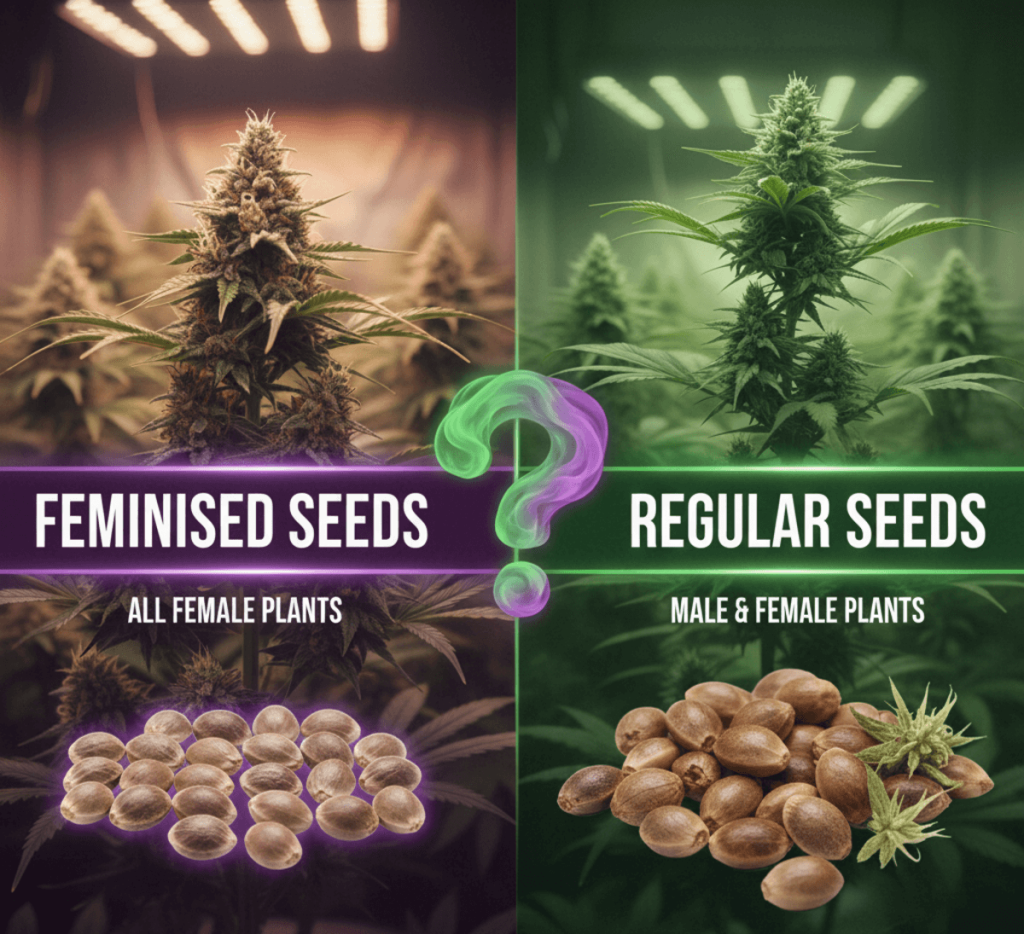
The distinction between feminised and regular seeds represents one of the most significant decisions for seed collectors. Each type offers different advantages for preservation and genetic study. Regular seeds maintain the plant’s complete genetic heritage, including both male and female chromosomes, while feminised seeds have been specifically bred to express only female genetics.

Regular seeds produce approximately 50% male and 50% female plants under typical conditions. This natural ratio mirrors wild cannabis populations and preserves genetic diversity. For collectors interested in breeding or maintaining complete genetic lines, regular seeds are essential. They allow for natural pollination and seed production, creating opportunities for genetic preservation and study.

Feminised seeds eliminate male plants from the equation entirely. Created through techniques like colloidal silver application or rodelization, these seeds produce exclusively female plants. This consistency makes feminised varieties popular among collectors who want predictable genetic expressions. However, feminised seeds cannot produce viable pollen for traditional breeding without specialized techniques.

The Breeding Science Behind Feminisation

Feminisation occurs when female plants are induced to produce pollen through stress techniques or chemical applications. This female-derived pollen contains only X chromosomes, lacking the Y chromosome that would produce male plants. When this pollen fertilizes another female plant, the resulting seeds carry only XX chromosome pairs, producing female offspring.

This process doesn’t alter the underlying genetics beyond sex expression. A feminised seed of a particular strain contains the same genetic information as a regular seed of that strain, minus the male chromosomes. Quality, potency, and other characteristics remain intact when feminisation is performed correctly using stable genetics.

Understanding this science helps collectors appreciate the sophistication of modern seed breeding. It also explains why distinguishing between male and female genetics requires understanding chromosomal differences rather than visible seed characteristics.

For more, read this complete guide to feminised weed seeds. 

Autoflowering Cannabis Seeds Explained

Autoflowering seeds represent a fascinating branch of cannabis genetics that operates independently of traditional light cycles. These seeds contain genetics from Cannabis ruderalis, a hardy subspecies that evolved in regions with extreme seasonal variations. The resulting plants flower automatically based on age rather than photoperiod changes.

The ruderalis contribution creates plants that typically begin flowering 2-4 weeks after germination, regardless of light exposure. This automatic flowering trait is controlled by specific genetic markers that trigger reproductive development at predetermined stages. For collectors, this represents a unique genetic expression worth preserving and studying.

Modern autoflowering varieties have been extensively bred to combine ruderalis genetics with premium indica and sativa strains. This hybridization preserves the automatic flowering trait while improving other characteristics like potency, yield potential, and aromatic profiles. The result is sophisticated genetics that maintain the autoflowering advantage.

Advantages of Autoflowering Genetics

Autoflowering seeds offer several distinct advantages for collectors in Australia. Their compact size and rapid development cycle make them ideal for small-space preservation projects. Many autoflowering varieties remain under one meter tall, requiring minimal space while still expressing complete genetic characteristics.

The light-independent flowering also provides flexibility for preservation under various conditions. Unlike photoperiod varieties that require specific light schedules to trigger flowering, autoflowers progress through their lifecycle regardless of lighting conditions. This resilience can be valuable when maintaining collections under non-optimal circumstances.

Additionally, autoflowering genetics often demonstrate enhanced resistance to environmental stress. The ruderalis heritage evolved in harsh climates, contributing genes for cold tolerance, pest resistance, and general hardiness. These traits make autoflowering seeds particularly interesting for collectors studying plant resilience and adaptation.

Learn more about the difference between autoflowering and photoperiod feminised seeds in this guide. 

How to Select Quality Cannabis Seeds

Selecting quality cannabis seeds requires understanding visual indicators, genetic backgrounds, and breeder reputations. While physical characteristics can provide useful clues, it’s important to recognise that natural variation exists between strains. Some genetics naturally produce paler or smaller seeds, even when they are fully mature and viable.

In general, mature cannabis seeds often show darker coloration ranging from light brown to deep brown or near black. This pigmentation usually develops as seeds reach full maturity, whereas very immature seeds may appear pale green or white. That said, colour alone isn’t definitive — certain strains consistently produce lighter-coloured seeds without any impact on viability. Firmness is a more reliable indicator: healthy seeds should feel solid when gently pressed and may have a smooth, slightly waxy outer shell that helps protect internal moisture.

Surface markings can also vary by genetics. Some strains commonly produce seeds with mottled patterns or so-called “tiger striping,” while others appear more uniform. These markings don’t guarantee viability, nor does their absence indicate a problem. What matters more is overall integrity — seeds with cracks, holes, soft spots, or obvious physical damage are best avoided, as these defects are more likely to compromise viability regardless of strain.

Evaluating Seed Genetics and Lineage

Beyond physical appearance, understanding genetic lineage helps collectors select superior seeds. Reputable breeders maintain detailed genetic records showing parent plants and breeding objectives. This transparency allows collectors to verify genetic authenticity and understand what traits a particular seed line expresses.

Stable genetics are crucial for quality collections. Seeds from well-established strains with documented breeding histories typically produce more predictable results than those from unknown or unstable genetics. Look for varieties with multiple generations of selective breeding rather than first-generation crosses that may express unpredictable traits.

Collectors should also consider the breeder’s reputation and testing protocols. At Sacred Seeds we go to great lengths to research our breeders track records and protocols.  We also offer detailed information about our testing procedures, providing transparency about seed quality and viability rates.


Proper Cannabis Seed Storage Methods

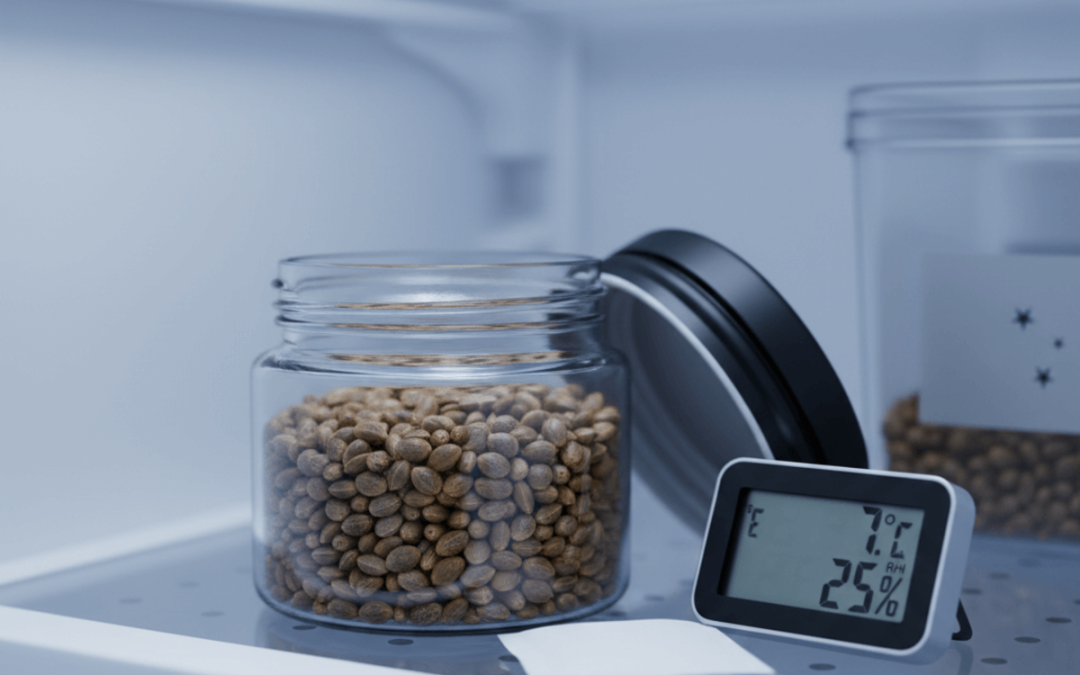
Airtight glass containers for cannabis seeds guide storage

Proper storage is perhaps the most critical factor in preserving cannabis seed viability over time. Seeds are living organisms in a dormant state, and their preservation requires careful attention to environmental conditions. Temperature, humidity, and light exposure all significantly impact long-term viability.

The ideal storage environment maintains consistent cool temperatures between 6-8°C (42-46°F). This temperature range slows metabolic processes without freezing, preserving seed viability for extended periods. Refrigerators provide suitable storage locations, though dedicated seed storage containers offer better environmental control than standard refrigerator storage.

Humidity control is equally important. Seeds should be stored at relative humidity levels between 20-30%. Higher humidity encourages premature germination or mould development, while extremely low humidity can desiccate seeds over time. Silica gel packets or specialized humidity control products help maintain optimal moisture levels within storage containers.

Light exposure accelerates seed degradation by triggering photochemical reactions that damage genetic material. Seeds should always be stored in opaque containers that block all light penetration. Even brief light exposure during handling should be minimized to preserve long-term viability. For comprehensive guidance on preservation techniques, review specific storage recommendations for Australian conditions.

Container Selection for Long-Term Storage

Container selection significantly impacts storage success. Airtight glass containers provide excellent moisture barriers while remaining inert and non-reactive. Amber or dark-colored glass offers additional light protection. Avoid plastic containers for long-term storage, as they may release chemicals over time and provide less reliable moisture barriers.

Individual seed packaging within larger containers provides extra protection. Small paper envelopes or seed tubes keep varieties separated while allowing air circulation that prevents condensation. Label all containers with strain names, collection dates, and any relevant genetic information to maintain accurate records.

For collectors maintaining extensive libraries, vacuum-sealed containers offer maximum protection. Removing air from storage containers eliminates oxygen that can degrade seeds over time. However, vacuum sealing requires careful technique to avoid crushing delicate seeds during the sealing process.

Monitoring and Maintaining Stored Seeds

Regular monitoring ensures storage conditions remain optimal. Check stored seeds quarterly for signs of moisture, mold, or pest activity. Temperature and humidity fluctuations can occur even in controlled environments, so periodic verification prevents storage failures.

Viability naturally declines over time, even under perfect conditions. Most cannabis seeds maintain high germination rates for 2-3 years under optimal storage, with gradual decline thereafter. Understanding realistic storage timeframes helps collectors plan acquisition and preservation strategies accordingly.

Cannabis Seed Germination Fundamentals

While this guide focuses primarily on seed selection and storage, understanding germination fundamentals helps collectors verify seed quality and preserve genetic lines. Germination testing reveals seed viability and allows collectors to refresh their stock by producing new seeds from stored genetics.

Successful germination requires three primary elements: moisture, warmth, and darkness. Seeds need adequate moisture to activate internal enzymes that initiate growth. Temperatures between 22-25°C (71-77°F) provide optimal conditions for germination, while darkness encourages the initial root development that precedes shoot emergence.

Several germination methods exist, each with advantages for different situations. The paper towel method involves placing seeds between moistened paper towels in a warm, dark location. This technique allows easy monitoring of germination progress and works well for testing small quantities. Direct soil germination offers a more natural approach, though it makes monitoring more difficult.

Water quality significantly impacts germination success. Chlorinated tap water can inhibit germination, while distilled or purified water provides neutral pH and eliminates chemical interference. Understanding water purity’s role helps collectors maximize germination rates when testing stored genetics.

Troubleshooting Germination Issues

When seeds fail to germinate, several factors may be responsible. Old seeds naturally exhibit lower germination rates, particularly those stored beyond their optimal timeframe. However, even fresh seeds may fail to germinate if exposed to extreme temperatures, excessive moisture, or contamination during storage.

Physical damage to the seed shell can prevent germination by allowing pathogens to enter before the seedling establishes itself. Inspect seeds carefully before germination attempts, discarding any with visible cracks or damage. Some collectors gently scarify very old seeds to improve water absorption, though this technique requires careful execution.

If multiple seeds from the same batch fail to germinate, the issue likely stems from storage conditions or seed age rather than germination technique. For detailed troubleshooting guidance, refer to comprehensive germination problem-solving resources that address common issues and solutions.

Germination Testing for Quality Verification

Professional collectors often conduct periodic germination tests to verify stored seed viability. Testing 5-10 seeds from each variety every 1-2 years provides data about storage effectiveness and helps identify varieties requiring refresh. Document germination rates, timing, and any abnormalities to build comprehensive quality records.

The paper towel germination method works particularly well for testing purposes, as it allows precise monitoring without soil medium variables. Record the time from moisture exposure to visible taproot emergence, as germination speed often indicates seed vigor and quality.

Genetic Considerations for Australian Collectors

Australian collectors face unique considerations when building cannabis seed collections. Climate variations across the continent, legal frameworks, and availability all influence collection strategies. Understanding these factors helps collectors make informed decisions about which genetics to acquire and preserve.

Australia’s diverse climate zones range from tropical in the north to temperate in the south, with arid interior regions. This variation means genetics suited to one region may perform differently in another. Collectors often seek varieties with proven resilience to their specific local conditions, whether that means heat tolerance, humidity resistance, or pest resilience.

Indica-dominant varieties generally prefer drier conditions with moderate temperatures, making them well-suited to many Australian regions. Sativa-dominant genetics often handle humidity better but may struggle with temperature extremes. Hybrid varieties offer balanced characteristics that adapt to varied conditions, making them popular among Australian collectors.

The legal framework surrounding cannabis in Australia continues to evolve, with varying regulations across states and territories. Collectors should understand their local laws regarding seed possession, as regulations differ significantly between jurisdictions. Seeds themselves are legal to possess in most Australian states when sold as collectibles or souvenirs.

Climate-Specific Genetic Selection

Northern Australian collectors in tropical and subtropical zones face different challenges than those in temperate southern regions. High humidity encourages mold and pest issues, making mold-resistant genetics particularly valuable. Varieties with looser bud structure allow better air circulation, reducing moisture-related problems in humid climates.

Southern collectors in cooler climates benefit from cold-resistant varieties that tolerate temperature fluctuations. Some indica varieties and certain hybrids demonstrate excellent cold tolerance, making them suitable for preservation in variable temperature conditions. Traditional indica genetics often show superior cold resistance compared to pure sativa varieties.

Arid interior regions present unique preservation challenges with extreme temperature swings and low humidity. Hardy varieties with drought tolerance and heat resistance perform best in these conditions. Collectors in these areas often focus on genetics with demonstrated resilience to environmental extremes.

Preserving Diverse Genetic Libraries

Serious collectors often maintain diverse genetic libraries representing different geographic origins, cannabinoid profiles, and growth characteristics. This diversity preserves genetic heritage while providing options for various interests and research applications. Building balanced collections requires strategic acquisition over time.

Consider including high-THC varieties, CBD-rich genetics, and balanced hybrids to represent the full spectrum of cannabis genetics. Each category offers unique preservation value and demonstrates different aspects of cannabis genetic diversity.

Common Cannabis Seed Myths Debunked

Seed Genetics cannabis seeds guide myths

Numerous myths and misconceptions surround cannabis seeds, often creating confusion for new collectors. Separating fact from fiction helps collectors make informed decisions and avoid common pitfalls. Understanding the science behind these myths provides clarity and improves collection strategies.

One persistent myth suggests seed appearance indicates plant sex. In reality, no visual seed characteristic reliably predicts whether a plant will be male or female. Sex determination occurs at the chromosomal level, invisible without genetic testing. Only feminised seeds guarantee female plants, and this results from breeding techniques rather than seed appearance.

Another common misconception claims that darker seeds are always superior to lighter ones. While dark coloration often indicates maturity, color alone doesn’t determine quality. Some varieties naturally produce lighter seeds even when fully mature. Shell firmness, surface condition, and genetic verification provide more reliable quality indicators than color alone.

The myth that freezing extends seed viability indefinitely persists despite evidence to the contrary. While freezing can preserve seeds, improper freezing technique often causes more damage than benefit. Ice crystal formation can rupture cell walls, destroying viability. Professional long-term storage uses ultra-cold temperatures with controlled moisture levels, very different from standard freezer storage.

Understanding Seed Genetics vs. Environmental Factors

Many collectors mistakenly believe seed genetics alone determine plant characteristics. In reality, phenotypic expression results from genetic and environmental factors interacting. The same seed can produce plants with different characteristics depending on growing conditions, nutrient availability, and environmental stress.

This genotype-phenotype relationship explains why seeds from the same batch may express varying characteristics. Genetics provide the potential range of expressions, while environment determines which traits manifest. Collectors interested in consistent expressions should understand this relationship and its implications for preservation.

For comprehensive myth-busting, review detailed analysis of common seed misconceptions that addresses breeding, storage, and germination myths with scientific explanations.

Frequently Asked Questions

What’s the difference between feminised and regular cannabis seeds?

Feminised seeds produce only female plants because they contain only X chromosomes, created through specialized breeding techniques. Regular seeds contain both male and female chromosomes, producing approximately 50% male and 50% female plants. Feminised seeds offer predictability, while regular seeds maintain complete genetic diversity and allow traditional breeding.

How long can cannabis seeds remain viable in storage?

Under optimal storage conditions (cool temperatures of 6-8°C, low humidity of 20-30%, and complete darkness), cannabis seeds typically maintain high germination rates for 2-3 years. With proper care, many seeds remain viable for 5 years or longer, though germination rates gradually decline over time. Storage quality significantly impacts longevity.

Can you tell if a cannabis seed will be male or female by looking at it?

No visual characteristic reliably indicates seed sex. Gender determination occurs at the chromosomal level, which cannot be seen without genetic testing. Only feminised seeds guarantee female plants, achieved through breeding techniques rather than physical seed traits. Claims about seed shape, size, or markings predicting sex lack scientific basis.

What are autoflowering cannabis seeds?

Autoflowering seeds contain genetics from Cannabis ruderalis and automatically flower based on age rather than light cycles. These plants typically begin flowering 2-4 weeks after germination, regardless of light exposure, making them ideal for collectors with space limitations. The automatic flowering trait is controlled by specific genetic markers that trigger reproductive development at predetermined stages, allowing for rapid seed-to-harvest cycles.

What should I look for in a reputable seed bank?

A reputable seed bank should demonstrate several key qualities that indicate reliability and quality. Look for established companies with a proven track record, transparent customer reviews across multiple platforms, and clear information about their testing procedures and germination guarantees. Quality seed banks provide detailed strain information, including genetic lineage, expected characteristics, and growing difficulty levels. They should also offer secure payment options, discreet packaging, and reliable customer support. Many premium seed banks provide germination rate data and genetic verification certificates for their products. Additionally, check whether they source seeds from established breeders with documented breeding histories rather than unknown or unstable genetics. A reputable seed bank will be transparent about their sourcing, testing protocols, and willing to answer questions about their products and procedures.

How do I know if my seeds are too old or no longer viable?

Several indicators suggest seeds may have lost viability or are too old. The most reliable method is conducting a germination test by soaking a sample of seeds in water for 24-48 hours and observing how many develop a taproot. If fewer than 50% of seeds germinate, viability has likely declined significantly. Visually, very old seeds may appear pale, cracked, or have a dull surface rather than the glossy, waxy coating of fresh seeds. Seeds stored in poor conditions—exposed to light, high humidity, or temperature fluctuations—will show reduced viability regardless of age. If seeds have been stored for more than 5 years, even under optimal conditions, germination rates typically decline noticeably. You can also perform a float test: place seeds in water and observe if they sink (viable) or float (potentially non-viable), though this method is less reliable than germination testing. When in doubt, test a small sample before committing to a full planting.

Can I store different seed types together, or should I keep them separate?

Different seed types can be stored together in the same container as long as proper storage conditions are maintained. However, there are practical reasons to keep them organized and separated within the container. Using individual paper envelopes or seed tubes for each variety allows you to maintain accurate records, track germination rates by type, and easily identify which seeds are which without opening the main storage container repeatedly. Separating seeds also helps prevent cross-contamination and makes it easier to monitor specific varieties for signs of mold or deterioration. If storing together, ensure all seeds are equally dry and the container maintains uniform temperature and humidity throughout. Label each individual packet clearly with the strain name, collection date, and any relevant genetic information. This organizational approach maximizes the lifespan of your entire collection while making it easy to access specific varieties when needed.

What’s the difference between seeds and clones, and which should I choose?

Seeds and clones represent two fundamentally different propagation methods, each with distinct advantages. Seeds are produced through pollination and contain genetic material from both parent plants, resulting in genetic diversity within a seed batch. This genetic variation means plants from the same seed batch may express slightly different characteristics. Clones, by contrast, are cuttings taken from a mother plant and are genetically identical to the parent. Seeds offer the advantage of genetic diversity, potentially discovering unique phenotypes, and are easier to transport and store. Clones provide consistency—you know exactly what you’re getting—and can be ready to flower more quickly since they’re already mature plant tissue. For collectors interested in genetic preservation and diversity, seeds are ideal. For those seeking predictable, consistent results, clones are preferable. Seeds are also more practical for long-term storage and collection building, while clones require living plant maintenance. Your choice depends on whether you prioritize genetic diversity and preservation or consistency and predictability.

How do environmental factors like temperature and humidity affect seed genetics?

Environmental factors don’t alter the underlying genetic code of seeds, but they significantly impact how those genetics are expressed in growing plants. This relationship between genetics (genotype) and environmental expression (phenotype) is crucial for collectors to understand. The same seed can produce plants with different characteristics depending on growing conditions, nutrient availability, light exposure, and environmental stress. For example, a strain genetically predisposed to produce purple coloration may only express this trait under specific temperature conditions. Similarly, cannabinoid profiles, growth rates, and plant size can all vary based on environmental factors even though the genetic potential remains unchanged. During storage, environmental conditions dramatically affect seed viability and longevity but not the genetic information itself. Temperature fluctuations, humidity exposure, and light penetration degrade seed viability over time without altering genetics. This is why proper storage is so critical—you’re preserving the genetic potential, not changing it. Understanding this genotype-phenotype relationship helps collectors maintain genetic diversity while recognizing that environmental optimization is key to expressing desired traits.

Are there differences between seeds from different breeders, and how do I choose between them?

Yes, significant differences exist between seeds from different breeders, even for the same strain name. Different breeders have distinct breeding philosophies, selection criteria, and genetic lines they use as parents. This means two “Blue Dream” seeds from different breeders may express noticeably different characteristics, potency levels, growth patterns, and aromatic profiles. When choosing between breeders, consider their reputation within the community, the transparency of their breeding information, and customer reviews of their specific strains.

Established breeders with long track records typically provide more stable, predictable genetics than newer or unknown breeders. Look for breeders who document their breeding history, explain their selection criteria, and offer detailed strain descriptions. Premium breeders often provide germination guarantees, genetic testing data, and customer support. Reading reviews from other collectors can reveal whether a particular breeder’s seeds consistently produce the characteristics advertised. For serious collectors, investing in seeds from reputable, established breeders ensures better quality, stability, and genetic authenticity than purchasing from unknown sources. Building relationships with trusted breeders over time allows you to develop confidence in their genetics and consistency.
The Best Purple Weed Seeds for Colorful Cannabis Cultivation

The Best Purple Weed Seeds for Colorful Cannabis Cultivation

💜 Purple Weed Seeds Explained

Most people just see a pretty colour.
But experienced growers know that the deep purple in a cannabis bud is a signal.
It’s a clue about the plant’s unique genetics, its potential flavour, and the relaxing effects to come.


🌿 Purple Weed Seeds Explained in Simple Terms

Let’s get one thing straight — the colour of your weed doesn’t make it stronger.

But there’s no denying that a bag full of deep purple buds just hits different.
The bag appeal is off the charts. It looks special because, a lot of the time, it is.

The reason it’s special isn’t the colour itself — the colour is just a signpost.
It’s a clue pointing to the unique genetics and the specific, often fruity and relaxing, experience that comes with purple weed.

It’s what we look for when we’re choosing strains for the collection at Sacred Seeds Australia; we’re chasing the quality genetics that the colour points to — like in the classic Granddaddy Purple.


🧠 Key Takeaways

😌 Most Purple Strains Are Relaxing

Many of the most popular purple strains are Indica-dominant, making them a go-to choice for users seeking relaxation, stress relief, and better sleep.


🧬 Genetics Are the Most Important Factor

A plant will only express purple colours if it has the genetic code to do so.
You cannot force a green strain to turn purple.


❄️ Cooler Temperatures Act as a Trigger

Exposing a genetically predisposed plant to cooler temperatures late in its flowering stage can enhance and deepen its purple hues.

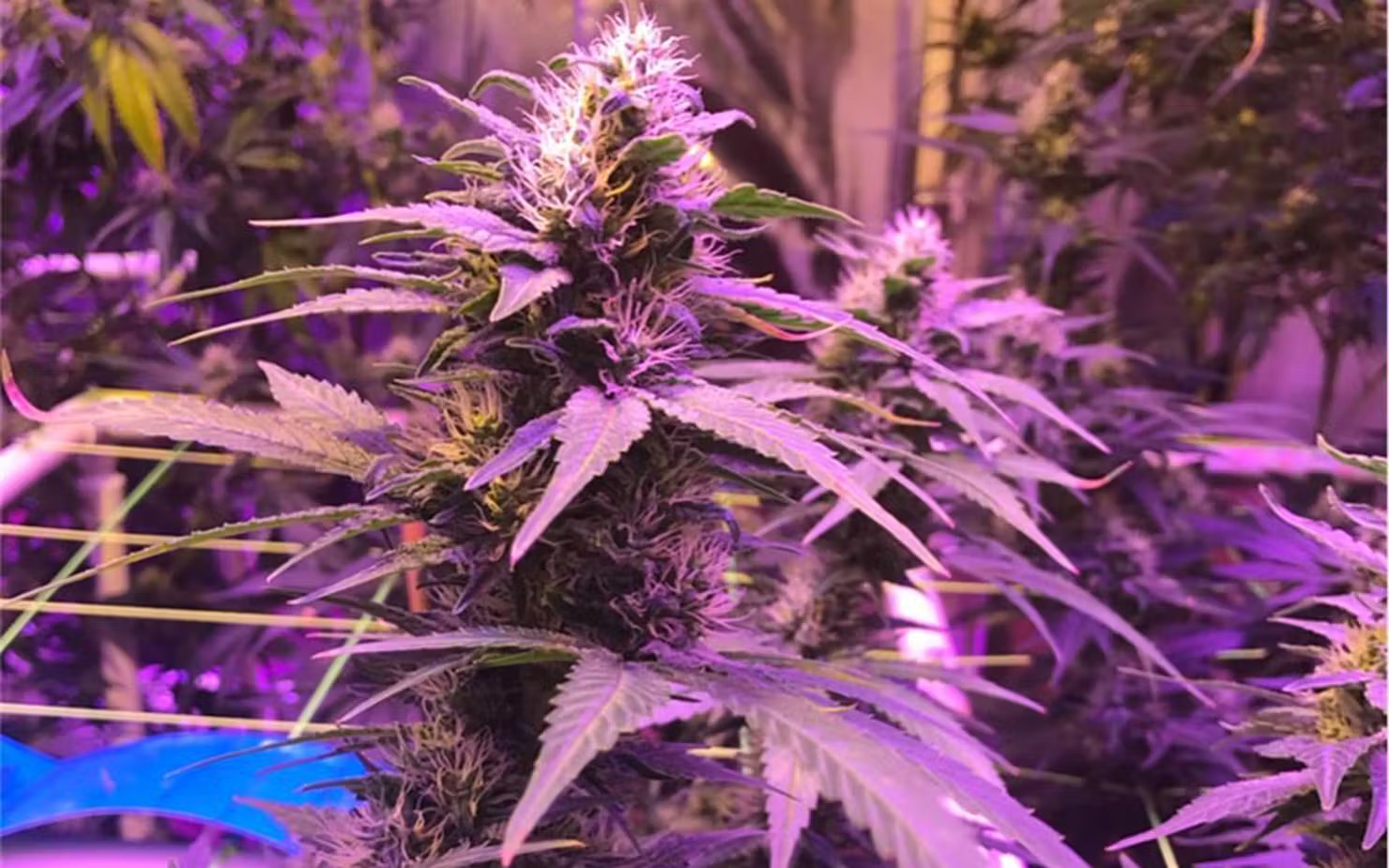
purple weed seeds sacred seeds australia

🍇 Most Purple Strains Have Relaxing Effects and Fruity Flavours

While the stunning appearance is a huge draw, purple weed seeds produce plants that are highly valued for their effects and aromas.

Because many of the most famous purple strains have a strong Indica-dominant heritage, they are often associated with powerful, full-body relaxation. Many people use these strains to help manage anxiety, stress, and chronic pain.

The terpene profiles in the strains also play a big role.
According to an analysis by Dutch Passion, purple strains frequently have a rich terpene blend that creates sweet, fruity, and earthy aromas.
Notes of grape and sweet berry are very common — making the taste and smell just as appealing as the vibrant colour.


💜 Granddaddy Purple and Purple Kush Are Some of the Finest Options in This Category

Granddaddy Purple is arguably the most famous.

Created in 2003 by breeder Ken Estes, Granddaddy Purple was a genetic milestone. By crossing Purple Urkle with Big Bud, he created a high-yielding Indica-dominant hybrid with a powerful body high and an unmistakable “grape Kool-Aid” aroma.

Before GDP, purple buds were a rarity — after, they became an icon.

Purple Kush is another West Coast classic.
It’s a pure Indica strain born from crossing Hindu Kush with a Purple Afghani.
It’s famous for its deeply relaxing, sedative effects, which make it a top choice for people dealing with chronic pain or insomnia.
Its earthy, sweet kush flavour is as legendary as its potent high.

Mimosa is another, one of the most delicious and stunning balanced hybrids.  Sometimes referred to as Purple Mimosa, she is a powerhouse strain created by crossing the zesty Clementine with the fruity, indica-leaning Purple Punch. This fusion delivers one of the most vibrant citrus-forward strains in existence, combining high THC levels with balanced effects and eye-catching bag appeal. Thanks to its purple heritage, Mimosa plants may express rich violet tones in cooler grow conditions.


🌈 Natural Pigments Called Anthocyanins Create the Purple Colour

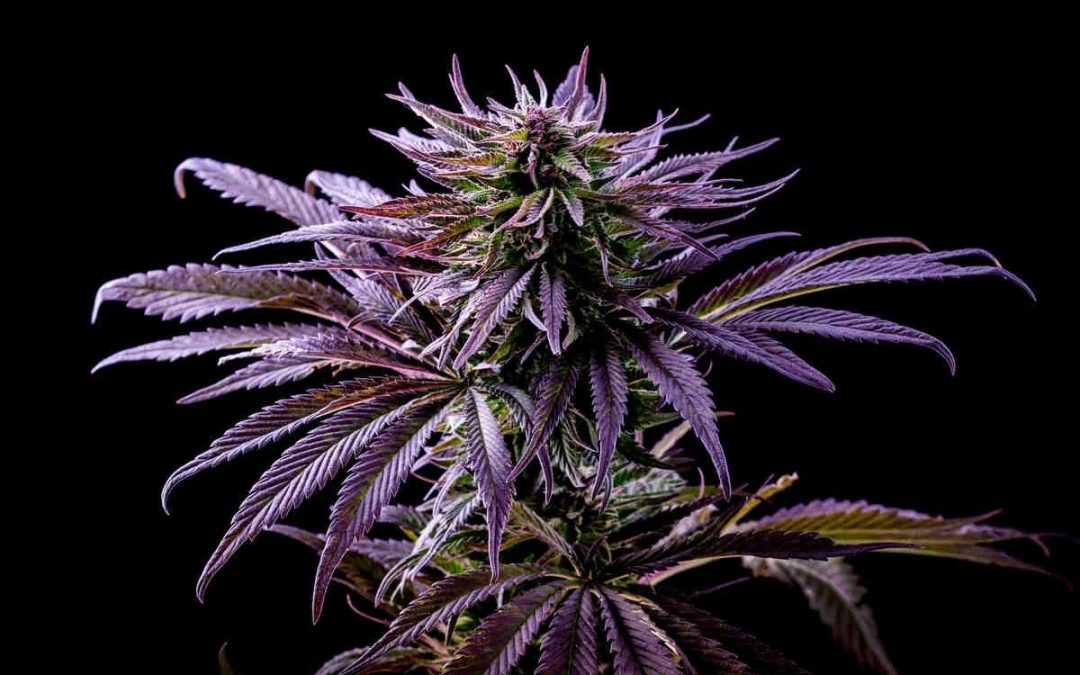
That striking purple colour is completely natural — produced by pigments called anthocyanins.

In a normal green cannabis plant, chlorophyll is so dominant that it masks the underlying colours.
But in purple cannabis strains, the genetics are different. As the plant matures and approaches harvest, it produces less chlorophyll, allowing the purple pigments that were always present to show through.

The process turns the leaves, flowers, and buds into beautiful violet shades.


❄️ Cooler Night Temperatures Will Bring Out the Deepest Purples

While a plant’s ability to turn purple is locked in its genetics, growers can use a few tricks to enhance the colour.

The most common method is to introduce cooler night temperatures.
Late in the flowering stage, letting the temperature drop a few degrees when lights are off mimics natural autumn conditions.

This signal slows chlorophyll production, allowing the vibrant purple hues to come through more strongly.
You don’t want to freeze your plants, but a gentle temperature drop makes a huge difference in final visual appeal.


🧬 Indica vs. Sativa: All Purple Effects Aren’t the Same

It’s a common mistake to think all purple weed will put you to sleep.
While many purple strains like Granddaddy Purple are Indica-dominant and deeply relaxing, that’s not the whole story — there are also sativa-dominant purple strains.

The legendary Purple Haze is the best example.
A cross of Haze and Purple Thai, it’s known for producing an energetic, creative, and almost psychedelic high.

It just goes to show — you’ll find a purple strain for every mood.


🌱 You Won’t Get Purple Buds Without the Right Genetics

You cannot force a plant to turn purple if it doesn’t have the right DNA.
All the tricks in the world won’t make a green strain show purple buds.

That’s why sourcing authentic seeds is so important when growing purple varieties.
At Sacred Seeds Australia, we work with top breeders to provide genuine genetics for legendary strains.

Our collection of feminised purple cannabis seeds and autoflower purple cannabis seeds is carefully selected.
With us, you’re definitely starting with the real deal.

purple kush sacred seeds australia

💬 Frequently Asked Questions (FAQs)

🌿 Are all purple strains Indicas?

No, but many of the most famous ones are Indica-dominant.
The relaxing effects are part of the classic purple weed profile.

However, there are also famous balanced purple strains, like Mimosa, which is known for its creative and euphoric effects.


🍇 Does the purple colour affect the taste of the buds?

Yes, in a way.
The anthocyanin pigments that cause the purple colouration are related to flavonoids, which contribute to the overall flavour profile.

This is why so many purple strains share a characteristic sweet berry or grape taste.


🔥 What is the THC content of most purple strains?

The THC levels depend on the strain.
Some, like Purple #1, are more moderate — around 10–15% THC.

Others are very potent.
For example, Cannabis Training University notes that Purple Kush typically contains 18–21% THC.


💜 What are some other popular purple strains?

The list is always growing.
Strains like Purple Punch and Purple Lemonade have become very popular recently.

Purple Punch is an Indica-dominant cross known for its knockout effects, while Purple Lemonade Auto is a fast-finishing autoflower with a zesty citrus and sweet flavour.


🌾 Do purple strains give good yields?

Yes, many are high-yielding varieties.
Breeders know that growers want both good looks and heavy harvests.

Strains like Granddaddy Purple were bred with Big Bud, a famous high-yielding strain, specifically to produce large yields of dense, resinous purple buds.


⚖️ What are the legal rules for growing purple seeds in Australia?

The rules are the same for all cannabis seeds.
In Australia, it is illegal to germinate or grow cannabis plants unless you are in the ACT or have a specific medical license.

All seeds — including purple weed seeds — are sold as adult souvenirs.
Always be aware of your local laws.


🧑‍🎓 Need helping choosing what to buy? Have a read of this strain guide.

🧑‍🎓 Learn here how we test our seeds and the best way to store seeds.  

Top Exotic Cannabis Seeds for Enthusiasts: Grow Unique Strains Today

Top Exotic Cannabis Seeds for Enthusiasts: Grow Unique Strains Today

🌺 Discovering Exotic Cannabis Seeds

You’ve heard of the big names like White Widow and Northern Lights.
But after a while, you start to wonder what else is out there.

There’s a whole world of rare, unusual, and powerful cannabis strains that offer completely new flavours and experiences.
Let’s get into it.


🔥 What’s the Big Deal About Exotic Cannabis Seeds?

The term “exotic cannabis seeds” describes strains with rare lineage, unique characteristics, and often very high potency.

The demand for premium genetics is growing fast.
A 2025 report from Cognitive Market Research points to a rapid rise in sales for the exotic cannabis seed market, driven by a clear consumer preference for novelty and potency.

It’s easy to see why breeders are producing exotic strains with incredible THC levels — some, like Future #1 by Anesia Seeds, have lab-tested THC levels of 37%!


🌿 Key Takeaways

💎 It’s About Rarity and Quality

Exotic strains are defined by their unique and hard-to-find genetics.
They are often a cross of award-winning or legendary parent strains.


🍋 Expect Unique Flavours and Aromas

A major part of what makes these strains exotic is their complex terpene profiles.
That results in unusual and powerful flavours and aromas you won’t find in more common varieties.


⚡ Potency Is Often High

Many exotic cannabis strains are bred for extreme THC levels.
It’s not uncommon to see them test well over 20% or even 30% THC.


🧠 They’re for the Connoisseur

Exotic marijuana seeds are made for the grower or collector who wants to explore something new and appreciates the fine qualities of top-shelf cannabis.

exotic cannabis seeds future #1 sacred seeds australia

🌿 What Makes a Strain “Exotic”?

First, it comes down to genetics.
Many exotic weed strains are the result of cutting-edge breeding projects. According to a report from Extreme Seeds, breeders often create them by crossing highly sought-after American strains with classic Dutch and Spanish varieties. The goal is to produce something new and exciting.

Next are the terpene profiles.
A study in the journal PLOS One highlights how terpenes create the distinct flavours and smells of a strain. Exotic strains are famous for having unusual aromas — think mint, strawberry, grape, or even gasoline.

Finally, there’s the potency.
While not always the case, many exotic cannabis strains are known for their incredibly high THC levels.


🇦🇺 Where to Find Real Exotic Genetics in Australia

The key to getting your hands on real exotic genetics is to go through a reputable seed bank that is transparent about where seeds come from.

That’s why a trusted local source is so important for cannabis enthusiasts.
At Sacred Seeds Australia, we have direct relationships with the breeders who create these exotic cannabis seeds. We spend a lot of time and energy finding and building relationships with artisan, expert breeders. 

Our collection of exotic weed seeds is carefully selected.


🌸 A Look at Some Examples

Some strains that were once considered exotic, like Girl Scout Cookies and Cherry Pie, have become so popular that they are now modern classics.

Today’s exotic marijuana strains continue to push the boundaries.
You have strains like Blue Dream and Durban Poison, which are sativa-dominant and known for a high that sparks creativity.

On the other end, you might find a heavy indica-dominant hybrid like Purple Kush, famous for its deep, relaxing effects and sweet berry flavours.
The goal of these unique cannabis strains is to always offer you a brand-new experience.


🍓 Why Exotic Strains Smell and Taste Different

While high THC levels get a lot of attention, the real magic of exotic cannabis strains is in their terpenes.
Terpenes are the aromatic compounds in the plant that create the incredible range of flavours and smells.

Standard strains might smell earthy, piney, or citrusy — but exotic weed strains are where you find truly strange and wonderful aromas: strawberry, mint, candy, cookies, and even gasoline.

A study in the PLOS One journal highlighted how these complex terpene profiles are directly linked to a strain’s unique qualities.
They don’t just create the flavours; they also work with cannabinoids to influence the effects — helping to create a high that sparks creativity or produces deep relaxation.

Learn about the entourage effect here. 


🌱 Are Exotic Strains Hard to Cultivate?

You might think that something so rare would be difficult to cultivate- but that’s not always the case.
A report from Extreme Seeds notes that many modern exotic seeds are specifically bred to be robust and grower-friendly.

Most are sold as feminized seeds, meaning you don’t have to worry about identifying and removing male plants.
Many are also available as autoflowering varieties- plants that begin to flower automatically after a few weeks, allowing for faster harvests.

These advancements make many exotic strains accessible even to less experienced growers.


🌬️ Don’t Ruin Your Harvest: How to Dry and Cure

Growing the plant is only half the battle.
The final steps — drying and curing — are where you either preserve those exotic flavours or destroy them.
Here’s how to do it right.

🪴 1. The Slow Dry Is Key

After you harvest, hang the individual branches in a cool, dark room with gentle air movement.
A closet or tent with a small fan works well.

You’re aiming for a slow dry over 7 to 14 days.
You’ll know it’s ready when the smaller stems snap instead of bending.

⚠️ Rushing this process with heat or too much air will make your buds taste like hay.


🍯 2. The Cure Develops the Flavour

Once the buds are dry, trim them off the branches and place them into airtight glass jars.
For the first couple of weeks, open each jar once a day for 5–10 minutes — a process called burping — to release moisture and prevent mould.

This step is essential for developing the rich, complex aromas of your strain.
After two weeks, burp every few days.
A good cure should last at least a month.

exotic cannabis seeds australia

💬 Frequently Asked Questions (FAQs)

💰 Are exotic seeds more expensive?

Yes, they often are.
The price of exotic marijuana seeds reflects their rarity, the difficulty in breeding them, and the high demand.
According to Premium Cultivars, pricing often fluctuates based on these factors.


🌿 Do exotic strains always have high THC?

Not always, but many are bred for high potency.
While you will find plenty of exotic cannabis strains with very high THC levels, others are considered exotic because of their rare terpene profiles, unique flavours, or unusual lineage.


🌸 What are some other examples of exotic strains?

The list is always growing.
Some other popular strains that are often considered exotic include Pink Panties, Blue Moonrock, and a wide range of Cherry Pie and Girl Scout Cookies crosses.
Each one offers a distinct and memorable experience.


⚡ Do exotic seeds come in autoflowering versions?

Yes.
Many breeders now offer their best exotic strains as autoflowering feminized seeds, giving growers access to top-shelf genetics in a fast and easy-to-grow format.

🧑‍🎓 Need helping choosing what to buy? Have a read of this strain guide.

🧑‍🎓 Learn here how we test our seeds and the best way to store seeds.  

Fast Version Cannabis Seeds: The Secret Weapon I Wish I’d Known About Sooner

Fast Version Cannabis Seeds: The Secret Weapon I Wish I’d Known About Sooner

A couple of years ago was when we were first tuned into the phenomonen of fast flowering seeds.

We were running a bit behind schedule, it was one of those very wet summers.

Someone on the 420 forum mentioned Fast Version cannabis seeds. “They’re like photoperiods,” he said, “but they finish weeks earlier.” I was skeptical. Sounded too good to be true.

Spoiler: They absolutely delivered. And now? Fast Versions have earned a permanent spot  in the Sacred seeds lineup.

What Are Fast Version Cannabis Seeds?


Fast Version cannabis seeds are photoperiod strains that have been bred to flower significantly faster than their original counterparts- typically 1-2 weeks quicker from start to finish.

Here’s the magic: breeders carefully cross elite photoperiod strains with specially selected autoflowering genetics, then stabilize the offspring over multiple generations.

The result? Plants that still respond to light cycles like traditional photoperiods but race through flowering at record speed.

You get the potency, flavors, and structure of legendary strains like Fast Bruce Banner or Fast OG Kush—just with a turbocharged timeline.

Fast Version Cannabis Seeds- sacred seeds australia

Fast Version vs. Photoperiod vs. Autoflower: What’s the Difference?

Let’s break it down simply:

Traditional Photoperiods need 12 hours of darkness to trigger flowering. Total grow time? Usually 4-5 months or more.

Autoflowers flower automatically based on age (usually 2-3 weeks after sprouting), finishing in 8-10 weeks total. No light schedule changes needed.

Fast Version cannabis seeds are the middle ground. They’re photoperiods that require the 12/12 light cycle to flower—but they finish 1-2 weeks faster than standard photoperiods. You maintain full control over veg time while shaving precious weeks off flowering.

Think of them as photoperiods with a fast-forward button.

When Fast Versions Are Absolute Game-Changers

🌱 Short Growing Seasons

Living in cooler southern regions or areas with unpredictable autumn weather? Fast Versions are your insurance policy. Whether you’re in Tasmania, New Zealand’s South Island, southern Chile, or anywhere frost arrives early, these seeds let you harvest before the cold hits.

🌱 Sneaking in a Late Run

Missed your spring planting window? Fast Version seeds let you start a crop in mid-summer and still bring it home before autumn. I’ve started Fast Gelato as late as mid-January and harvested quality buds by late April.

🌱 Mold and Pest Pressure

The less time your plants spend flowering outdoors, the less exposure to bud rot, powdery mildew, and late-season pests. Fast Versions get you to the finish line before autumn’s humidity and cooler nights create problems.

🌱 Multiple Harvests

Indoor growers can squeeze an extra crop into the year. Outdoor growers in warmer climates—think Queensland, northern NSW, or Perth—can run two full cycles: one early season (October-January), one late (February-May).

🌱 Impatient Growers (No Judgment)

Sometimes you just want your harvest sooner. Fast Version cannabis seeds deliver premium results without the extended wait.


Sacred Seeds Fast Version Lineup

We’ve curated Fast Version genetics from iconic strains:

👉 Fast Bruce Banner – Diesel fuel meets euphoric power in record time
👉 Fast OG Kush – Classic earthy, piney OG goodness, ready weeks early
👉 Fast Gelato – Sweet, creamy, dessert terps with rapid finishing
👉 Fast Sour Diesel – Legendary sativa energy, shorter flowering window

Each strain maintains the essence of the original while respecting your schedule.

Fast Version Cannabis Seeds- sacred seeds australia

The Bottom Line

Fast Version cannabis seeds aren’t a compromise- they’re an upgrade for specific situations. You’re not sacrificing quality for speed; you’re simply growing smarter.

Since that near-disaster autumn, I always keep Fast Versions in my seed vault. They’ve saved outdoor runs, let me experiment with late plantings, and consistently delivered potent, flavorful harvests when time was tight.

If you’ve ever stressed about finishing before frost, or wished you could harvest sooner without switching to autos, Fast Versions are the answer you’ve been looking for.

Ready to experience the Fast Version advantage? Browse our complete Fast Version collection and discover which legendary genetics fit your grow.

🧑‍🎓 Need helping choosing what to buy? Have a read of this strain guide.

🧑‍🎓 Check out the Top strains for 2025

🧑‍🎓 Learn here how we test our seeds and the best way to store seeds.  

Top CBD Cannabis Seeds for Optimal Growth and Health Benefits

Top CBD Cannabis Seeds for Optimal Growth and Health Benefits

A lot of the talk around cannabis can be confusing. You hear all about THC, but then there’s a whole other thing called CBD, and you’re wondering if you’ll ever completely understand it. It’s time to get a straight answer- and find out why so many people are looking for this side of the plant.

🌿 CBD Cannabis Seeds Explained in Clear Language

CBD cannabis seeds are focused on wellness and therapeutic effects, not intoxication. Interest in cannabis for medicinal purposes in Australia is huge- and growing fast.

At Sacred Seeds Australia, we see a lot of customers looking for specific high-CBD strains, so we know how important good, clear information really is.


✨ Key Takeaways

  • CBD Is Not THC. The key thing to remember is that CBD is non-psychoactive- it’s not the compound that gets you “stoned.”
  • The Ratio Is Everything. The effects of a CBD strain are determined by the ratio of CBD to THC. Decide whether you want an almost-pure CBD strain or a balanced mix.
  • It’s About Wellness, Not a Party. People seek high-CBD strains for reasons like easing anxiety, managing chronic pain, or reducing inflammation — it’s a wellness tool, not a high-THC experience.
  • Genetics Matter. To get the advertised CBD content, start with stable, high-quality seeds. Poor genetics lead to unpredictable results every time.
Male And Female Weed Seeds

🌿 First Things First: CBD Won’t Get You High

Let’s get the most important point straight. CBD, or cannabidiol, is one of the main cannabinoids in cannabis, but it works very differently from THC.

It doesn’t cause euphoric highs. Because of this, a strain with high CBD and very low THC will not give you the strong psychoactive effects you might associate with marijuana. If you want to get stoned, you’ll need something other than CBD.


💆 So, Why Do People Use CBD?

Many people dealing with day-to-day anxiety and looking for stress relief use CBD. It also provides mental clarity without sedation.

Its anti-inflammatory and therapeutic properties make it a popular choice for medicinal users managing chronic pain.

A 2024 survey from the Harm Reduction Journal backs this up, showing that an overwhelming 97% of Australian medicinal users reported improvement in their symptoms from using cannabis.


⚖️ What’s the CBD to THC Ratio You Need?

The ratio of CBD to THC in a strain dictates its effects. Breeders have created many variants to suit different needs.

Some seeds produce plants with very high levels of CBD and almost no THC (often under 1%). These are perfect for people who want maximum therapeutic benefits with zero psychoactive feeling.

Then there are balanced 1:1 strains, which have equal parts CBD and THC. In these, the CBD smooths out the intensity of the THC, creating a mild and manageable effect. That interaction between cannabinoids is often called the entourage effect.


🌱 What to Expect When You Grow CBD Plants


If you’re used to growing higher-THC varieties, you might wonder if high-CBD plants are any different. For the most part, the growing process is exactly the same.

CBD plants look, smell, and grow just like their THC-rich counterparts — you can’t tell a plant’s cannabinoid profile just by looking at it.

The flowering time, yield, and structure of the plant are all determined by its core genetics (Indica, Sativa, or Hybrid), not its CBD content.

Modern breeders have done an excellent job of developing high-CBD varieties that are just as vigorous and productive as any other cannabis strains. You can still expect good yields of dense, resinous buds.

The only real difference is in the final product: the plant you harvest will simply have a different chemical makeup, delivering the therapeutic benefits you were aiming for from the start.


🔬 The Hard Part: How to Find Quality Genetics You Can Trust


When you’re looking for specific therapeutic benefits, you need to be absolutely sure that the plant you grow has the high CBD content it’s supposed to.

A seed with unstable genetics is a lottery- you might end up with a plant that has higher THC and lower CBD than you wanted.

This is where your source is everything. You need to get your CBD cannabis seeds from a seed bank that takes genetics seriously.

At Sacred Seeds Australia, all our seeds are carefully selected from world-class breeders and rigorously tested for quality and viability. We offer a diverse selection of feminised and autoflowering CBD varieties, including trusted balanced strains like Charlottes Web because consistency is everything for our growers.

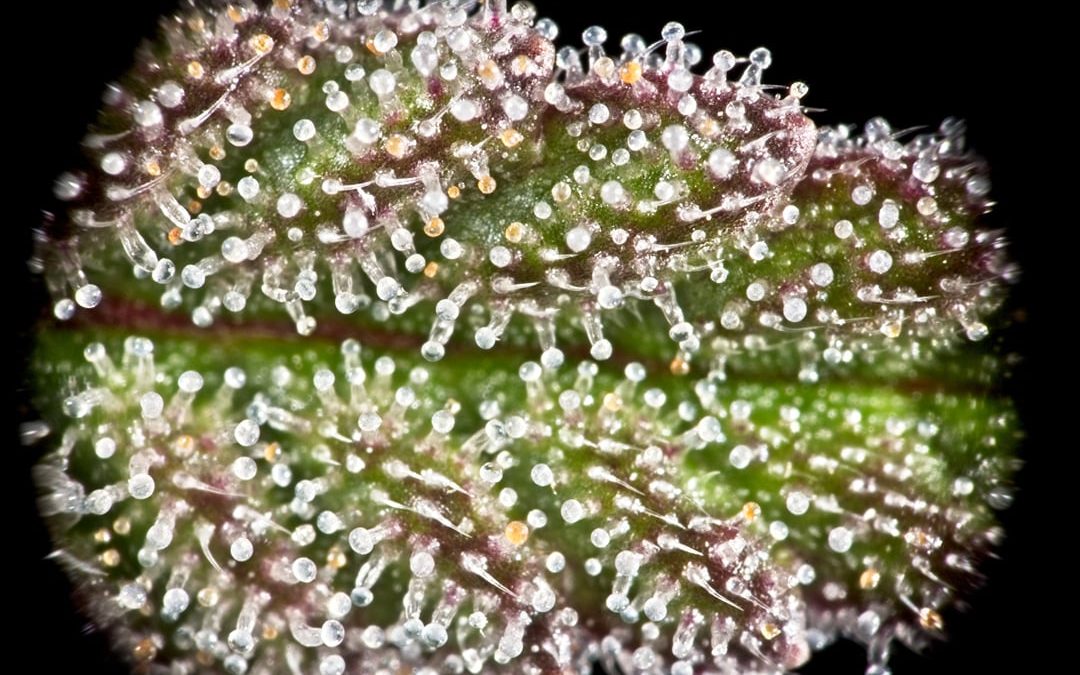
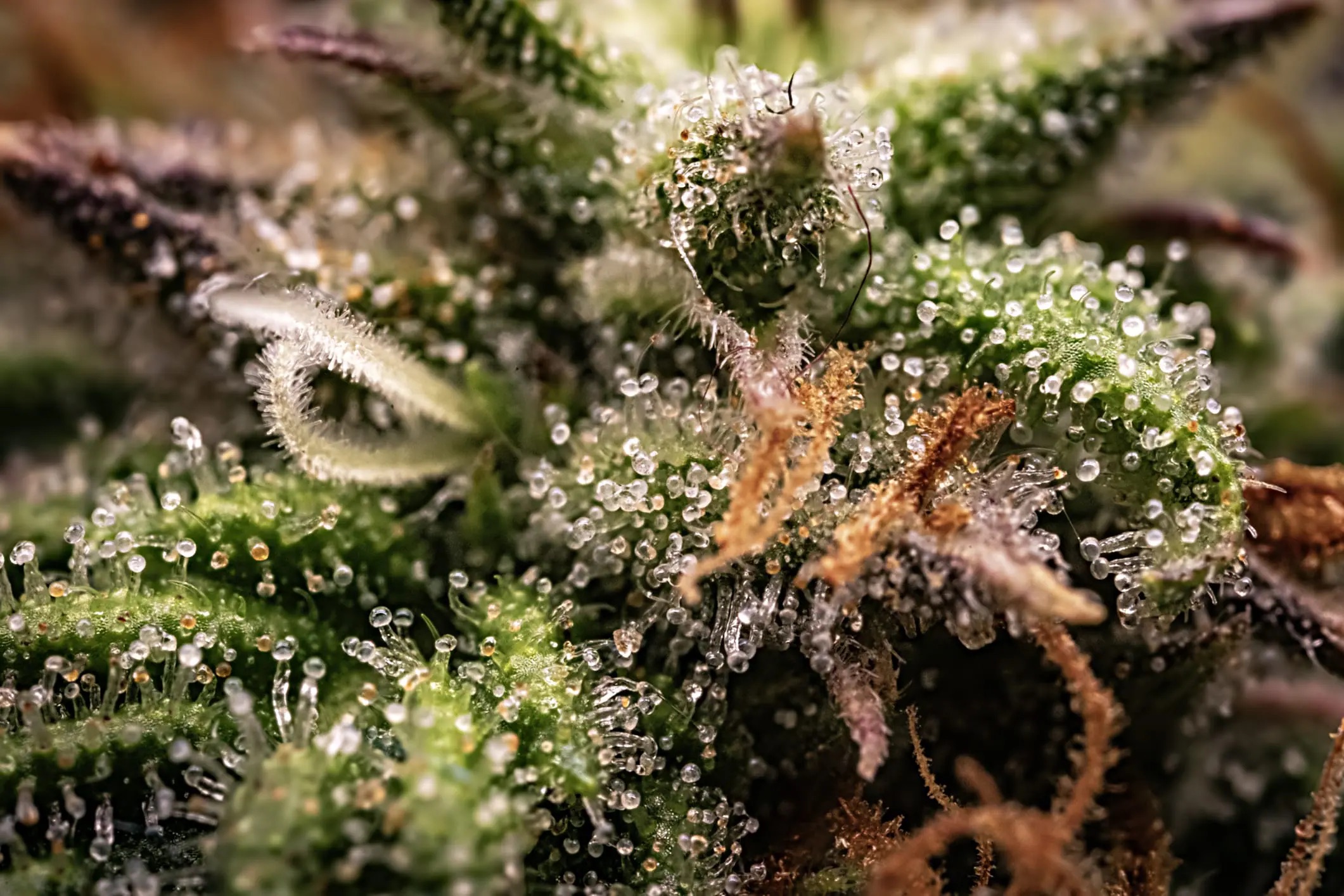
cbd cannabis seeds close up trichomes

FAQs


What’s the flowering time on a typical CBD strain?

The flowering time is determined by the strain’s genetics, not its CBD content. Many popular CBD strains have an Indica background, giving them a quick flowering time of around 8-9 weeks. Autoflower seeds with high CBD are even faster.

How do I properly store my CBD seeds?

To make sure your seeds remain viable, you have to protect them from light, heat, and moisture. The best way is to keep them in a sealed, airtight container in the back of your fridge. Stored correctly, quality seeds will last for years.

Do high CBD plants produce smaller yields?

Not anymore. In the early days of breeding, some high CBD strains had lower yields. But today, modern breeders have developed a huge range of high-CBD cannabis strains that produce very good yields of dense, resinous buds.

Do you offer a germination guarantee in Australia?

To comply with local laws in Australia, we sell our seeds strictly as adult souvenirs, as it is illegal to start growing them in most places. For that reason, a germination guarantee isn’t possible. What we do guarantee is the quality of your collectible purchase: fresh, high-quality cannabis seeds with great genetics, rigorously tested for success, plus a full delivery guarantee with discreet delivery.

How can I tell if the seeds I received are fresh and healthy?

High-quality cannabis seeds have a certain look and feel. They should be hard, dry, and have a dark, mottled colour. If your seeds are pale green, white, or feel squishy, they are likely immature or old and won’t be viable. Fresh, healthy seeds are key to success.

Is it legal to cultivate plants for personal use in Australia?

In most of Australia, it is illegal to cultivate plants or even start growing them. The Australian Capital Territory (ACT) has an exception for limited personal use. For everywhere else, seeds are sold strictly as adult souvenirs.

How can I find real reviews to verify a seed bank’s quality?

Look for feedback on independent platforms like Reddit, forums, or review sites. Real reviews from other growers are the best way to confirm if a company provides great genetics, an excellent product, and great service before you make a purchase.

🧑‍🎓 Need helping choosing what to buy? Have a read of this strain guide.

🧑‍🎓 Learn here how we test our seeds and the best way to store seeds.  

Understanding Male and Female Weed Seeds: Key Differences Explained

Understanding Male and Female Weed Seeds: Key Differences Explained

Ever put weeks into a plant just to find out it won’t give you any buds? It’s a gut punch. It all comes down to knowing about male and female weed seeds. Get this right, and you’re on your way.

Your Crash Course on Male and Female Weed Seeds

Figuring out the difference between male and female weed seeds is probably the first real lesson for anyone getting into growing cannabis.

It’s pretty straightforward, really. You want the female plants. They’re the ones that grow the dense, sticky buds everyone is after. The male plants have a different job. They make pollen. If that pollen gets on your females, you get a crop full of seeds, not the quality buds you were hoping for.


Key Takeaways

  • Female plants are what you’re after for a harvest. They are the ones that produce buds.

  • Male plants are for breeding. They make pollen, which creates more seeds. Most growers get rid of them on sight.

  • Feminized seeds are a way to make sure you only grow female cannabis plants. A huge time and space saver.

  • Regular seeds will give you both males and females. They’re for people who want to breed or don’t mind the extra work of weeding out the males.

Male And Female Weed Seeds

So, Why are Female Plants That Important?

A study in Frontiers in Plant Science from 2020 points out that cannabis is a dioecious plant. That’s a science-y way of saying it produces separate male and female plants.

The females grow the flowers with all the good stuff. The males grow little pollen sacs. If those sacs burst open near your females, it messes things up. The female plant’s whole mission changes. It stops putting energy into making big, frosty buds and starts making cannabis seeds instead. For most growers, that’s a failed crop.

How to Tell the ‘Boys’ from the ‘Girls’

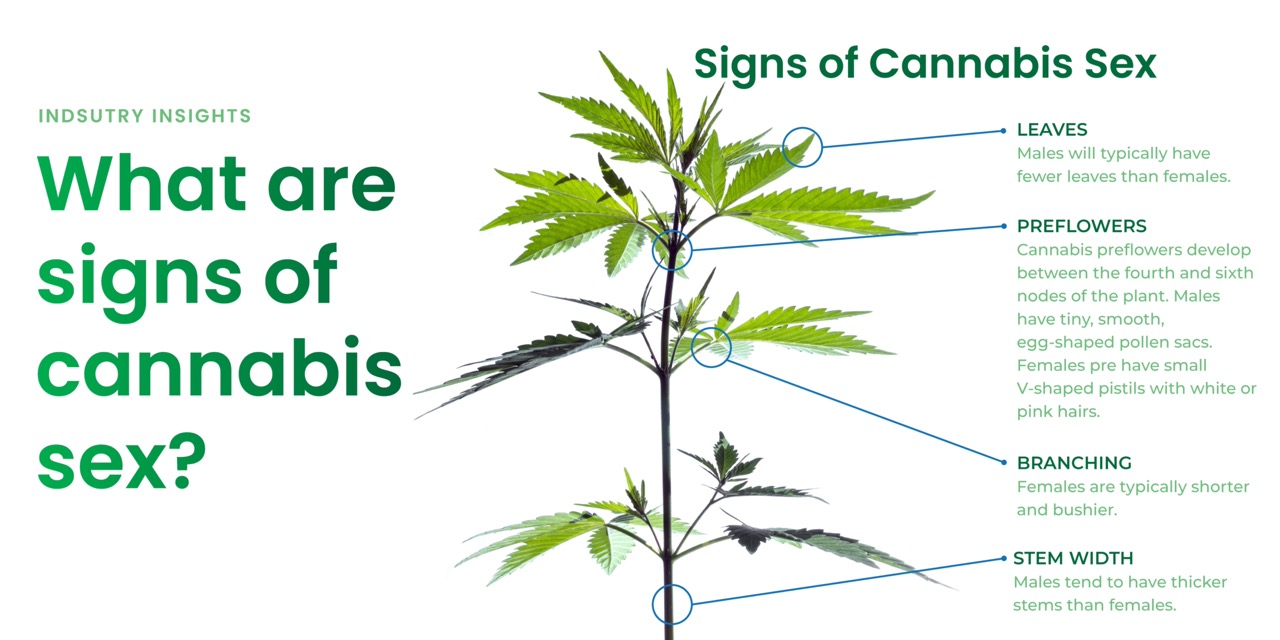
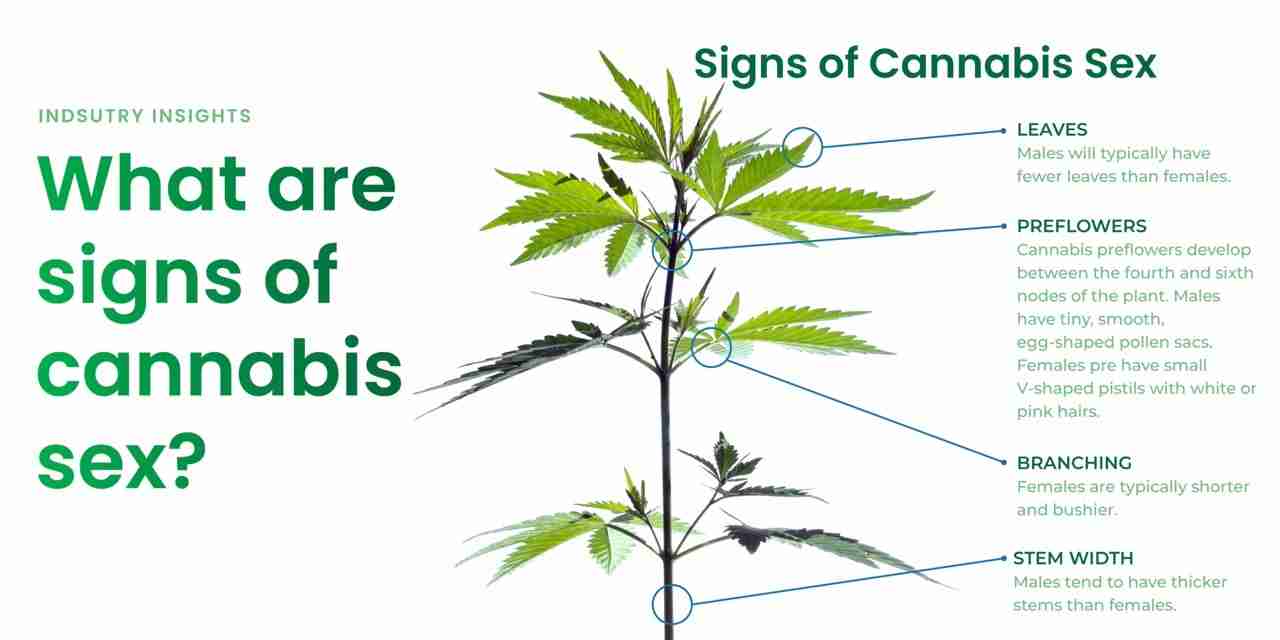
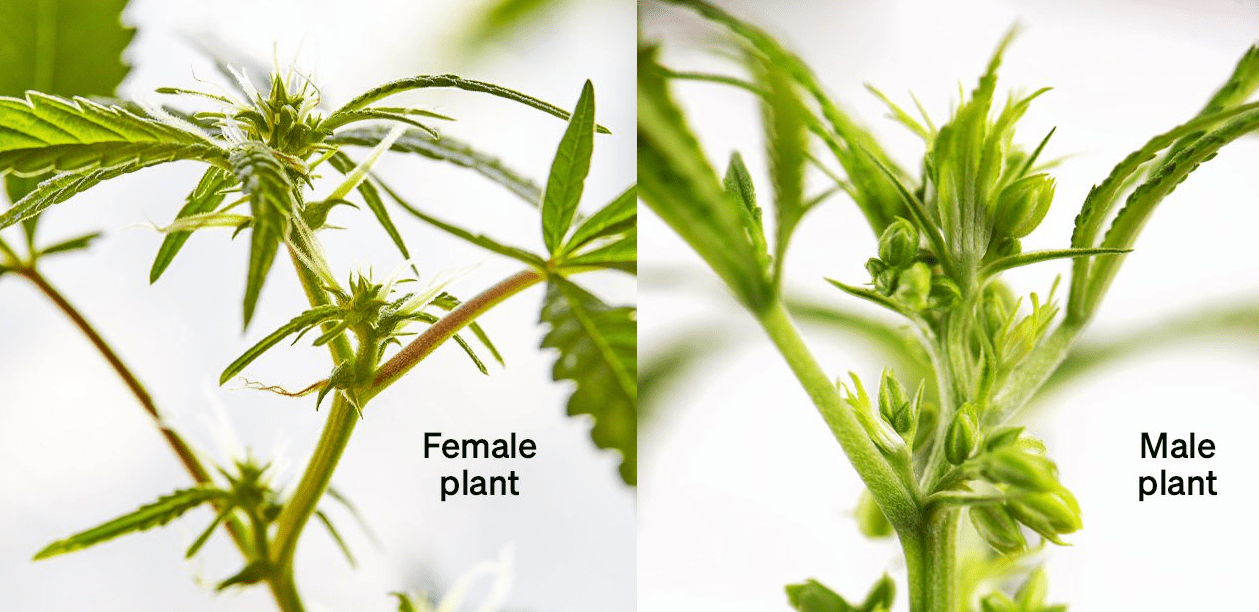
You save yourself a world of pain by spotting the males early. The trick is to look for the ‘pre-flowers’. These are tiny signs of sex that pop up where the branches meet the main stalk.

A male plant shows little green balls. They look like tiny bunches of grapes. Those are the pollen sacs.

A female plant shows a small teardrop-shaped pod with a couple of white hairs, called pistils, poking out of the top.

You’ll see these appear a few weeks into the vegetative stage. Get the males out before they open up and release that pollen.

Choosing Your Seeds: The Big Decision

Alright, so you know you need female plants. The next question is, how do you make sure you get them?

Getting poor-quality seeds is a waste of money and months of your time. You need a source that provides solid genetics. Below are a few reasons why thousands of Aussie growers trust a local, family-run operation like Sacred Seeds Australia.

1. Fast Local Shipping – No Customs Delays or Risks

There’s nothing worse than waiting weeks for an order from overseas, just to have it nabbed by customs. Because Sacred Seeds Australia is right here in the country, you get your order fast. We ship with Australia Post, and orders usually arrive in a few business days.

Everything is sent in discreet, compostable packaging, too.

2. Great Selection of Premium Strains (High THC, CBD, Autoflowers)

We have over 50 different strains from top breeders. You can get famous high-THC strains or find something with high CBD for medicinal purposes. We’ve got feminized photoperiods, and we’ve got autoflowering seeds, which are great for beginners because they are almost always feminized and flower automatically. You find the right seeds for your plans, whatever that is.

3. Proven Genetics and High Success Rates

The genetics inside that little seed shell determine everything. Bad genetics lead to weak plants or plants that turn hermaphrodite under stress.

We focus on premium, stable genetics. One Aussie grower on a forum said our seeds produced “almost twin plants with every strain, so if that ain’t stable I don’t know what is.”
That stability is what you pay for. It means your female plants will grow the way they’re supposed to.

4. Rave Customer Reviews and Trustworthiness

Talk is cheap. Results matter. Our website has over 1,800 verified reviews from real customers. People talk about the fast delivery and high germination rates.

One Reddit user put it plainly: “the business is definitely legit, safe payment with competitive pricing and quick shipping from within Australia.”

We’re an Aussie family that values our reputation.


Benefits of Getting Quality Seeds

Good seeds make everything easier.

  • Better Yields and Potency: Good genetics mean your plants have the blueprint to grow big and strong. With our feminized seeds, you’re not wasting space on non-budding males.

  • Major Cost Savings: It saves you a lot of money in the long run. One single seed that costs maybe $15 can produce hundreds of dollars’ worth of flowers.

  • Fewer Legal Headaches: For those in the ACT or with a licence, using a local supplier like us avoids the legal troubles of importing. We ship discreetly from within Australia, which is a much safer bet.

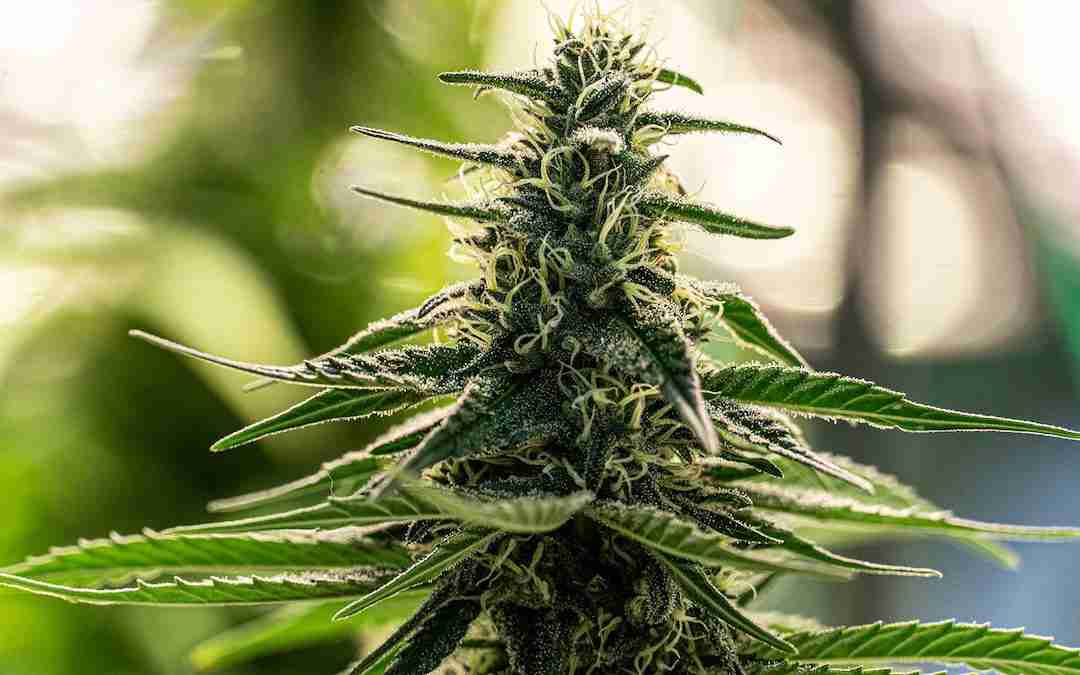
close up Male And Female Weed Seeds

Few Things To Be Careful About

Today’s high-THC strains are very strong. Research from the British Journal of Psychiatry found links between heavy use of strong cannabis and psychosis, especially in younger people. So go slow and know your limits.

And while it feels like a harmless plant, about 1 in 10 regular users might develop a dependence, according to Australian health data. Be mindful of your use.

Finally, know your local laws. Outside of the ACT, germinating marijuana seeds is illegal. Seeds are sold as souvenirs for adults. Always follow the law in your state.


FAQs


What are hermaphrodite plants?

A hermaphrodite or “hermie” is a single cannabis plant that develops both male pollen sacs and female flowers. It often happens due to stress and is bad because the plant can pollinate itself and your other female plants, filling your buds with seeds.

If I find a male, how quickly do I need to remove it?

You should remove it immediately. The pollen sacs can open very quickly once they are mature. Check your plants daily once they start showing pre-flowers.

What’s the main benefit of autoflowering strains again?

Their biggest advantage is speed and simplicity. They switch to the flowering stage automatically based on age, not a light schedule. This, combined with them being feminized, makes them perfect for new growers.

How long do baby cannabis plants take to show sex?

Baby cannabis plants usually show pre-flowers around week four to six of the vegetative stage. Experienced growers check carefully to determine sex before pollen sacs form.

What’s the difference between feminised seeds and female seeds?

Female seeds is a loose term some people use, but feminised seeds are specifically bred to produce only female cannabis plants. They’re the safest choice for people who want only females.

Do male or female plants grow faster?

Male or female plants grow at similar rates early on. Male cannabis plants often show pre-flowers earlier, which helps growers spot them before they produce pollen.

Are there guaranteed female plants?

Using feminised cannabis seeds is the closest you’ll get to guaranteed female plants. Most growers prefer them to regular marijuana seeds because they save time and space.

What’s the difference between feminized plants and feminised strains?

Feminized plants are the actual marijuana plants grown from feminised seeds. Feminised strains are the specific cannabis strain genetics bred to reliably produce female plants.

🧑‍🎓 Need helping choosing what to buy? Have a read of this strain guide.

🧑‍🎓 Learn here how we test our seeds.