Northern Lights is one of those strains I keep coming back to. I’ve grown a lot of genetics over the years — chased potency ceilings, run complex modern hybrids, spent time with landrace genetics from places that take weeks to reach. But Northern Lights sits in a different category for me. It’s the strain I reach for when I want to wind down properly at the end of a long day, and it’s one of the most rewarding grows I’ve done consistently. Stable, predictable, fast, and genuinely beautiful to work with.
This is a full strain review and grow guide for the Northern Lights feminised seeds we stock — genetics, effects, terpene profile, complete growing guide with Australian outdoor timing, and a week-by-week table. If you want a fixed-timeline version, we also stock Auto Northern Lights. If you’re considering either for your next grow, this covers everything you need.
Northern Lights — Strain Specs
| Genetics | Afghani landrace × Thai |
| Also known as | NL, NL#5, Northern Lights #5 |
| Type | 90% Indica / 10% Sativa — Feminised Photoperiod |
| THC | 18–22% |
| CBD | <1% |
| Flowering time | 7–9 weeks from 12/12 flip |
| Indoor yield | 450–500 g/m² under optimised conditions |
| Outdoor yield | 500–600 g/plant (full season) |
| Height | Compact — 80–120 cm, minimal stretch |
| Outdoor harvest (AU) | North: late March • Mid: early April • South: mid April |
| Terpene profile | Myrcene (dominant) • Caryophyllene • Pinene |
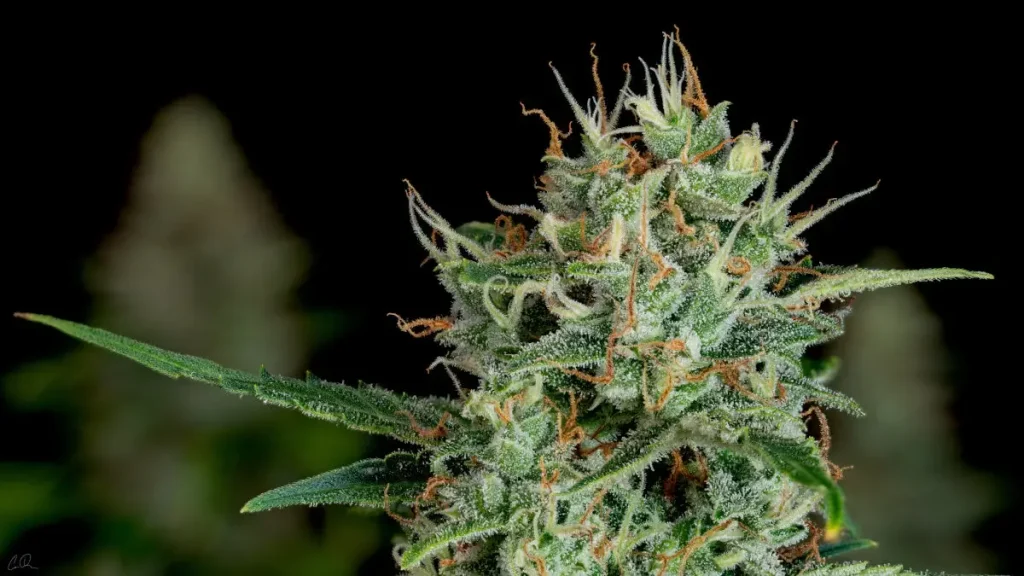
| Aroma | Sweet earth, pine, faint spice — clean and classic |
In this review:
Northern Lights Strain Review: Genetics, History, and What Makes It Different
The origin story of Northern Lights is one of the more genuinely interesting in cannabis genetics. The most documented account traces it back to a grower known as “The Indian,” who cultivated the original plants from Afghani landrace seeds on an island near Seattle in the 1970s. He produced 11 phenotypes — numbered NL #1 through #11 — of which #5 became the definitive expression: exceptional resin production, fast flowering, compact structure, and a deeply sedative effect profile that set the benchmark for what an indica could be. The identity of “The Indian” has never been definitively confirmed, which is part of why the origin story has remained somewhat mythologised — some accounts suggest the original genetics may have included Thai and other landrace crosses beyond pure Afghani, which would explain the phenotypic variation across the 11 numbered plants.
The reason #5 won out over #1 is worth understanding. NL #1 was the pure Afghani inbred — essentially hashplant genetics with almost no sativa influence. Dense, resinous, fast, but a very one-dimensional stone. #5 carried just enough Thai to give it the euphoric opening phase that made it more versatile and more interesting as a smoke. That distinction is what separated a connoisseur’s strain from a commercially significant one, and it’s why #5 became the global standard while #1 remained a specialist’s choice.
The strain reached a global audience when Australian-born breeder Nevil Schoenmakers transported female clones to the Netherlands in the late 1970s or early 1980s. What Schoenmakers did next is worth noting — he effectively built the modern cannabis seed bank industry from scratch, operating out of what became known as the Cannabis Castle in Den Haag and establishing the first commercial mail-order seed business. Northern Lights was central to that original catalogue. Working with Ben Dronkers at Sensi Seeds from 1985, Schoenmakers stabilised the genetics and produced the variants that went on to win multiple Cannabis Cup awards. Without that combination of the Pacific Northwest genetics and the Dutch breeding infrastructure, Northern Lights would likely have remained a regional strain rather than the global benchmark it became.
What makes the lineage worth understanding is what each parent contributes. The Afghani landrace brings the dense, resinous bud structure, the fast flowering time, the compact indica growth pattern, and the dominant myrcene terpene profile that drives the sedative effect. The Thai sativa influence introduces the subtle euphoric lift that prevents Northern Lights from being a pure couch-lock strain. NL #5 carries just enough Thai to make the experience dynamic rather than simply heavy.
Northern Lights was later used by Sensi Seeds as a parent in Jack Herer — crossed with Shiva Skunk and Haze to produce what became another defining strain of the era. But that’s just the most famous example. NL genetics appear in the lineage of dozens of modern strains where breeders needed a stable, predictable indica foundation. Its genetic stability is the trait professional breeders reach for — it contributes structure, resin production, and flowering speed without introducing unpredictability into the cross. Understanding this explains why Northern Lights remains relevant four decades after it was stabilised, while many of its contemporaries have faded from catalogues.
Jason: I’ve been growing Northern Lights on and off for longer than most of the strains in our current catalogue have existed. There’s something about working with genetics that have been properly stabilised over decades — you know what you’re getting. The phenotype variation is minimal, the grow is predictable, and the end product is consistently what you want it to be. For me that’s as valuable as anything a newer hybrid can offer. The myrcene expression in particular is remarkably consistent across NL #5 plants — where modern hybrids can vary significantly in terpene profile between individual seeds from the same pack, NL delivers the same earthy-sweet profile reliably. That’s the result of forty years of stabilisation work and it’s not something you can replicate quickly.

Northern Lights Effects — What the Terpene Profile Produces
Northern Lights is an evening strain. That’s not a limitation — it’s the point. The myrcene-dominant terpene profile drives a deeply physical, sedative effect that builds over 45–90 minutes and lands you exactly where you want to be at the end of the day: comfortable, relaxed, unhurried. This is the strain I reach for when I want to genuinely switch off.
The terpene profile and what it does
Myrcene is dominant and responsible for the characteristic earthy, musky sweetness in the aroma and the sedative body effect. Myrcene facilitates THC crossing the blood-brain barrier — which is part of why Northern Lights hits heavier than its THC percentage alone would suggest. At 18–22% THC with high myrcene, the body load is substantial. What’s notable about Northern Lights specifically is how consistent the myrcene expression is across plants — where modern hybrids can vary significantly in terpene profile between individual seeds from the same pack, NL #5 delivers the same earthy-sweet baseline reliably. This is a direct consequence of the decades of stabilisation work and something growers who’ve run both classic and modern genetics will notice.
Caryophyllene adds the spicy, peppery note to the aroma and activates CB2 receptors directly — the receptors involved in inflammation and pain response. This is what gives Northern Lights its reputation for pain relief and muscle relaxation. The caryophyllene contribution is part of why this strain has remained in medicinal circles for decades.
Pinene is the tertiary terpene and adds the clean pine note that distinguishes Northern Lights from heavier, earthier indicas. Pinene also counteracts some of the short-term cognitive fog associated with high-myrcene strains — it’s what keeps Northern Lights on the functional side of sedating rather than making it disorienting.
Effect progression
Onset (10–20 min): A mild euphoric lift — the Thai sativa influence in NL #5 genetics makes itself felt early. Mood brightens, tension releases. The effect at this stage is warm and pleasant rather than heavy.
Early phase (20–60 min): The indica genetics assert themselves. Body relaxation spreads systematically — muscles ease, physical discomfort recedes. At moderate doses this is still functional. You can hold a conversation, watch something, be present. The experience is comfortable rather than incapacitating.
Mid-to-late phase (60–120 min): Full body sedation at typical doses. The myrcene load comes through completely. Most users at moderate-to-high doses find sleep follows naturally from here. Appetite increases. The mind is quiet.
Duration: 2–3 hours at typical doses. Clean finish — no notable grogginess the following morning at moderate use.
Jason: Northern Lights is what I smoke when I want the day to be over. Not in a negative sense — in the sense that it marks the transition from work to rest better than almost anything else I’ve tried. One session, early evening, and I’m genuinely relaxed in a way that doesn’t happen from just sitting on the couch. The myrcene load is real and it does exactly what you want it to do. This is my go-to for switching off.
Growing Northern Lights Seeds — Complete Guide
Northern Lights is one of the most rewarding grows available — not because it’s complex, but because it performs consistently and generously without demanding much in return. The Afghani landrace genetics produce a plant that handles variation in temperature, humidity, and nutrition better than most indica-dominant hybrids while still producing dense, resinous buds. It’s a strain that rewards growers who set up correctly and manage consistently, without punishing reasonable errors the way some sensitive hybrids do.
Structure and training
Northern Lights grows compact — 80–120 cm finished height with minimal stretch in early flower, typically 20–30% height increase from flip. The Afghani indica structure means bushy, multi-branched plants with tight internodal spacing and dense bud sites. This structure makes NL naturally efficient in small spaces and easy to manage without aggressive training.
LST from week two or three of veg opens the canopy and exposes lateral bud sites meaningfully — the branching structure responds well and the extra light penetration to lower sites improves overall yield. SCROG suits Northern Lights well precisely because the compact structure fills a screen efficiently without the sativa stretch management that taller genetics require. Topping at week three to four of veg produces a well-balanced multi-cola structure that maximises the natural bud density.
Defoliation should be modest — remove fan leaves blocking direct bud sites in early flower, a second light pass at week three. The dense indica canopy benefits from airflow improvement but the leaves are working hard during the fixed flower window. Don’t strip the canopy.
Feeding strategy
Seedling (days 1–14): Plain pH-adjusted water or 1/4 strength maximum. EC below 0.6. Northern Lights is not particularly nutrient-sensitive in seedling but there’s no advantage in pushing it early. Clean start, build slowly.
Veg (weeks 3–6): Build to full strength by week four. EC 1.0–1.4, nitrogen-forward. The compact Afghani structure doesn’t require massive biomass building, but adequate nitrogen in veg supports the dense flowering structure that follows. Watch for glossy dark green leaves — first sign to ease N before toxicity accumulates.
Early flower / stretch (weeks 1–3 of 12/12): Transition to bloom nutrients. Reduce nitrogen, build phosphorus. EC 1.2–1.6. The stretch in Northern Lights is minimal — this phase passes quickly and the plant moves into bud development faster than most indica-dominant strains. CalMag support through early flower if running coco or RO water.
Mid flower (weeks 4–7 of 12/12): Full bloom profile. EC 1.4–1.8. Potassium support from week five improves resin density and terpene expression. The myrcene and pinene profile develops strongly in this window — temperature management matters here. Keep below 26°C to preserve the terpene quality that makes Northern Lights worth growing.
Late flower / pre-flush (weeks 7–8 of 12/12): Begin tapering nutrients as natural leaf yellowing starts. Reduce EC to 1.0–1.2. The plant is in final bud development and resin production.
Flush (final 10–14 days): Plain pH-adjusted water only. The earthy-sweet terpene profile of Northern Lights comes through cleanest after a thorough flush and proper cure. Don’t shortchange this step.
Climate
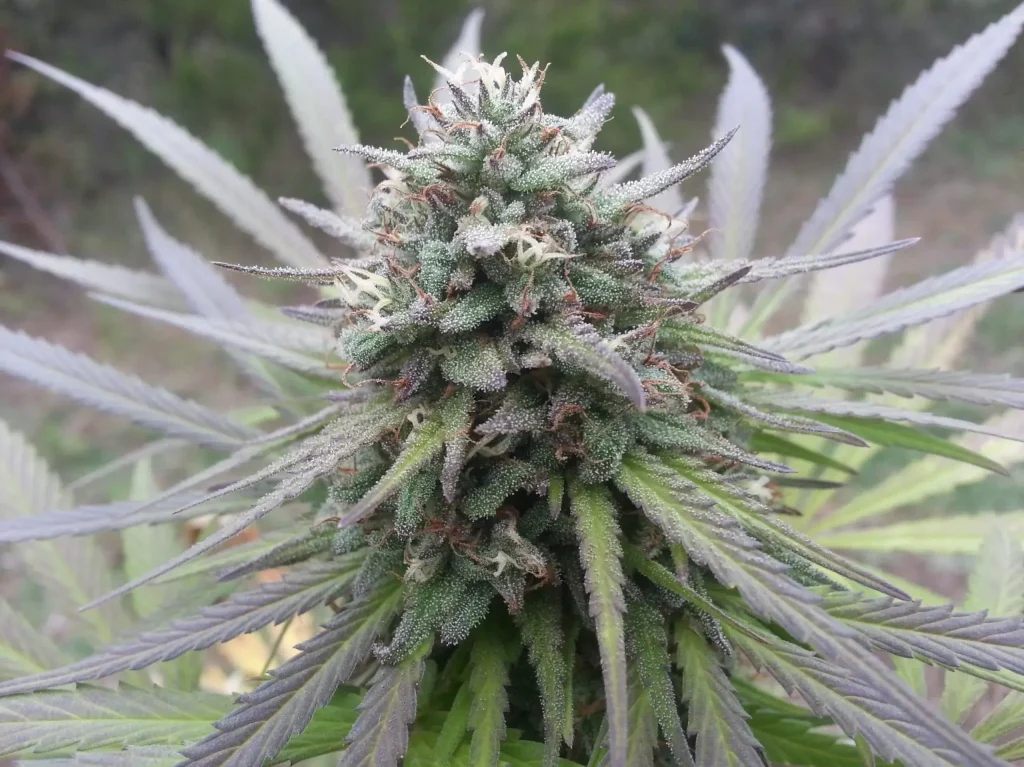
Temperature: 22–26°C through veg and early flower. Drop to 20–24°C from week five of flower — cooler late-flower conditions improve terpene expression and resin density. Cool nights of 17–20°C in the final two weeks produce noticeably better aromatic depth. Some NL #5 phenotypes develop striking purple colouration in the final two weeks when the day-to-night temperature differential reaches 8–10°C — it’s not universal but it’s a characteristic that surprises growers who weren’t expecting it from what is otherwise a dense green strain. The purple expression doesn’t affect potency or terpene profile but it’s visually impressive and worth knowing to expect.
Harvest timing note: The difference between a week-seven and week-nine harvest on Northern Lights is more significant than with many strains. At week seven, 10–15% amber, the Thai sativa influence is still present in the effect — the euphoric opening phase is more pronounced, the body effect is lighter, and the experience sits somewhere between indica and hybrid. At week nine, 20–25% amber, the indica genetics are fully dominant — deeper sedation, heavier body load, stronger sleep-promoting effect. Neither is wrong; they’re genuinely different experiences from the same plant. Growers who prefer a less sedating NL should harvest earlier. Those who want the full indica body effect should push to the longer end and wait for 20–25% amber trichomes.
Humidity: Seedling 65–70% RH. Veg 55–65% RH. Early flower 50–55% RH. Mid-to-late flower 40–50% RH, dropping to 40–45% in final two weeks. The dense Afghani bud structure is susceptible to botrytis if humidity climbs above 55% once buds are developed — airflow through the canopy and consistent RH management from week four of flower are important.
Light: 18/6 veg, 12/12 flower. PPFD targets: 400–600 µmol/m²/s veg, 700–900 µmol/m²/s flower. Northern Lights responds well to higher light intensity in flower — the dense bud structure and resin production both benefit from adequate PPFD. Outdoors: full sun, minimum six hours direct light.
Jason: The thing I tell people about growing Northern Lights is — set it up right and then trust it. This strain doesn’t need constant intervention. Get the environment dialled, feed it consistently, and it does the work. The most satisfying grows I’ve had with NL have been the ones where I’ve done less rather than more. It’s a complete plant that knows what it’s doing. One thing I do pay attention to is harvest timing — I’ve run NL at week seven and at week nine and they’re genuinely different smokes. If I want something functional for early evening I’ll pull at 10–15% amber. If I want the full indica experience I run it to 20–25% and wait. Most people growing NL want the full body effect, so I’d say push it to the longer end unless you have a specific reason not to.
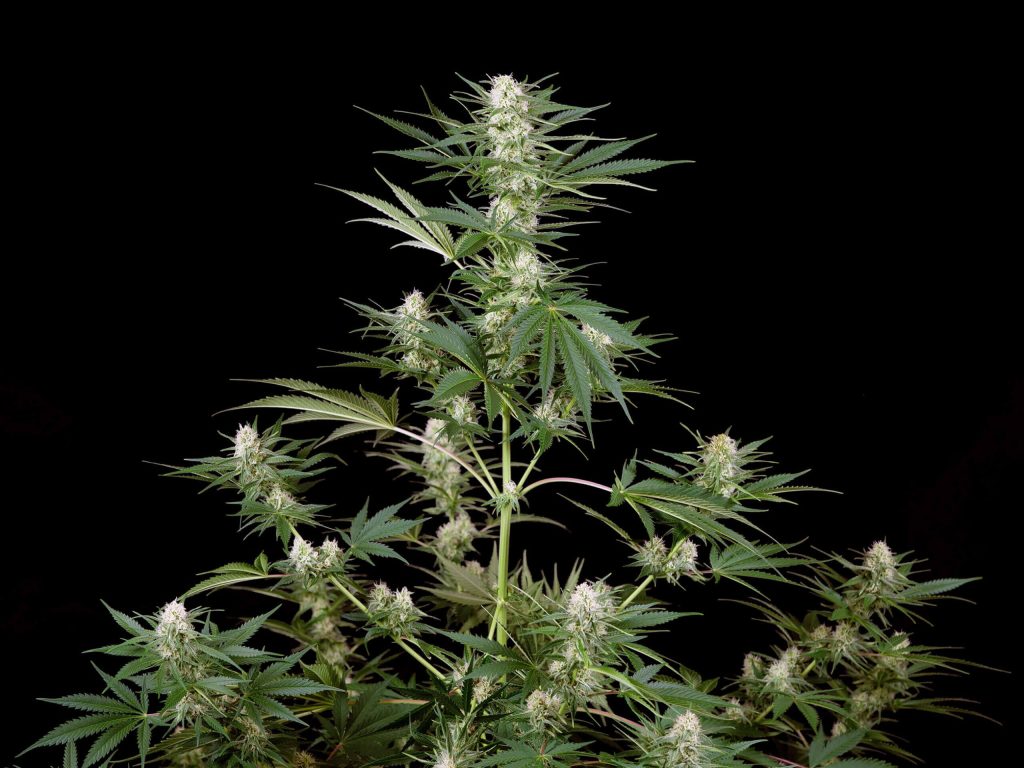
Northern Lights Week-by-Week Grow Guide
| Phase / Week | What’s Happening | Key Actions | Watch Out For |
|---|---|---|---|
| Weeks 1–2 Seedling |
Taproot establishing. First true leaves emerging. Compact indica structure apparent early. | Plain water or 1/4 strength. 18/6 light. Humidity 65–70% RH. pH 6.0–6.5 soil. | Overwatering — the most common early mistake. Water in a ring around the seedling, not over it. Wait until top 2 cm is dry. |
| Weeks 3–4 Early veg |
Rapid bushy growth. Multiple lateral branches developing. Tight internodal spacing characteristic of Afghani genetics. | Build to full strength nutrients by week 4. EC 1.0–1.2. Begin gentle LST — tie main stem to open canopy. Top or FIM at week 3–4 if desired. | Glossy dark green leaves signal nitrogen excess. NL is efficient with nutrients — don’t overfeed early. |
| Weeks 5–6 Late veg |
Plant filling out. Dense canopy structure. Multiple productive bud sites developing if trained well. | EC 1.2–1.4. Continue LST or fill SCROG screen. Flip to 12/12 when plant is at 50–60% of available height — NL stretch is minimal. | Unlike sativa-dominant strains, NL won’t double in height after flip — flipping slightly later is fine here. |
| Weeks 1–2 of flower Stretch / transition |
Minimal stretch — 20–30% height increase. Pre-flowers developing rapidly. First trichome formation on bud sites. | Transition to bloom nutrients. EC 1.2–1.6. Reduce nitrogen. Light defoliation of shading fan leaves. | The fast transition from stretch to bud development is a characteristic of NL — don’t miss the defoliation window, it closes quickly. |
| Weeks 3–5 of flower Early-mid flower |
Buds stacking rapidly. Sweet earthy aroma building from week 3. Dense Afghani bud structure forming. Height gain complete. | Full bloom nutrients. EC 1.4–1.8. Potassium support from week 5. Carbon filter essential. Drop RH to 45–50%. Keep below 26°C. | Humidity management — the dense bud structure is vulnerable from week 4 onward. RH above 55% at this stage raises botrytis risk significantly. |
| Weeks 6–7 of flower Late flower |
Buds fattening and hardening. Trichome production at peak. Resin coating heavy across all bud surfaces. Pistils darkening. | Begin checking trichomes from day 42 (week 6). Taper nutrients to EC 1.0–1.2. Drop RH to 40–45%. Cool nights 17–20°C for terpene expression. | Don’t harvest early — the full body effect of NL develops in the final week. Check trichomes, not the calendar. Aim for 20–25% amber. |
| Weeks 8–9 of flower Flush and harvest |
Final ripening. Natural yellowing of fan leaves. Dense resinous colas. Harvest window opens at week 7. | Plain pH-adjusted water for 10–14 days. Week 7–8: harvest at 10–15% amber for lighter, more euphoric effect. Week 8–9: harvest at 20–25% amber for full indica body effect. | Deciding too early. Week 7 and week 9 produce meaningfully different experiences — know which you want before you cut. |
| Post-harvest Cure |
The earthy-sweet myrcene and pinene profile develops in the jar. NL at two weeks of cure is decent. At six weeks it’s the classic strain people know. | Jar at 60–65% RH. Burp daily for two weeks. 4 weeks minimum. 6 weeks ideal for full expression. | Opening too early. Fresh NL doesn’t represent the genetics. The classic Northern Lights flavour and smooth smoke is earned in the cure, not on the plant. |
Indoor Growing — Northern Lights
- Flowering time: 7–9 weeks from 12/12 flip
- Yield: 450–500 g/m² under optimised lighting with training
- Container: 15–20 L — compact root system suits mid-size containers
- Light schedule: 18/6 veg → 12/12 flower
- PPFD: 400–600 veg / 700–900 flower
- Height: 80–120 cm finished — suits tents from 60×60 cm upward
- Training: LST from week 2–3 veg; SCROG suits the bushy structure; top at week 3–4
- Temperature: 22–26°C veg and early flower; cool to 20–24°C from week 5 flower
- Humidity: 65–70% seedling → 55–65% veg → 45–50% early flower → 40–45% late flower
- Aroma: Carbon filtration from week 3 of flower — the earthy sweetness builds early
- Cycles per year: 4–5 given the fast 7–9 week flower
Growing Northern Lights Outdoors in Australia
Northern Lights suits Australian outdoor growing well — the compact structure, fast flowering time, and Afghani mould resistance make it practical across most climate zones. The 7–9 week flower from flip and the compact height give growers in southern states a meaningful advantage over longer-flowering strains when planning around the autumn harvest window.
Queensland and Northern NSW
Northern Lights performs well in Queensland and Northern NSW, though the dense Afghani bud structure requires humidity management from week four of flower. Plants in the ground by mid-October target a late-March harvest. The compact height and Afghani mould resistance handle the subtropical climate reasonably well — maintain airflow through the canopy and monitor from week five onward. Harvest: late March to early April.
NSW and VIC — Temperate
The natural choice for temperate outdoor growers. Northern Lights’ fast 7–9 week flower from flip means plants in the ground by late October in NSW and VIC can target an early-to-mid April harvest comfortably — within the safe window before autumn rains become consistent. The compact height makes discretion practical. Harvest: early to mid April.
Tasmania and Southern VIC
Northern Lights is one of the better choices for short-season southern climates precisely because of its fast finishing. The compact structure handles the cooler conditions well and the Afghani genetics don’t require the warm long seasons that sativa-dominant strains demand. Target mid-April harvest in TAS and southern VIC. Harvest: mid April.
WA and SA
The drier climate suits the dense Afghani bud structure — mould risk is lower and the plant handles warm dry days well. Standard outdoor timing applies: in the ground by late October, harvest early to mid April. Full sun position, good drainage, 15–20 L containers minimum outdoors.
Northern Lights vs Other Classic and Hybrid Strains
| Strain | THC | Flower time | How it differs from NL |
|---|---|---|---|
| Northern Lights | 18–22% | 7–9 weeks | The reference point — earthy-sweet terpene profile, reliable sedation, fast and stable |
| Godfather OG | 22–28% | 8–9 weeks | Higher THC, heavier sedation, more demanding grow — temperature sensitivity in flower. The choice for maximum potency |
| Black Domina | 20–24% | 8–9 weeks | 95% indica, heavier and more narcotic than NL, less euphoric. Darker, more complex aroma profile |
| Gorilla Glue #4 | 26–28% | 8–9 weeks | Significantly higher THC, more complex caryophyllene-driven terpene profile, heavier resin. Less euphoric opening phase than NL |
| Jack Herer | 18–22% | 8–10 weeks | NL is a parent — Jack Herer is the sativa expression of what NL contributes. Uplifting and functional vs NL’s sedating and physical |
Ready to grow Northern Lights?
Feminised photoperiod seeds shipped from Australia. Batch-tested genetics, express delivery nationwide.
Northern Lights — Key Takeaways
Afghani × Thai. 18–22% THC. Myrcene-dominant terpene profile producing deeply sedative, body-first relaxation with a mild euphoric opening from the Thai sativa influence. Fast 7–9 week flower, compact structure, excellent mould resistance, stable Afghani genetics with minimal phenotype variation. One of the most rewarding grows in the classic indica catalogue — set it up right and it delivers consistently without demanding constant intervention. The ideal evening strain for growers who value reliability, quality, and a genuinely relaxing experience over chasing the newest genetics. For the full spec breakdown and to order, see the Northern Lights feminised seeds product page.
Northern Lights Strain — Frequently Asked Questions
When should I harvest Northern Lights for maximum body effect vs a lighter experience?
Northern Lights at week seven (10–15% amber trichomes) and week nine (20–25% amber) produce genuinely different experiences. At the earlier harvest the Thai sativa influence is still present — more euphoric opening, lighter body effect, sits closer to a hybrid experience. At the later harvest the indica genetics are fully dominant — deeper sedation, heavier body load, stronger sleep-promoting effect. Most growers running Northern Lights want the full indica body effect, so the week-nine harvest at 20–25% amber is the default recommendation. If you want something more functional for early evening use, harvest at the shorter end.
What are Northern Lights seeds?
Northern Lights is a feminised indica-dominant cannabis strain bred from Afghani landrace and Thai genetics, stabilised by Nevil Schoenmakers and Sensi Seeds in the Netherlands from 1985. NL #5 is the most widely distributed phenotype — the one most seed banks including Sacred Seeds work from. It tests at 18–22% THC with a myrcene-dominant terpene profile, flowers in 7–9 weeks, and produces dense resinous buds with an earthy-sweet aroma. Buy Northern Lights seeds from Sacred Seeds Australia.
What does Northern Lights smell and taste like?
Earthy, sweet pine with a faint spicy note from the caryophyllene and a woody undertone. The myrcene dominance gives it the musky earthiness characteristic of Afghani-lineage genetics. It’s a classic, immediately recognisable profile — not the layered complexity of modern OG-lineage hybrids, but clean and distinct. The full flavour develops best with a six-week minimum cure.
Is Northern Lights good for sleep?
It’s one of the more reliably sedating strains available. The high-myrcene terpene profile facilitates THC uptake and drives a deep physical body effect that builds progressively into sedation at moderate-to-high doses. For growers and users whose primary use case is insomnia or end-of-day relaxation, Northern Lights is consistently effective. It’s an evening strain — not suitable for daytime use where function is required.
How long does Northern Lights take to flower?
7–9 weeks from the 12/12 light flip indoors. This is on the faster end for an indica-dominant strain at this quality level and is one of the practical advantages of Northern Lights over heavier-yielding strains with longer flower windows. Check trichomes from week seven — harvest at 20–25% amber for the full sedative effect.
Is Northern Lights easy to grow?
It’s a rewarding and consistent grow. The Afghani genetics produce a resilient, stable plant with good mould resistance, minimal stretch, and predictable structure. It handles variation in temperature and humidity better than many modern hybrids. That said, no cannabis strain runs itself — proper environment management, consistent feeding, and humidity control in late flower are still required. It rewards growers who set up correctly and let the genetics do the work.
How does Northern Lights compare to Godfather OG?
Godfather OG is heavier, more demanding, and more potent — 22–28% THC versus 18–22% for NL, with a more complex OG terpene profile and greater temperature sensitivity in flower. Northern Lights is the more practical, consistent, and approachable grow with a reliable sedative effect that doesn’t require maximum THC to deliver what you want from an evening indica. If maximum potency is the brief, Godfather OG. If a rewarding, consistent grow with excellent evening effect is the brief, Northern Lights.
Can I grow Northern Lights outdoors in Australia?
Yes — Northern Lights suits Australian outdoor growing particularly well. The fast 7–9 week flower from flip and compact structure make it practical across all climate zones. In southern states (VIC, TAS, SA), it’s one of the more reliable outdoor choices because the fast finish comfortably fits the harvest window before April. In Queensland and NSW, the Afghani mould resistance is an advantage in coastal humidity. Target harvest: late March in QLD, early to mid April in NSW/VIC/SA. The Australian climate strain guide covers regional timing in more detail.
What is Northern Lights #5?
Northern Lights #5 is the most famous and widely distributed phenotype from the original 11 numbered plants grown by “The Indian” near Seattle. It became the definitive expression of Northern Lights through Nevil Schoenmakers and Sensi Seeds’ work in the Netherlands — chosen for its exceptional resin production, fast flowering time, dense bud structure, and balanced effect profile. When a seed bank lists “Northern Lights” without a number, they’re almost always working from #5 genetics.
Does Northern Lights have an autoflowering version?
Yes — Auto Northern Lights carries the same classic genetics in an autoflowering format, completing seed to harvest in approximately 70–75 days on a fixed timeline regardless of light schedule. The auto version is well suited to Australian outdoor conditions where multiple runs per season are practical or where light control isn’t available.
Related Reading
Indica-dominant cannabis seeds — the full range of indica-dominant genetics available from Sacred Seeds Australia.
Best cannabis strains for Australian climates — regional strain selection and seasonal timing for outdoor growers across all Australian states.
Knowing when to harvest cannabis — trichome reading and harvest timing indicators, relevant for the final weeks of a Northern Lights grow.
Autoflower vs photoperiod seeds — if you’re deciding between Northern Lights feminised and Auto Northern Lights, the format differences explained in full.
Browse all cannabis seeds — over 50 feminised, autoflower, and photoperiod strains shipped from Australia.
Seeds are sold strictly as novelty collector’s items. They contain no THC or CBD. This page does not constitute medical or legal advice. By purchasing you agree to our terms and conditions. Always check local laws before germinating or cultivating cannabis.