The most persistent piece of harvest advice in cannabis is wrong, and it’s costing growers potency every single run.
“Wait for 30% amber trichomes.” You’ve probably read it a dozen times across forums, YouTube comments, and grow guides that all cite each other. The problem is that amber trichomes don’t signal ripeness. They signal that THC has already begun degrading into CBN — a sedative cannabinoid with significantly lower psychoactive potency. By the time you’re at 30% amber across the plant, roughly 30% of your THC is gone. You grew it, you just didn’t keep it.
I spent years watching experienced growers follow this advice and wonder why their harvests felt flat. Once I understood the actual biochemistry — and started harvesting accordingly — the difference was immediate and consistent. That’s what this guide covers: how to read what your plant is actually telling you, not what the forums think it’s saying.
What Trichome Colour Actually Tells You
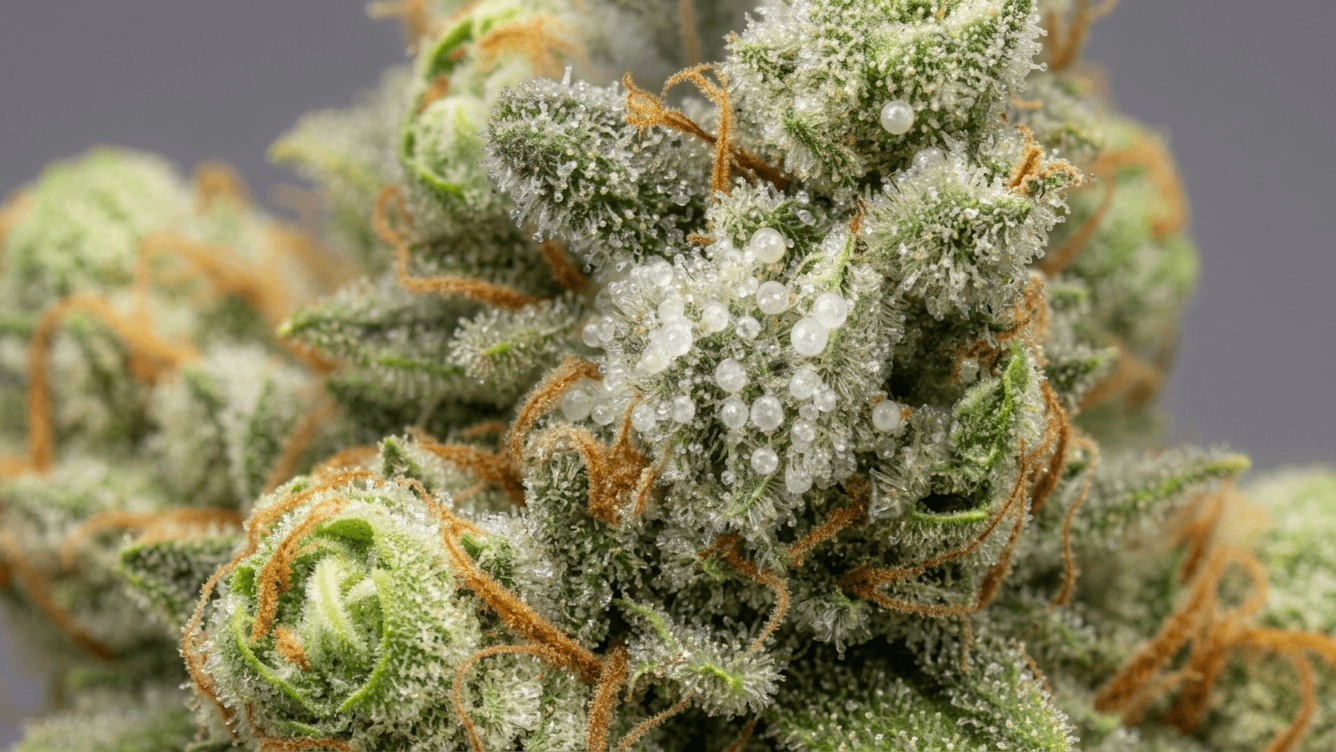
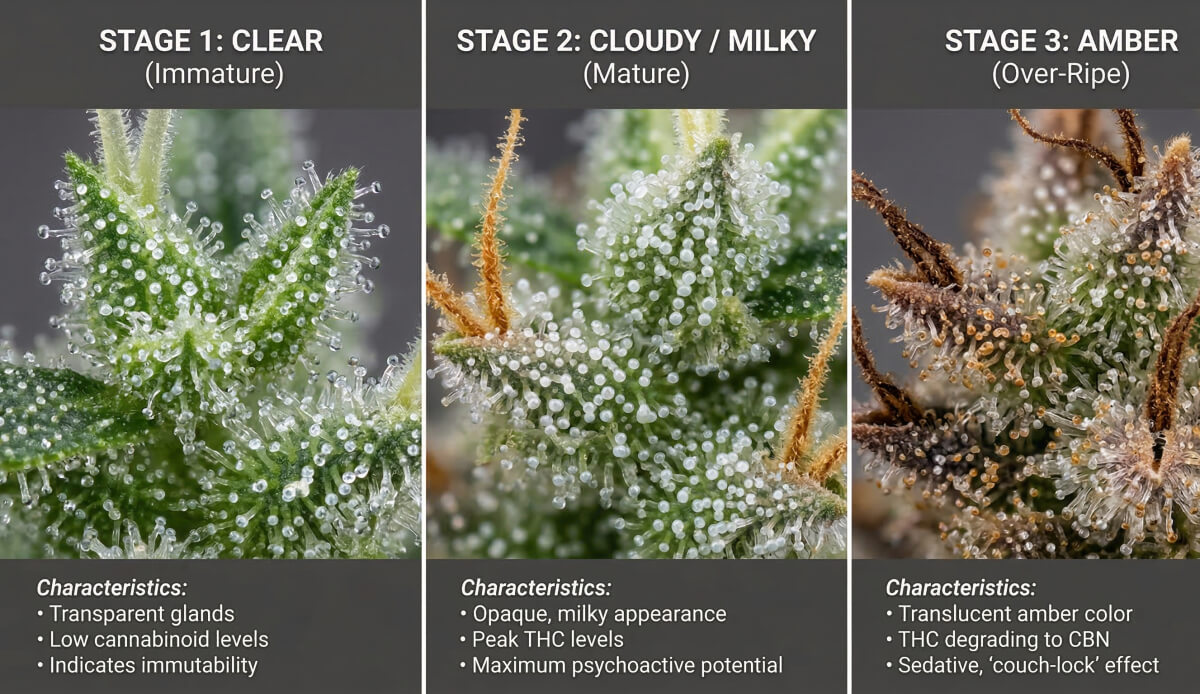
Trichomes progress through three distinct phases. Only one of them represents peak harvest quality — and it’s not the one most guides tell you to wait for.
Clear or transparent trichomes mean cannabinoids are still developing. Buds harvested here taste weak, feel racy, and often trigger anxiety. You’re not even close.
Cloudy or milky white trichomes indicate peak THC. The cannabinoid profile is complete, terpenes are at full expression, and the effect is potent and clear-headed. This is your target window.
Amber trichomes mean THC is actively degrading into CBN. The effect becomes heavier and more sedative — which suits some applications — but past 30% amber you’re not harvesting at peak, you’re harvesting past it. That’s a choice, not a recommendation.
The harvest window: 70–90% cloudy trichomes, with the remainder still clear or just beginning to shift. Check the bud calyxes directly — not the sugar leaves, which mature 5–7 days earlier and will send you to the scissors too soon.
|
Trichome colour |
Cannabinoid status |
Effect profile |
Harvest call |
|
Clear |
Immature |
Weak, racy, anxious |
Too early — wait |
|
Cloudy/milky (70–90%) |
Peak THC |
Potent, clear-headed |
Optimal window |
|
Amber (10–30%) |
THC degrading to CBN |
Heavier, more sedative |
Personal preference only |
|
Amber (50%+) |
Significant THC loss |
Heavy sedation, reduced potency |
Too late — quality gone |
On equipment: a 60x jeweller’s loupe does the job for around $15. A USB digital microscope is worth the $40 if you grow regularly — the image clarity removes all doubt. A phone camera in macro mode can work in good light but struggles with the clear-to-cloudy distinction. You’ll second-guess yourself every time, which usually means waiting too long.
One note on sedative effects: if you’re growing specifically for sleep or pain management, pushing to 20–30% amber is a legitimate call. Just understand the trade-off — you’re exchanging THC potency for CBN sedation. There’s no free lunch in cannabis chemistry.
The Five Signals to Read Together
Trichome colour is the most precise indicator, but reading it in isolation causes mistakes. A plant can show 80% cloudy trichomes and still not be ready. These are the five signals I check simultaneously — and all five need to align before I cut.
1. Trichome colour and density
Covered above, but density matters alongside colour. Trichome heads should be swollen and mushroom-shaped. Flat or deflated heads on an otherwise cloudy plant mean the buds need more time — the structure isn’t there yet even if the colour is. Check multiple bud sites at different heights. Top colas mature faster than lower growth, sometimes by a full week.
2. Pistil colour and recession
Pistils — the hair-like structures covering the buds — shift from white to orange or brown as the plant matures, then pull back into the bud. This is your macro-level read, visible without a loupe.
At 50–60% brown pistils, the plant is still building. At 70–80% brown, start checking trichomes closely — you’re entering the window. At 90% brown, don’t wait much longer.
Colour alone isn’t enough. Pistils should also be receding into the bud. If 80% have turned brown but are still protruding outward, the calyxes are still swelling. Give it a few more days.
3. Bud structure and the final swell
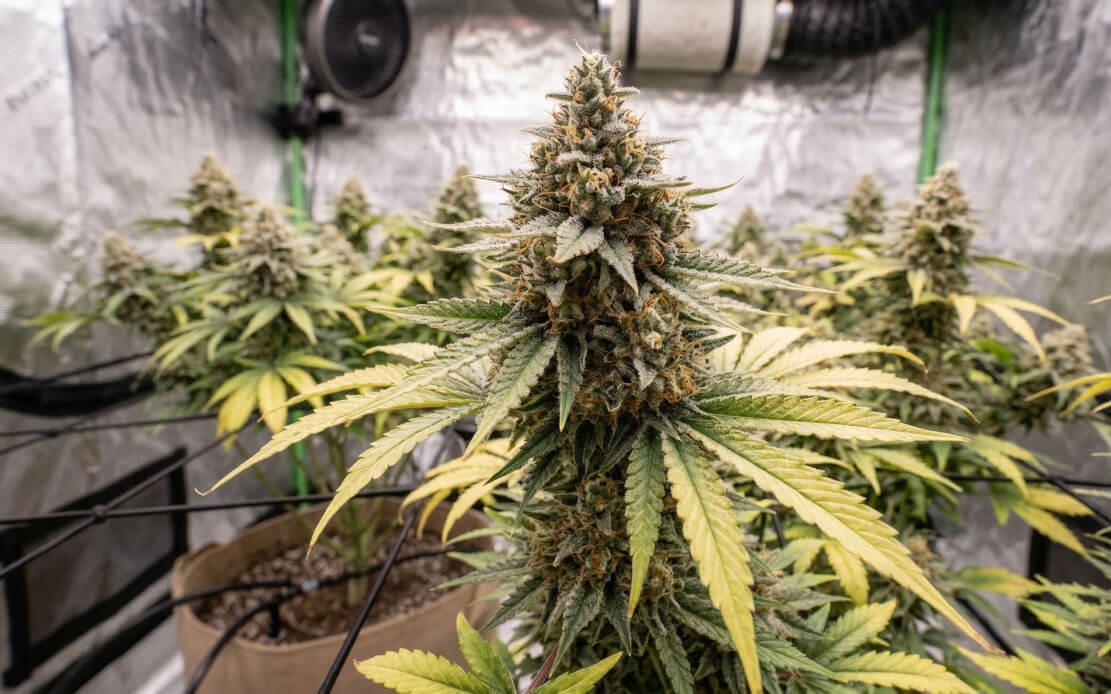
In the last week or two before harvest, buds put on a noticeable final swell — 10–20% additional mass as the calyxes stack and fill in. Mature buds feel dense and firm when gently squeezed, not airy or spongy. If you’re still seeing new white pistils emerging, growth hasn’t finished.
This is where patience directly translates to yield. Harvesting before the final swell completes is one of the most common ways growers leave weight on the plant.
4. Breeder’s flowering time
Breeder estimates tell you when to start looking, not when to harvest. Start checking trichomes about a week before the minimum stated flowering time. Expect the actual harvest to fall somewhere in the middle of the stated range — sativa-dominant strains often run a week or two beyond breeder estimates, while indica-dominant strains are generally more accurate.
For bag seed or unknown genetics, you don’t have this reference point. It’s one of the practical reasons documented genetics from a reputable source are worth the investment.
5. Leaf fade
In the final weeks, fan leaves naturally yellow and drop as the plant redirects remaining nutrients into the buds. Lower leaves go first, progressing upward. This is healthy — it means the plant is finishing rather than continuing to grow.
Sudden yellowing across the whole plant is a different problem entirely. Gradual fade from the bottom up is what you want to see.
If you’re still running nitrogen-heavy nutrients at this stage, you’ll delay the fade and risk harsh-tasting buds. Stop nitrogen-heavy feeds two to three weeks before expected harvest.
Harvesting in Australia: What Changes
Growing outdoors in Australia adds a variable that most cannabis guides — written for Northern Hemisphere growers — don’t account for: autumn rain arriving before the crop is ready.
Late February through April is when most outdoor harvests happen on the east coast. It’s also when humidity and extended rain events create serious bud rot risk. The decision calculus shifts. A plant at 65% cloudy trichomes with 75% brown pistils and three days of solid rain incoming is a fundamentally different situation to the same plant with a clear fortnight ahead.
My general rule: if sustained rain — three or more consecutive days — is forecast and the plant is past 60% cloudy with pistils mostly brown, harvest before it arrives. You’ll sacrifice some potency relative to peak harvest, but that’s recoverable through careful drying and curing. Bud rot at harvest is not.
Regional timing to plan around
Queensland and northern NSW growers should treat mid-April as a hard deadline for outdoor harvests — earlier in wet years. Victoria and Tasmania growers often need to be done by late March to stay ahead of the weather. WA’s drier climate gives more flexibility, but coastal humidity in the southwest still requires attention in late autumn.
Strain selection for outdoor Australian grows
You’re best off reading this full guide to growing in Australia. But Autoflowering indica strains (7–8 week flower time) and Fast Version strains are great outdoor choices if you have a limited grow window — they’re done before the worst of the autumn rain window. Sativa-dominant strains with 10–12 week flowering times are a genuine gamble outdoors in most of Australia and are best reserved for greenhouse or indoor grows. Autoflowers offer a clean solution: planted in October or November, they finish well before the high-humidity period arrives.
Australian summer heat and false amber
Temperatures above 35°C can cause premature trichome ambering on exposed top colas. This is heat stress, not ripeness. If top colas are showing heavy amber while mid-plant buds still look cloudy and white, read the middle of the plant. That’s your actual harvest indicator.
The Decision Framework
When I’m standing in front of a plant making the call, this is the sequence I run through. Work through it in order — if a step says wait, wait.
- Flowering time check. Are we within the breeder’s stated range? If we’re more than a week short of the minimum, put the loupe away and come back.
- Pistil check. Are 70% or more brown and pulling back into the bud? If not, wait.
- Bud structure. Dense, firm, swollen calyxes with no new white pistils? If buds still feel light or airy, they’re not done.
- Trichome check across three to five bud sites at different heights. Are 70–90% cloudy on the actual bud calyxes? If yes, the window is open.
- Weather and preference. Rain incoming? Do you want maximum potency or more sedative effects? That determines whether you harvest today or push a few more days.
If all five align, harvest in the morning. Terpene content is highest before heat and light exposure build through the day — the difference is measurable even if it’s subtle.
The Most Costly Mistakes
Checking sugar leaves instead of buds. Worth repeating because it’s endemic. Sugar leaves mature 5–7 days ahead of bud material. Reading them sends you to harvest too soon, every time.
Harvesting the whole plant at once. Top colas and lower buds often differ by a week in maturity. Cut the tops when they’re ready, leave the lower buds for another five to seven days. Better quality across the whole plant.
The “one more week” loop. Indecision is its own mistake. Once you’re past 50% amber across the plant, THC is declining. Check your indicators, make the call, commit to it.
Misreading weather risk. A brief shower is not three days of humidity. Don’t harvest at 40% cloudy trichomes because light rain is forecast. Read the actual forecast and make a proportionate decision.
After the Harvest
Everything you’ve done to reach peak harvest quality can unravel in the first 24 hours if the transition isn’t handled carefully.
Handle branches gently — trichome heads shear off easily and don’t grow back. Get plants into a dark, temperature-controlled drying environment immediately. Don’t leave harvested material sitting in warmth or light while you finish cutting. Aim for 15–18°C and 55–60% relative humidity with steady airflow, targeting a 10–14 day dry. The slow dry is not optional — it’s where terpene complexity develops and chlorophyll breaks down. Rushing it is how months of careful growing produces a mediocre smoke.
The full drying and curing process has its own guide. Read it before you hang your first branch.
Growing next season? Start with genetics you can time.
Documented flowering times, stable genetics, discreet shipping across Australia.
Frequently Asked Questions
Can I harvest different parts of the plant at different times?
Yes, and for most plants it produces better results than a single harvest. Top colas receive more light and mature faster. Cut them when trichomes are 80% cloudy, then give lower buds another five to seven days. Keep watering the plant until the final cut.
What if trichomes look ready but pistils are still 50% white?
Wait. This usually means the plant experienced some stress — heat, nutrients, or water — that accelerated trichome development while bud growth stalled. Check again in five to seven days. Pistils should catch up.
Do autoflowers follow the same harvest indicators?
The same indicators apply but the timeline is compressed. Start checking at week seven from seed. The harvest window on autos is narrower — three to five days rather than a week or more — so once you’re close, check daily.
What if I’m forced to harvest early due to weather?
At 60–70% cloudy trichomes you’re looking at roughly 10–15% less potency than peak, and the effect will be slightly more cerebral and less full-bodied. It’s not ideal, but it’s far better than losing the crop to bud rot. Prioritise a slow, careful dry to preserve what’s there.
When is the best time of day to harvest?
Early morning — just after lights on indoors, or just after sunrise outdoors. Terpenes are volatile and evaporate through the day with heat and light exposure. The difference is subtle but consistent.
Should I flush before harvest and does it affect timing?
Start flushing with plain pH-balanced water when trichomes are 50–60% cloudy. That gives you one to two weeks to flush while the plant finishes. Waiting until trichomes are 90% cloudy before you start means you’ll be forced to harvest before the flush is complete.
How do I know which strains finish fastest outdoors in Australia?
Documented genetics with verified flowering times are the most reliable guide. Indica-dominant strains in the 7–9 week range are your safest outdoor bet for beating the autumn rain window. Browse our range of cannabis seeds Australia — all strains include breeder-verified flowering time data.