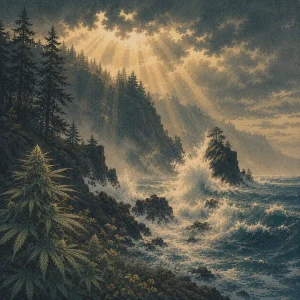
Bruce Banner seeds produce one of the most potent and recognisable hybrids in the modern cannabis catalogue — OG Kush crossed with Strawberry Diesel by Delta9 Labs in the early 2010s, with Bruce Banner #3 becoming the phenotype that put the strain on the map. It tests consistently between 25–30% THC, sits around 60% sativa, and produces the kind of effect that surprises people who think they know what a high-THC indica-leaning hybrid does. It doesn’t do what you expect.
I’ve grown Banner in a few different formats — photoperiod indoor, fast version outdoor — and the genetics perform well in both contexts. The caryophyllene and myrcene terpene combination gives it a depth that you don’t get from a lot of strains in this THC range. This review covers the genetics, what to expect from the grow, how it performs outdoors in Australian conditions, and which of the three available formats suits different situations.
Browse our high-THC cannabis seeds →
Bruce Banner — Strain Specs
| Genetics | OG Kush × Strawberry Diesel |
| Type | 60% Sativa / 40% Indica — Feminised |
| THC | 25–30% |
| CBD | <1% |
| Flowering time (photo) | 8–10 weeks from flip |
| Flowering time (fast) | 6–8 weeks from flip |
| Seed to harvest (auto) | 10–12 weeks fixed |
| Indoor yield | 500–600 g/m² (photo, optimised) |
| Outdoor yield | 600–900 g/plant (photo, full season) |
| Height | Medium-tall — significant stretch in early flower |
| Terpene profile | Caryophyllene, myrcene, limonene |
| Aroma | Diesel, earthy, spice — sweet fruit undertones from Strawberry Diesel |
In this review:

Bruce Banner Strain Review: Genetics, THC, and What to Expect
The lineage is straightforward and explains the strain well. OG Kush brings the dense bud structure, the resin production, and the earthy-diesel terpene foundation that runs through most West Coast hybrid genetics. Strawberry Diesel adds the sativa-dominant growth pattern, the uplifting cerebral character, and the sweet fruity note that softens the diesel baseline. The result leans sativa in growth behaviour and effect onset, with the OG indica influence asserting itself in the mid-to-late phase of the experience.
Bruce Banner #3 is the phenotype most people are referring to when they discuss the strain. Delta9 Labs released several numbered phenotypes and #3 became the one that circulated widely — it’s the highest-THC expression and the most balanced in terms of effect. When you see Bruce Banner in a seed bank catalogue, #3 genetics are usually what’s behind it, though the phenotype hunt involved in growing from seed means individual plants will express the profile slightly differently.
The THC range of 25–30% is real and consistent with what lab testing shows across multiple grows. This puts it in the same bracket as Godfather OG and above most of what you’d find in the general catalogue. The difference from a lot of strains in this range is that the caryophyllene and limonene in the terpene profile prevent the experience from being purely sedative — it’s potent and physical, but the sativa genetics and the limonene component keep it functional in a way that a myrcene-heavy pure indica at equivalent THC wouldn’t be.
Jason: The first time I grew Banner properly I was expecting something closer to a Godfather OG effect given the THC numbers — a heavy indica body lock. What I got was something more complex. The initial phase is genuinely cerebral and energetic, which surprised me for a strain testing at 28%. The indica genetics come through strongly in the second half of the experience. It’s not a strain you use and then do things. But the first hour is functional in a way that very few strains at this potency level are.
Bruce Banner Effects — What the Terpene Profile Does
The caryophyllene dominance is what makes Bruce Banner’s effect profile different to other strains in the same THC range. Caryophyllene activates CB2 receptors directly — the receptors involved in inflammation and pain response — which adds a physical therapeutic depth that sits alongside rather than competing with the cerebral sativa character. The combination of caryophyllene and limonene produces an effect that’s simultaneously physically relaxing and mentally clear in the opening phase, before the myrcene and the raw THC load drive the body effect home in the second phase.
Onset (10–20 min): Clear cerebral lift, mood elevation, energy. The limonene-driven sativa character is front and centre early.
Mid-phase (30–90 min): Physical relaxation builds alongside the mental lift. Pain relief becomes noticeable. Still functional at moderate doses.
Late phase: The myrcene and indica genetics assert themselves. Full body relaxation. Most users at higher doses find sleep follows naturally. Not a strain for late afternoon if you have evening commitments.
Growing Bruce Banner Seeds — Complete Grow Guide
Bruce Banner is an intermediate grow. The genetics are stable and forgiving of reasonable mistakes, but the sativa growth pattern and the high-THC ceiling both reward growers who understand what they’re working with before they start. The most important things to get right: managing the stretch in early flower, keeping temperature below 26°C in mid-to-late flower to preserve the terpene profile, and not rushing the harvest.
Structure and Training
The Strawberry Diesel sativa genetics drive significant stretch — expect 50–80% height increase from the start of the 12/12 flip to when vertical growth stops, typically around week three of flower. This is the single most important thing to plan for indoors. A plant that’s 60 cm at flip will be 90–110 cm before it stops stretching. If your tent ceiling is 120 cm, that’s a problem without early training.
LST from week two of veg is the most effective approach — tie the main stem and lateral branches down progressively to open the canopy and expose bud sites before the flip. SCROG works well with Bruce Banner given the open branching structure: the number of lateral sites is high once the canopy is spread, and a screen channels that energy into multiple productive colas rather than a single dominant top. Top or FIM at week three of veg if height is a serious constraint — the genetics recover well, but allow at least a week before the flip for recovery.
Defoliation in early flower (week one to two of the 12/12 phase) removes shading leaves and improves light penetration to lower bud sites. Keep it moderate — strip fan leaves blocking direct bud sites, not the whole canopy. A second light defoliation at week four of flower removes any leaves that have developed across bud sites as they stack. Don’t defoliate after week five.
Feeding Strategy
Bruce Banner’s yield potential and THC ceiling both require proper nutrition, but the OG Kush genetics carry some sensitivity to overfeeding in the seedling and early veg phase. Start conservative and build.
Seedling (days 1–14): Plain pH-adjusted water or 1/4 strength maximum. EC below 0.6. No CalMag unless using RO water. The most common mistake with this strain is feeding full strength in the first two weeks — tip burn in week two costs early development time.
Veg (weeks 3–6): Build to full strength by week four. EC range 1.0–1.4. Nitrogen-forward profile — Banner puts on significant biomass in veg and needs the nitrogen to support it. Watch for deep green leaves going glossy — that’s the first sign to back off N before toxicity sets in.
Early flower / stretch (weeks 1–3 of 12/12): Transition to bloom nutrients — reduce nitrogen, begin building phosphorus. EC range 1.2–1.6. The stretch phase is metabolically demanding; don’t drop nutrients during this period. CalMag support through early flower if running coco or RO water.
Mid flower (weeks 4–7 of 12/12): Full bloom profile. EC range 1.4–1.8. Potassium support from week five improves resin density and terpene expression — this is where the caryophyllene and diesel terpene profile develops. Keep temperature below 26°C from week five; above this, terpene evaporation accelerates visibly.
Late flower / pre-flush (weeks 8–9 of 12/12): Begin tapering nutrients as natural leaf yellowing starts. Reduce EC to 1.0–1.2. The plant is directing energy into bud development and resin production, not leaf maintenance — yellowing fan leaves at this stage are normal and expected.
Flush (final 10–14 days): Plain pH-adjusted water only. Important for OG-lineage terpene expression — the diesel and earthy notes are cleaner after a proper flush. Don’t skip or shorten this; the flavour difference in cured material is noticeable.
Climate
Temperature: 22–26°C through veg and early flower. Drop to 20–24°C from week five of flower — the diesel and caryophyllene terpene expression in Bruce Banner is noticeably better in cooler late-flower conditions. Cool nights (17–20°C) in the final two weeks improve both terpene intensity and resin density. Some phenotypes will show purple colouration with the temperature differential.
Humidity: Seedling 65–70% RH. Veg 55–65% RH. Early flower 50–55% RH. Mid-to-late flower 40–50% RH, dropping to 40–45% in the final two weeks. The OG Kush-derived bud density makes Banner susceptible to botrytis if RH creeps above 55% once buds are developed — airflow through the canopy and consistent RH management from week four of flower are non-negotiable.
Light: 18/6 standard veg schedule. 12/12 to trigger flower. PPFD targets: 400–600 µmol/m²/s in veg, 700–900 µmol/m²/s in flower. Banner responds well to higher light intensity in flower — if your setup can push into the 800–900 range during peak flower, yield and resin production both improve. Outdoors: full sun position, minimum 6 hours direct light.
Jason: The indoor run I did with the fast version was the most straightforward. Six weeks of flower, density that rivals the standard photoperiod, and the terpene expression was actually stronger than my first photoperiod run — I think because the faster finish meant less time at elevated late-flower temperatures. If you’re running indoor and the timeline flexibility doesn’t matter to you, the fast version is worth considering over the standard photo. The terpene ceiling is higher when you’re not managing heat through a longer flower.
Bruce Banner Week-by-Week Grow Guide (Photoperiod)
The following covers the photoperiod version. Fast version timing is two to three weeks shorter in the flower phase — compress weeks 5–10 accordingly.
| Phase / Week | What’s Happening | Key Actions | Watch Out For |
|---|---|---|---|
| Weeks 1–2 Seedling |
Taproot establishing. First true leaves emerging. Sativa leaf structure visible early. | Plain water or 1/4 strength. 18/6 light. Humidity 65–70% RH. pH 6.0–6.5 soil, 5.8–6.2 coco. | Overfeeding. EC above 0.6 at this stage causes tip burn that costs the plant development time it won’t recover in early veg. |
| Weeks 3–4 Early veg |
Rapid vegetative growth. Sativa internode spacing developing. Plant is structuring itself for the stretch ahead. | Build to full strength nutrients by week 4. EC 1.0–1.2. Begin gentle LST — tie main stem to open structure. Top or FIM at week 3–4 if height management required. | Glossy dark green leaves signal nitrogen toxicity — back off N before damage accumulates. Allow minimum one week post-topping before flip. |
| Weeks 5–6 Late veg |
Plant reaching target size before flip. Multiple lateral branches developing. LST anchors setting canopy position. | EC 1.2–1.4. Continue LST to maintain even canopy. Flip to 12/12 when plant is at 40–50% of your available height — it will double. | Flipping too late is the most common indoor mistake with Banner. If the plant looks too small at 18/6, it will look right-sized after the stretch. Flip early. |
| Weeks 1–3 of flower Stretch / transition |
Significant height increase — 50–80% typical. Pre-flowers developing into early bud sites. First trichome formation. | Transition to bloom nutrients. EC 1.2–1.6. Continue LST to manage stretch and keep canopy even. Light defoliation of shading leaves at week 2. | Don’t stop feeding during stretch — the plant is metabolically demanding in this phase. Monitor canopy-to-light distance daily during rapid height gain. |
| Weeks 4–6 of flower Early-mid flower |
Buds stacking. The diesel and spice aroma building strongly from week 5. Height gain mostly complete by week 4. | Full bloom nutrients. EC 1.4–1.8. Carbon filtration essential from week 5. Drop RH to 45–50%. Temperature management critical — keep below 26°C. Second light defoliation at week 4 if canopy needs opening. | Heat above 26°C visibly degrades terpene expression. This is the most important environmental variable to manage for Banner specifically. Monitor RH — botrytis risk increases as bud density builds. |
| Weeks 7–8 of flower Late flower |
Buds fattening and hardening. Trichome production at peak. Pistils darkening. Diesel and earthy aroma at full intensity. | Check trichomes from week 7. Taper nutrients — EC 1.0–1.2. Drop RH to 40–45%. Cool nights 17–20°C to maximise terpene and resin expression. Begin flush when 10–15% amber visible. | Don’t harvest early. The OG-derived resin and terpene development continues into the final week. Harvesting at mostly cloudy trichomes misses the full flavour and potency the genetics produce. |
| Weeks 9–10 of flower Flush and harvest |
Final ripening. Natural leaf yellowing accelerates. Dense resinous colas. Harvest at 20–30% amber for the full caryophyllene-driven physical effect. | Plain pH-adjusted water for 10–14 days. Harvest at 20–30% amber. Slow dry at 15–18°C, 55–60% RH for 10–14 days. | Rushing the dry. The diesel and earthy terpene profile is volatile — fast drying at high temperature destroys it. Slow and cool is not optional with OG genetics. |
| Post-harvest Cure |
The full diesel and earthy OG terpene character develops during the cure, not on the plant. Fresh material is decent. Properly cured material is recognisably Bruce Banner. | Jar at 60–65% RH. Burp daily for two weeks. 4 weeks minimum. 6–8 weeks noticeably better for terpene expression. | Opening the jars too early. The caryophyllene-driven spice and the diesel character deepen significantly over weeks three and four of cure. Don’t smoke it fresh and judge the genetics. |
Indoor Growing — Bruce Banner (Australia)
- Flowering time: 8–10 weeks (photo) / 6–8 weeks (fast version)
- Yield: 500–600 g/m² under optimised lighting with training
- Container: 15–20 L for photoperiod; 10–15 L acceptable for fast version shorter flower
- Light schedule: 18/6 veg → 12/12 flower
- PPFD: 400–600 veg / 700–900 flower
- Height: Flip at 40–50% of available ceiling height — expect 50–80% stretch
- Training: LST from week 2–3 veg; SCROG suits the branching structure; top/FIM at week 3–4 if needed
- Temperature: 22–26°C veg and early flower; below 26°C strictly from week 5 flower
- Humidity: 65–70% seedling → 55–65% veg → 45–50% flower → 40–45% late flower
- Aroma management: Carbon filtration from week 5 — the diesel terpene output is strong and early
- Cycles per year: 3–4 (photo) / 4–5 (fast version)
Common Problems with Bruce Banner
Overfeeding in seedling phase: The OG genetics carry some nutrient sensitivity into the seedling stage. EC above 0.6 in the first two weeks produces tip burn that slows early development. Always start at 1/4 strength and watch the tips — any browning signals to drop back before damage accumulates.
Underestimating the stretch: The single most common indoor problem. Growers flip at full ceiling height and end up with plants pushing into the light by week three of flower. Flip when the plant is at 40–50% of available canopy height and let the stretch do the work.
Heat in mid-to-late flower: Above 26°C from week five of flower, the diesel and caryophyllene terpene expression degrades visibly in the final product. If your grow space runs warm in summer, either run Banner in cooler months or address temperature management before starting. This is the most impactful single variable for terpene quality with OG-lineage genetics.
Botrytis from humidity: The OG-derived dense bud structure is vulnerable once buds reach full size. Keep RH below 50% from week four of flower, maintain airflow through the canopy, and check bud sites in the lower canopy weekly from week six. Botrytis spreads fast in dense buds — catch it early or lose the affected colas.
Harvesting at cloudy trichomes: Banner’s physical effect and terpene depth both develop in the final week of flower. Harvesting at mostly cloudy trichomes produces a lighter, more cerebral effect that doesn’t represent the genetics. Wait for 20–30% amber under a loupe — then harvest.
Growing Bruce Banner Seeds Outdoors in Australia
The sativa-dominant structure makes Bruce Banner well-suited to outdoor growing in warmer Australian climates, with some important caveats around timing and humidity management.
Queensland and Northern NSW: The open bud structure from the sativa genetics is an advantage in humid coastal conditions — better airflow than dense indica-dominant strains. Plant by mid-October for a March harvest before the autumn rain window. The photoperiod version gives you the full yield potential here; the fast version gives you a February finish and more buffer before the weather turns.
NSW and VIC (temperate): Standard outdoor timing applies — in the ground by late October, harvest late March to April. Bruce Banner’s 8–10 week flower fits this window well. The fast version is worth considering in VIC specifically to target a late-March harvest and avoid the April risk period. The dense bud structure is vulnerable to botrytis if autumn rains arrive early — monitor from week six of flower.
SA and WA: The drier climate suits the OG Kush bud density — mould risk is lower, and the plant handles warm days well. Standard outdoor season timing applies.
Bruce Banner Photoperiod vs Fast Version vs Auto — Which One?
The photoperiod version is the right choice when you want maximum control — over veg time, plant size, and the ability to take clones from a phenotype worth keeping. If you find an exceptional expression in a photoperiod run, you can preserve it indefinitely as a mother plant. Indoor yield potential tops out higher with the photoperiod (500–600 g/m² under optimised conditions) than either the fast version or auto.
The fast version is the most practical choice for most Australian outdoor growers. It flowers two to three weeks faster than the photoperiod, which meaningfully shifts the harvest window in southern states and provides more buffer against April rain in NSW and VIC. It retains photoperiod characteristics — still requires a 12/12 light flip, still responds to training, still achieves close to photoperiod yield potential — while finishing earlier. For outdoor season management, this is the format I’d recommend as the default.
The autoflowering version trades yield and potency ceiling for the fixed 10–12 week timeline and season independence. THC will be somewhat lower than the photoperiod and yield per plant is reduced. If the timeline flexibility or the inability to manage light cycles makes the photoperiod impractical, the auto is a legitimate option — just go in with accurate expectations about what the Ruderalis cross costs relative to the full photoperiod expression.

Bruce Banner vs Gorilla Glue #4 vs Godfather OG
Bruce Banner vs Gorilla Glue #4: Similar THC range (GG4 typically 26–28%). GG4 is caryophyllene-dominant with myrcene — more physically sedating and less cerebral than Banner in the early phase. Banner’s limonene component gives it a more energetic opening that GG4 doesn’t have. If you want functional potency, Banner. If you want deep body effect, GG4.
Bruce Banner vs Godfather OG: Godfather OG is myrcene-dominant with a 22–28% THC range — pure sedative indica-dominant effect from the OG Cup-winning genetics. Banner at equivalent doses is noticeably more functional and cerebral. Godfather OG is the choice for insomnia and heavy pain management. Banner is the choice when you want the potency but need more range in the effect.
Bruce Banner vs Girl Scout Cookies: GSC sits lower in THC (20–25%) and its caryophyllene-dominant profile produces a more balanced, sociable effect. Banner is more potent and more diesel-forward in aroma. GSC is the better choice for a lower-intensity evening hybrid experience. Banner is for growers specifically after maximum THC with sativa character.
Not sure Bruce Banner is right for your grow?
Answer six questions and Jess will match you to three strains based on your setup, experience, and goals.
Bruce Banner Seeds — Key Takeaways
OG Kush × Strawberry Diesel. 25–30% THC. Caryophyllene and limonene dominant terpene profile that produces a more functional, cerebral-opening effect than most strains in this potency range. Significant stretch in early flower — plan for it indoors. Dense OG-derived bud structure requires humidity management from week five outdoors. Fast version is the practical default for Australian outdoor growing, particularly in southern states where the two-to-three week earlier finish meaningfully shifts the harvest window. Not an entry-level genetics choice at this THC level — approach with accurate expectations about what you’re working with.
Bruce Banner Seeds — Frequently Asked Questions
What are Bruce Banner seeds?
Bruce Banner is a feminised cannabis strain bred from OG Kush and Strawberry Diesel by Delta9 Labs, with Bruce Banner #3 being the most widely distributed phenotype. It tests consistently at 25–30% THC with a caryophyllene, myrcene, and limonene terpene profile. Available as photoperiod, fast version, and autoflowering feminised seeds.
How long does Bruce Banner take to flower?
The photoperiod version flowers in 8–10 weeks from the 12/12 light flip. The fast version reduces this to 6–8 weeks — two to three weeks faster — making it better suited to outdoor growing in southern Australian states where the harvest window is tighter. The autoflowering version runs a fixed 10–12 week seed-to-harvest timeline regardless of light schedule.
How does Bruce Banner compare to Gorilla Glue #4?
Both sit in the 25–30% THC range. GG4 is more heavily sedating and body-dominant — its myrcene and caryophyllene profile produces a deep physical effect with less cerebral character. Bruce Banner’s limonene component gives it a more energetic, functional opening phase before the indica genetics assert themselves. If maximum body effect is the brief, GG4. If you want high potency with more sativa character, Banner.
What is Bruce Banner best suited to outdoors in Australia?
Queensland and Northern NSW suit the sativa-dominant open structure — good airflow through the canopy in humid conditions. In NSW and VIC, the fast version is worth considering over the standard photoperiod to target a late-March harvest before autumn rains. The dense OG bud structure requires humidity monitoring from week five of flower in coastal climates. The full Australian climate strain guide covers regional timing in detail.
Is Bruce Banner difficult to grow?
Intermediate. The genetics are reasonably stable and respond well to standard training. The main considerations are managing the significant stretch in early flower, maintaining humidity below 50% from week five as buds develop density, and not overfeeding in the seedling phase. It’s not a punishing grow but the high-THC genetics and the sativa growth pattern both reward growers who’ve run a few cycles before attempting Banner.
When should I harvest Bruce Banner?
Check trichomes from week seven of the 12/12 flower phase. Harvest at 20–30% amber trichomes for the full physical effect the OG genetics produce — caryophyllene-driven body relaxation and the diesel terpene depth both develop in the final week. Harvesting at mostly cloudy trichomes produces a lighter, more cerebral experience that doesn’t represent the full potential of the genetics. Use a loupe or jeweller’s scope, not the pistil colour — pistils turning orange is not a reliable harvest indicator.
How should I feed Bruce Banner through the grow?
Start at 1/4 strength in the seedling phase — EC below 0.6 for the first two weeks. Build to full strength in veg by week four (EC 1.0–1.4, nitrogen-forward). Transition to bloom nutrients at the flip — reduce nitrogen, build phosphorus. EC 1.2–1.6 through early flower, 1.4–1.8 in mid-flower. Potassium support from week five improves resin and terpene production. Taper to EC 1.0–1.2 in late flower, then flush with plain pH-adjusted water for 10–14 days before harvest. The flush matters with OG genetics — it makes a noticeable difference to the diesel flavour in cured material.
Photoperiod for maximum yield and the ability to preserve mother plants from exceptional phenotypes. Fast version for outdoor Australian growing where the earlier finish matters — this is the practical default for most growers. Auto for season independence and fixed timeline, with reduced yield and slightly lower THC as the trade-off.
Related Reading
High-THC cannabis seeds in Australia — the full range of strains testing above 25% THC available from Sacred Seeds.
Autoflower vs photoperiod seeds — the format differences in full, relevant if you’re deciding between the three Bruce Banner variants.
Best cannabis strains for Australian climates — regional outdoor strain selection and seasonal timing guides.
Browse all cannabis seeds — the full Sacred Seeds catalogue, shipped from Australia in 3–6 days.
Seeds are sold strictly as novelty collector’s items. They contain no THC or CBD. This page does not constitute medical or legal advice. By purchasing you agree to our terms and conditions. Always check local laws before germinating or cultivating cannabis.