Feminised · Photoperiod
Green Crack
Green Crack seeds is the daytime sativa built for energy, and a favourite around here for the flavour and the vibe. A cross of Skunk #1 and an Afghani landrace indica, it leads with a big,…
Shop now →🐨 Free Express Post on orders $300+ | ⭐️2,617 5-Star Reviews



From Original price was: $80.00.$75.00Current price is: $75.00.
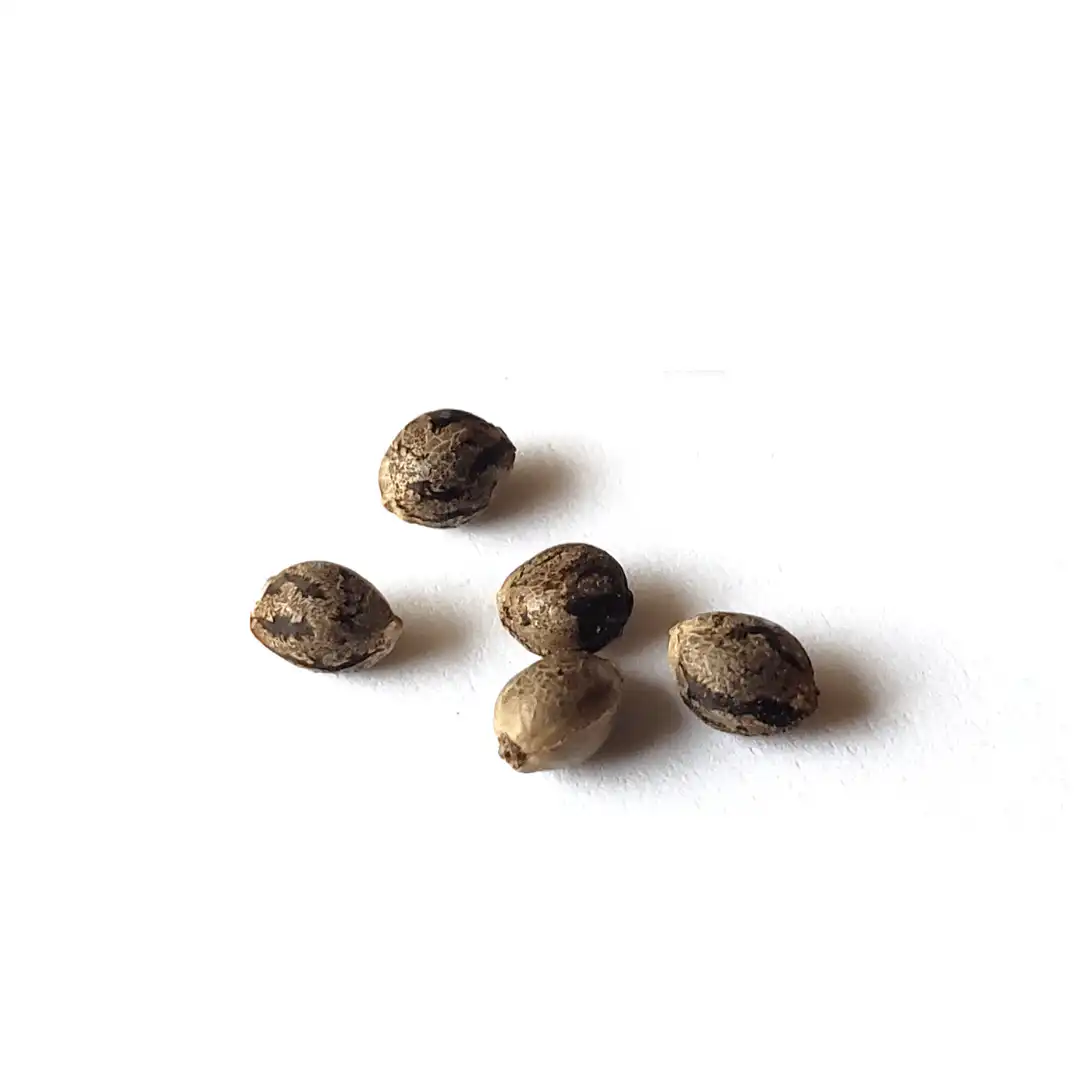
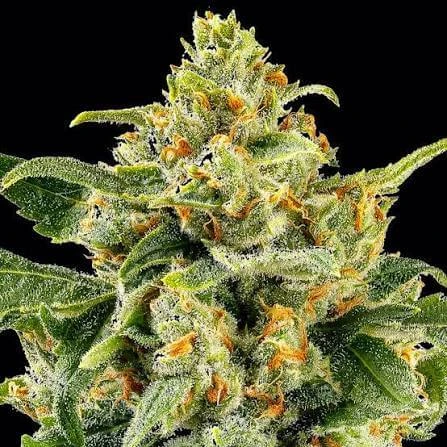
Skunk #1 seeds changed cannabis forever. The world’s first stable hybrid combined Afghani, Colombian Gold, and Acapulco Gold into the blueprint for modern breeding. Fast, reliable, beautifully balanced, and still the benchmark over 40 years later. Every Skunk has a story. This is where it begins. 🦨
Every order ships with bonus seeds. One free seed per five purchased — added automatically.
Free Express Post on orders $300+. Automatic upgrade · Australia-wide
Contact us for bulk pricing.

Skunk #1 is the most important hybrid in cannabis history: the first genuinely stable, true-breeding cross, built from three landraces, that proved cannabis could be bred with real predictability. Its balanced effect, its unmistakable skunky aroma, and its beginner-friendly reliability made it the benchmark every strain since has been measured against.
The story starts in 1970s California, where an underground collective that called itself Sacred Seeds, led by a breeder known as Sam the Skunkman, set out to do something no one had managed: take the wild inconsistency out of cannabis. They crossed a hardy Afghani indica with two uplifting landrace sativas, Colombian Gold and Acapulco Gold (now in our catalogue as Acapulco Gold feminised seeds), and through generations of selection stabilised the result into a plant that grew the same way, every time. That was revolutionary. It proved cannabis could be bred like any other crop, and it kicked off everything that followed. The name, for what it is worth, is not lost on us.
From there the influence only grew. After the collective was raided in 1982, the genetics travelled to Amsterdam and sparked the Dutch indoor-growing revolution, passing through the hands of breeders including Nevil Schoenmakers, the same figure behind the Northern Lights story. In 1988 Skunk #1 won the very first High Times Cannabis Cup. The aroma became so iconic that "skunk" entered everyday language as a word for potent cannabis. And the genetics became foundational: this is a direct parent of Super Skunk and an ancestor of a huge share of the modern catalogue, from Cheese to countless others. For the deeper genetics and breeding history, see our Skunk #1 strain review, and our Northern Lights review, which covers the same era and breeders.
What matters for the grower is that all of that history sits inside one of the most reliable plants you can run. Skunk #1 Seeds produce a fast, uniform, forgiving plant with strong yields, real mould and pest resistance, and the balanced hybrid effect the strain has always been loved for. It is the anchor of our skunk and funk genetics, and it sits in our balanced hybrid range, part of the wider cannabis seeds Australia catalogue.
Skunk #1 Lineage
Why growers choose Skunk #1:
Skunk #1 is the definition of a balanced hybrid: a bright, sociable cerebral lift that settles into a comfortable body calm, with a soft landing and no heavy couch-lock.
Onset (5–15 minutes): An energetic, uplifting head change arrives first. Mood rises, thoughts quicken, and there is a genuine social, creative, sometimes giggly quality to it. Clear-headed and pleasant rather than intense.
Peak (15–60 minutes): The sativa side leads, euphoric, talkative, and creative, while the Afghani indica works underneath to keep it grounded. This is the classic Skunk #1 balance: engaged and happy without the racy edge a pure sativa can bring, and relaxed without being sedated.
Mid to late phase: As the cerebral lift eases, a comfortable body relaxation comes forward, calm, mellow, and easy. It never tips into heavy couch-lock at moderate doses, which is a large part of why the strain has stayed so popular for so long.
Duration and landing: a couple of hours for most, with a notably soft comedown, no crash, no fog, just an easy return to baseline.
Potency note: at ~15 to 19% THC, Skunk #1 is moderate by modern numbers, and that is the point. The appeal is the balance, the aroma, and the quality of the experience rather than raw strength. The full terpene profile makes it feel more complete than the percentage suggests, an early example of what growers now call the entourage effect.
When it suits: genuinely flexible, upbeat enough for daytime and social settings, mellow enough for an evening with friends. One of the more versatile effect profiles in the catalogue.
Flavour: the original skunk, and still one of the best. Earthy and musky with a sweet-and-sour funk, a citrus lift, and a faint hoppy, spicy edge. It is a distinctive, old-school profile with none of the muddiness that over-crossed modern hybrids can carry, clean, pungent, and unmistakable.
Skunk #1 is where the classic skunk terpene profile was defined. Myrcene leads, driving the pungent, earthy funk, with the rest of the profile adding sweetness, citrus, and spice:
For how these compounds shape flavour and effect, see our cannabis terpenes guide.
(Strictly for ACT residents with a licence or those overseas where cultivation is legal.)
Experience level: beginner-friendly, and genuinely so. Skunk #1 was bred for stability and reliability, and decades of selection have made it one of the most forgiving strains you can grow. It germinates readily, grows vigorously, produces a uniform crop, and tolerates the kind of small mistakes that would set back a fussier strain. It was also deliberately bred for resistance to mould and pests, which removes the two problems most likely to catch out a new grower. If you are learning, this is one of the best strains to learn on. Our cannabis seedling care guide covers a strong start.
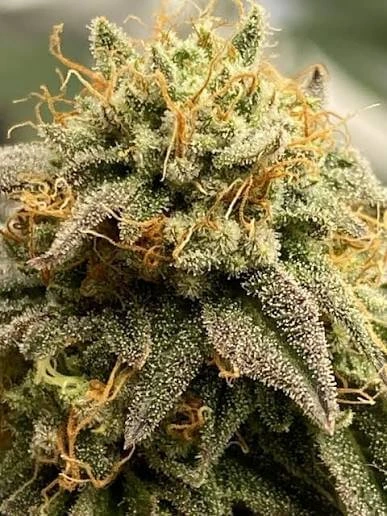
Structure and height: mostly indica in appearance, with dark green leaves, short internodal gaps, and dense, rounded flower clusters that merge into heavy terminal buds. It gains a little more height than a pure indica during flower, finishing around 100 cm indoors (roughly 50 to 150 cm depending on veg time) and up to 200 cm outdoors. The stems and branches are thick and strong, built to carry the heavy yields without much support.
Training: Skunk #1 is robust enough to handle any technique you want to throw at it, so even growers with limited experience can experiment. Sea of Green suits its uniform, fast-flowering nature especially well, and Screen of Green, supercropping, topping, and lollipopping all work. Because the plant recovers so readily from stress, it is a forgiving strain to practise training on.
Feeding: a straightforward, moderate feeder that does not demand the careful nutrient management some higher-maintenance strains need. Keep nitrogen moderate in veg, transition to a phosphorus and potassium forward feed through flower, and it will reward you without fuss. This tolerance for imperfect feeding is part of what makes it so beginner-friendly.
Aroma management: the one thing to plan for is the smell. Skunk #1 is loud, that is the whole point of it, and the aroma builds strongly from mid-flower. Indoors, carbon filtration is essential, not optional. Outdoors, factor the smell into where you site the plant. Our amber trichomes guide covers reading the harvest window.
| Phase / Week | What's Happening | Key Actions | Watch Out For |
|---|---|---|---|
| Veg weeks 1–3 Seedling / early veg |
Fast, vigorous germination and early growth. Uniform seedlings, a hallmark of this stable strain. | Build feed from quarter to half strength. Begin light LST if training. 18/6 light. | Not much, this is a forgiving phase. Avoid overwatering, otherwise it largely looks after itself. |
| Veg weeks 4–5 Mid veg |
Strong branching and a bushy, indica-leaning structure. Thick, sturdy stems developing. | Full-strength feed. Set up SOG or SCROG if using. Flip at your target height. | Flip in time, it gains moderate height in early flower, so account for the stretch. |
| Flower weeks 1–3 Stretch / early flower |
Moderate stretch, then dense flower clusters form at the short internodes. The skunk aroma appears. | Phosphorus-forward feed. Carbon filter on. RH 45 to 50%. Light defoliation of shade leaves. | Aroma builds fast, get filtration running early. Otherwise a smooth phase. |
| Flower weeks 4–6 Mid-late flower |
Dense, rounded buds merge into heavy terminal colas. Resin builds, aroma at full intensity. | Peak P and K feed. RH under 45%. Keep airflow strong. Check trichomes from week 6. | Humidity in the dense buds, though the mould resistance gives you more margin than most. |
| Flower weeks 7–8 Ripening / flush |
Final ripening, trichomes maturing, fan leaves showing colour as energy goes to bud. | Begin flush at 50 to 60% cloudy. Plain pH water. Harvest at 70 to 80% cloudy for the balanced effect. | Harvesting by the calendar, not the plant. Read trichomes, this one finishes fast but reward patience. |
| Post-harvest Dry & cure |
The classic skunk profile sharpens and cleans up in the jar over the first few weeks. | Slow dry at 15 to 18 °C, 55 to 60% RH for 10 to 14 days. Jar at 60 to 65% RH, burp daily for two weeks. Our drying and curing guide covers it. | Rushing the dry, since the pungent terpenes are volatile and a fast, hot dry flattens the funk. |
There is a reason growers still reach for Skunk #1 fifty years on, and it is not nostalgia. If you can grow Skunk #1 well, you can grow almost anything, and if you cannot, this is the strain that will teach you, because it forgives the mistakes that kill fussier plants. I point new growers here constantly. It germinates, it grows, it yields, and it does not throw the surprises that make people give up.
The one thing I tell everyone: respect the smell. Skunk #1 earned its name honestly. From about week three of flower it gets loud, and by the end it is genuinely pungent. Indoors that means a proper carbon filter, running, before you think you need it. Outdoors it means thinking about where the plant sits relative to fences and neighbours. This is not a discreet strain, and pretending otherwise is how people get caught out.
Last thing, on the cure. The percentage on this strain is moderate and that is fine, the magic is in the terpenes, and terpenes are made or lost in the dry and cure. Go slow and cool, give it three to four weeks in the jar, and what you get is that clean, old-school skunk that no amount of THC percentage can fake. Rush it and you throw away the best part of the strain.
| Feature | Skunk #1 (this page) |
Super Skunk |
|---|---|---|
| Genetics | (Afghani × Colombian × Acapulco Gold) | Skunk #1 × Afghani |
| Balance | Balanced, ~65% indica / 35% sativa | Indica-dominant, ~80/20 |
| THC | ~15–19% | ~16–20% |
| Effect | Balanced: energetic then relaxed | Heavier body stone, head stays clearer |
| Flowering | 7–8 weeks | 7–8 weeks |
| Flavour | Classic sweet-sour skunk | Skunk with sweeter Afghani depth |
| Best for | A balanced all-rounder, day or evening | Heavier evening body relaxation |
Both share the same easy-growing skunk backbone. Choose Skunk #1 for the balanced, versatile effect and the original profile; choose Super Skunk if you want the heavier, more indica-forward body stone that the added Afghani brings.
Still deciding? Our full strain lineup guide covers the range, or browse the balanced hybrid range, the feminised seed range, or the complete cannabis seeds catalogue.
Skunk #1 is a three-landrace hybrid, (Afghani × Colombian Gold) × Acapulco Gold, and the first genuinely stable, true-breeding cannabis cross ever created. Bred in 1970s California, it proved cannabis could be developed with real consistency and became the template for modern breeding. It is loved for its balanced hybrid effect, its iconic skunky aroma, and how reliably and easily it grows. Our Skunk #1 strain review tells the full origin story, from 1970s California to the first Cannabis Cup.
It was the first stabilised hybrid, the strain that showed cannabis could be bred like any other crop rather than left to chance. It went on to spark the Dutch indoor-growing revolution, win the very first High Times Cannabis Cup in 1988, and become the genetic backbone of a huge share of modern strains, including Super Skunk, Cheese, and countless others.
For the aroma. Skunk #1 has such a pungent, distinctive smell that "skunk" entered everyday language as a term for strong-smelling, potent cannabis. In other words, this is the strain the word is named after, not the other way around.
A balanced hybrid experience: an energetic, uplifting, sociable head change first, settling into a comfortable body calm with a soft landing. It is not couch-lock, and it works day or evening. That versatility is a large part of why it has stayed popular for so long.
Around 15 to 19% THC, which is moderate by modern standards, and that is by design. Skunk #1 is about balance, aroma, and the quality of the experience rather than chasing the highest number. The full terpene profile makes it feel more complete than the percentage suggests, an early, textbook example of the entourage effect.
The original skunk: earthy and musky with a sweet-and-sour funk, a citrus lift, and a faint hoppy, spicy edge. It is clean and pungent, without the muddy taste some over-crossed modern hybrids carry. More on how terpenes shape this in our cannabis terpenes guide.
Around 7 to 8 weeks (49 to 56 days) indoors from the 12/12 flip, which is fast, and one of the reasons the strain has always been popular with growers. Outdoors in a warm Australian summer it finishes around early April.
Yes, it is one of the best strains to learn on. It was bred for stability and reliability, grows vigorously and uniformly, tolerates small mistakes, and was deliberately selected for resistance to mould and pests, the two problems most likely to catch out a new grower. It also handles any training method you want to try, so it is forgiving to experiment with.
Around 100 cm indoors (50 to 150 cm depending on veg time) and up to 200 cm outdoors, with strong stems that carry the weight well. Indoors you can expect up to 600 g/m² with good lighting; outdoors a large full-season plant can reach up to 1,500 g in ideal conditions.
Very well. It is more adaptable than the pure landrace sativas, thriving indoors and in a normal warm Australian summer outdoors across most of the country, and its mould resistance is a genuine advantage in humid coastal regions. Our Australian climate strain guide breaks this down by region.
Super Skunk is Skunk #1 crossed back to an Afghani, which pushes it more indica-dominant (~80/20) with a heavier body stone. Skunk #1 is the more balanced, versatile of the two, with a livelier head component. Both grow easily and finish fast. If you want a balanced all-rounder, Skunk #1; if you want a heavier evening body effect, the Super Skunk.
Yes, with fast domestic shipping and discreet packaging, and most orders arrive within a few business days. All seeds are batch-tested with the paper towel method at ~22 °C and stored cold and dry to preserve viability.
Not sure this is the right strain for you?
Answer six quick questions and we will give you three strains we feel best for you based on your setup, experience, and goals.



Discover the latest additions to Sacred Seeds Australia — from legendary old-school strains to exciting modern hybrids, each selected for its distinctive character, lineage and reputation.
Explore all latest drops →Green Crack seeds is the daytime sativa built for energy, and a favourite around here for the flavour and the vibe. A cross of Skunk #1 and an Afghani landrace indica, it leads with a big,…
Shop now →
Auto Maui Wowie brings the classic Hawaiian landrace sativa into autoflowering form. Maui Wowie Auto keeps the bright pineapple-citrus flavour and clean, energetic daytime lift, but finishes in about 9 to 10 weeks from seed with…
Shop now →
Hindu Kush seeds bring you one of the world's last great pure indica landraces. Born high in the rugged mountains between Afghanistan and Pakistan, this resin-rich classic delivers earthy spice, deep relaxation, and genetics that have…
Shop now →
Germination in three days.
Sacred Seeds are the place to go for quality seeds and great information. 👍👍