Understanding Autoflowers: What Makes Them Different
Autoflowering cannabis plants draw their genetics from Cannabis ruderalis, a subspecies that evolved in the harsh, short-season climates of Russia and Central Asia. That heritage produced something genuinely distinct: plants that flower based on age rather than light cycle, progressing from seedling to harvest in approximately 8-12 weeks regardless of photoperiod. The practical implication is that you can run an 18-20 hour light schedule throughout the entire grow, simplifying the light management side of cultivation.
What this accelerated timeline actually demands, though, is a higher standard of attentiveness from the outset.
The compressed growth window that makes autoflowers appealing is the same thing that makes them unforgiving. A mistake in week two of a photoperiod grow can be absorbed across an extended vegetative phase — that same mistake in an autoflower costs you directly in final yield and quality. There’s no corrective buffer. This makes the cultivation of quality autoflowering genetics a genuine skill exercise: getting the most from these plants requires dialling in your environment, your watering discipline, and your feeding programme precisely, because the plants won’t wait for you to catch up.Modern autoflower genetics have also fundamentally changed what’s achievable. Contemporary varieties from serious breeders routinely produce potency, terpene complexity, and bud structure that rivals well-grown photoperiod strains. The ceiling has risen considerably, and reaching it requires the same craft focus that premium photoperiod cultivation demands. Understanding that autoflowers are fast-moving, not forgiving, shapes everything that follows in this guide.
Jason’s Key Lesson
With autoflowers, the clock starts the moment the seed cracks — and it never stops.
A photoperiod plant will sit in veg for as long as you need it to. Made a mistake? Fix it, let the plant recover, carry on. Autoflowers don’t work that way. They’re moving through their lifecycle on their own schedule, and they’re not waiting for you to catch up. Every week you lose to a problem — overwatering, a nutrient issue, a transplant stress — is a week that was already allocated to bud production. You can’t get it back.
The simplicity people talk about with autos is real: no light schedule management, faster turnaround, smaller plants. But that simplicity is about logistics, not about craft. The actual growing demands more precision, not less — because the margin for error is so much smaller.
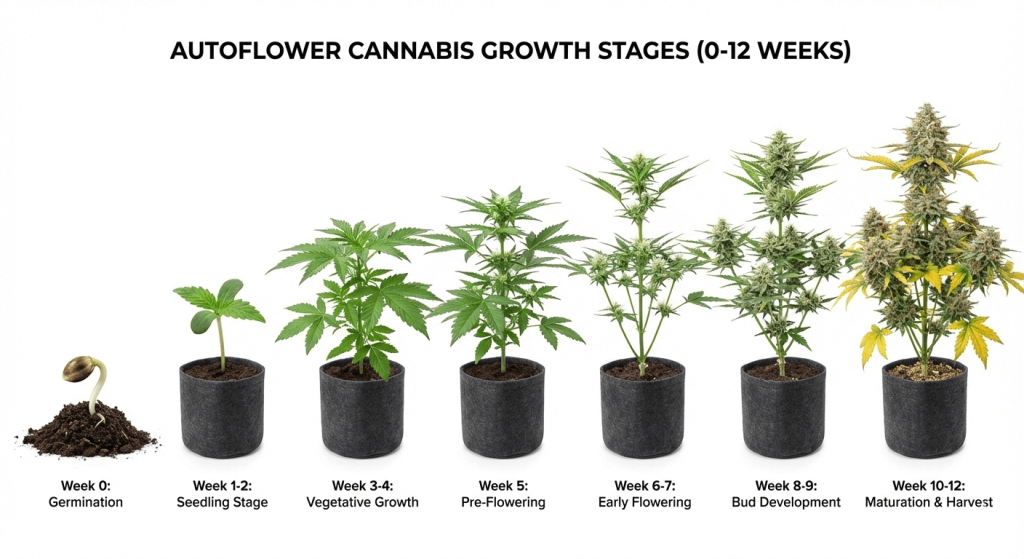
Understanding Autoflowers: What Makes Them Different
Autoflowering cannabis seeds contain genetics from Cannabis ruderalis, a hardy subspecies originating from regions with short growing seasons in Russia and Central Asia. This ruderalis heritage grants autoflowers their signature trait: they begin flowering based on age, typically around 3-4 weeks from germination, rather than responding to changes in light cycles like photoperiod varieties. This fundamental difference means you can grow autoflowers under any light schedule, though most growers opt for 18-20 hours of light throughout the entire grow cycle for maximum yields. The compact timeline of autoflowers—usually 8-12 weeks from seed to harvest—offers several distinct advantages for Australian growers. You can complete multiple harvests in a single outdoor season, work around unpredictable weather patterns, and maintain discretion with plants that typically remain under 1.2 metres tall. Additionally, autoflowers demonstrate remarkable resilience to temperature fluctuations, pests, and beginner mistakes compared to their photoperiod counterparts. However, this accelerated growth means there’s limited time to correct errors, making it essential to provide optimal conditions from day one. Modern autoflowering cannabis seeds have evolved significantly since their early iterations. Today’s genetics produce potent, flavourful buds with THC levels rivalling photoperiod strains, whilst maintaining the speed and simplicity that made autoflowers popular initially. Understanding these unique characteristics helps you tailor your approach throughout each developmental stage, maximising both yield and quality from your autoflower grow.| Week | Stage | Key Focus |
|---|---|---|
| 0 | Germination | Moisture, warmth |
| 1–2 | Seedling | Root development |
| 3–4 | Vegetative | Structure, nitrogen |
| 5 | Pre-flower | Transition nutrients |
| 6–9 | Flowering | Bud development |
| 10–12 | Ripening | Trichome monitoring |
Germination (Week 0): Starting Your Autoflower Journey
Successful germination sets the foundation for your entire autoflower grow. The most reliable method involves the paper towel technique, where seeds are placed between dampened paper towels inside a sealed container or plastic bag. Store this setup in a warm, dark location maintaining temperatures between 22-25°C. Within 24-72 hours, you should observe the seed shell cracking and a white taproot emerging. Once the taproot reaches approximately 1-2 centimetres, your seed is ready for planting. Plant germinated seeds directly into their final container—this is crucial for autoflowers. Unlike photoperiod plants, autoflowers have limited vegetative time and respond poorly to transplanting stress. Any setback during their brief vegetative phase directly impacts final yield. Choose containers between 11-19 litres capacity with excellent drainage. Fill with a light, airy growing medium such as a quality soil mix with 30% perlite, or a coco coir blend. Plant the germinated seed approximately 1-1.5 centimetres deep with the taproot facing downward, then gently cover with soil. Maintain consistent moisture without waterlogging during this critical phase. The growing medium should feel damp but not saturated. Place a humidity dome or clear plastic cup over the planting site to retain moisture and create a microclimate that encourages the seedling to break through the soil surface. Within 24-48 hours of planting, you should see the seedling emerge. Once visible, remove any covering and position your light source approximately 60-75 centimetres above the seedling to prevent stretching whilst avoiding light stress.Seedling Stage (Weeks 1-2): Establishing Strong Foundations
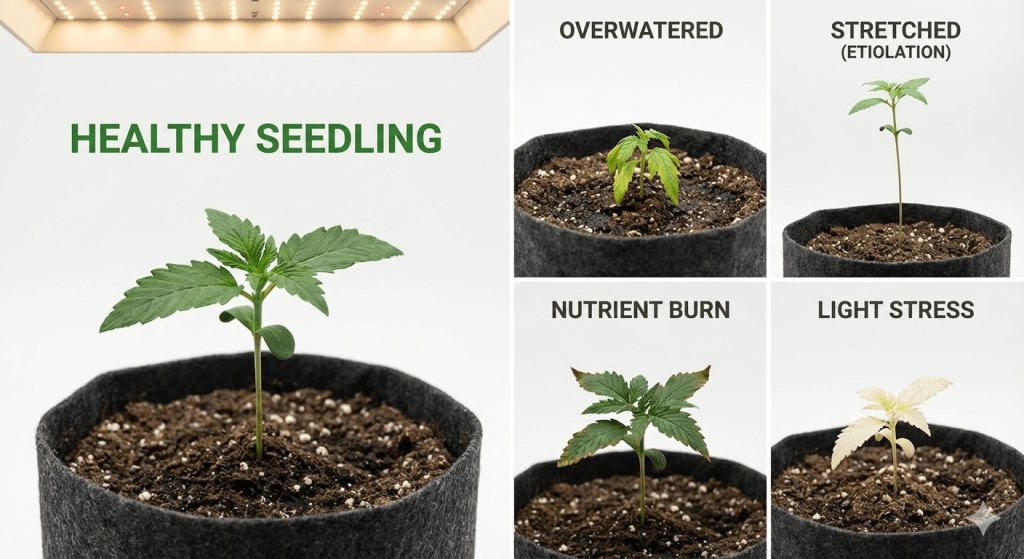
The seedling stage represents your autoflower’s most vulnerable period, requiring careful attention to environmental conditions. Your young plant will display its first set of true leaves (after the initial round cotyledon leaves) and begin establishing its root system. Temperature should remain between 20-25°C with relative humidity around 65-70%. Lighting can be relatively gentle during this phase—LED fixtures should be positioned 60-90 centimetres away, whilst HPS or MH lights require greater distance to prevent heat stress. Watering discipline during the seedling stage proves critical. Overwatering remains the primary killer of cannabis seedlings, as their small root systems cannot process excess moisture, leading to oxygen deprivation and root rot. Water in a small circle around the seedling rather than saturating the entire container. Allow the top 2-3 centimetres of growing medium to dry before watering again. As roots develop, gradually increase the watering zone radius. By week two, roots should be spreading throughout the container, and you can begin watering the full pot whilst still maintaining dry periods between waterings. Nutrition requirements remain minimal during the seedling phase. Quality soil contains sufficient nutrients for the first 2-3 weeks, so avoid introducing additional fertilisers that can overwhelm delicate roots. If using an inert medium like coco coir, introduce nutrients at quarter strength during week two. Monitor your seedlings for any signs of stress: yellowing leaves may indicate nutrient deficiency or overwatering, whilst burnt leaf tips suggest nutrient excess. Healthy seedlings display vibrant green leaves, steady upward growth, and develop new leaf sets every few days.Vegetative Growth (Weeks 3-4): Rapid Development Phase
Weeks three and four mark the explosive vegetative growth period where your autoflower establishes the structure that will support future bud production. During this phase, plants develop rapidly, producing new leaf sets and branches daily. Node spacing, leaf size, and overall plant structure become established. Provide 18-24 hours of light daily—many experienced growers prefer an 18/6 or 20/4 schedule to balance growth with plant rest periods, though some cultivators report excellent results with continuous 24-hour lighting. Nutritional demands increase significantly during vegetative growth. Your plants require nitrogen-rich fertilisers to support leaf and stem development. If using bottled nutrients, follow the manufacturer’s feeding schedule but consider starting at half strength and gradually increasing based on plant response. Organic growers should ensure their soil contains adequate nitrogen sources such as worm castings, blood meal, or composted manure. Water when the top layer of soil feels dry, and always water until you observe runoff from drainage holes—this prevents salt buildup that can lock out nutrients.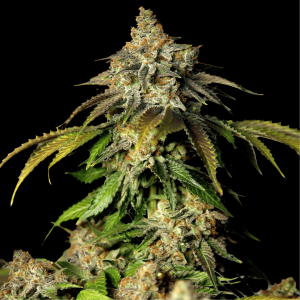

Pre-Flowering (Week 5): The Transition Period
Week five typically marks the pre-flowering phase where your autoflower transitions from vegetative growth to flower production. You’ll notice pistils (white hairs) emerging from calyxes at node sites, confirming the plant’s sex and flowering initiation. Feminised autoflower seeds eliminate concerns about male plants, but it’s still worth examining your plants closely during this phase. Growth patterns shift as vertical stretching accelerates—expect plants to gain 50-100% of their vegetative height during the next few weeks. Adjust your nutrient regimen to reflect changing plant needs. Begin reducing nitrogen whilst increasing phosphorus and potassium, which support flower formation and bud development. Most nutrient lines offer specific “bloom” formulations designed for this transition. Additionally, consider introducing supplements containing beneficial microbes, carbohydrates, or bloom boosters that enhance flower production. However, exercise caution with additives—more is not better, and overfeeding can harm yields more than underfeeding. Environmental adjustments become important as flowering commences. Lower humidity to 40-50% to reduce mould risk as buds begin forming. Maintain temperatures between 20-26°C—slightly cooler than vegetative stage temperatures. Some strains display enhanced colour and resin production when experiencing a 5-8°C temperature drop between lights-on and lights-off periods. Ensure your lighting remains consistent without interruption during the dark period if you’re using a schedule with darkness, though autoflowers tolerate light interruptions better than photoperiod plants.Flowering Stage (Weeks 6-9): Bud Development
The flowering stage represents the most exciting phase of your autoflower grow as buds swell and resin production intensifies. During weeks six through nine, flowers develop rapidly, transitioning from loose clusters of pistils to dense, resinous formations. Your plants’ distinctive aroma strengthens significantly—ensure adequate odour control measures are in place if discretion is required. Different strains display varying flowering patterns; sativa-dominant autoflowers typically produce longer, more airy buds, whilst indica-dominant varieties form tight, compact colas. Nutritional management during flowering focuses on phosphorus and potassium whilst minimising nitrogen, which is no longer needed in large quantities. Continue feeding according to your nutrient schedule, but monitor plants for signs of nutrient burn (dark leaves with burnt tips) or deficiencies (yellowing leaves, purple stems). Some leaf yellowing in lower growth is normal as plants redirect energy to flower production. Maintain consistent watering practices, but be mindful that dense canopies and increased plant mass mean faster water uptake. Check soil moisture more frequently than during earlier stages. Support structures may become necessary as buds gain weight. Bamboo stakes, plant ties, or trellis netting prevent branches from bending or breaking under the burden of heavy flowers. Defoliation should be approached cautiously during flowering—remove only leaves blocking light penetration to lower bud sites or those showing disease. Excessive defoliation stresses plants during this critical period. Monitor closely for pests or mould, which are attracted to flowering plants. Implement preventative measures rather than waiting for problems to emerge, as treatment options become limited once dense flowers form.Late Flowering and Harvest (Weeks 10-12): The Final Stretch
The final weeks of your autoflower grow determine ultimate potency and yield. During weeks 10-12, bud development reaches its peak, with calyxes swelling and trichome production maximising. Pistils begin changing colour from white to orange, brown, or red, depending on genetics. This visual transformation often tempts growers to harvest prematurely, but patience during these final weeks significantly impacts quality and potency. Most autoflowers require the full 10-12 weeks, with some sativa-dominant varieties extending slightly longer. Flushing—the practice of providing only plain water for the final 1-2 weeks before harvest—remains debated amongst growers. Proponents argue flushing improves flavour by removing residual nutrients from plant tissue, whilst critics suggest it unnecessarily stresses plants during their final production phase. If you choose to flush, begin approximately 10-14 days before your anticipated harvest date. Provide pH-adjusted water without nutrients until runoff appears clear. Plants may display rapid leaf yellowing during flushing as they consume remaining internal nutrient stores. Environmental conditions during late flowering should emphasise mould prevention and resin production. Maintain humidity below 45% if possible, particularly during the final two weeks. Some growers reduce temperatures slightly (18-24°C) to stress plants beneficially, potentially increasing resin production and enhancing colour development in purple-tinged varieties. However, avoid drastic temperature swings that could shock plants. Lighting remains crucial through harvest day—any reduction in light intensity or duration can signal the plant to slow production.Common Autoflower Mistakes to Avoid
Successfully growing autoflowers requires avoiding several common pitfalls that particularly impact these fast-flowering plants. The most frequent mistake involves transplanting, which stresses autoflowers during their limited vegetative window. Always germinate seeds directly in their final containers to maximise growth potential. Similarly, overtraining through techniques like topping or heavy defoliation often reduces yields rather than improving them. Autoflowers lack sufficient recovery time to compensate for the stress these methods create. Overwatering and overfeeding account for numerous autoflower failures, particularly amongst new growers. Cannabis plants generally thrive with less water and fewer nutrients than beginners expect. Establish a watering schedule based on container weight and soil dryness rather than arbitrary timing. When introducing nutrients, start conservatively at half the recommended strength and increase gradually based on plant response. It’s far easier to add more nutrients than to correct nutrient burn or lockout. Light-related issues frequently compromise autoflower potential. Insufficient lighting produces stretched, weak plants with minimal bud development, whilst excessive light intensity causes bleaching, heat stress, and reduced yields. Position lights according to manufacturer recommendations for your specific fixture and growth stage. Additionally, avoiding these common mistakes becomes easier by consulting comprehensive resources about successful cannabis cultivation practices that apply across various growing methods. Environmental neglect represents another category of common errors. Temperature extremes, humidity issues, and poor airflow create conditions where pests, diseases, and stress thrive. Invest in basic environmental monitoring equipment—a thermometer, hygrometer, and timer cost relatively little but provide crucial data for maintaining optimal conditions. Finally, harvesting prematurely based on breeders’ timelines rather than actual plant indicators consistently disappoints growers. Every phenotype varies slightly in maturation speed, and environmental factors influence development rates significantly.Determining the Perfect Autoflower Harvest Time
Identifying the optimal harvest window requires examining trichomes—the tiny, mushroom-shaped glands covering flowers and surrounding leaves. Invest in a jeweller’s loupe or digital microscope with at least 30x magnification. Trichomes progress through three distinct stages: clear (immature), cloudy/milky (peak THC), and amber (THC degrading to CBN). Most growers target harvest when 70-90% of trichomes appear cloudy with 10-30% turning amber, depending on desired effects. Clear trichomes indicate immaturity and will produce less potent, potentially anxiety-inducing effects if harvested prematurely. Cloudy trichomes represent peak THC content and produce the most cerebral, energetic effects. Amber trichomes indicate THC converting to CBN, producing more sedative, body-focused effects. Understanding these stages allows you to customise your harvest timing based on preferences. Sativa enthusiasts might harvest earlier (mostly cloudy, minimal amber), whilst indica lovers often wait for increased amber percentage. For detailed guidance on this critical aspect, review information about amber trichomes and harvest timing. Additional harvest indicators complement trichome examination. Most pistils should have darkened and curled inward, though some fresh white pistils may remain on the uppermost flowers. Leaves often display autumn colours as the plant senesces naturally. However, don’t rely solely on these secondary indicators—trichome development remains the most reliable harvest metric. According to research from Cannabis cultivation studies, harvest timing can influence cannabinoid profiles by up to 20-30%, making proper assessment essential for achieving your desired outcome. Once you’ve determined harvest readiness, plan your post-harvest process. Prepare your drying space, trimming tools, and storage containers before cutting plants. Most growers harvest in the morning when resin production peaks and before lights warm the grow space. Cut entire plants at the base or harvest individual branches, depending on your drying setup and whether different parts of the plant display varying maturity. Remember that proper drying and curing significantly impact final quality, so view harvest as the beginning of the finishing process rather than the end of cultivation.Frequently Asked Questions About Growing Autoflowers
How long do autoflowers take from seed to harvest?
Most autoflower strains complete their full cycle in 8-12 weeks from germination. Fast-finishing varieties can be ready closer to 8-9 weeks; some sativa-leaning autos extend to 12-13 weeks. Breeder timelines are useful estimates, not guarantees — individual phenotypes and environmental conditions influence development meaningfully. Always base harvest decisions on trichome development rather than calendar dates.What’s the best light schedule for autoflowers?
Most experienced growers run 18/6 or 20/4 throughout the entire cycle. Some use 24/0 with success; others find that a dark period supports healthier metabolic function and slightly better terpene development. The more important variable is light quality and intensity — a consistent, high-output spectrum will do more for your results than the precise split between light and dark hours.Can I grow autoflowers outdoors in Australia?
Yes, and Australian conditions can produce excellent results with the right timing. The fast lifecycle allows multiple harvests per season in most climate zones. Queensland and northern NSW can produce year-round with careful planning; southern states are best suited to spring and summer runs (September through February). Autoflowers aren’t dependent on photoperiod changes, which gives you scheduling flexibility — though they still require substantial direct sun, ideally 6-8 hours daily minimum for quality outcomes.What size pot do I need for autoflowers?
Eleven to nineteen litres is the practical range, with larger containers generally supporting better root development and yield potential. The critical rule is to plant your germinated seed directly into the final container — autoflowers respond poorly to transplanting. The stress and recovery time eat into the vegetative window you can’t afford to lose. Fabric pots are worth considering for the air pruning effect and the drainage they provide.Should I top or train my autoflowers?
Low-stress training — gently bending and tying branches to open the canopy and distribute light — works well when started early, around weeks 2-3. High-stress techniques like topping or FIMing are a different matter. The recovery time required cuts into a vegetative phase that’s already brief, and the yield trade-off is rarely worth it. If you’re going to train, do it early and keep it gentle. If there’s any doubt, growing naturally will outperform a stressed and stunted plant.