Whether you’re a dedicated collector or simply curious about botanical preservation, understanding cannabis seeds is essential for building a quality collection. This comprehensive cannabis seeds guide explores everything from seed genetics and types to proper storage techniques and selection criteria specific to Australian conditions. With the right knowledge, you can confidently navigate the world of seed collecting and preservation.
At its core, selecting quality cannabis seeds requires understanding the fundamental differences between seed types, recognizing quality indicators, and knowing how to preserve genetic material properly. Feminised seeds produce only female plants, regular seeds offer both male and female genetics, and autoflowering varieties flower based on age rather than light cycles. Proper storage in cool, dark, dry conditions can preserve seed viability for years, while quality seeds display dark coloration, firm shells, and waxy coatings that indicate genetic health and maturity.
Understanding Different Types of Cannabis Seeds
The types of cannabis seeds available to collectors have evolved significantly over the past few decades. Modern breeding techniques have created distinct seed categories, each with unique characteristics and preservation requirements. Understanding these differences forms the foundation of any serious collection strategy.
Cannabis seeds generally fall into three primary categories: feminised, regular, and autoflowering. Each type represents different breeding objectives and genetic expressions. Feminised seeds have been selectively bred to produce only female plants, eliminating male chromosomes through specialized breeding techniques. Regular seeds maintain both male and female genetics in roughly equal proportions, preserving the plant’s natural genetic diversity.
Autoflowering seeds represent a revolutionary development in cannabis genetics. These seeds contain genetics from Cannabis ruderalis, a subspecies that evolved in harsh northern climates where daylight hours vary dramatically. This genetic contribution allows plants to flower based on age rather than photoperiod, typically within 2-4 weeks regardless of light exposure.
Beyond these primary categories, collectors also encounter specialized variations. Fast version cannabis seeds combine photoperiod and autoflowering genetics to create plants that flower more quickly than traditional photoperiod varieties while maintaining the quality characteristics collectors value. These represent an exciting middle ground for those interested in diverse genetic expressions.
Photoperiod Seeds and Light Sensitivity
Photoperiod seeds respond to changes in light exposure, mimicking natural seasonal transitions. In their natural environment, these plants begin flowering when days shorten and nights lengthen, typically occurring as summer transitions to autumn. This light sensitivity is controlled by specific genes that detect photoperiod changes.
For collectors in Australia, understanding photoperiod sensitivity is particularly important. The southern hemisphere’s reversed seasons mean plants respond to different light cues than those in northern regions. Some collectors specifically seek genetics adapted to Australian conditions, while others preserve international varieties as botanical specimens.
Photoperiod varieties include both indica-dominant and sativa-dominant genetics, each with distinct growth patterns and preservation considerations. Understanding these differences helps collectors maintain genetic diversity within their collections.
Feminised vs Regular Cannabis Seeds
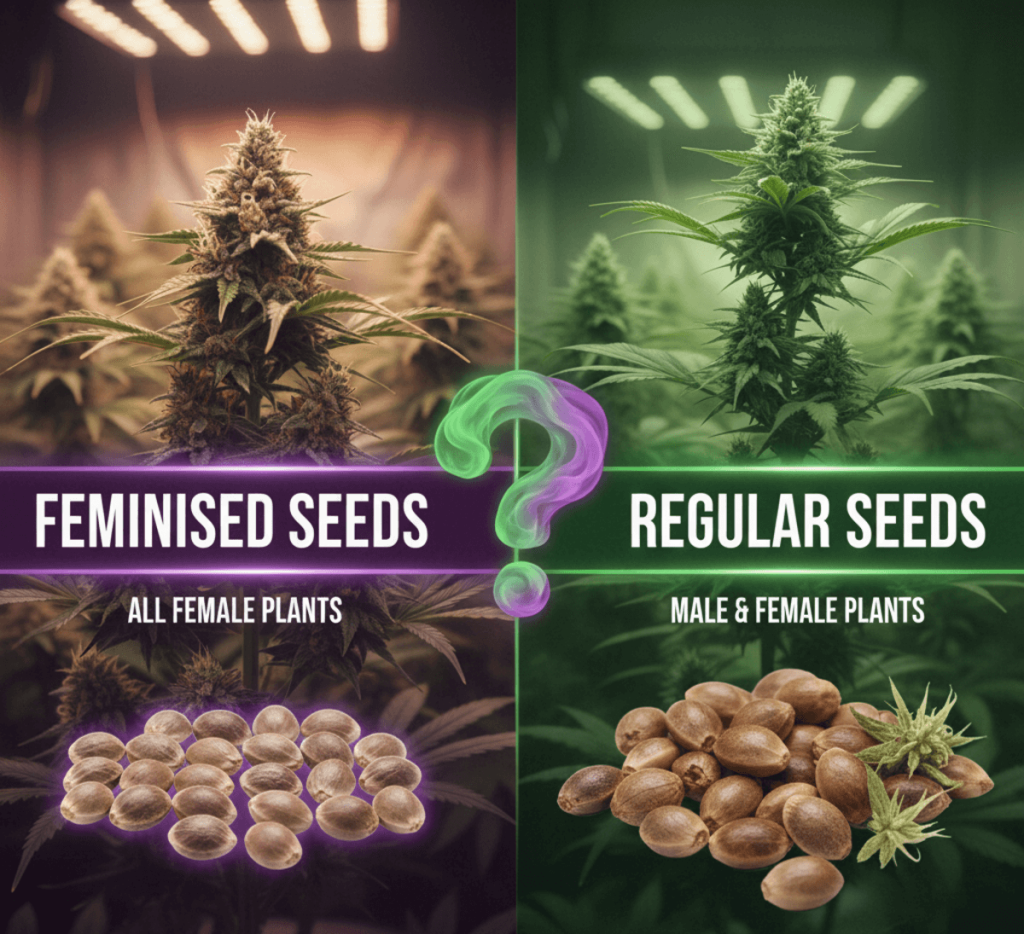
The distinction between feminised and regular seeds represents one of the most significant decisions for seed collectors. Each type offers different advantages for preservation and genetic study. Regular seeds maintain the plant’s complete genetic heritage, including both male and female chromosomes, while feminised seeds have been specifically bred to express only female genetics.
Regular seeds produce approximately 50% male and 50% female plants under typical conditions. This natural ratio mirrors wild cannabis populations and preserves genetic diversity. For collectors interested in breeding or maintaining complete genetic lines, regular seeds are essential. They allow for natural pollination and seed production, creating opportunities for genetic preservation and study.
Feminised seeds eliminate male plants from the equation entirely. Created through techniques like colloidal silver application or rodelization, these seeds produce exclusively female plants. This consistency makes feminised varieties popular among collectors who want predictable genetic expressions. However, feminised seeds cannot produce viable pollen for traditional breeding without specialized techniques.
The Breeding Science Behind Feminisation
Feminisation occurs when female plants are induced to produce pollen through stress techniques or chemical applications. This female-derived pollen contains only X chromosomes, lacking the Y chromosome that would produce male plants. When this pollen fertilizes another female plant, the resulting seeds carry only XX chromosome pairs, producing female offspring.
This process doesn’t alter the underlying genetics beyond sex expression. A feminised seed of a particular strain contains the same genetic information as a regular seed of that strain, minus the male chromosomes. Quality, potency, and other characteristics remain intact when feminisation is performed correctly using stable genetics.
Understanding this science helps collectors appreciate the sophistication of modern seed breeding. It also explains why distinguishing between male and female genetics requires understanding chromosomal differences rather than visible seed characteristics.
For more, read this complete guide to feminised weed seeds.
Autoflowering Cannabis Seeds Explained
Autoflowering seeds represent a fascinating branch of cannabis genetics that operates independently of traditional light cycles. These seeds contain genetics from Cannabis ruderalis, a hardy subspecies that evolved in regions with extreme seasonal variations. The resulting plants flower automatically based on age rather than photoperiod changes.
The ruderalis contribution creates plants that typically begin flowering 2-4 weeks after germination, regardless of light exposure. This automatic flowering trait is controlled by specific genetic markers that trigger reproductive development at predetermined stages. For collectors, this represents a unique genetic expression worth preserving and studying.
Modern autoflowering varieties have been extensively bred to combine ruderalis genetics with premium indica and sativa strains. This hybridization preserves the automatic flowering trait while improving other characteristics like potency, yield potential, and aromatic profiles. The result is sophisticated genetics that maintain the autoflowering advantage.
Advantages of Autoflowering Genetics
Autoflowering seeds offer several distinct advantages for collectors in Australia. Their compact size and rapid development cycle make them ideal for small-space preservation projects. Many autoflowering varieties remain under one meter tall, requiring minimal space while still expressing complete genetic characteristics.
The light-independent flowering also provides flexibility for preservation under various conditions. Unlike photoperiod varieties that require specific light schedules to trigger flowering, autoflowers progress through their lifecycle regardless of lighting conditions. This resilience can be valuable when maintaining collections under non-optimal circumstances.
Additionally, autoflowering genetics often demonstrate enhanced resistance to environmental stress. The ruderalis heritage evolved in harsh climates, contributing genes for cold tolerance, pest resistance, and general hardiness. These traits make autoflowering seeds particularly interesting for collectors studying plant resilience and adaptation.
Learn more about the difference between autoflowering and photoperiod feminised seeds in this guide.
How to Select Quality Cannabis Seeds
Selecting quality cannabis seeds requires understanding visual indicators, genetic backgrounds, and breeder reputations. While physical characteristics can provide useful clues, it’s important to recognise that natural variation exists between strains. Some genetics naturally produce paler or smaller seeds, even when they are fully mature and viable.
In general, mature cannabis seeds often show darker coloration ranging from light brown to deep brown or near black. This pigmentation usually develops as seeds reach full maturity, whereas very immature seeds may appear pale green or white. That said, colour alone isn’t definitive — certain strains consistently produce lighter-coloured seeds without any impact on viability. Firmness is a more reliable indicator: healthy seeds should feel solid when gently pressed and may have a smooth, slightly waxy outer shell that helps protect internal moisture.
Surface markings can also vary by genetics. Some strains commonly produce seeds with mottled patterns or so-called “tiger striping,” while others appear more uniform. These markings don’t guarantee viability, nor does their absence indicate a problem. What matters more is overall integrity — seeds with cracks, holes, soft spots, or obvious physical damage are best avoided, as these defects are more likely to compromise viability regardless of strain.
Evaluating Seed Genetics and Lineage
Beyond physical appearance, understanding genetic lineage helps collectors select superior seeds. Reputable breeders maintain detailed genetic records showing parent plants and breeding objectives. This transparency allows collectors to verify genetic authenticity and understand what traits a particular seed line expresses.
Stable genetics are crucial for quality collections. Seeds from well-established strains with documented breeding histories typically produce more predictable results than those from unknown or unstable genetics. Look for varieties with multiple generations of selective breeding rather than first-generation crosses that may express unpredictable traits.
Collectors should also consider the breeder’s reputation and testing protocols. At Sacred Seeds we go to great lengths to research our breeders track records and protocols. We also offer detailed information about our testing procedures, providing transparency about seed quality and viability rates.
Proper Cannabis Seed Storage Methods

Proper storage is perhaps the most critical factor in preserving cannabis seed viability over time. Seeds are living organisms in a dormant state, and their preservation requires careful attention to environmental conditions. Temperature, humidity, and light exposure all significantly impact long-term viability.
The ideal storage environment maintains consistent cool temperatures between 6-8°C (42-46°F). This temperature range slows metabolic processes without freezing, preserving seed viability for extended periods. Refrigerators provide suitable storage locations, though dedicated seed storage containers offer better environmental control than standard refrigerator storage.
Humidity control is equally important. Seeds should be stored at relative humidity levels between 20-30%. Higher humidity encourages premature germination or mould development, while extremely low humidity can desiccate seeds over time. Silica gel packets or specialized humidity control products help maintain optimal moisture levels within storage containers.
Light exposure accelerates seed degradation by triggering photochemical reactions that damage genetic material. Seeds should always be stored in opaque containers that block all light penetration. Even brief light exposure during handling should be minimized to preserve long-term viability. For comprehensive guidance on preservation techniques, review specific storage recommendations for Australian conditions.
Container Selection for Long-Term Storage
Container selection significantly impacts storage success. Airtight glass containers provide excellent moisture barriers while remaining inert and non-reactive. Amber or dark-colored glass offers additional light protection. Avoid plastic containers for long-term storage, as they may release chemicals over time and provide less reliable moisture barriers.
Individual seed packaging within larger containers provides extra protection. Small paper envelopes or seed tubes keep varieties separated while allowing air circulation that prevents condensation. Label all containers with strain names, collection dates, and any relevant genetic information to maintain accurate records.
For collectors maintaining extensive libraries, vacuum-sealed containers offer maximum protection. Removing air from storage containers eliminates oxygen that can degrade seeds over time. However, vacuum sealing requires careful technique to avoid crushing delicate seeds during the sealing process.
Monitoring and Maintaining Stored Seeds
Regular monitoring ensures storage conditions remain optimal. Check stored seeds quarterly for signs of moisture, mold, or pest activity. Temperature and humidity fluctuations can occur even in controlled environments, so periodic verification prevents storage failures.
Viability naturally declines over time, even under perfect conditions. Most cannabis seeds maintain high germination rates for 2-3 years under optimal storage, with gradual decline thereafter. Understanding realistic storage timeframes helps collectors plan acquisition and preservation strategies accordingly.
Cannabis Seed Germination Fundamentals
While this guide focuses primarily on seed selection and storage, understanding germination fundamentals helps collectors verify seed quality and preserve genetic lines. Germination testing reveals seed viability and allows collectors to refresh their stock by producing new seeds from stored genetics.
Successful germination requires three primary elements: moisture, warmth, and darkness. Seeds need adequate moisture to activate internal enzymes that initiate growth. Temperatures between 22-25°C (71-77°F) provide optimal conditions for germination, while darkness encourages the initial root development that precedes shoot emergence.
Several germination methods exist, each with advantages for different situations. The paper towel method involves placing seeds between moistened paper towels in a warm, dark location. This technique allows easy monitoring of germination progress and works well for testing small quantities. Direct soil germination offers a more natural approach, though it makes monitoring more difficult.
Water quality significantly impacts germination success. Chlorinated tap water can inhibit germination, while distilled or purified water provides neutral pH and eliminates chemical interference. Understanding water purity’s role helps collectors maximize germination rates when testing stored genetics.
Troubleshooting Germination Issues
When seeds fail to germinate, several factors may be responsible. Old seeds naturally exhibit lower germination rates, particularly those stored beyond their optimal timeframe. However, even fresh seeds may fail to germinate if exposed to extreme temperatures, excessive moisture, or contamination during storage.
Physical damage to the seed shell can prevent germination by allowing pathogens to enter before the seedling establishes itself. Inspect seeds carefully before germination attempts, discarding any with visible cracks or damage. Some collectors gently scarify very old seeds to improve water absorption, though this technique requires careful execution.
If multiple seeds from the same batch fail to germinate, the issue likely stems from storage conditions or seed age rather than germination technique. For detailed troubleshooting guidance, refer to comprehensive germination problem-solving resources that address common issues and solutions.
Germination Testing for Quality Verification
Professional collectors often conduct periodic germination tests to verify stored seed viability. Testing 5-10 seeds from each variety every 1-2 years provides data about storage effectiveness and helps identify varieties requiring refresh. Document germination rates, timing, and any abnormalities to build comprehensive quality records.
The paper towel germination method works particularly well for testing purposes, as it allows precise monitoring without soil medium variables. Record the time from moisture exposure to visible taproot emergence, as germination speed often indicates seed vigor and quality.
Genetic Considerations for Australian Collectors
Australian collectors face unique considerations when building cannabis seed collections. Climate variations across the continent, legal frameworks, and availability all influence collection strategies. Understanding these factors helps collectors make informed decisions about which genetics to acquire and preserve.
Australia’s diverse climate zones range from tropical in the north to temperate in the south, with arid interior regions. This variation means genetics suited to one region may perform differently in another. Collectors often seek varieties with proven resilience to their specific local conditions, whether that means heat tolerance, humidity resistance, or pest resilience.
Indica-dominant varieties generally prefer drier conditions with moderate temperatures, making them well-suited to many Australian regions. Sativa-dominant genetics often handle humidity better but may struggle with temperature extremes. Hybrid varieties offer balanced characteristics that adapt to varied conditions, making them popular among Australian collectors.
The legal framework surrounding cannabis in Australia continues to evolve, with varying regulations across states and territories. Collectors should understand their local laws regarding seed possession, as regulations differ significantly between jurisdictions. Seeds themselves are legal to possess in most Australian states when sold as collectibles or souvenirs.
Climate-Specific Genetic Selection
Northern Australian collectors in tropical and subtropical zones face different challenges than those in temperate southern regions. High humidity encourages mold and pest issues, making mold-resistant genetics particularly valuable. Varieties with looser bud structure allow better air circulation, reducing moisture-related problems in humid climates.
Southern collectors in cooler climates benefit from cold-resistant varieties that tolerate temperature fluctuations. Some indica varieties and certain hybrids demonstrate excellent cold tolerance, making them suitable for preservation in variable temperature conditions. Traditional indica genetics often show superior cold resistance compared to pure sativa varieties.
Arid interior regions present unique preservation challenges with extreme temperature swings and low humidity. Hardy varieties with drought tolerance and heat resistance perform best in these conditions. Collectors in these areas often focus on genetics with demonstrated resilience to environmental extremes.
Preserving Diverse Genetic Libraries
Serious collectors often maintain diverse genetic libraries representing different geographic origins, cannabinoid profiles, and growth characteristics. This diversity preserves genetic heritage while providing options for various interests and research applications. Building balanced collections requires strategic acquisition over time.
Consider including high-THC varieties, CBD-rich genetics, and balanced hybrids to represent the full spectrum of cannabis genetics. Each category offers unique preservation value and demonstrates different aspects of cannabis genetic diversity.
Common Cannabis Seed Myths Debunked

Numerous myths and misconceptions surround cannabis seeds, often creating confusion for new collectors. Separating fact from fiction helps collectors make informed decisions and avoid common pitfalls. Understanding the science behind these myths provides clarity and improves collection strategies.
One persistent myth suggests seed appearance indicates plant sex. In reality, no visual seed characteristic reliably predicts whether a plant will be male or female. Sex determination occurs at the chromosomal level, invisible without genetic testing. Only feminised seeds guarantee female plants, and this results from breeding techniques rather than seed appearance.
Another common misconception claims that darker seeds are always superior to lighter ones. While dark coloration often indicates maturity, color alone doesn’t determine quality. Some varieties naturally produce lighter seeds even when fully mature. Shell firmness, surface condition, and genetic verification provide more reliable quality indicators than color alone.
The myth that freezing extends seed viability indefinitely persists despite evidence to the contrary. While freezing can preserve seeds, improper freezing technique often causes more damage than benefit. Ice crystal formation can rupture cell walls, destroying viability. Professional long-term storage uses ultra-cold temperatures with controlled moisture levels, very different from standard freezer storage.
Understanding Seed Genetics vs. Environmental Factors
Many collectors mistakenly believe seed genetics alone determine plant characteristics. In reality, phenotypic expression results from genetic and environmental factors interacting. The same seed can produce plants with different characteristics depending on growing conditions, nutrient availability, and environmental stress.
This genotype-phenotype relationship explains why seeds from the same batch may express varying characteristics. Genetics provide the potential range of expressions, while environment determines which traits manifest. Collectors interested in consistent expressions should understand this relationship and its implications for preservation.
For comprehensive myth-busting, review detailed analysis of common seed misconceptions that addresses breeding, storage, and germination myths with scientific explanations.
Frequently Asked Questions
What’s the difference between feminised and regular cannabis seeds?
Feminised seeds produce only female plants because they contain only X chromosomes, created through specialized breeding techniques. Regular seeds contain both male and female chromosomes, producing approximately 50% male and 50% female plants. Feminised seeds offer predictability, while regular seeds maintain complete genetic diversity and allow traditional breeding.
How long can cannabis seeds remain viable in storage?
Under optimal storage conditions (cool temperatures of 6-8°C, low humidity of 20-30%, and complete darkness), cannabis seeds typically maintain high germination rates for 2-3 years. With proper care, many seeds remain viable for 5 years or longer, though germination rates gradually decline over time. Storage quality significantly impacts longevity.
Can you tell if a cannabis seed will be male or female by looking at it?
No visual characteristic reliably indicates seed sex. Gender determination occurs at the chromosomal level, which cannot be seen without genetic testing. Only feminised seeds guarantee female plants, achieved through breeding techniques rather than physical seed traits. Claims about seed shape, size, or markings predicting sex lack scientific basis.
What are autoflowering cannabis seeds?
Autoflowering seeds contain genetics from Cannabis ruderalis and automatically flower based on age rather than light cycles. These plants typically begin flowering 2-4 weeks after germination, regardless of light exposure, making them ideal for collectors with space limitations. The automatic flowering trait is controlled by specific genetic markers that trigger reproductive development at predetermined stages, allowing for rapid seed-to-harvest cycles.
What should I look for in a reputable seed bank?
A reputable seed bank should demonstrate several key qualities that indicate reliability and quality. Look for established companies with a proven track record, transparent customer reviews across multiple platforms, and clear information about their testing procedures and germination guarantees. Quality seed banks provide detailed strain information, including genetic lineage, expected characteristics, and growing difficulty levels. They should also offer secure payment options, discreet packaging, and reliable customer support. Many premium seed banks provide germination rate data and genetic verification certificates for their products. Additionally, check whether they source seeds from established breeders with documented breeding histories rather than unknown or unstable genetics. A reputable seed bank will be transparent about their sourcing, testing protocols, and willing to answer questions about their products and procedures.
How do I know if my seeds are too old or no longer viable?
Several indicators suggest seeds may have lost viability or are too old. The most reliable method is conducting a germination test by soaking a sample of seeds in water for 24-48 hours and observing how many develop a taproot. If fewer than 50% of seeds germinate, viability has likely declined significantly. Visually, very old seeds may appear pale, cracked, or have a dull surface rather than the glossy, waxy coating of fresh seeds. Seeds stored in poor conditions—exposed to light, high humidity, or temperature fluctuations—will show reduced viability regardless of age. If seeds have been stored for more than 5 years, even under optimal conditions, germination rates typically decline noticeably. You can also perform a float test: place seeds in water and observe if they sink (viable) or float (potentially non-viable), though this method is less reliable than germination testing. When in doubt, test a small sample before committing to a full planting.
Can I store different seed types together, or should I keep them separate?
Different seed types can be stored together in the same container as long as proper storage conditions are maintained. However, there are practical reasons to keep them organized and separated within the container. Using individual paper envelopes or seed tubes for each variety allows you to maintain accurate records, track germination rates by type, and easily identify which seeds are which without opening the main storage container repeatedly. Separating seeds also helps prevent cross-contamination and makes it easier to monitor specific varieties for signs of mold or deterioration. If storing together, ensure all seeds are equally dry and the container maintains uniform temperature and humidity throughout. Label each individual packet clearly with the strain name, collection date, and any relevant genetic information. This organizational approach maximizes the lifespan of your entire collection while making it easy to access specific varieties when needed.
What’s the difference between seeds and clones, and which should I choose?
Seeds and clones represent two fundamentally different propagation methods, each with distinct advantages. Seeds are produced through pollination and contain genetic material from both parent plants, resulting in genetic diversity within a seed batch. This genetic variation means plants from the same seed batch may express slightly different characteristics. Clones, by contrast, are cuttings taken from a mother plant and are genetically identical to the parent. Seeds offer the advantage of genetic diversity, potentially discovering unique phenotypes, and are easier to transport and store. Clones provide consistency—you know exactly what you’re getting—and can be ready to flower more quickly since they’re already mature plant tissue. For collectors interested in genetic preservation and diversity, seeds are ideal. For those seeking predictable, consistent results, clones are preferable. Seeds are also more practical for long-term storage and collection building, while clones require living plant maintenance. Your choice depends on whether you prioritize genetic diversity and preservation or consistency and predictability.
How do environmental factors like temperature and humidity affect seed genetics?
Environmental factors don’t alter the underlying genetic code of seeds, but they significantly impact how those genetics are expressed in growing plants. This relationship between genetics (genotype) and environmental expression (phenotype) is crucial for collectors to understand. The same seed can produce plants with different characteristics depending on growing conditions, nutrient availability, light exposure, and environmental stress. For example, a strain genetically predisposed to produce purple coloration may only express this trait under specific temperature conditions. Similarly, cannabinoid profiles, growth rates, and plant size can all vary based on environmental factors even though the genetic potential remains unchanged. During storage, environmental conditions dramatically affect seed viability and longevity but not the genetic information itself. Temperature fluctuations, humidity exposure, and light penetration degrade seed viability over time without altering genetics. This is why proper storage is so critical—you’re preserving the genetic potential, not changing it. Understanding this genotype-phenotype relationship helps collectors maintain genetic diversity while recognizing that environmental optimization is key to expressing desired traits.
Are there differences between seeds from different breeders, and how do I choose between them?
Yes, significant differences exist between seeds from different breeders, even for the same strain name. Different breeders have distinct breeding philosophies, selection criteria, and genetic lines they use as parents. This means two “Blue Dream” seeds from different breeders may express noticeably different characteristics, potency levels, growth patterns, and aromatic profiles. When choosing between breeders, consider their reputation within the community, the transparency of their breeding information, and customer reviews of their specific strains.
Established breeders with long track records typically provide more stable, predictable genetics than newer or unknown breeders. Look for breeders who document their breeding history, explain their selection criteria, and offer detailed strain descriptions. Premium breeders often provide germination guarantees, genetic testing data, and customer support. Reading reviews from other collectors can reveal whether a particular breeder’s seeds consistently produce the characteristics advertised. For serious collectors, investing in seeds from reputable, established breeders ensures better quality, stability, and genetic authenticity than purchasing from unknown sources. Building relationships with trusted breeders over time allows you to develop confidence in their genetics and consistency.