This article explores something we find quite fascinating: the cannabis entourage effect.
Why does one strain provide energetic creativity while another induces deep relaxation?
The answer lies in a complex phenomenon known as the entourage effect—a scientific principle that explains how the hundreds of compounds in cannabis work together to produce distinct experiences.
Key Takeaways
- The entourage effect describes how cannabis compounds work synergistically to create effects greater than isolated components
- Terpenes significantly modify how cannabinoids interact with the body’s endocannabinoid system
- Cannabinoid ratios (particularly THC:CBD) profoundly influence the overall effects experienced
- Minor cannabinoids like THCV, CBG, CBC, and CBN contribute unique therapeutic properties
- Strain-specific effects result from the precise combination of hundreds of bioactive compounds working together
- Consumer experiences stem from complex biochemical interactions rather than simplistic indica/sativa classifications
Understanding the Entourage Effect: Beyond THC and CBD
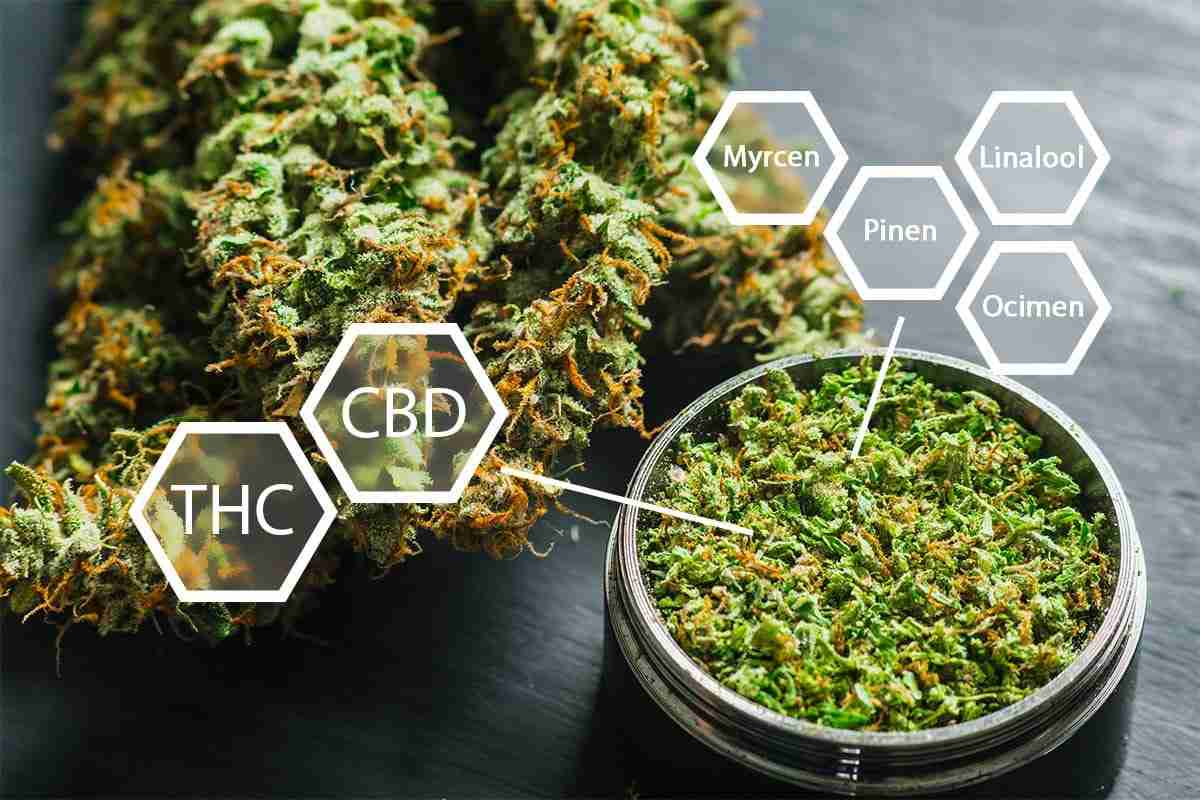
For years, cannabis research focused almost exclusively on isolated cannabinoids, particularly THC and CBD. However, this reductionist approach failed to explain why whole-plant preparations often demonstrated greater therapeutic efficacy than purified compounds.
The entourage effect, first proposed by researchers Raphael Mechoulam and Shimon Ben-Shabat in 1998, suggests that cannabis compounds work in concert, producing effects that wouldn’t be possible from any single component. This synergistic interaction explains why different cannabis varieties create such diverse experiences despite similar THC or CBD percentages.
How Synergy Works: When multiple cannabis compounds interact, they may:
- Enhance each other’s beneficial effects
- Mitigate unwanted side effects
- Improve bioavailability and absorption
- Target multiple biological pathways simultaneously
- Create entirely novel effects not present in isolated compounds
Research now confirms that focusing solely on THC or CBD content provides an incomplete picture of a strain’s potential effects. The full spectrum of cannabinoids, terpenes, and flavonoids creates a complex “chemical fingerprint” unique to each variety.
The Major Players: Cannabinoids and Their Interactions
Cannabis contains over 100 different cannabinoids, each with distinct properties. While THC and CBD receive the most attention, the interactions between multiple cannabinoids significantly influence the overall experience.
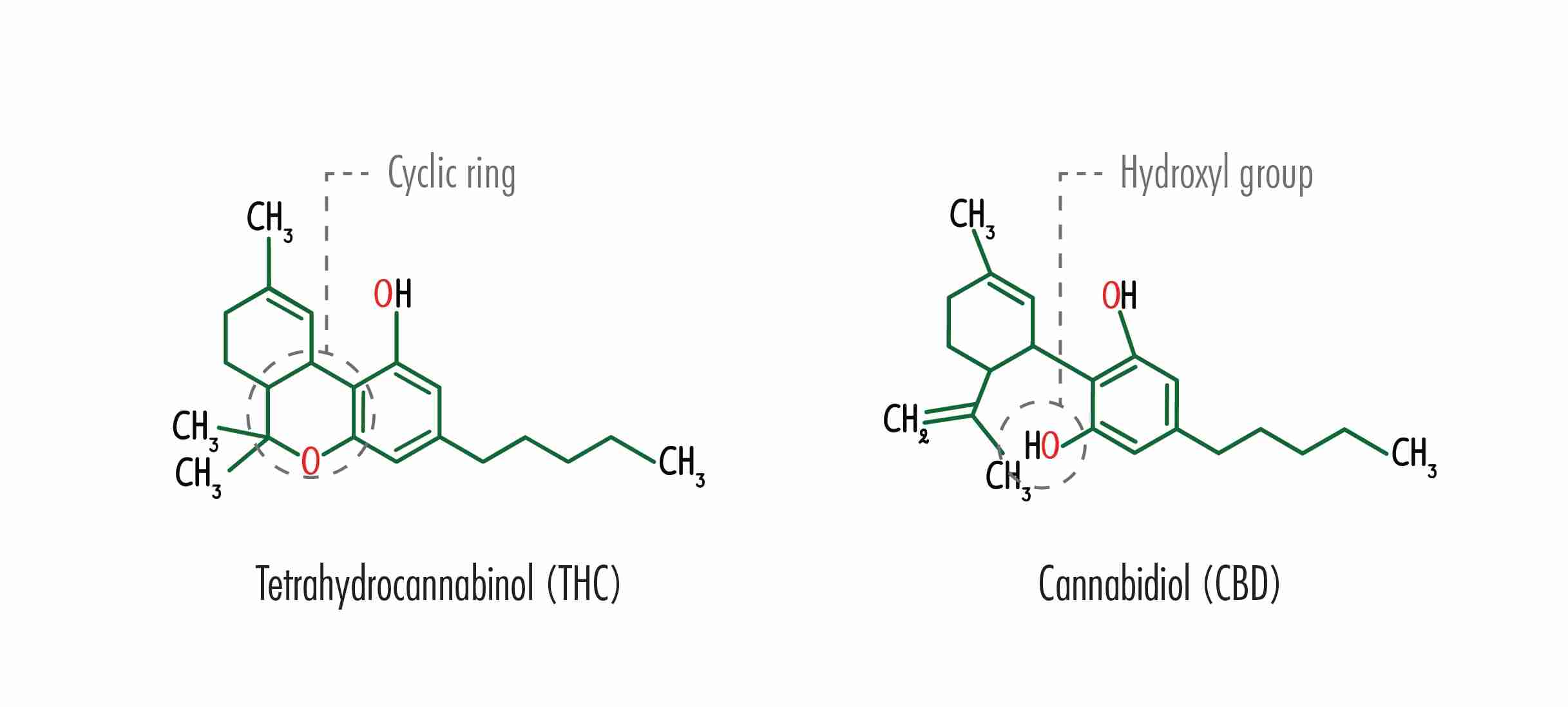
THC:CBD Ratios: The Primary Modulators
The ratio between THC and CBD represents one of the most important factors in predicting effects:
THC-Dominant (High THC, Low CBD)
- Stronger psychoactive effects
- More pronounced euphoria and sensory alteration
- Potential for anxiety or paranoia in sensitive individuals
- Examples: Many recreational strains like Super Silver Haze or Gorilla Glue
Balanced (Equal THC:CBD)
- Moderated psychoactive effects
- Enhanced pain and inflammation relief
- Reduced THC-associated anxiety
- Examples: Harlequin, Cannatonic, ACDC
CBD-Dominant (High CBD, Low THC)
- Minimal psychoactivity
- Pronounced anti-inflammatory and anxiolytic properties
- Potential anticonvulsant effects
- Examples: White widow CBD, Charlotte’s Web, Ringo’s Gift, Harle-Tsu
Research demonstrates that CBD directly modulates THC effects by altering how it binds to receptors. At the molecular level, CBD acts as a negative allosteric modulator of the CB1 receptor, changing its shape when THC attempts to bind, thus reducing psychoactivity while maintaining therapeutic benefits.
Minor Cannabinoids: The Supporting Cast
Beyond THC and CBD, minor cannabinoids play crucial roles in the entourage effect:
CBG (Cannabigerol)
- Acts as precursor to other cannabinoids
- Shows promise for glaucoma and inflammatory bowel conditions
- Demonstrates antibacterial properties
- Potentially enhances the muscle-relaxant effects of other cannabinoids
CBC (Cannabichromene)
- Promotes neurogenesis (growth of brain cells)
- Demonstrates significant anti-inflammatory properties
- Works synergistically with THC for pain management
- Shows potential for acne treatment when combined with other cannabinoids
CBN (Cannabinol)
- Forms as THC degrades
- Contributes to sedative effects, especially when combined with myrcene
- Demonstrates stronger effects when paired with THC
- May help regulate immune system function in combination with other cannabinoids
THCV (Tetrahydrocannabivarin)
- Acts as appetite suppressant at low doses
- Modifies THC’s effects on memory and psychoactivity
- Potentially enhances focus and energy
- Shows promise for diabetes and metabolic disorders
- Examples of strains containing THCV: Durban Poison
These minor cannabinoids rarely work in isolation; instead, they modify each other’s effects while simultaneously interacting with terpenes—creating a multidimensional matrix of possible experiences.
Terpenes: The Aromatic Influencers

Terpenes—aromatic compounds found throughout the plant kingdom—constitute another critical component of the entourage effect. Originally evolved to protect plants from predators and attract pollinators, these volatile molecules significantly influence cannabis effects through both pharmacological actions and aromatic effects on mood.
Primary Cannabis Terpenes and Their Synergistic Effects
Myrcene
- Most abundant terpene in modern cannabis varieties
- Enhances cell membrane permeability, allowing cannabinoids to take effect more rapidly
- Synergizes with THC to produce stronger sedation
- May enhance analgesic (pain-relieving) properties of cannabinoids
- Found in: Granddaddy Purple, OG Kush, Blue Dream
Limonene
- Citrus-scented terpene with mood-elevating properties
- Enhances CBD’s anxiolytic (anti-anxiety) effects
- Improves absorption of other terpenes through the skin and mucous membranes
- Potentially offsets THC-induced anxiety
- Found in: Special Lime Haze
Pinene
- Pine-scented terpene that improves alertness and memory
- Counteracts some of THC’s memory-impairing effects
- Works synergistically with CBD for anti-inflammatory effects
- Helps open bronchial pathways when combined with cannabinoids
- Found in: Jack Herer, Pinene, Blue Dream
Linalool
- Lavender-scented terpene with sedative properties
- Enhances the anticonvulsant properties of cannabinoids
- Works with CBD to produce enhanced anxiolytic effects
- Synergizes with CBN for improved sleep quality
- Found in: Lavender, LA Confidential, Amnesia Haze
Beta-Caryophyllene
- Spicy terpene that directly activates CB2 receptors
- Only terpene known to bind directly to cannabinoid receptors
- Enhances the anti-inflammatory properties of CBD
- Works with CBD and CBC for enhanced pain relief
- Found in: GSC, Sour Diesel, Bubba Kush
Humulene
- Earthy terpene with appetite-suppressing properties
- Works synergistically with THCV to reduce hunger
- Enhances anti-inflammatory effects when combined with beta-caryophyllene
- Demonstrates enhanced antibacterial effects alongside CBC
- Found in: Death Star, Headband, White Widow
These terpenes don’t just contribute aroma—research shows they actively modify cannabinoid effects through multiple mechanisms, including affecting neurotransmitter levels, modulating receptor activity, altering blood-brain barrier permeability, and influencing endocannabinoid system function.
The Endocannabinoid System: The Biological Foundation
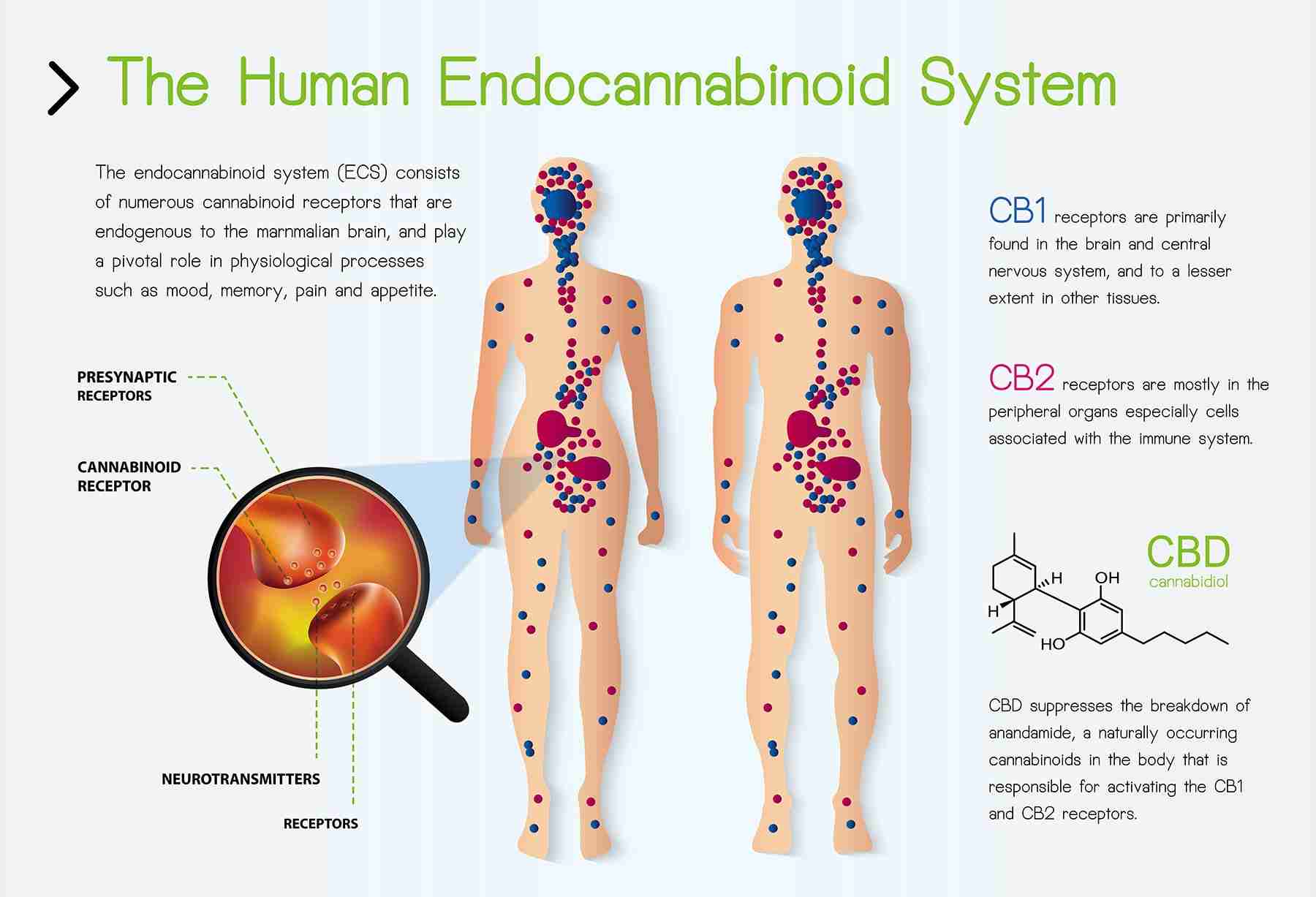
Understanding the entourage effect requires knowledge of the endocannabinoid system (ECS)—a complex biological network present in all vertebrates. This system consists of endocannabinoids (natural cannabis-like molecules produced by the body), receptors, and enzymes that regulate numerous physiological processes.
How Cannabis Compounds Interact with the ECS
Cannabis compounds affect the ECS in diverse ways:
CB1 Receptor Interactions
- Primary target for THC (strong binding)
- Indirectly influenced by CBD (weak binding, allosteric modulation)
- Also affected by certain terpenes like beta-caryophyllene
- Located primarily in the brain and central nervous system
- Responsible for psychoactive effects and pain perception modulation
CB2 Receptor Interactions
- Engaged by multiple cannabinoids with varying affinities
- Directly activated by beta-caryophyllene
- Present primarily in immune tissues and peripheral nervous system
- Responsible for anti-inflammatory and immunomodulatory effects
Beyond Cannabinoid Receptors Cannabis compounds also interact with:
- Serotonin receptors (mood and anxiety)
- TRPV1 receptors (pain and temperature sensation)
- GPR55 receptors (bone density and blood pressure)
- PPAR receptors (metabolism and energy homeostasis)
The entourage effect stems from cannabis compounds simultaneously engaging multiple receptor systems, creating effects impossible to achieve with isolated compounds. For example, CBD’s anxiolytic effects work through serotonin receptors while simultaneously modulating how THC binds to CB1 receptors—a multi-target approach enhanced further by terpenes.
Scientific Evidence for the Entourage Effect
While anecdotal evidence has long suggested synergistic interactions between cannabis compounds, scientific research increasingly supports the entourage effect:
Key Research Supporting Synergistic Interactions
Russo and Guy (2006)
- Demonstrated that CBD-rich cannabis extracts required lower doses for therapeutic effects compared to purified CBD
- Showed reduced side effects compared to isolated cannabinoids
- Published in Medical Hypotheses
Blasco-Benito et al. (2018)
- Found that whole cannabis extracts showed superior anti-tumor effects compared to THC alone
- Identified specific synergies between cannabinoids and terpenes
- Published in Biochemical Pharmacology
Pamplona et al. (2018)
- Analysis of epilepsy patients showed CBD-rich cannabis extracts were 4 times more potent than purified CBD
- Required significantly lower doses for seizure control
- Published in Frontiers in Neurology
LaVigne et al. (2021)
- Demonstrated that cannabis terpenes enhance the pain-relieving effects of THC in animal models
- Showed the combination required lower doses for effective pain relief
- Published in Scientific Reports
These studies and others provide growing scientific validation for what cannabis consumers have intuitively understood—that whole-plant preparations offer different effects than isolated compounds.
Strain-Specific Effects: Science vs. Marketing
The cannabis industry has traditionally classified strains as indica, sativa, or hybrid—categories that supposedly predict effects. However, scientific analysis reveals these designations have little correlation with chemical composition or effects.
Beyond Indica vs. Sativa
Modern research demonstrates that strain effects stem from their specific chemical profiles rather than broad categories:
Chemotype Analysis
- Gas chromatography and mass spectrometry can identify specific compound ratios
- These chemical fingerprints better predict effects than traditional classifications
- Strains with similar chemotypes typically produce similar effects regardless of their indica/sativa designation
Genetic Inconsistency
- Most modern strains are hybrids with complex genetic backgrounds
- Decades of crossbreeding have blurred traditional distinctions
- Genetic testing often contradicts reported lineages
The scientific community increasingly advocates for chemotype-based classification using specific cannabinoid and terpene profiles rather than outdated morphology-based categories.
Practical Applications: Medical and Recreational Implications
Understanding the entourage effect has profound implications for both medical and recreational cannabis use:
Medical Applications
Targeted Formulations
- Epilepsy patients respond better to specific cannabinoid-terpene combinations
- Pain management benefits from THC+CBD+myrcene+beta-caryophyllene profiles
- Anxiety disorders may respond to high-CBD preparations with limonene and linalool
- Sleep disorders show improved outcomes with CBN+myrcene+linalool combinations
Precision Dosing
- Lower doses often required with full-spectrum preparations
- Reduced side effects compared to isolated compounds
- More predictable responses across patient populations
Recreational Considerations
Effect Predictability
- Chemotype-aware selection leads to more consistent experiences
- Understanding personal responses to specific terpene-cannabinoid combinations
- Moving beyond simplistic THC percentages to comprehensive profiles
Tolerance Management
- Varying chemotypes may help manage tolerance development
- Different receptor engagement patterns with diverse chemical profiles
- Potential for maintained effectiveness with strategic rotation
The Future of Entourage Research
As cannabis science advances, several promising research directions are emerging:
Personalized Cannabis Medicine
- Genetic testing to predict individual responses to specific chemotypes
- Tailored formulations based on endocannabinoid tone and metabolism
- Development of databases correlating chemotypes with patient outcomes
Advanced Analytical Methods
- Machine learning to identify patterns in chemotype-effect relationships
- Development of standardized bioassays for entourage effects
- Real-time analysis tools for consumers and patients
Novel Combinations
- Exploration of minor cannabinoids (THCV, CBG, etc.) in therapeutic formulations
- Investigation of less common terpenes and flavonoids
- Development of ratio-specific breeding programs
Conclusion: Embracing Complexity
The entourage effect represents a fundamental shift in how we understand cannabis—moving from a reductionist focus on isolated compounds to an appreciation of the plant’s natural complexity. This botanical synergy explains why whole-plant preparations often outperform isolated compounds in both therapeutic efficacy and experiential richness.
As research advances, the cannabis community is developing more sophisticated ways to classify, predict, and enhance the multidimensional effects created by these synergistic interactions. This evolution in understanding helps explain why cannabis has demonstrated such versatile effects across cultures and throughout human history.
The true power of cannabis lies not in any single compound but in the harmonious chemical symphony created when hundreds of bioactive molecules work in concert—a phenomenon that continues to challenge and expand our understanding of plant medicine.
Glossary of Entourage Effect Terminology
Allosteric Modulation: A change in how a receptor responds to a compound due to another compound binding to a different site on the receptor.
Bioavailability: The proportion of a substance that enters circulation when introduced to the body and can have an active effect.
Cannabinoid: Any of a group of related compounds that include the active constituents of cannabis, both plant-derived (phytocannabinoids) and those produced naturally in the body (endocannabinoids).
CB1 Receptor: Cannabinoid receptor primarily found in the brain and central nervous system, mainly responsible for the psychoactive effects of THC.
CB2 Receptor: Cannabinoid receptor primarily associated with the immune system and peripheral tissues, involved in reducing inflammation and immune response.
Chemotype: The chemical phenotype or profile of a cannabis plant, describing its specific composition of cannabinoids and terpenes.
Endocannabinoid System (ECS): A biological system composed of endocannabinoids, receptors, and enzymes that helps regulate various physiological and cognitive processes.
Flavonoid: Plant compounds with antioxidant properties that contribute to taste, color, and potential therapeutic effects in cannabis.
Full-Spectrum: Cannabis products containing the full range of compounds found in the original plant, including cannabinoids, terpenes, and flavonoids.
Isolated Compound: A single molecule extracted and purified from cannabis, such as CBD isolate.
Phytocannabinoid: Cannabinoids naturally produced by plants, particularly those found in cannabis.
Receptor: Protein molecules that receive chemical signals from outside a cell, allowing communication between cells.
Synergy: The interaction of multiple compounds producing a combined effect greater than the sum of their separate effects.
Terpene: Aromatic compounds found in many plants, including cannabis, that contribute to smell, taste, and effects.
Therapeutic Window: The dosage range between the minimum effective dose and the dose at which undesirable side effects occur.
Frequently Asked Questions
What exactly is the entourage effect in cannabis?
The entourage effect refers to the synergistic interaction between multiple cannabis compounds—including cannabinoids, terpenes, and flavonoids—that work together to produce effects different from and often greater than what any single compound could achieve alone. This biological phenomenon explains why whole-plant cannabis preparations often demonstrate different therapeutic profiles compared to isolated compounds like pure THC or CBD.
Do all cannabis products produce the entourage effect?
No. Full-spectrum cannabis products (containing the complete range of naturally occurring compounds) produce the strongest entourage effect. Broad-spectrum products (containing multiple cannabinoids and terpenes but no THC) offer a partial entourage effect. Isolates (containing only a single purified compound like CBD or THC) do not produce an entourage effect at all, as they lack the complementary compounds necessary for synergistic interaction.
Can terpenes affect cannabis experiences without being psychoactive themselves?
Yes. While most terpenes don’t directly cause intoxication, they significantly influence cannabis effects through multiple mechanisms. They can alter how cannabinoids bind to receptors, affect blood-brain barrier permeability to allow more or fewer cannabinoids to reach brain receptors, influence neurotransmitter levels, and have their own direct pharmacological effects. For example, limonene can elevate mood through serotonin pathways while myrcene can enhance THC’s sedative properties.
Why do different strains with similar THC levels produce different effects?
Different effects from strains with similar THC percentages result from their unique “chemical fingerprints” of minor cannabinoids and terpenes. For example, a 20% THC strain rich in myrcene and linalool will likely produce relaxing, sedative effects, while another 20% THC strain dominant in limonene and pinene might create an energizing, uplifting experience. This variation demonstrates why THC percentage alone is an incomplete predictor of effects.
Is there scientific proof of the entourage effect, or is it just a theory?
While initially proposed as a theory, substantial scientific evidence now supports the entourage effect. Multiple peer-reviewed studies demonstrate that whole-plant extracts often show greater efficacy at lower doses compared to isolated compounds. Research using advanced techniques like receptor binding assays, animal models, and clinical trials has documented specific synergistic interactions between cannabinoids and terpenes. However, due to research restrictions, many specific compound combinations remain understudied.
How do CBD and THC work together in the entourage effect?
CBD modifies THC’s effects through multiple mechanisms. It acts as a negative allosteric modulator of the CB1 receptor, slightly changing the receptor’s shape when THC attempts to bind, thus reducing THC’s psychoactive effects while maintaining its therapeutic properties. CBD also inhibits the liver enzyme that metabolizes THC, potentially extending its duration. Additionally, CBD works on separate receptor systems (serotonin, TRPV1) to counter THC-induced anxiety while enhancing pain relief and anti-inflammatory effects.
Can the entourage effect be measured or quantified?
Scientists are developing methods to measure entourage effects through various approaches. These include receptor binding studies that show how compounds affect each other’s activity, comparative clinical trials measuring outcomes between whole-plant extracts versus isolated compounds, and advanced analytical techniques using artificial intelligence to identify patterns in large datasets. While challenging to quantify precisely, bioassay testing increasingly demonstrates measurable differences in effects between isolated compounds and their combinations.
References and Further Reading
- Russo, E. B. (2019). The Case for the Entourage Effect and Conventional Breeding of Clinical Cannabis: No “Strain,” No Gain. Frontiers in Plant Science, 9, 1969. https://doi.org/10.3389/fpls.2018.01969
- Ferber, S. G., Namdar, D., Hen-Shoval, D., Eger, G., Koltai, H., Shoval, G., Shbiro, L., & Weller, A. (2020). The “Entourage Effect”: Terpenes Coupled with Cannabinoids for the Treatment of Mood Disorders and Anxiety Disorders. Current Neuropharmacology, 18(2), 87–96. https://doi.org/10.2174/1570159X17666190903103923
- Blasco-Benito, S., Seijo-Vila, M., Caro-Villalobos, M., Tundidor, I., Andradas, C., García-Taboada, E., Wade, J., Smith, S., Guzmán, M., Pérez-Gómez, E., Gordon, M., & Sánchez, C. (2018). Appraising the “entourage effect”: Antitumor action of a pure cannabinoid versus a botanical drug preparation in preclinical models of breast cancer. Biochemical Pharmacology, 157, 285–293. https://doi.org/10.1016/j.bcp.2018.06.025
- Pamplona, F. A., da Silva, L. R., & Coan, A. C. (2018). Potential Clinical Benefits of CBD-Rich Cannabis Extracts Over Purified CBD in Treatment-Resistant Epilepsy: Observational Data Meta-analysis. Frontiers in Neurology, 9, 759. https://doi.org/10.3389/fneur.2018.00759
- LaVigne, J. E., Hecksel, R., Keresztes, A., & Streicher, J. M. (2021). Cannabis sativa terpenes are cannabimimetic and selectively enhance cannabinoid activity. Scientific Reports, 11(1), 8232. https://doi.org/10.1038/s41598-021-87740-8
- Cogan, P. S. (2020). The ‘entourage effect’ or ‘hodge-podge hashish’: the questionable rebranding, marketing, and expectations of cannabis polypharmacy. Expert Review of Clinical Pharmacology, 13(8), 835–845. https://doi.org/10.1080/17512433.2020.1721281
- Gülck, T., & Møller, B. L. (2020). Phytocannabinoids: Origins and Biosynthesis. Trends in Plant Science, 25(10), 985–1004. https://doi.org/10.1016/j.tplants.2020.05.005
- McPartland, J. M., & Russo, E. B. (2014). Cannabis and Cannabis Extracts: Greater Than the Sum of Their Parts? Journal of Cannabis Therapeutics, 1(3-4), 103–132. https://doi.org/10.1300/J175v01n03_08