The single most common reason healthy seeds fail to germinate is tap water. Not bad genetics. Not incorrect temperature. Not a faulty paper towel technique. Town water — straight from the tap, full of chlorine, chloramines, fluoride, and whatever else the municipal treatment process adds — is being used by growers every day to germinate seeds that cost them real money, and then those growers wonder why their germination rates are disappointing.
I batch-test every seed line we stock at Sacred Seeds. The paper towel method, 22°C, controlled conditions. When germination rates come back lower than expected, the first question I ask is always about the water. And the answer, more often than not, is tap water. This isn’t a minor variable. Cannabis germination water quality is one of the most impactful things a grower can get right — and one of the most commonly ignored.
This guide covers what’s actually in Australian tap water, what it does to germinating seeds at a biochemical level, and the practical solutions that make a measurable difference. The fix is simpler than most people think.
Water Quality for Germination — At a Glance
| Ideal pH for germination | 6.0–7.0 — slightly acidic to neutral |
| Ideal temperature | 20–25°C — consistent warmth, not fluctuating |
| Main tap water problems | Chlorine, chloramines, fluoride, heavy metals, hard water minerals |
| Best water for germination | Rainwater (collected), RO water, distilled water |
| Practical minimum fix | Carbon-filtered tap water, pH adjusted to 6.0–6.5 |
| Chlorine removal (no filter) | Leave tap water uncovered 24 hours — chlorine off-gasses |
| Chloramines | Do not off-gas — require carbon filtration or Campden tablet to neutralise |
In this guide:
What Actually Happens During Germination — And Why Water Quality Matters
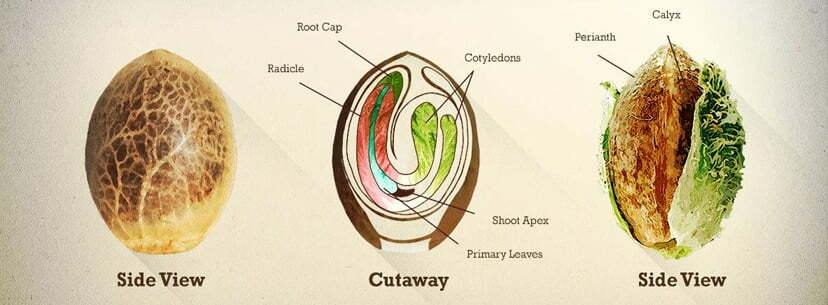
Germination is a sequence of precise biochemical events, not a single moment. Understanding the sequence explains why contaminants cause the specific problems they do.
The first stage is imbibition — the seed absorbs water, which softens and breaks down the seed coat. This initial water uptake is the point at which whatever is in that water first makes contact with the seed’s internal structures. The embryo, the enzyme systems, and the nutrient stores are all exposed to the water chemistry from this first moment.
Enzyme activation follows. The absorbed water triggers the conversion of stored nutrients — starches into sugars, proteins into amino acids — into the forms the embryonic plant can actually use for cellular division and growth. These enzyme systems are chemically sensitive. They operate within specific pH ranges and are disrupted by oxidising agents, heavy metals, and compounds that alter the soil or medium chemistry around the seed.
Cellular division then begins as the radicle — the embryonic root — pushes through the softened seed coat and anchors into the growing medium. This is the stage where root development problems from water contamination become visible: slow emergence, weak radicles, uneven germination across a batch.
The sensitivity of this sequence to water chemistry is why the same seeds, germinated identically except for water source, can produce meaningfully different results. The biochemistry is not forgiving of oxidising agents, pH disruption, or mineral interference at these concentrations — and Australian municipal water contains all three.
🧠 Jason — On Tap Water and Germination
I’ve been testing seed germination for years. When someone contacts us about low germination rates on a batch that tested well before dispatch, I go through the same checklist every time. Temperature, paper towel moisture level, darkness, timing. But the question I always get to is: what water did you use? And when the answer is tap water — which it is more often than I’d like — the conversation becomes straightforward. We spend real money sourcing and testing quality genetics. Using tap water to germinate them is the equivalent of buying good coffee and making it with water from a garden hose. The water matters. It has always mattered. People just don’t think about it until something goes wrong.
What Australian Tap Water Contains — and Why It Affects Cannabis Germination
Australian municipal water is treated to standards designed for human consumption — not for the biochemical sensitivity of germinating seeds. The treatment processes that make tap water safe to drink introduce several compounds that are actively problematic during germination.
The specific contaminant profile varies by city and region — Sydney water uses chloramination, Melbourne uses chlorine, some regional areas have higher fluoride and mineral loads than metropolitan supplies. But the categories of concern are consistent across Australian municipal water: disinfectants, fluoride additives, and whatever the local pipe infrastructure contributes in the way of heavy metals and minerals.
Chlorine and Chloramines — The Disinfectants That Don’t Discriminate
Chlorine is added to municipal water as a disinfectant. It kills pathogens by oxidising their cellular structures — disrupting cell membranes, denaturing proteins, and interfering with enzyme function. This is effective for making water safe for humans. The problem is that chlorine doesn’t discriminate between the pathogens it’s meant to kill and the enzyme systems in germinating seeds, or the beneficial microbial life in a germination medium.
At typical municipal concentrations of 0.5–2 mg/L, chlorine can disrupt the enzyme activation phase of germination, damage the beneficial microorganisms in a seed-starting mix that support early root development, and interfere with the seed’s natural protective coating in ways that increase vulnerability to fungal pathogens.
Chloramines — a compound of chlorine and ammonia used increasingly by Australian water authorities including Sydney Water — are a more persistent problem. Unlike chlorine, which off-gasses when water is left standing uncovered, chloramines are stable and remain in the water. Leaving chloraminated water out overnight does nothing. They require active removal — carbon filtration or a Campden tablet (potassium metabisulfite) to neutralise.
Chlorine vs Chloramines — What Works to Remove Each
| Chlorine | Chloramines | |
| Standing 24 hrs uncovered | ✓ Effective | ✗ Does not work |
| Carbon filtration | ✓ Effective | ✓ Effective |
| Campden tablet | ✓ Effective | ✓ Effective |
| Reverse osmosis | ✓ Effective | ✓ Effective |
| Boiling | ✓ Effective | ✗ Does not work |
Check your local water authority’s website to confirm whether your municipal supply uses chlorine or chloramines — Sydney Water uses chloramination; Melbourne Water uses chlorine. The distinction determines which removal method you need for cannabis germination water quality.
Fluoride — The Additive That Accumulates
Fluoride is added to most Australian municipal water supplies at concentrations around 0.6–1.0 mg/L. For plants, fluoride interferes with enzyme activity during germination and accumulates in plant tissues over time, where it can disrupt the uptake of calcium and magnesium — two minerals that are directly involved in cellular division and early root development.
The effect is typically cumulative rather than acute. A single germination attempt with fluoridated water may not produce visibly different results to one with pure water. But fluoride that accumulates in the growing medium and in the seedling’s early tissue can compound through the plant’s development, producing stunted growth and mineral deficiencies that appear weeks later and are often misdiagnosed as nutrient problems.
Fluoride cannot be removed by standing water, boiling, or carbon filtration at standard carbon filter capacity. Reverse osmosis removes it effectively. Distilled water and collected rainwater contain none.
Heavy Metals and Hard Water — Infrastructure Problems
Heavy metals — primarily lead, copper, and zinc — enter tap water through ageing pipe infrastructure rather than through the treatment process itself. Australian plumbing in older buildings, particularly those constructed before the 1970s when lead pipes were standard, can introduce meaningful concentrations of these metals between the treatment plant and the tap.
Even trace concentrations of heavy metals accumulate in the tender tissues of emerging seedlings and disrupt cellular function at critical development stages. Root growth inhibition is the most immediate effect — the radicle is the first structure to encounter the growing medium and whatever water chemistry has saturated it. Lead, copper, and zinc at elevated concentrations all produce measurable inhibition of root elongation in germinating seeds.
Hard water — characterised by high dissolved calcium and magnesium mineral loads — creates a different problem. These minerals are not intrinsically harmful to plants, but at high concentrations they alter the pH of the germination medium and can form deposits around seeds that physically impede water uptake. Australian inland and semi-arid regions tend toward harder water than coastal cities — growers in these areas have more reason to test and treat their water than metropolitan growers on average.
Practical Solutions for Cannabis Germination Water Quality — From Simplest to Most Thorough
1. Collected rainwater — the best free option
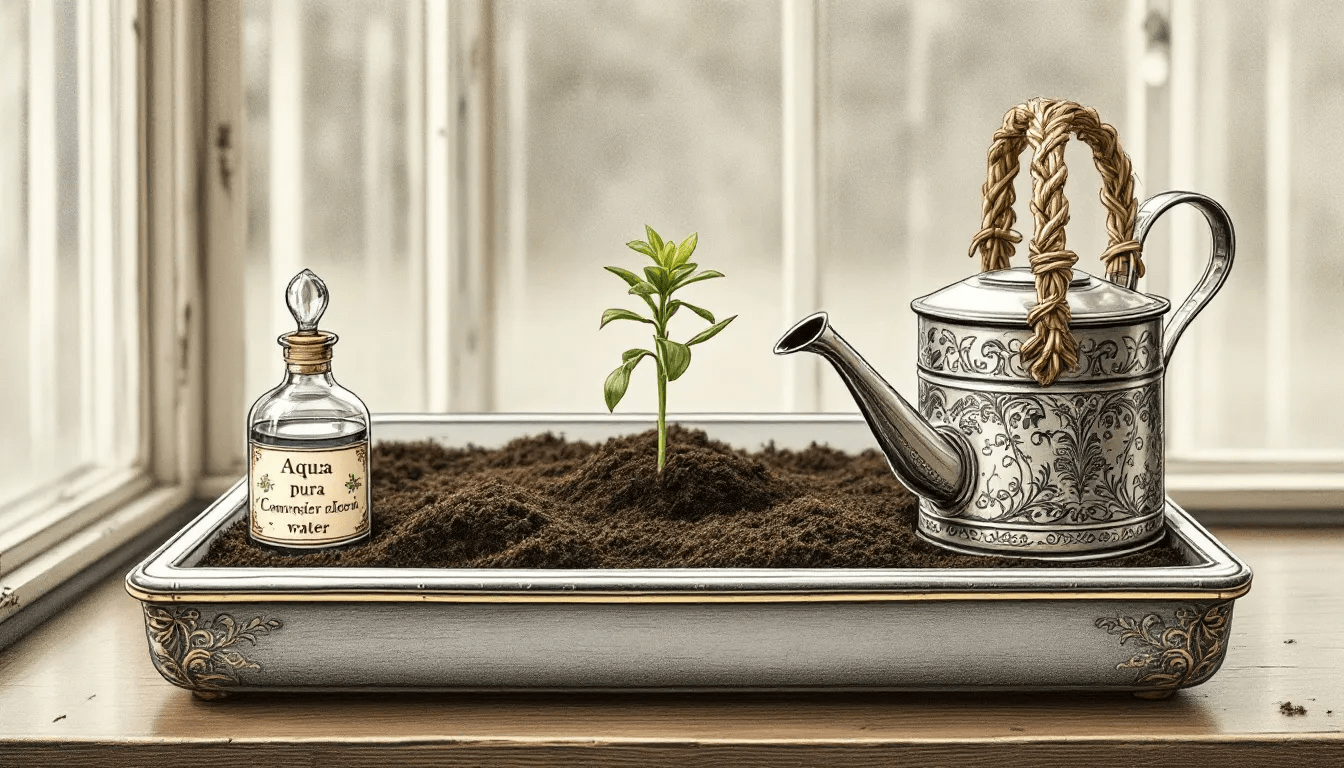
Rainwater is naturally soft, slightly acidic to neutral (pH 5.6–7.0 depending on local atmospheric conditions), and free from chlorine, chloramines, fluoride, and heavy metals. It contains trace minerals that are beneficial rather than harmful for germination. In most Australian climate zones there’s enough rainfall to collect meaningful quantities — even a modest tank or barrel fed from a roof downpipe produces more than enough water for germination and seedling care.
The only considerations: store collected rainwater in a sealed container away from light to prevent algae growth, and check pH before use if your roof material is metal — some metal roofing can alter runoff pH.
2. Carbon-filtered water — the practical everyday option
A carbon filter — countertop, under-sink, or a simple jug filter — removes chlorine and, at sufficient carbon density, chloramines. It reduces heavy metal concentrations and improves taste and odour. It does not remove fluoride or dissolved minerals effectively. For most Australian growers in chlorinated (non-chloraminated) water areas, a carbon filter plus pH adjustment to 6.0–6.5 is an adequate and affordable upgrade from raw tap water — the practical minimum for cannabis germination water quality.
If you’re on chloraminated supply (Sydney Water is the most common example), confirm your carbon filter is rated for chloramine removal — not all standard jug filters are. Look for filters rated to NSF Standard 42 and 53, or specifically labelled for chloramine removal.
3. Reverse osmosis water — the most complete solution
Reverse osmosis systems remove virtually all contaminants — chlorine, chloramines, fluoride, heavy metals, dissolved minerals, and anything else in solution. The output is near-pure water with an EC close to zero. For germination purposes this is ideal. The one practical step with RO water is pH adjustment — pure RO water has a low but unstable pH that needs to be buffered to 6.0–6.5 before use.
RO systems require an upfront investment of $150–500 for a basic under-sink unit, but the per-litre cost of water produced is very low. For growers who invest in quality genetics and want to eliminate water quality as a variable entirely, RO is the right solution.
4. Distilled water — reliable but inconvenient at scale
Distilled water is available at supermarkets and pharmacies — it’s the same product sold for use in steam irons, car batteries, and CPAP machines. It’s completely free of minerals and contaminants and provides consistent quality. At germination volumes (you don’t need much) it’s a practical option. Adjust pH to 6.0–6.5 before use, as with RO water.
5. Standing tap water — a partial fix, not a solution
Leaving tap water uncovered for 24 hours allows chlorine to off-gas. This is better than using water straight from the tap in chlorinated areas. It does nothing for chloramines, fluoride, heavy metals, or dissolved minerals. In chloraminated supply areas it provides essentially no benefit over tap water. It’s a partial measure that’s worth doing if it’s all you have, but it’s not a substitute for filtration or collected rainwater.
🧠 Jason — The Simple Fix Most People Won’t Bother With
The fix here is not complicated. If you’re on town water, get a basic carbon filter — the jug type is fine for germination volumes. Adjust the pH to 6.2–6.5. That’s it. You’ve eliminated the chlorine issue and given your seeds water at the right pH. If you’re serious about water quality — and if you’re germinating genetics that cost you real money, you should be — collect rainwater when you can, or invest in a small RO unit. But the minimum viable fix is cheap and takes five minutes. The frustrating part is watching people spend serious money on quality seeds and then germinate them in straight tap water without a second thought. The seeds are doing everything they can. Give them the conditions to actually succeed.
Best Practices During Germination
Water quality is the most commonly neglected variable, but it’s one of several that determine germination outcomes. With the water sorted, these are the other conditions worth getting right.
Temperature: 20–25°C consistently. Not fluctuating — a seedling heat mat with a thermostat is a worthwhile investment for anyone germinating regularly. Below 18°C, germination slows significantly. Above 28°C, the enzymes involved in germination become heat-stressed. Consistent warmth matters more than any specific temperature within the 20–25°C range.
pH: 6.0–7.0, ideally 6.0–6.5. Check with a basic pH meter or reliable pH drops — neither is expensive. Adjust filtered or RO water to this range before use. A pH that’s outside this range reduces the effectiveness of the enzyme systems driving germination even if the water is otherwise clean.
Moisture level: The germination medium should be moist — not wet, not damp. Wet conditions invite damping off and fungal problems. Damp conditions don’t provide enough moisture for the imbibition process. If you’re using the paper towel method, the towel should hold moisture without dripping when lifted.
Darkness: Most seeds germinate better in darkness. Light is not required and in some species actively inhibits germination. Keep seeds covered during the germination period.
Gentleness: Handle germinating seeds as little as possible. The radicle is fragile — once it emerges, any bending or breaking of it ends the plant’s development. If you need to check progress, do it carefully and return seeds to their position without disturbing the radicle orientation.
Advanced Options for Difficult or High-Value Seeds
For rare genetics, older seeds with reduced viability, or seeds with particularly hard seed coats, there are additional treatments worth considering beyond water quality alone.
Hydrogen peroxide solution (0.1–0.3%): A dilute hydrogen peroxide solution increases oxygen availability in the germination medium and has mild antifungal properties that reduce damping off risk. Use food-grade hydrogen peroxide diluted to 0.1–0.3% in your clean germination water. This is particularly useful for older seeds where the seed coat has hardened.
Scarification: For seeds with unusually hard coats, very light scarification — gently rubbing the seed against fine sandpaper to thin the coat — improves water uptake during imbibition. Used carefully on seeds that have failed to germinate despite optimal conditions, it can make the difference for difficult genetics.
Kelp extract: A dilute kelp solution provides trace elements including natural cytokinins that support cell division in germinating seeds. Use at 0.1–0.2 ml per litre of clean water. The effect is modest but measurable for seeds under marginal conditions.
Willow water: Soaking willow twigs or bark in clean water for 24 hours produces a solution containing salicylic acid and indolebutyric acid — natural compounds that promote root development. An old remedy that has biochemical support — salicylic acid in particular plays a documented role in plant stress responses and root initiation.
Not sure which strain suits your setup?
Answer six questions and Jess will match you to three strains based on your experience, space, and goals.
Key Takeaways — Water Quality and Seed Germination
Australian tap water contains chlorine or chloramines, fluoride, and in older infrastructure areas, heavy metals — all of which interfere with the enzyme systems, beneficial microbiology, and pH conditions that germination depends on. Chlorine off-gasses from standing water but chloramines do not and require active removal. Carbon filtration handles both chlorine and chloramines. Fluoride and heavy metals require reverse osmosis or distillation to remove. Collected rainwater sidesteps all municipal treatment problems and is free. The minimum viable fix for most growers is a basic carbon filter plus pH adjustment to 6.0–6.5. Germination temperature of 20–25°C consistent, darkness, and correct moisture level matter alongside water quality. For high-value or difficult seeds, hydrogen peroxide solution and kelp extract provide additional support beyond water chemistry alone. For Sacred Seeds’ full germination guide using the paper towel method, see the paper towel germination guide and the complete germination guide.
Water Quality and Seed Germination — Frequently Asked Questions
Why is tap water bad for germinating seeds?
Australian tap water contains chlorine or chloramines (disinfectants), fluoride, and in older pipe infrastructure areas, trace heavy metals. These compounds interfere with the enzyme activation and cellular division processes that drive germination — disrupting the biochemistry that converts a dormant seed into an emerging seedling. The effect is measurable: germination rates, speed, and seedling vigour are all affected by water quality.
Does leaving tap water out overnight fix the problem?
Partially, and only for chlorinated supplies. Chlorine is volatile and off-gasses when water is left uncovered for 24 hours. Chloramines — used by Sydney Water and increasingly common in Australian municipal supplies — are stable and do not off-gas. For chloraminated water, standing overnight provides essentially no benefit. Carbon filtration or a Campden tablet (potassium metabisulfite) is needed to neutralise chloramines. Check your local water authority’s website to confirm which disinfectant system your supply uses.
What is the best water for germinating cannabis seeds?
Collected rainwater is the best free option — naturally soft, slightly acidic to neutral pH, free of municipal additives. RO (reverse osmosis) water is the most complete treatment option if you have the system — adjust pH to 6.0–6.5 before use. Carbon-filtered tap water with pH adjustment is the practical minimum for most growers. Distilled water from a supermarket works well for germination volumes.
What pH should germination water be?
6.0–7.0, with 6.0–6.5 being the optimal range for most seeds. Outside this range the enzyme systems driving germination operate less efficiently, even if the water is otherwise clean. Check pH with a basic pH meter or pH drops and adjust as needed — pH Up (potassium hydroxide) or pH Down (phosphoric acid) in small amounts bring filtered or RO water into range quickly.
Does fluoride in tap water affect seed germination?
Yes. Fluoride interferes with enzyme activity during germination and accumulates in plant tissue, where it can disrupt calcium and magnesium uptake. The effect is often cumulative rather than immediately visible — stunted growth and mineral deficiencies appearing weeks into the plant’s development are sometimes traceable to fluoride exposure during germination. Fluoride cannot be removed by carbon filtration at standard filter capacity or by standing water. Reverse osmosis, distillation, or collected rainwater are the solutions.
What is the difference between chlorine and chloramines in tap water?
Chlorine is a single-element disinfectant that off-gasses from water left standing uncovered for 24 hours — it’s volatile and escapes into the air. Chloramines are a compound of chlorine and ammonia that are chemically stable and do not off-gas. Both are harmful to germination enzyme systems and beneficial soil microorganisms. Chloramines require carbon filtration or a Campden tablet to remove. Sydney Water uses chloramination; Melbourne Water uses chlorine. Check your local authority for confirmation.
Can I use a standard Brita filter for germination water?
A standard Brita jug filter uses activated carbon and removes chlorine, some heavy metals, and improves taste. It does not reliably remove chloramines, fluoride, or dissolved hard water minerals. In chlorinated water areas it provides a useful improvement. In chloraminated water areas (Sydney Water) a standard Brita is not sufficient — you need a filter specifically rated for chloramine removal. RO is the more complete solution if fluoride and minerals are also concerns.
How do I germinate cannabis seeds correctly?
Use clean water (filtered, rainwater, or RO) at pH 6.0–6.5 and 20–25°C. The paper towel method — damp (not wet) paper towel, seeds placed between two sheets, sealed in a bag or container, kept dark and warm — is reliable and allows easy progress monitoring. Handle the emerging radicle with extreme care. For the full step-by-step process see the paper towel germination guide.
Related Reading
Paper towel germination method — Sacred Seeds’ complete step-by-step germination guide using the paper towel technique.
How to germinate cannabis seeds — the full germination guide covering all methods and common problems.
Cannabis seedling care in Australia — what comes after successful germination, including watering, feeding, and damping off prevention.
Why seedlings die — stem rot and damping off — how water quality and moisture management connect to the most common seedling failure mode.
Sacred Seeds quality guarantee — how we test every seed batch before dispatch, including the paper towel method at controlled temperature.
Browse all cannabis seeds — feminised, autoflower, and photoperiod strains shipped from Australia.
Seeds are sold strictly as novelty collector’s items. They contain no THC or CBD. This page does not constitute medical or legal advice. By purchasing you agree to our terms and conditions. Always check local laws before germinating or cultivating cannabis.