How you store cannabis seeds determines whether you’re planting viable genetics or throwing money at soil. A seed that’s been sitting in a warm drawer through an Australian summer, exposed to humidity and light, is not the same seed that left the breeder’s facility. Viability degrades quietly — no visible sign until germination fails.
The good news is that seeds stored correctly hold their germination potential for five to eight years or longer. The conditions that make the difference are straightforward: temperature, humidity, light, and container. Get those four right and the genetics stay intact.
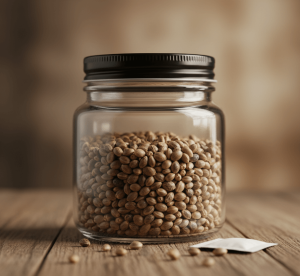
Why Seed Storage Matters More Than Most Growers Realise
Seed viability is determined by the condition of the embryo inside the shell. Heat, moisture, and light all accelerate the enzymatic processes that age a seed — the same biology that eventually triggers germination, running slowly in the wrong direction when conditions aren’t controlled. A seed stored at 25°C with 60% RH is ageing faster than you want it to. A seed stored at 4°C with 10% RH is essentially in stasis.
There’s a practical dimension to this beyond just keeping seeds fresh for the next grow. As modern hybridised genetics dominate the market, older landrace and heirloom varieties become increasingly rare. Proper home seed banking is one of the few practical ways to preserve genetic diversity outside of commercial or institutional collections. Jason and Jess take this seriously — the decentralisation of seed genetics, keeping strains out of corporate and pharmaceutical control, is part of why Sacred Seeds exists. A properly stored seed collection is a small but real contribution to that. If you’re building a collection and deciding what’s worth preserving, our autoflowering and feminised photoperiod ranges are the place to start.
The Right Temperature for Storing Cannabis Seeds
The target range for long-term seed storage is between 4°C and -4°C — a standard household refrigerator sits at the upper end of this range and works well for most growers. At these temperatures, the metabolic activity inside the seed slows to a near-halt and viability is maintained for years rather than months.
Room temperature storage — typically 15–20°C in most Australian homes — is acceptable for seeds you plan to use within six months. Beyond that, the elevated temperature starts to matter. In an Australian summer, rooms without air conditioning can push well above 20°C, and that heat exposure accumulates. If you’re keeping seeds for the medium or long term, the fridge is the right call.
Jason: I’ve cracked open packs that sat in a shed through a Byron summer and the germination rate told the story immediately. Two from ten where you’d expect nine. The seeds looked fine — that’s the problem. There’s no visible sign until you’re waiting on sprouts that aren’t coming.
Should You Freeze Cannabis Seeds?
Freezing is viable for very long-term storage — think years, not months — but it introduces risks that refrigeration doesn’t. The main one is moisture. If seeds enter the freezer with any residual humidity in the container, that moisture forms ice crystals which can damage the seed coat and the embryo. The other risk is temperature cycling: every time you open a frozen container, condensation forms as the cold contents meet warm air. A seed that gets frozen, thawed, refrozen, and thawed again is going to struggle.
If you’re freezing seeds for long-term preservation, the process matters: dry the seeds thoroughly first, use a vacuum-sealed container with silica gel, and commit to leaving them undisturbed. Don’t freeze seeds you plan to access regularly. For most growers, a dedicated fridge shelf is a more practical and lower-risk option than the freezer.
Humidity: The Variable Australian Growers Need to Take Seriously
Anyone who was on the east coast during those two years of relentless rainfall knows the battle against moisture is a full-time job. Humidity is the primary threat to stored seeds in Australia — more so than temperature in most parts of the country, and more so than light.
The target humidity for seed storage is below 15% RH. Above 40% RH, mould becomes a real risk. The challenge is that ambient humidity in coastal Queensland, NSW, and parts of Victoria regularly exceeds this — and humidity inside a poorly sealed container will equilibrate with the ambient humidity around it over time.
The practical fix is silica gel. A small silica gel sachet inside the storage container keeps the internal humidity down regardless of what’s happening outside it. Replace or recharge the sachet every six to twelve months. This one step makes more difference to long-term viability than almost anything else, and it costs almost nothing.
Jason: During the wet period we had growers contact us about seeds that had gone mouldy in storage — every single case was an unsealed or poorly sealed container. A mason jar with a good rubber seal and a silica sachet would have fixed all of it. The container matters as much as the temperature.
Ideal Cannabis Seed Storage Conditions
Temperature: 4°C to -4°C for long-term storage. Below 20°C acceptable for seeds used within six months.
Humidity: Below 15% RH. Use silica gel sachets inside the container to maintain this regardless of ambient conditions.
Light: Complete darkness. Store in an opaque container or wrap in foil if using glass jars.
Container: Airtight — glass jar with a silicone seal, vacuum-sealed bag, or a purpose-made seed vault container.
Handling: Minimise. The oils on skin degrade the seed coat over time — use a small spoon or wear gloves when handling seeds you’re storing.
Labelling: Strain name, date acquired, and source. This matters more than it seems once you have more than a few varieties stored.
The Best Containers for Storing Cannabis Seeds in Australia
The container’s job is to seal out moisture, light, air, and pests. Airtight is non-negotiable for anything beyond short-term storage. Beyond that, the choice comes down to what you’re working with.
Glass mason jars with rubber seal lids are the most practical option for most growers — airtight, inert (glass doesn’t off-gas), reusable, and cheap. They’re not opaque, so store them inside a dark box or wrap them, but the seal quality is reliable. Vacuum-sealed bags are the better choice for larger quantities or for seeds going into long-term frozen storage — they eliminate the air gap entirely and minimise moisture exposure. Plastic containers work in a pinch but quality varies significantly. Some plastics are slightly gas-permeable over time; if you’re storing for years, glass or vacuum-sealed is the safer choice.
Whatever container you use, add a small silica gel sachet before sealing. Keep the container in the back of the fridge, away from the door where temperature fluctuates with opening and closing. Label everything — strain name, date, source — before you put it away. Future you will thank you.
Light Exposure and Seed Viability
Seeds should be stored in darkness. Light — UV in particular — degrades the seed coat and accelerates the enzymatic processes you’re trying to slow down. The fridge handles this automatically if the container is in the back, away from the light that comes on when the door opens. If you’re storing at room temperature, keep seeds inside a drawer, box, or opaque container rather than on a shelf where they see regular light exposure.
Handling Seeds Without Damaging Them
The oils and acids on skin degrade the seed coat over time — not dramatically on a single touch, but cumulatively across repeated handling. If you’re picking through a collection regularly, use a small spoon or wear nitrile gloves. For seeds going into long-term storage, handle them once: into the container, sealed, into the fridge. Don’t take them out to look at them.
Not sure which strain to add to your collection?
Answer six questions and Jess will match you to three strains based on your setup, experience, and goals.
Cannabis Seed Storage — Frequently Asked Questions
How long do cannabis seeds last in storage?
Seeds stored correctly — below 4°C, below 15% RH, in an airtight container in darkness — can remain viable for five to eight years or longer. Seeds stored at room temperature in a non-airtight container will typically lose meaningful germination rates within one to two years, faster if Australian summer heat is involved. When you’re ready to pop them, our cannabis germination guide covers the method we recommend.
Can I store cannabis seeds in the fridge?
Yes — a standard household refrigerator at around 4°C is one of the most practical options for long-term seed storage. The key is managing moisture: store seeds in an airtight container with a silica gel sachet inside, and keep them at the back of the fridge rather than in the door where temperature fluctuates. Avoid opening the container frequently, as condensation forms when cold air meets warm.
Should I freeze cannabis seeds?
Freezing is viable for very long-term storage if done correctly — seeds thoroughly dried, in a vacuum-sealed container with silica gel, left undisturbed. The risk is moisture damage from ice crystal formation and temperature cycling. For most growers who want to access seeds periodically, refrigerator storage is lower-risk and more practical than the freezer.
What humidity level is safe for cannabis seed storage?
Below 15% RH for long-term storage. Above 40% RH, mould becomes a risk. In coastal Australian climates where ambient humidity regularly exceeds these levels, a silica gel sachet inside the sealed container is essential — it maintains internal humidity independently of what’s happening outside the jar.
What’s the best container for storing cannabis seeds?
Glass mason jars with rubber seal lids are the most practical for most growers — airtight, inert, reusable. Vacuum-sealed bags are better for larger quantities or long-term frozen storage. Whichever you use, add a silica gel sachet, store in darkness, and label with strain name and date before sealing.
Can light damage stored cannabis seeds?
Yes — UV and direct light exposure degrades the seed coat and accelerates enzymatic ageing. Store in complete darkness: inside a drawer, a dark box, or an opaque container. Glass jars in a dark fridge work well. Avoid leaving seeds on a windowsill or in any location with regular light exposure.
Should I avoid touching cannabis seeds?
Minimise handling. The oils and acids on skin degrade the seed coat over time. Use a small spoon or nitrile gloves when picking through a collection. For seeds going into long-term storage, handle once — into the container, sealed, stored — and leave them alone.
How do I prevent mould on stored cannabis seeds in Australia?
Keep humidity below 15% RH inside the storage container using silica gel sachets. Store in a cool environment — the fridge is ideal. Use an airtight container that won’t equilibrate with the ambient humidity around it. In high-humidity coastal climates, check and replace silica gel sachets every six to twelve months.
Related Reading
How to Germinate Cannabis Seeds — the next step once your stored seeds are ready to pop. The method matters as much as the seed quality.
Autoflower vs Photoperiod Seeds — if you’re building a seed collection and deciding what’s worth storing, understanding the format differences is the starting point.
Best Cannabis Strains for Australian Climates — regional strain selection for outdoor growers. Relevant if you’re storing seeds in advance of a seasonal grow.
Browse all cannabis seeds — over 50 feminised, autoflower, and photoperiod strains. Shipped from Australia in 3–6 days.
Seeds are sold strictly as novelty collector’s items. They contain no THC or CBD. This page does not constitute medical or legal advice. By purchasing you agree to our terms and conditions. Always check local laws before germinating or cultivating cannabis.