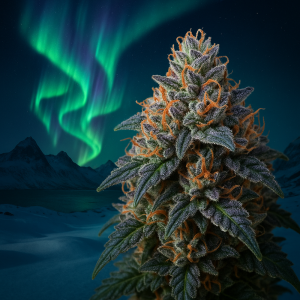
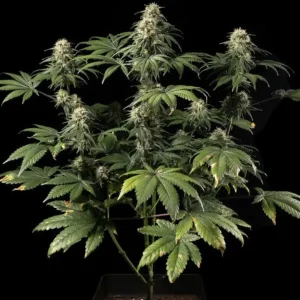
Fat Bastard is a Blimburn original, and that matters more than the name suggests. Jess and I met the Blimburn team at a cannabis conference in the States a few years back and came away with a lot of respect for how seriously they approach their breeding work. These aren’t marketing-first genetics dressed up with a provocative name — the stability, the resin density, the flavour complexity all trace back to a programme that genuinely gives a damn. When we started Sacred Seeds Australia, Fat Bastard was one of the first strains we knew we wanted to stock.
The shorthand version of what this strain delivers: Goldmember crossed with Monkey Spunk, true 50/50 hybrid, 30–38% THC verified across multiple breeder lab tests. Those numbers put it among the most potent feminised photoperiod genetics available anywhere — not just in Australia. Most strains at this potency ceiling sit firmly in indica territory and hit in one direction. Fat Bastard opens with a clear euphoric rush from its sativa side before the indica weight settles in. A more complete effect arc than most of the heavy hitters at the top end of the THC range.
This article is the strain story — genetics, terpene science, effect profile, flavour, and why Australia’s climate suits Blimburn’s dry-climate breeding intentions better than most growing regions Fat Bastard ends up in. For the full grow guide — week-by-week timeline, EC targets, training approach, harvest timing — head to the Fat Bastard product page. The two pieces are designed to work together.
🧬 Fat Bastard Genetics — Where the Potency Comes From
The Fat Bastard cross — Goldmember × Monkey Spunk — reads like a name designed to test a customer’s commitment to the strain before they reach checkout. Look past the names and the parent genetics tell a serious story.
Goldmember is OG Kush crossed with Gold Leaf. The OG Kush half is one of the most documented and influential strains in modern cannabis breeding, contributing dense calyx structure, the unmistakable fuel and earth aroma, and the deep physical body effect that defines the indica side of Fat Bastard’s profile. Gold Leaf is a Robert Bergman creation — a hybrid bred specifically for high THC and balanced effects, contributing yield potential and resin density. Goldmember on its own is a heavy, pungent strain with serious commercial credentials. As a parent, it’s the source of Fat Bastard’s body weight and its aromatic foundation.
Monkey Spunk is Gorilla Glue #4 crossed with Lilac Diesel. GG#4 needs no introduction — Cup-winning, 25%+ THC, the strain that defined American hype genetics in the mid-2010s and remains one of the most consistently potent feminised genetics available. Lilac Diesel is the more interesting half: a complex polyhybrid bred for its terpene complexity, contributing the floral and berry undertones that lift Fat Bastard’s flavour profile out of straight Kush territory. Monkey Spunk inherits GG#4’s potency ceiling and Lilac Diesel’s terpene diversity. As a parent, it’s where Fat Bastard’s cerebral onset and complex flavour profile come from.
Crossed together: a true 50/50 hybrid that combines Kush body weight with GG#4 potency, anchored by a terpene profile neither parent quite delivers on its own. The 30–38% THC range isn’t a marketing inflation — Blimburn’s lab work is documented and consistent. What’s worth understanding is that hitting the upper end of that range requires the genetics to express fully, which means real growing skill and conditions that suit the strain. Most home grows land in the 24–30% range, which is still extraordinary. The 38% ceiling is what’s possible, not what’s typical.
The Terpene Science Behind the Fat Bastard High
Fat Bastard’s dominant terpene is caryophyllene — and this matters more than most growers realise. Caryophyllene is the only terpene currently understood to directly bind to cannabinoid receptors, specifically CB2 receptors in the peripheral nervous system. CB2 activation is what produces the body-relaxing, anti-inflammatory component of Fat Bastard’s effect profile, and it’s part of why the strain’s body weight feels different from a pure myrcene-driven indica. The peppery, spicy note on the exhale is caryophyllene announcing itself directly.
Myrcene — the secondary terpene — does the work most casual cannabis users credit to THC alone. Research indicates myrcene enhances the permeability of biological membranes including the blood-brain barrier, which facilitates faster and more complete cannabinoid uptake. In practical terms: at equivalent THC percentages, a myrcene-rich strain like Fat Bastard hits harder and faster than a strain with a different terpene profile. This is why Fat Bastard’s 30%+ THC numbers feel like 30%+ THC numbers — the terpene profile is amplifying delivery, not just contributing flavour.
Humulene — the tertiary terpene — is responsible for the woody, hoppy character (the same terpene prominent in many craft beers and a major component of cannabis’s relationship with hop genetics). What makes humulene interesting in Fat Bastard’s profile is that it’s been demonstrated to have appetite-suppressing properties, which is unusual for a high-THC strain. The combination is part of why experienced users describe Fat Bastard’s effect as “heavy without the munchies hangover” — humulene is doing real work in modulating the appetite response that high-THC strains usually trigger.
🌍 Fat Bastard — Five Things Most Growers Don’t Know
The strain has been on the market long enough now that grower communities have built up a body of practical knowledge that doesn’t make it into seed bank descriptions. These are the details worth knowing before you commit.
1. The 50/50 split actually behaves like a 50/50 split. Most strains marketed as “balanced hybrids” lean clearly one way once you know what you’re looking for. Fat Bastard genuinely doesn’t. The growth pattern shows it — more branching activity than a pure indica, tighter internodal spacing than a pure sativa, a canopy that responds to training without the structural quirks of either parent type. The effect shows it too. The cerebral onset isn’t a brief sativa note before the indica takes over — it’s a sustained component that runs alongside the body relaxation through the entire experience.
2. The name is honest in a way most strain names aren’t. Fat Bastard is a Blimburn original, and the breeder team chose the name deliberately to reference both the dense, weighty bud structure and the unapologetic potency. Most modern strain names lean toward dessert imagery and aspirational marketing language. Fat Bastard goes the other direction — and the strain’s commercial success despite the name is a quiet endorsement of what it actually delivers. Customers don’t keep buying a strain on its name alone.
3. It’s one of the best concentrate strains in the catalogue. The trichome density on properly grown Fat Bastard is exceptional even by 30%+ THC standards. The trichome heads are large and well-formed, the stalks are robust, and the resin remains stable through extraction. Hash makers working with the strain consistently report excellent rosin returns and a flavour profile that translates well to concentrates — the caryophyllene and humulene profile holds up through extraction better than more volatile terpene profiles. Scissor hash at trim alone is significant.
4. Anthocyanin expression is pheno-dependent. A subset of Fat Bastard phenotypes will produce purple hues in the buds and leaves during late flower if exposed to a deliberate temperature differential — daytime around 20–22°C, nighttime dropping to 14–16°C. This isn’t every plant. The genetics carry the anthocyanin pathway through the OG Kush lineage, but expression depends on the specific phenotype. Don’t expect every Fat Bastard plant to purple up. Roughly one in three to one in four phenotypes in our experience expresses noticeable colour shift under the right conditions.
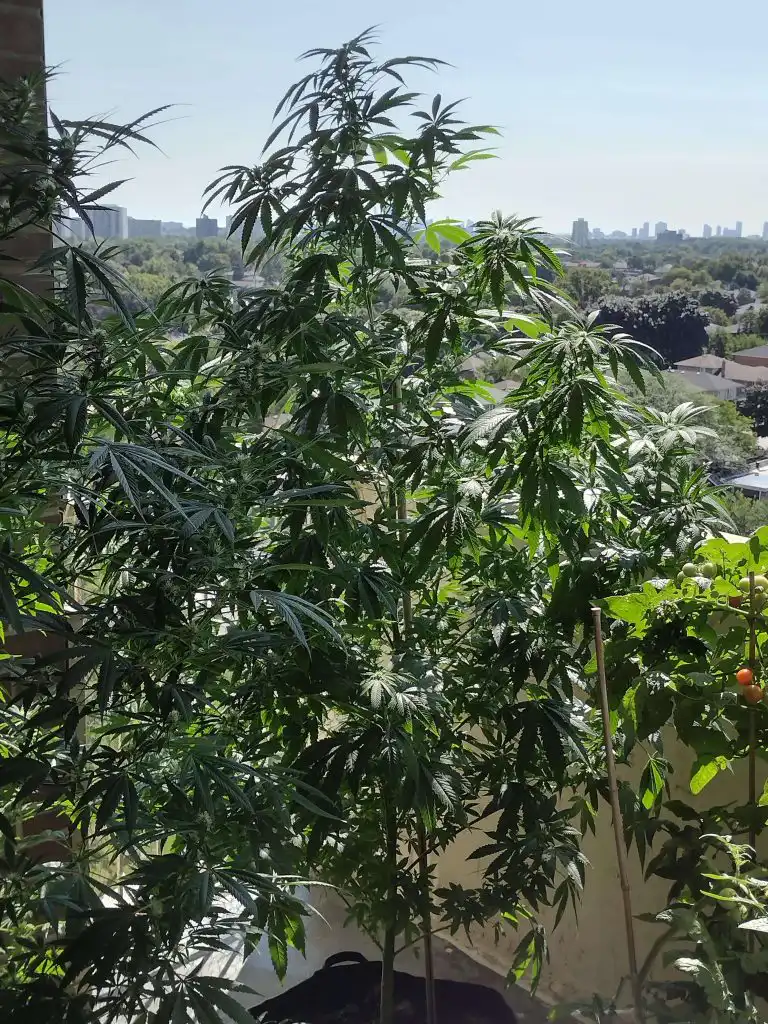
5. Australia’s dry climate is closer to its breeding intent than Europe’s. Blimburn classify Fat Bastard as a dry-climate strain, and that classification is meaningful rather than throwaway. The dense bud structure is high-risk in humid conditions — botrytis establishes at the cola’s core before becoming visible on the surface, and once established it spreads fast. Most outdoor Fat Bastard grows in northern Europe finish under conditions the strain wasn’t bred for. Inland temperate Australia, semi-arid South Australia, much of Western Australia — these regions actually match the dry-finish conditions the breeder programme was selecting for.
🧠 Fat Bastard Effects — What to Actually Expect
Onset (5–15 minutes): Faster than the THC numbers alone would suggest, and that’s the myrcene profile doing its work. The first signal is cerebral — a clean, expansive lift that arrives without the racing edge that pure sativas can carry. Within fifteen minutes the cerebral component is fully present and the body relaxation is beginning to layer in underneath.
Early phase (15–45 minutes): The 50/50 split establishes itself fully. Mood is elevated, conversation flows easily, focus sharpens on whatever you direct it toward. The body relaxation is present but not dominant yet — the cerebral effect is still leading. At moderate doses this is the most functional window. Inexperienced users should pay attention here: at 30%+ THC the effect is genuinely present, and “feeling fine” at the 30-minute mark is not a signal to consume more.
Mid-phase (45–90 minutes): This is where Fat Bastard’s full character expresses. The body weight from the OG Kush lineage settles in fully, the cerebral effect deepens rather than fades, and experienced users find this the most interesting window. Less experienced users at higher doses will find the couch firmly in play. The duration is longer than most high-THC strains — the indica genetics aren’t producing a sharp peak followed by a crash, they’re producing a sustained plateau.
Late phase (90–180+ minutes): The transition is gradual. Cerebral activity fades first, body relaxation persists longer, and the comedown is unusually smooth for a strain at this potency. Appetite increases — though humulene moderates this more than most high-THC strains. No notable crash. The duration at typical doses is genuinely 3–4 hours, longer at higher doses.
Potency note: 30–38% THC with this terpene profile is not equivalent to 30% THC with a different terpene profile. The myrcene amplification means Fat Bastard hits noticeably harder than the raw percentage suggests. Newer consumers should approach with serious respect — start with a fraction of what you’d normally use and wait the full 30 minutes before considering more. This is one of the strongest strains in our catalogue. Treat it accordingly.
Fat Bastard Flavour Profile — What the Cure Develops
Open a jar of properly cured Fat Bastard and the room knows about it. The dominant note is fruity-skunk — exotic fruit on the front end, a sweet pungent skunk character beneath, with a distinctive fuel quality on the exhale that signals the resin density. The flavour develops significantly during the cure — fresh-harvested material reads as one-dimensional skunk with a fuel edge. Six weeks in glass and the complexity opens up.
On the inhale: fruity and pungent, with the OG Kush earthiness sitting beneath the brighter Lilac Diesel-derived fruit notes. Caryophyllene contributes a peppery edge that’s most noticeable on the back of the tongue. On the exhale: fuel-forward, the GG#4 lineage announcing itself, fading into a clean finish that doesn’t linger uncomfortably.
Some phenotypes express berry or grape undertones in the final two weeks if they’ve seen cooler late-flower temperatures — the same anthocyanin response that triggers purple expression also tends to deepen the flavour profile. Not every plant. The phenotypes that purple up are usually the ones that develop the most complex final flavour. A proper cure is non-negotiable with this strain — pulled at two weeks, you’re not experiencing what Fat Bastard is actually capable of.
🌏 The Australian Angle — Why This Strain Suits This Country
Blimburn’s dry-climate classification for Fat Bastard maps onto Australian growing regions better than it maps onto most of the European and North American markets the strain is sold into. The genetics were selected under Mediterranean and dry-continental conditions — long warm seasons, dry finishes, low ambient humidity through the back end of flower. Inland New South Wales, Victoria’s drier zones, most of South Australia, and much of Western Australia genuinely match those conditions.
The dense bud structure that makes Fat Bastard a high-risk strain in humid northern European autumns becomes an asset in dry Australian autumns. Resin development holds, terpene complexity expresses, and the botrytis pressure that forces European outdoor growers to compromise on harvest timing simply isn’t the same constraint here. Coastal subtropical growers — northern NSW, Queensland, the wetter parts of WA’s southwest — can absolutely work with the strain, but site selection for airflow becomes more critical than sun exposure. Inland and arid growers have it easier with this one than they realise.
The other Australian advantage is the autumn temperature differential in the southern states. Cool nights through April in Victoria, Tasmania, and the Adelaide Hills trigger the anthocyanin response in receptive phenotypes more reliably than the milder European autumns the strain was originally photographed under. Some of the most visually striking Fat Bastard grows we’ve seen have come out of southern Australian outdoor seasons.
Ready to Grow Fat Bastard?
The complete grow guide — week-by-week timeline, EC targets, training approach, climate management, and harvest timing — is on the product pages.
Fat Bastard Feminised Seeds → | Auto Fat Bastard Feminised Seeds →
❓ Frequently Asked Questions — Fat Bastard
What is Fat Bastard?
Fat Bastard is a Blimburn Seeds original — a true 50/50 hybrid bred from Goldmember (OG Kush × Gold Leaf) and Monkey Spunk (Gorilla Glue #4 × Lilac Diesel). It carries verified THC of 30–38%, putting it among the most potent feminised photoperiod strains available. The terpene profile is caryophyllene-dominant with significant myrcene and humulene contributions, producing a balanced cerebral and physical effect rather than the one-directional couchlock typical of most strains at this potency level.
Where does Fat Bastard come from?
Fat Bastard is a Blimburn Seeds original. Blimburn is a Spanish-American breeding house with a serious reputation for stable, well-documented genetics rather than marketing-led releases. The Goldmember × Monkey Spunk cross was developed specifically to combine OG Kush body weight with GG#4 potency on a 50/50 sativa/indica framework — a more complete effect arc than most heavy-hitting indica strains deliver.
What does Fat Bastard taste and smell like?
Dominant fruity-skunk on the front, with a distinctive fuel quality on the exhale that signals the resin density. Caryophyllene adds a peppery, spicy note. The flavour profile develops significantly during the cure — fresh-harvested material reads as one-dimensional. Six weeks in glass opens up the complexity. Some phenotypes express berry or grape undertones if exposed to cooler late-flower temperatures.
How potent is Fat Bastard really?
Verified 30–38% THC across Blimburn’s lab analysis. The 38% ceiling is what’s achievable under optimal conditions, not what’s typical — most home grows land in the 24–30% range, which is still extraordinary. The myrcene-enhanced terpene profile means Fat Bastard hits harder than the raw percentage suggests. New consumers should treat this strain with serious respect.
Is Fat Bastard good for outdoor growing in Australia?
Australia’s dry climate suits Fat Bastard’s breeding intent better than most of the European and North American markets where it’s typically grown. Inland New South Wales, Victoria, South Australia, and most of Western Australia provide the dry-finish conditions the strain was selected under. Coastal subtropical regions can work with it but require careful site selection for airflow. Southern Australian autumns also trigger anthocyanin response (purple expression) in receptive phenotypes more reliably than European conditions.
How does Fat Bastard compare to the auto version?
The Auto Fat Bastard delivers the same Blimburn genetic foundation on a fixed 56–70 day timeline with no light flip required. The trade-offs are lower THC (typically 20–25% rather than 30%+), reduced terpene intensity, and significantly smaller yields. The auto is a strong choice when the photoperiod timeline isn’t workable. For the full Fat Bastard expression, the feminised photoperiod is the definitive version.
Why is Fat Bastard one of Sacred Seeds’ top strains?
Three things. The breeder credibility — Blimburn’s lab documentation backs the THC claims, which most breeders can’t say honestly. The terpene profile — caryophyllene-dominant rather than the more common limonene or myrcene leads, which produces a genuinely different effect from most high-THC strains. And the 50/50 hybrid balance — most strains at this potency are pure indica, and the cerebral component Fat Bastard retains makes it more versatile than its potency would suggest.
Where can I buy Fat Bastard seeds in Australia?
Sacred Seeds Australia stocks both Fat Bastard Feminised Seeds and Auto Fat Bastard Feminised Seeds, with express Australian shipping and batch-tested seed quality. Sold strictly as novelty collector’s items in accordance with local laws.