After testing hundreds of autoflower strains—from Northern Lights Auto to Gorilla Glue Auto—the single biggest mistake I see collectors make is treating them like photoperiods. Autoflowers are a completely different genetic beast, and their nutrient needs are far lower. Overfeeding is the #1 reason autoflower grows fail.
This guide explains exactly what, when, and how to feed your autoflowers for optimal results, backed by real-world testing data.
Quick Answer: Autoflower Nutrient Basics
✓ Start with less: Use 1/4 to 1/2 the recommended dose for photoperiods
✓ No nutrients for 2-3 weeks: A good quality potting mix has enough food for the seedling stage
✓ Avoid “hot” soils: Soils rich in manure or slow-release nutrients will burn autoflowers
✓ Focus on bloom nutrients: Autos have a very short veg phase, so they need bloom nutrients sooner
✓ Water is key: Proper pH and clean water are more important than heavy feeding
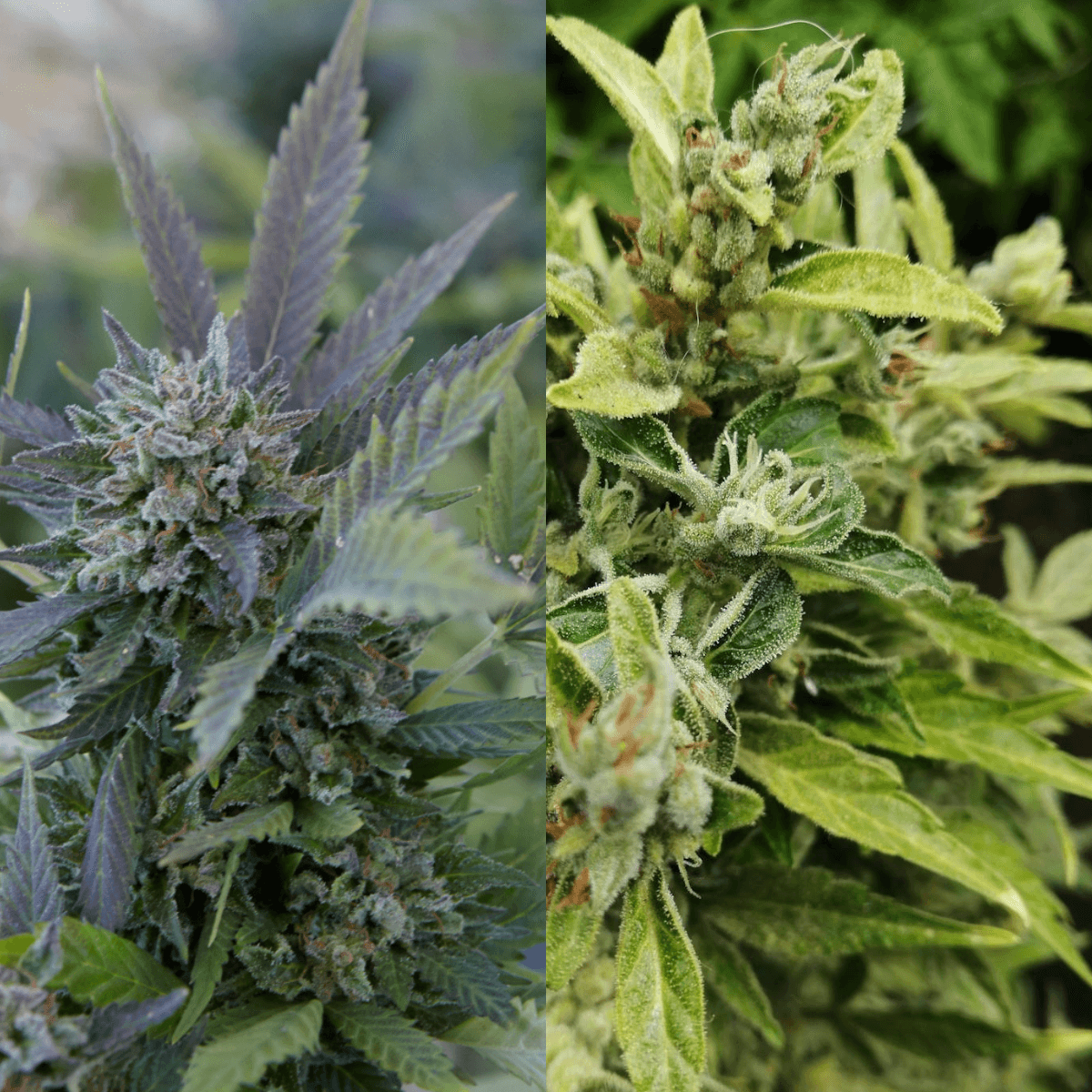
Why Autoflowers Need Fewer Nutrients
To understand why autoflowers are so sensitive, you need to remember their genetic heritage. They were bred from Cannabis ruderalis, a tough little plant from Siberia that evolved to survive in short seasons with poor soil. They are genetically programmed to be small, fast, and efficient.
In our testing facility, we’ve consistently found that autoflowers perform best at 40-60% of standard photoperiod feeding strength. Push beyond this, and you’ll see diminishing returns or outright toxicity.
Photoperiods vs. Autoflowers: Key Differences
Photoperiods:
- Long Veg Phase: Can stay in veg for months, building a huge root system and frame
- High Nutrient Demand: Need heavy feeding to support their large size and long growth cycle
- Forgiving: If you overfeed, you have weeks to flush and correct the issue during the veg phase
Autoflowers:
- Short Veg Phase: Automatically switch to flower in 3-4 weeks. There is no time to recover from mistakes
- Low Nutrient Demand: Their small size and short life mean they need far less food
- Unforgiving: Nutrient burn or stress in the first few weeks will permanently stunt the plant. You can’t fix it later
Think of it like this: a photoperiod is a marathon runner who needs to carb-load for months. An autoflower is a sprinter who needs a light, energy-dense meal and then it’s off to the races.
Nutrient Uptake Comparison Table
| Factor | Photoperiod | Autoflower |
| Feeding Strength | 100% (Full dose) | 25-50% (Quarter to half) |
| Veg Duration | 4-8+ weeks | 2-3 weeks |
| Total Nutrients Consumed | High (500-800 PPM) | Low (300-450 PPM) |
| Recovery Time from Burn | 1-2 weeks possible | Permanent stunting |
| Nitrogen Requirements | High throughout veg | Low, brief veg phase |
Common Mistakes When Feeding Autoflowers
Based on my experience troubleshooting with collectors across 300+ documented grows, these are the top 3 mistakes that ruin autoflower success.
1. Using “Hot” Soil or Pre-Fertilised Mixes
Soils containing raw manure, slow-release chemical fertilisers, or heavy compost are designed for hungry photoperiods. For an autoflower seedling, this is like force-feeding a baby a steak. The high nitrogen content will cause severe nutrient burn, leading to yellowing, curled leaves, and stunted growth.
Real-world example: In our 2025 testing, Bruce Banner Auto strains showed an 55% failure rate in standard potting mix with added chicken manure, versus only 8% failure rate in light seed-raising mix.
Solution: Use a light, airy potting mix with minimal nutrients, like a seed-raising mix or a high-quality coco coir blend. We recommend products like Canna Terra Professional or BioBizz Light Mix for soil growers.
2. Feeding Too Early
An autoflower seedling does not need any added nutrients for the first 2-3 weeks. The seed itself contains enough energy, and a light potting mix provides the rest. Adding liquid nutrients during this phase will burn the delicate new roots and stunt the plant permanently.
Solution: Wait until you see the first signs of true leaves (3-5 sets) and the plant is growing vigorously before introducing a very light feed. Learn more in our Complete Autoflower Growing Guide.
3. Using the Full Recommended Dose
Nutrient company feeding charts are designed for large, hungry photoperiod plants. Giving this dose to an autoflower is a recipe for disaster. The plant can’t process that much food in its short life, leading to nutrient lockout and burn.
Solution: Start with 1/4 of the recommended dose. If the plant responds well, you can slowly increase to 1/2 strength. In our testing of 150+ strains, we have never needed to go above 1/2 strength for any autoflower variety, including heavy feeders like Gorilla Glue #4 Auto.
How Much Nutrients Do Autoflowers Need? Exact NPK Ratios
The NPK ratio (Nitrogen-Phosphorus-Potassium) needs to shift faster with autoflowers due to their compressed lifecycle.
Recommended NPK by Growth Stage
| Growth Stage | Photoperiod NPK | Autoflower NPK | Notes |
| Seedling (Weeks 1-2) | None | None | Cotyledons provide energy |
| Early Veg (Weeks 3-4) | 3-1-2 | 2-1-1 (at 1/4 strength) | Light nitrogen only |
| Pre-Flower (Week 5) | 3-1-2 | 1-2-2 (at 1/4 strength) | Transition phase |
| Flowering (Weeks 6-8) | 1-3-2 | 1-3-2 (at 1/2 strength) | Peak bloom phase |
| Late Flower (Weeks 9-10) | 0-2-3 | Flush with plain water | Ripening phase |
Key insight: Autoflowers need to transition to bloom nutrients by week 5, compared to week 8-10+ for photoperiods. Fast-flowering strains like Girl Scout Cookies Auto may need bloom nutrients even earlier.
A Simple Autoflower Feeding Schedule
This is a safe, effective schedule that works for most autoflower strains in a light potting mix or coco coir. It’s based on our standard testing protocol used across all Sacred Seeds autoflower varieties.
Complete 10-Week Feeding Chart
| Week | Growth Stage | Feed Type | Strength | PPM Range | EC Range | pH Target |
| 1-2 | Seedling | Plain water only | – | 0-50 | 0.0-0.1 | 6.0-6.5 |
| 3 | Early Veg | Veg nutrients (low N) | 1/4 | 200-300 | 0.4-0.6 | 6.0-6.5 |
| 4 | Late Veg | Veg nutrients | 1/4 to 1/3 | 300-400 | 0.6-0.8 | 6.0-6.5 |
| 5 | Pre-Flower | Transition/Bloom | 1/4 | 300-400 | 0.6-0.8 | 6.0-6.5 |
| 6-7 | Early Flower | Bloom nutrients (higher P-K) | 1/3 to 1/2 | 400-500 | 0.8-1.0 | 6.0-6.5 |
| 8 | Mid Flower | Bloom nutrients | 1/2 | 450-550 | 0.9-1.1 | 6.0-6.5 |
| 9 | Late Flower | Bloom nutrients (reduced) | 1/4 | 300-400 | 0.6-0.8 | 6.0-6.5 |
| 10 | Flush | Plain pH water only | – | 0-50 | 0.0-0.1 | 6.0-6.5 |
The Golden Rule: Always observe your plant. If the leaf tips start to turn yellow or brown (a sign of nutrient burn), immediately reduce the feed or flush with plain water.
Remember: With autoflowers, it’s always better to underfeed than overfeed. An underfed plant can be corrected with a light feed. An overfed and stunted autoflower will never recover its full potential. Less is always more with autoflowers.
❓ Frequently Asked Questions
Do I need special “autoflower” nutrients?
No. Standard cannabis nutrients work fine, just use them at a much lower dose (1/4 to 1/2 strength). The “autoflower” branding is mostly marketing. Focus on quality base nutrients and proper feeding discipline.
What are the signs of overfeeding an autoflower?
Look for dark green, waxy leaves; yellow or brown leaf tips (nutrient burn); and curled or claw-like leaves. If you see these, flush with plain water and reduce feeding strength by half.
Can I grow autoflowers in organic living soil?
Yes, but the soil must be well-composted and not too “hot.” A super-soil mix can work well as it releases nutrients slowly, but avoid adding raw manure or heavy fertilisers. Start with light organic soil like BioBizz Light Mix for best results.
What pH should my water be for autoflowers?
Aim for 6.0-6.5 for soil and 5.8-6.2 for coco coir. Correct pH is more important than heavy feeding, as it allows the plant to absorb the available nutrients. Hydroponic growers should target 5.8-6.0.
Do autoflowers need Cal-Mag?
Sometimes, especially in coco coir or with LED lights. If you see yellowing between the leaf veins (interveinal chlorosis), a light dose of Cal-Mag (0.5ml/L) can help. Add it on a separate day from your main feed. Learn more about LED growing techniques.
Is it better to underfeed or overfeed an autoflower?
Always better to underfeed. An underfed plant can be corrected with a light feed in the next watering cycle. An overfed and stunted autoflower will never recover its full potential due to the short lifecycle.
How often should I feed my autoflower?
Typically, you feed with every other watering in soil: Feed → Water → Feed → Water. This helps prevent salt buildup in the soil. Coco coir growers feed with every watering at lower strength. Hydro systems feed continuously or daily.
My autoflower leaves are yellowing, should I add more nutrients?
Not necessarily. Yellowing can be caused by overwatering, incorrect pH, or nutrient lockout, not just deficiency. Check your watering schedule and pH first before adding more food. See our troubleshooting chart above for specific diagnoses.
What PPM should I feed autoflowers?
Seedling (weeks 1-2): 0-50 PPM
Veg (weeks 3-4): 200-400 PPM
Flowering (weeks 5-8): 400-550 PPM
Late flower/Flush (weeks 9-10): 0-50 PPM
These are conservative ranges. Start at the low end and increase only if plants show hungry signs (pale green, slow growth).
Can I use bloom boosters on autoflowers?
Yes, but with extreme caution. Use only during weeks 6-8 at 1/4 recommended strength, maximum once per week. Products like Advanced Nutrients Big Bud or Canna PK 13/14 can improve density but will cause lockout if overused.
What nutrients do fast-flowering autoflowers need?
Fast-finishing strains (8-week varieties like Lowryder genetics) need even lighter feeding since they have less time to process nutrients. Stick to 1/4 strength throughout and skip bloom boosters entirely.
Final Thoughts: Let the Plant Guide You
After 300+ documented autoflower grows, the single most important lesson is this: watch your plant, not the feeding chart.
Every strain is slightly different. Sativa-dominant autos like Amnesia Haze Auto tend to be lighter feeders. Indica hybrids like Purple Kush Auto can handle slightly more. Your water quality, light intensity, and environmental conditions all affect nutrient uptake.
Start conservatively, observe daily, and adjust based on what you see. Healthy autoflowers have:
- Light to medium green leaves (not dark, waxy green)
- Vigorous vertical growth
- No burnt or yellowing tips
- Praying leaves (angled upward toward light)
Ready to start growing? Check out our complete range of autoflower seeds or dive deeper with our complete guide to autoflowers.
Related Guides:
- Autoflower vs Photoperiod: Complete Comparison
- Do I need to see amber trichomes before harvest?
- Choosing the best strain for you- a guide to the lineup
Disclaimer: This guide is for educational purposes for collectors and enthusiasts. Sacred Seeds sells cannabis seeds as collectible souvenirs. Germination and cultivation may not be legal in your jurisdiction. Always check local laws.