What’s the Difference Between Autoflower and Photoperiod Seeds?

What’s the Difference Between Autoflower and Photoperiod Seeds?

Quick Answer: What You Need to Know

🌱 Autoflower seeds flower automatically after 3-4 weeks, regardless of light schedule

🕐 Photoperiod seeds only flower when you change the light cycle to 12/12

⏱️ Autoflowers finish in 8-12 weeks total; photoperiods take 3-5 months

📏 Autoflowers stay smaller (60-100cm); photoperiods grow larger (100-200cm+)

🎯 Autoflowers = speed and simplicity; photoperiods = control and yield

If you’re choosing between seed types, start here: our complete range of cannabis seeds in Australia.
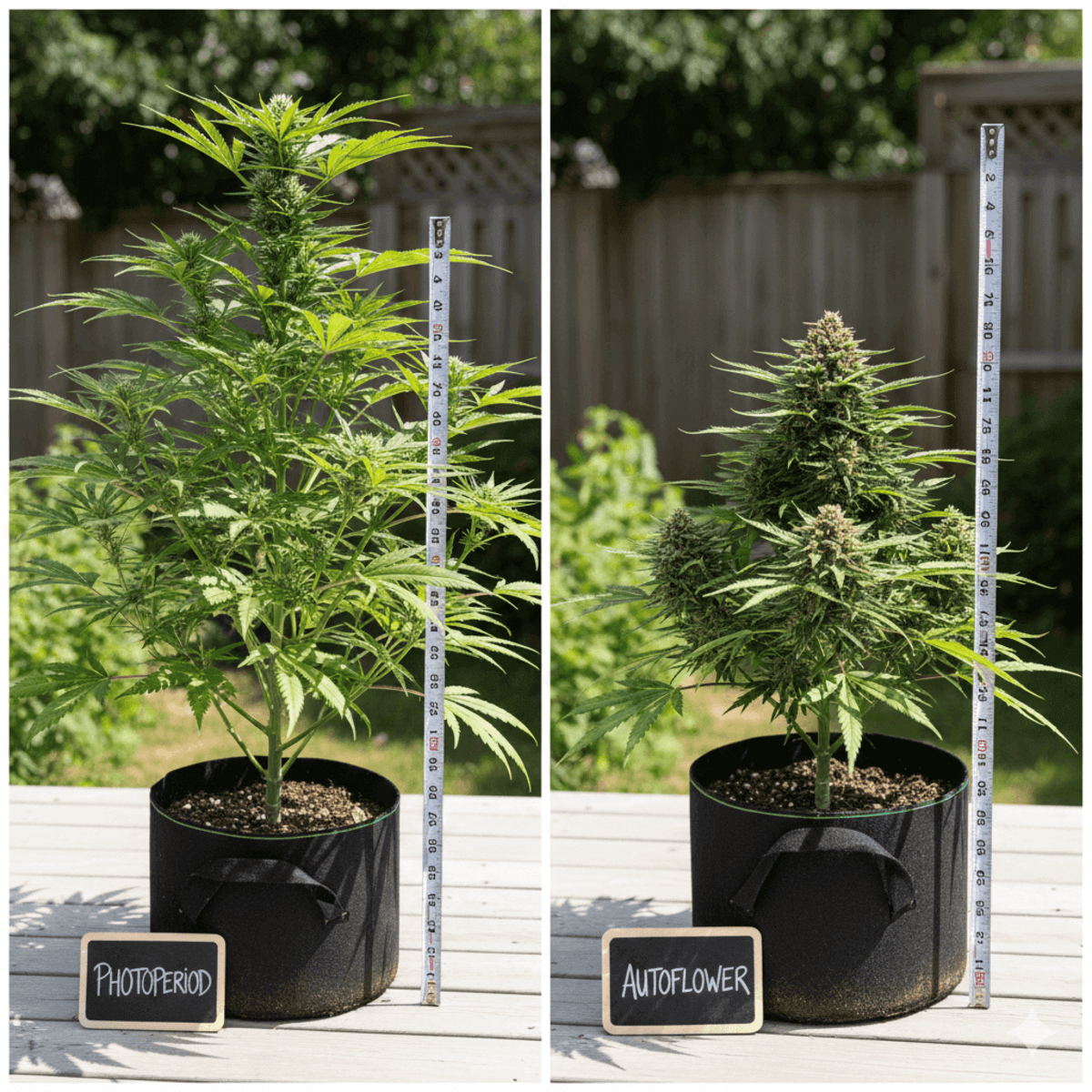
Side by side comparison of autoflower and photoperiod cannabis plants showing size and growth differences

The Fundamental Difference: Light Dependency

The core difference between autoflower and photoperiod cannabis seeds comes down to one thing: how they decide when to flower.

Photoperiod plants are light-sensitive. In nature, they flower when days get shorter (late summer/autumn). Indoors, you control this by switching from 18/6 light to 12/12 light. Until you make that change, they stay in vegetative growth.

Autoflower plants ignore light schedules entirely. They flower based on age—typically 3-4 weeks after sprouting, no matter what light cycle you’re running. This trait comes from Cannabis ruderalis genetics, a subspecies that evolved in regions with short summers where waiting for shorter days would mean missing the growing season entirely.

I’ve tested hundreds of autoflower and photoperiod strains over the years, and this genetic difference creates a cascade of practical differences that affect everything from grow time to final yield.

The Genetic Marvel: How Autoflowers Were Created

Autoflower cannabis is one of the most impressive breeding achievements in modern horticulture. Here’s the fascinating story:

Enter Cannabis ruderalis – a wild subspecies that evolved in the harsh climates of Siberia, northern Russia, and Central Asia. Unlike Cannabis indica and Cannabis sativa (which evolved near the equator with consistent day/night cycles), ruderalis developed in regions with extreme seasonal variation.

In these short-summer environments, waiting for autumn’s shorter days would be fatal—plants would freeze before flowering. So ruderalis evolved a survival mechanism: age-based flowering. After 3-4 weeks of growth, ruderalis automatically flowers regardless of light schedule, ensuring it completes its lifecycle before winter arrives.

The problem? Wild ruderalis is tiny, low-potency, and produces minimal flowers. Not exactly what collectors want.

The breakthrough came in the 1970s-80s when breeders realized they could cross ruderalis with elite indica and sativa strains. Through careful selection over multiple generations, they created plants that:

Retained the auto-flowering trait from ruderalis

Gained potency, flavor, and yield from indica/sativa parents

Stabilized genetics so the auto trait breeds true

Early autoflowers (2000s) were weak—maybe 8-12% THC with mediocre yields. But modern autoflowers from quality breeders now regularly hit 20-25% THC with respectable yields, all while finishing in 10 weeks. That’s decades of selective breeding compressed into plants that combine the best of three cannabis subspecies.

It’s genuinely remarkable: You’re growing plants that carry ancient survival genetics from Siberian ruderalis, wrapped in the potency and terpenes of California or Amsterdam elite strains. Every single gorilla glue autoflower seed, for example, represents thousands of hours of breeding work to perfect that genetic balance.

What Are Autoflower Seeds?

Autoflower seeds produce plants that automatically transition from vegetative growth to flowering based on age, not light cycle.

Key Characteristics:

⏱️ Fast lifecycle: 8-12 weeks seed to harvest

📏 Compact size: Usually 60-100cm tall

🌞 Light flexible: Can run 18/6 or even 20/4 throughout entire grow

🔄 No re-veg risk: Once flowering starts, it’s committed

🚀 Beginner-friendly: Simpler light management

📦 Lower yields: Typically 30-80g per plant

Best for:

✓ First-time growers

✓ Limited space

✓ Quick turnaround

✓ Outdoor grows in short seasons

✓ Perpetual harvests (stagger planting)

At Sacred Seeds, our most popular autoflowers finish in 9-11 weeks with minimal fuss. They’re forgiving of beginner mistakes and don’t require light schedule changes.

What Are Photoperiod Seeds?

Photoperiod seeds produce plants that flower only when exposed to 12 hours of darkness per day.

Key Characteristics:

🕐 Light-dependent: Need 12/12 light cycle to flower

📏 Larger plants: Can grow 100-200cm+ depending on veg time

Longer lifecycle: 3-5 months total (you control veg length)

🌿 Bigger yields: 100-300g+ per plant possible

🔬 More control: Extend veg time, take clones, train heavily

🎨 Full genetic expression: Terpenes and potency often more pronounced

Best for:

✓ Experienced growers

✓ Maximizing yield

✓ Taking clones (autoflowers can’t be cloned effectively)

✓ Training techniques (topping, mainlining, SCROG)

✓ Outdoor grows in full summer season

Photoperiods give you complete control over plant size. Want a small plant? Veg for 2 weeks. Want a massive plant? Veg for 8 weeks. This flexibility is why experienced growers often prefer them.

Side-by-Side Comparison

Growing Time

🟢 Autoflower: 8-12 weeks total

🔵 Photoperiod: 12-20 weeks total (depending on veg time)

Plant Size

🟢 Autoflower: 60-100cm (compact)

🔵 Photoperiod: 100-200cm+ (you control size)

Yield Per Plant

🟢 Autoflower: 30-80g typical

🔵 Photoperiod: 100-300g+ possible

Light Schedule

🟢 Autoflower: Any schedule works (18/6, 20/4, even 24/0)

🔵 Photoperiod: 18/6 for veg, must switch to 12/12 for flower

Difficulty Level

🟢 Autoflower: Beginner-friendly

🔵 Photoperiod: Requires more knowledge

Training Tolerance

🟢 Autoflower: Limited (no time to recover from stress)

🔵 Photoperiod: Excellent (can extend veg to recover)

Cloning Ability

🟢 Autoflower: Not practical

🔵 Photoperiod: Easy to clone

Outdoor Suitability

🟢 Autoflower: Multiple harvests per season possible

🔵 Photoperiod: One harvest per season (follows natural light)

Which Should You Choose?

Choose Autoflowers if you want:

✓ Fast results (first harvest in 10 weeks)

✓ Simple growing (no light schedule changes)

✓ Compact plants (balcony, small tent)

✓ Multiple harvests per year outdoors

✓ Forgiving genetics for beginners

Choose Photoperiods if you want:

✓ Maximum yield per plant

✓ Full control over plant size

✓ Ability to take clones

✓ Advanced training techniques

✓ Peak terpene and cannabinoid expression

My take: Neither is “better”—they serve different purposes. I recommend new collectors start with autoflowers to build confidence, then experiment with photoperiods once they understand the basics. Many experienced growers run both: autos for quick harvests, photos for their main crop.

Browse our full range of autoflower and check out all our feminised photoperiod seeds to find what suits your growing style.

Frequently Asked Questions

Are autoflowers less potent than photoperiods?

No, modern autoflowers can match photoperiod potency. Early autoflowers (2000s) were weaker, but today’s genetics from quality breeders regularly test at 20%+ THC. The main difference is yield size, not potency. Top-shelf autoflowers from reputable breeders deliver the same quality as photoperiods in a smaller, faster package.

Can you clone autoflower plants?

Technically yes, but it’s not practical. Autoflower clones continue aging from the mother plant’s age, so they flower almost immediately with minimal growth. You’d get a tiny plant with negligible yield. Photoperiods clone perfectly because you can keep them in vegetative growth indefinitely. If you want to preserve genetics, photoperiods are the only practical option.

Do autoflowers need 24 hours of light?

No, autoflowers don’t need 24-hour light, though some growers use it. Most run 18/6 or 20/4 for the entire grow. While autoflowers will flower under any light schedule, they still need some rest period for optimal growth. 18/6 is the sweet spot—enough light for good growth without stressing the plant or wasting electricity.

Which yields more: autoflower or photoperiod?

Photoperiods yield significantly more per plant—typically 100-300g+ vs 30-80g for autoflowers. However, autoflowers finish faster, so you can run 2-3 auto cycles in the time one photoperiod takes. For small spaces, autos can actually produce more total yield per year despite smaller individual harvests.

Can you grow autoflowers outdoors in Australia?

Yes, autoflowers excel outdoors in Australia. Unlike photoperiods that follow seasonal light changes, autos can be planted spring through autumn for multiple harvests. In warmer regions, you can get 3-4 auto harvests per year. They’re also less conspicuous due to smaller size and faster finish time.

What happens if you give autoflowers 12/12 light?

Autoflowers will still flower on 12/12 light, but yield suffers because they receive less total light energy. They don’t need 12/12 to trigger flowering—they flower automatically regardless. Running autos on 12/12 wastes their potential. Stick with 18/6 or 20/4 for best results.

Are feminised seeds autoflower or photoperiod?

Feminised seeds can be either autoflower or photoperiod. “Feminised” means the seeds produce female plants (no males). “Autoflower” vs “photoperiod” refers to flowering behavior. You can get feminised autoflowers, feminised photoperiods, regular autoflowers, or regular photoperiods. Check the seed description to know which type you’re getting.

Can you switch autoflowers to 12/12 mid-grow?

You can, but there’s no benefit and it reduces yield. Autoflowers don’t need light schedule changes to flower—they do it automatically. Switching to 12/12 just gives them less light energy, resulting in smaller plants and lower yields. Keep autos on 18/6 or 20/4 throughout their entire lifecycle.
Why Are My Photoperiod Plants Flowering Early?

Why Are My Photoperiod Plants Flowering Early?

I’ve helped thousands of Australian growers troubleshoot early-flowering photoperiods. The issue is extremely common — and 99% of the time, it has nothing to do with receiving the wrong seed type.

This guide explains every real cause, the science behind why they trigger flowering, and what to do next.

Quick Answer: Why Photoperiods Flower Early

  • Light leaks during the dark period (most common cause)
  • Seasonal light changes outdoors trigger early blooming
  • Stress — transplant, temperature, nutrients, root issues
  • Genetics — some strains are more light-sensitive
  • Sexual maturity (4–6 weeks old) + stress = early flowering
  • It’s almost never a “wrong seed type” issue

Still unsure what you’re growing?

→ Read our comparison: Autoflower vs Photoperiod Seeds

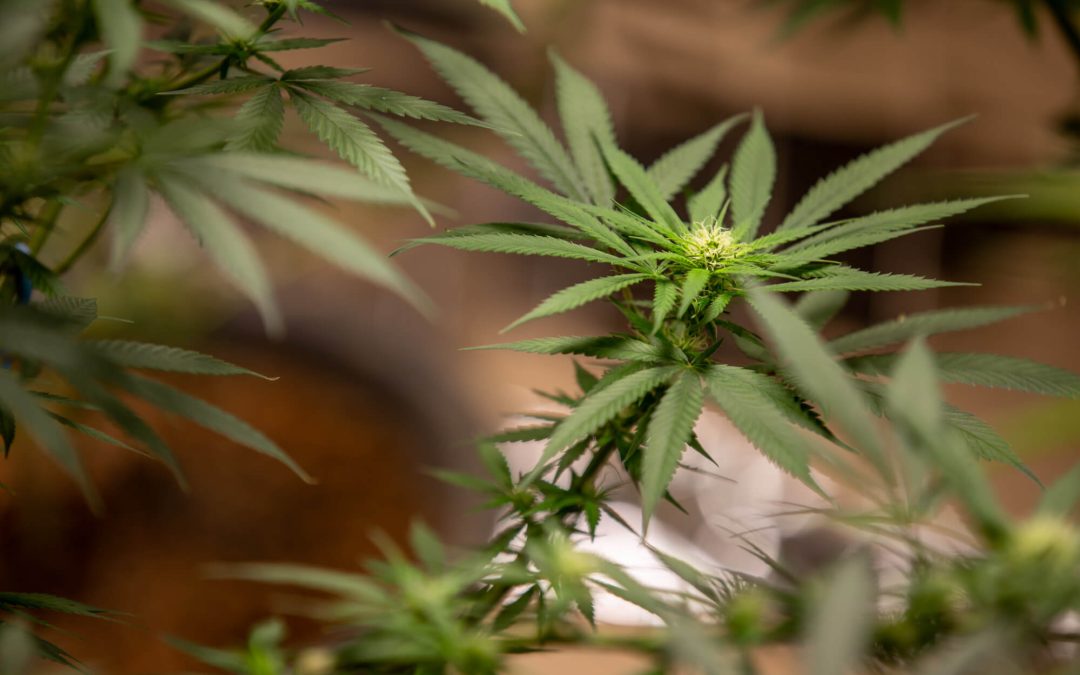
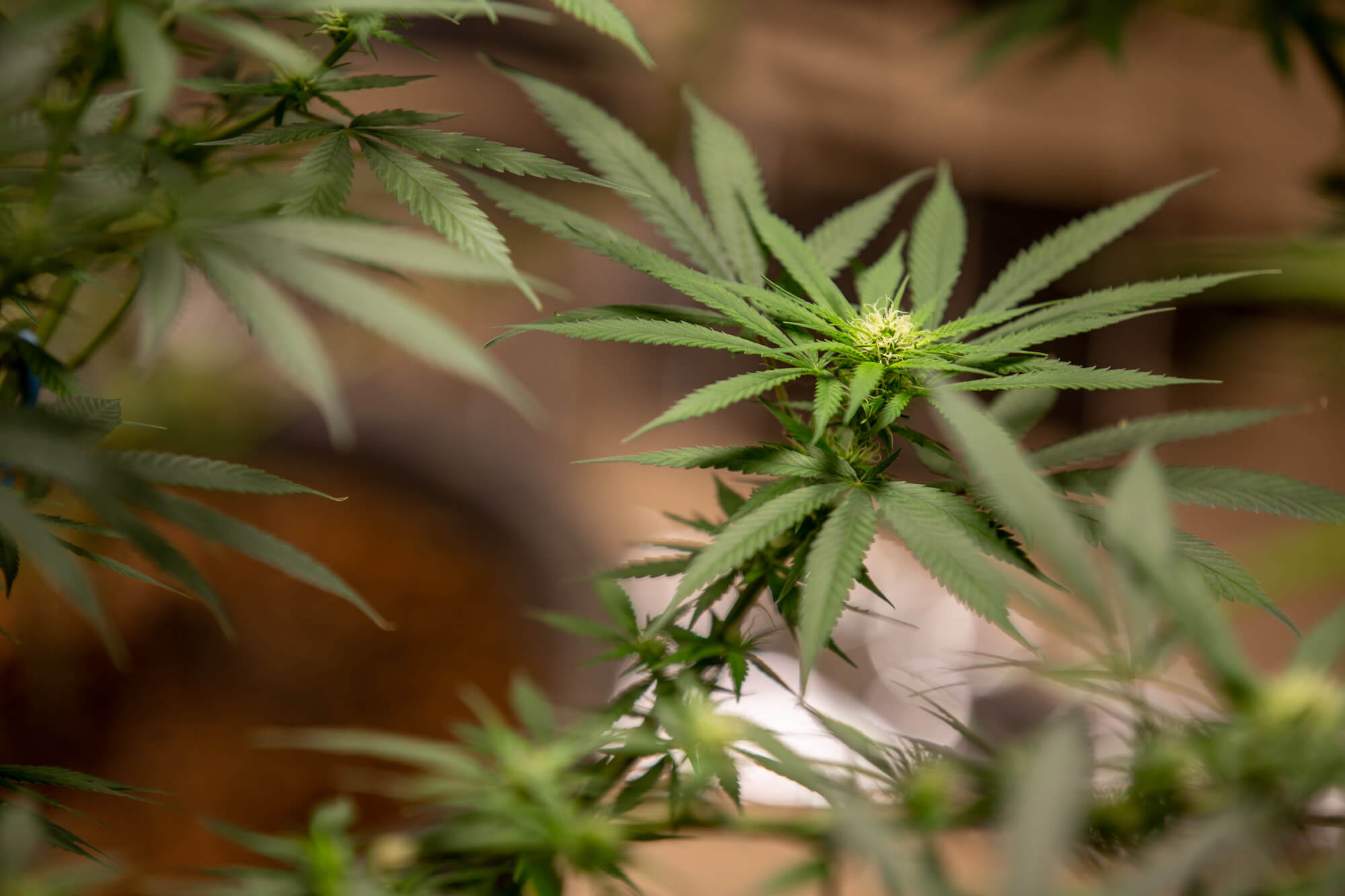
Photoperiod cannabis plant showing early flowering with small buds during vegetative stage

Understanding Early Flowering in Photoperiod Plants

One of the most frequent messages I get is:

“My photoperiod is flowering way too early — did you send me an auto?”

Short answer: No. Seed mix-ups are extremely rare (we hand-check and double-verify every order).

Long answer: Photoperiods flower from darkness — not from age — and many conditions can accidentally mimic a 12/12 cycle.

The Science: Photoperiod cannabis measures uninterrupted darkness using photoreceptor proteins (phytochromes). When the plant detects 12+ hours of continuous darkness, it triggers hormonal changes that shift from vegetative to flowering growth. If the plant thinks “days are shortening,” it will start flowering even if you’re running 18/6 or growing outdoors in summer.

Let’s break down the seven real causes, ranked by frequency.

The 7 Causes of Early Flowering (Ranked by Frequency)

1. Light Leaks (Most Common Indoor Cause)

Photoperiods measure hours of uninterrupted darkness. Even brief light exposure during the dark period disrupts the phytochrome system, signaling to the plant that days are still long (vegetative season). When this disruption stops or becomes inconsistent, the plant interprets it as autumn arriving.

Common hidden light sources:

  • LED indicator lights on power strips, fans, humidifiers
  • Door cracks or poorly sealed tent zippers
  • Street lights or room lights bleeding into tents
  • Entering the tent with your phone light
  • Moonlight-level leaks through vents

The test: If you can see your hand in a dark room after 5 minutes of darkness, there’s too much light.

Fix:

  • Cover all LEDs with electrical tape
  • Patch tent pinholes with duct tape
  • Never open the tent during dark hours
  • Seal vents or redirect airflow
  • Use light-proof ducting

Light leaks are the #1 cause of early flowering worldwide, based on years of troubleshooting with Australian growers.

2. Seasonal Light Changes (Most Common Outdoor Cause)

Outdoor plants respond directly to the sun’s photoperiod. In Australia:

  • Days shorten rapidly from late January onward
  • Even slight shortening (13.5 hours → 13 hours) triggers flowering in sensitive strains
  • Plants started too late may flower at only 20–40cm tall

Example: A plant started outdoors in February is guaranteed to flower early, no matter the strain. The plant detects shortening days and immediately shifts to reproduction mode.

Fix:

  • For full-size outdoor photoperiods → plant Sept–Oct (spring)
  • For late-season grows → expect earlier flowering + smaller plants
  • Consider light-dep techniques (covering plants to control photoperiod

3. Transplant Shock & Root Problems

Severe stress signals to the plant: “Conditions are bad — reproduce now before you die.”

This survival response can trigger premature flowering, especially in sexually mature plants (4+ weeks old).

Stress triggers:

  • Rough transplanting or damaged roots
  • Root-bound containers
  • Switching growing mediums abruptly (soil → coco → hydro)
  • Severe under/overwatering
  • Drastic pH swings (6.5 → 5.0 overnight)

The science: Stress hormones (ethylene, abscisic acid) can interact with flowering pathways, especially when combined with marginal light conditions.

Fix:

  • Transplant gently, keeping root ball intact
  • Avoid root damage
  • Maintain consistent watering schedule & pH (6.0–6.5 for soil)
  • Don’t transplant late into veg (wait until after stretch if needed)

4. Temperature Extremes

Photoperiod cannabis evolved in temperate climates with distinct seasons. Temperature cues help the plant determine what season it is.

Optimal range: 18–28°C

Triggers:

  • Night temps <15°C (signals autumn/winter)
  • Day temps >32°C (stress response)
  • Large day/night temperature swings (>15°C difference)

When temperatures fall outside this range, the plant may interpret it as seasonal change and begin flowering, especially if combined with other stress factors.

Fix:

  • Use heaters in cold climates (especially nights)
  • Provide shade/extraction in hot climates
  • Avoid extreme temperature swings
  • Monitor tent temps with min/max thermometer

5. Nutrient Stress

Severe nutrient deficiencies or toxicities can trigger early flowering:

  • Nitrogen deficiency in veg — plant thinks resources are scarce, shifts to reproduction
  • Excess phosphorus — high P/K ratios signal bloom phase
  • Nutrient lockout from incorrect pH — creates multiple deficiencies

Fix:

  • Maintain pH 6.0–6.5 (soil) or 5.5–6.0 (hydro)
  • Avoid bloom nutrients until ready to flower
  • Don’t overfeed phosphorus-heavy products during veg
  • Use balanced veg nutrients (higher N ratio)

6. Genetics & Strain Sensitivity

Some genetics are extremely light-sensitive and will flower with even minor photoperiod changes.

These strains flower early more often:

  • Afghani / Pakistani indicas (adapted to short growing seasons)
  • Early-finishing outdoor lines (bred for short summers)
  • “Fast versions” (photo × auto hybrids with some auto genetics)
  • Light-sensitive landrace varieties

Some strains begin flowering with 13–13.5 hours of light, not a strict 12/12. This is genetic variation, not a seed quality issue.

Fix:

  • For sensitive genetics: run 20/4 or 24/0 in veg (more buffer)
  • Outdoors: plant earlier (Sept–Oct) to give enough vegetative time
  • Research strain characteristics before growing

7. Plant Sexual Maturity (4–6 Weeks Old)

Once a plant reaches sexual maturity (typically 4–6 weeks from seed), it can flower if given the right environmental signals:

  • Slight stress
  • Slight reduction in light hours
  • Inconsistent light schedule
  • Temperature or nutrient stress

Important distinction:

Pre-flowers (normal):

  • Appear at nodes around week 4–6
  • Are single small flowers showing sex
  • Do NOT mean the plant is in bloom

True flowering (not normal in veg):

  • Budsites forming rapidly at branch tips
  • Pistil clusters growing
  • Stretch phase begins
  • Internode spacing increases

Many growers misread pre-flowers as “early flowering.” Pre-flowers are simply the plant showing its sex — it’s not in bloom yet.

How to Tell If You Actually Have Autoflowers

Autos and photoperiods behave very differently. Here’s how to know for certain:

Photoperiod traits:

  • Only flower with 12+ hours darkness (or severe stress)
  • Can stay in veg forever under 18–24 hours light
  • Can be cloned
  • Typically larger plants (1–2m+)
  • Respond to light schedule changes

Autoflower traits:

  • Flower automatically 3–4 weeks after sprouting
  • Cannot be kept in veg (age-based flowering)
  • Cannot be cloned successfully
  • Usually smaller (60–100cm)
  • Do not respond to light schedule changes

The definitive test: If a plant flowers exactly at 3–4 weeks, regardless of stress or light schedule → likely an auto.

If flowering begins later (6+ weeks) or after environmental triggers → it’s a photoperiod responding to conditions.

Real-World Example from a Sacred Seeds Collector:

“I had three photoperiod plants (Blue Dream, Northern Lights, and White Widow) all start flowering at week 7 under 18/6 light. I was convinced you’d sent me autos by mistake. Jason helped me check my tent — turned out my power strip had a tiny blue LED that was reflecting off my tent’s mylar lining during dark periods. Covered it with tape, and the plants reverted back to veg within 2 weeks. Lesson learned!”

— Marcus T., Melbourne

This is the most common scenario I see: a tiny, overlooked light source causing the issue.

How to Prevent Early Flowering (Checklist)

Indoors:

✓ Zero light leaks (do the hand test in complete darkness)

✓ High-quality digital timers (cheap mechanical timers can drift)

✓ Stable temps 18–28°C

✓ Consistent watering schedule

✓ Correct pH & veg nutrients (higher N ratio)

✓ Learn your strain’s light sensitivity

Outdoors:

✓ Plant in spring (Sept–Oct in Australia)

✓ Protect from temperature extremes

✓ Avoid strong night-time artificial lighting (street lights, porch lights)

✓ Use balanced veg nutrition

✓ Consider light-dep if growing in short-season climates

Sacred Seeds Quality Guarantee

If you ordered photoperiods (like Blue Dream Feminised), that is exactly what you received.

We hand-check and double-verify every order. Our seed testing protocols include:

  • Germination testing (95%+ guarantee)
  • Genetic verification from breeders
  • Batch tracking and quality control
  • Climate-controlled storage (6–8°C, 30–40% RH)

Early flowering comes from environment, timing, stress, or genetics — not seed type.

But if you’ve systematically ruled out every factor and believe there’s a genuine seed issue, reach out. We back every seed we sell.

Browse All Photoperiod Cannabis Seeds

Looking for robust strains with longer veg windows and stable genetics?

→ Explore our full photoperiod seed range

Frequently Asked Questions

Can photoperiod plants flower under 18/6?

Yes — if the dark period is interrupted by light leaks or if the plant is severely stressed. Photoperiods measure darkness, not light. Inconsistent darkness is the most common trigger.

How do I tell if I got autos instead of photos?

Autos flower automatically at 3–4 weeks regardless of light schedule. Photoperiods only flower due to darkness (12+ hours) or severe stress. If flowering happens at week 6+ after environmental changes, it’s a photoperiod.

Do pre-flowers mean flowering has begun?

No. Pre-flowers simply show sexual maturity (male or female). True flowering means rapid bud formation at branch tips, pistil clusters, and stretch phase.

Can stress trigger early flowering?

Absolutely. Root damage, transplant shock, pH issues, temperature swings, and severe nutrient deficiencies can all trigger early flowering in sexually mature plants.

Will early-flowering photoperiods finish faster?

No. A plant that flowers early just becomes smaller — flowering time stays the same (8–10 weeks for most strains). You get less yield, not faster harvest.

Can I re-veg a photoperiod that flowered early?

Yes. Move it back to 18–20 hours light. It will revert to vegetative growth over 2–4 weeks, but growth slows significantly during this transition. It’s usually better to start fresh.

Do LED indicator lights really cause early flowering?

Yes. Even tiny LEDs (power strips, fans, humidifiers) can disrupt the dark period if they’re visible inside the tent. Cover all LEDs with electrical tape during lights-off.

How much light leak triggers flowering?

Very little. If you can see anything at all during the dark period after your eyes adjust (5 minutes), it’s enough to disrupt flowering hormones. The threshold is surprisingly low.