Spring has a way of making growers impatient. The mornings warm up, everything outside starts throwing fresh growth, and suddenly every seed in the drawer feels like it should have been started yesterday.
I understand the urge. After winter, it is hard not to get carried away. But the growers who make the most of spring are rarely the ones who move first. They are the ones who read their local conditions, prepare properly and give young plants a clean start without fussing them to death.
These are my ten practical tips for growing cannabis in spring in Australia. They come from years of watching plants deal with bright days, cold nights, coastal humidity, sudden wind and the occasional week when the weather appears to have lost the plot.
1. Read your region, not just the calendar

Australia does not have one spring. September in Hobart, October in the Northern Rivers and the build-up season around Darwin are completely different horticultural events.
In much of southern Australia, October to November is a common outdoor starting window. That is a guide, not an appointment. Look at overnight temperatures, frost risk, rainfall, wind and day length. A warm afternoon is not proof that winter has packed its bags.
Our Australian outdoor growing season guide breaks the country into practical climate zones and is the best companion to this article.
Spring 2026 weather note
The Bureau’s Spring 2026 outlook, issued 3 September, indicates warmer-than-average daytime temperatures across most of Australia south of the tropics. Rainfall is more mixed, with parts of the south and east leaning drier and much of western Australia leaning wetter. That is a useful warning against copying somebody else’s watering routine. Check the latest Bureau outlook for your region.
2. Choose genetics for the season you actually have
A wonderful strain with the wrong finish time is still the wrong strain. Before choosing, work backwards from the weather that normally arrives near the end of your outdoor season.
Long-flowering sativas can be magnificent in warm, dry autumn conditions. In a wet coastal area, the same late finish can turn April into a daily mould inspection. Compact, dense indicas finish sooner but need excellent airflow. Autoflowers can fit a shorter window, although their fixed life cycle leaves less room for early mistakes.
Start with our guide to cannabis strains for Australian climates and the autoflower versus photoperiod guide. Pick for climate and timing first. The fancy name can come second.
3. Do not rush photoperiod plants outside
This catches experienced growers as well as beginners. A mature photoperiod plant moved outdoors while the days are still short can interpret the light cycle as a signal to flower. As spring days lengthen, it may return to vegetative growth.
That flowering and re-vegetating detour can create twisted leaves, awkward branching and weeks of lost momentum. If you started indoors under long light hours, compare that schedule with the natural day length before making the move.
If a plant is already behaving strangely, read why photoperiod plants flower early before assuming the genetics are faulty.
Jason’s rule
The first warm weekend is for checking pots, soil, irrigation and weatherproofing. It is not a starting pistol. I would rather begin a little late with settled conditions than spend a month nursing a plant through bad decisions made in one sunny afternoon.
4. Harden seedlings off slowly
Indoor light, still air and stable temperatures produce soft growth. Full Australian sun and spring wind are a different job entirely. Moving a seedling straight outside can scorch leaves and stall growth even when the temperature seems pleasant.
I normally allow seven to ten days, starting with a few hours in sheltered shade and gradually increasing the direct morning sun, breeze and time outdoors. Avoid making the first full day a hot, windy one.
Our cannabis transplanting guide covers the physical move without turning it into major surgery.
5. Prepare the final home before the roots need it
Spring growth accelerates quickly. A plant that looks comfortable in a small pot can become root-bound while you are still deciding what to do with it.
Have the next container or planting area ready early. Check drainage, water access and how the site behaves after heavy rain. If you are using containers, choose the final size with the plant type and available space in mind. Our container sizing guide explains the practical stages and transplant signals.
Do not compensate for poor drainage by adding more products. A fancy nutrient bottle cannot negotiate with a swamp.
6. Water the root zone, not the timetable
Spring is inconsistent. One week can be cool and damp, the next sunny and drying. Watering every Tuesday because it is Tuesday ignores the plant, the pot, the wind and the weather.
Check moisture below the surface and learn how the container feels when it is approaching dry. Young roots need oxygen as much as water. Constantly wet media encourages weak root development and creates conditions associated with damping off.
If seedlings are failing near the soil line, our guide to damping off and stem rot explains what to look for.
The spring overwatering trap
A bright day dries the top centimetre of soil, so the pot looks thirsty. Underneath, the root zone may still be wet and cool. Check deeper before reaching for the watering can. Wet roots do not care how convincing the surface looked.
7. Build strong light exposure without cooking young leaves
Spring sun is gentler than midsummer sun, but a seedling raised indoors can still burn. Increase exposure gradually and favour morning sun during the transition.
Also watch the site as the sun angle changes. A corner that receives excellent light in September may be shaded by a fence or tree later, while an exposed paved area can become brutally hot by December. Plan for the plant’s future size and the summer sun, not only the pleasant spot you are standing in today.
8. Solve airflow and weather protection early
Good airflow is not just an autumn concern. Spacing plants properly in spring builds stronger structure and avoids creating a humid thicket later.
Give each plant room, keep its immediate surroundings tidy and identify where rainwater collects. In exposed areas, a simple windbreak can protect young stems without blocking all air movement. In humid regions, avoid designs that trap moisture around dense foliage.
I learned this lesson repeatedly in the Northern Rivers. Growth can be extraordinary, then wet autumn weather sends the bill. The best time to plan for that finish is while the plants are still small.
9. Start pest checks before you see damage
Spring brings fresh growth and the creatures that enjoy eating it. Check the undersides of leaves, new tips and the junctions where branches meet the stem. A quick inspection twice a week is easier than discovering a settled colony after the leaves begin curling.
The point is observation, not panic spraying. Identify the problem before treating it, protect beneficial insects and use the least disruptive response that works. Our organic cannabis pest-control guide covers common offenders and non-toxic management options.
10. Keep notes and leave yourself room to adjust
A simple notebook beats a heroic memory. Record germination dates, transplants, weather swings, watering, feeding and anything unusual. Take one photograph from the same angle each week.
Those notes turn vague impressions into useful experience. They also stop you making five changes at once and then crediting the wrong one when the plant improves. Spring rewards attention, but it punishes hovering. Make one sensible change, watch what happens and let the plant do some of the work.
For young plants, our complete cannabis seedling-care guide covers the mistakes most likely to derail the first few weeks.
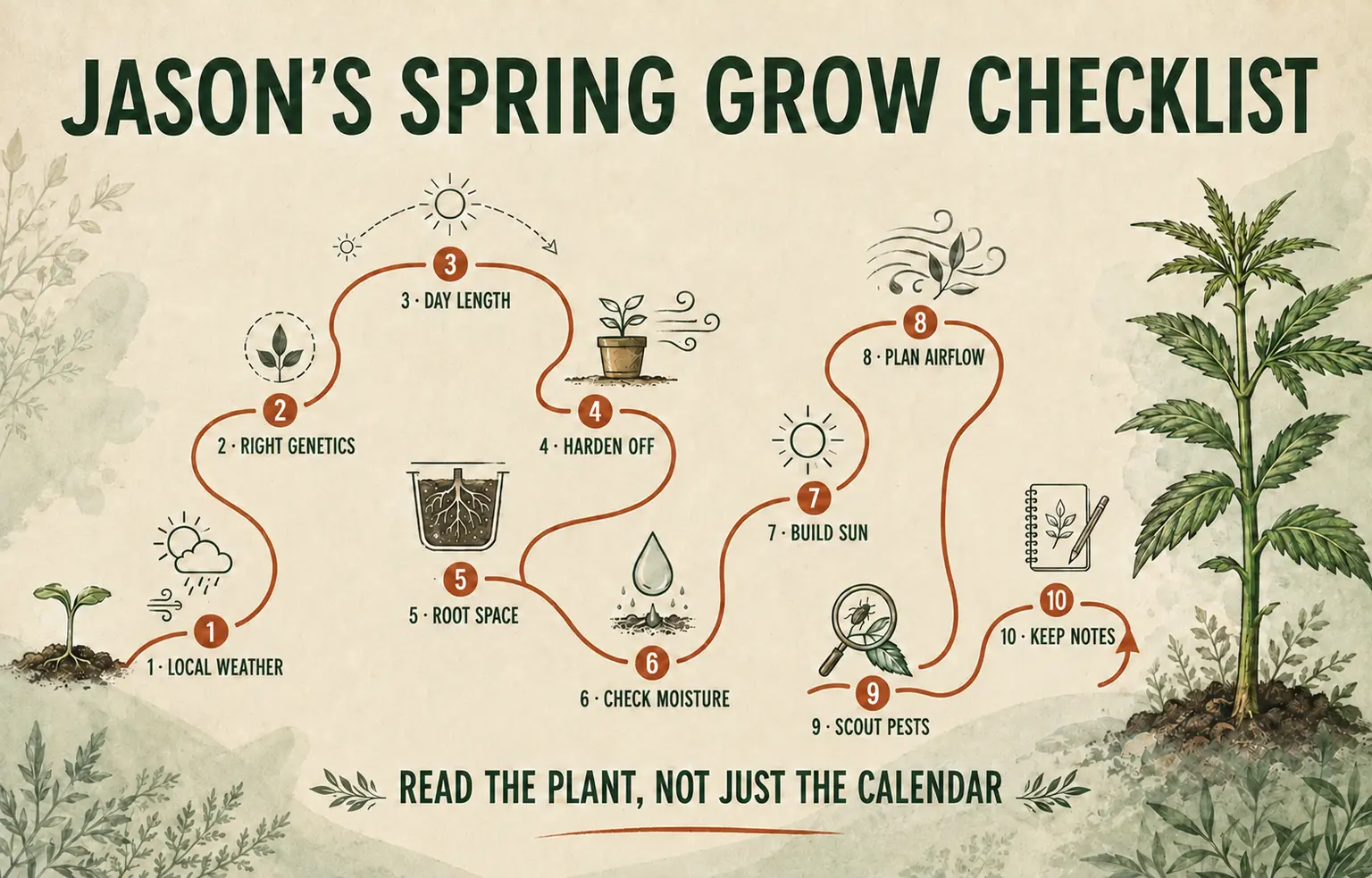
Jason’s quick spring checklist
| Check | What you want to know | Common mistake |
|---|---|---|
| Local weather | Night temperatures, frost, wind and rainfall | Following a national calendar |
| Day length | Whether outdoor light matches the plant’s stage | Moving mature photoperiods out too early |
| Root zone | Drainage, moisture and room to expand | Watering by schedule |
| Exposure | A gradual path from shade to full sun | One sudden day outdoors |
| Final site | Summer light, airflow and water access | Choosing only for today’s conditions |
| Pests | What is present and where | Spraying before identifying |
Ready to choose your spring genetics?
Browse our cannabis seeds available in Australia, then choose according to your climate, available season and preferred growing format. Good genetics help, but good timing is what lets them show it.
Spring cannabis growing FAQ
When should I start cannabis seeds in spring in Australia?
There is no single date for the whole country. In much of southern Australia, October to November is a common outdoor starting window, but local night temperatures, day length and frost risk matter more than the month. Tropical and subtropical regions follow different seasonal patterns.
Can starting photoperiod cannabis too early cause flowering?
Yes. A mature photoperiod plant placed outdoors while spring days are still short may begin flowering, then return to vegetative growth as the days lengthen. That stop-start growth can cost time and create awkward branching.
How do I harden cannabis seedlings before moving them outdoors?
Introduce seedlings to outdoor conditions gradually over seven to ten days. Begin with sheltered shade, then increase their exposure to direct sun and breeze a little each day while protecting them from severe wind, cold nights and sudden heat.
Should cannabis plants be watered more often in spring?
Not automatically. Water according to root-zone moisture, container size, wind and temperature. Spring weather can change quickly, so a fixed watering schedule often causes more trouble than it prevents.
Are autoflowers or photoperiod plants better for spring?
Both can work, but they reward different planning. Photoperiod plants offer more time to recover and grow before flowering. Autoflowers finish faster but have a fixed life cycle, so poor weather or early stress can take a larger share of the total grow.
Australian laws concerning cannabis seeds and cultivation vary by jurisdiction and can change. Sacred Seeds Australia supplies seeds for lawful purposes only. Check the rules that apply where you live.