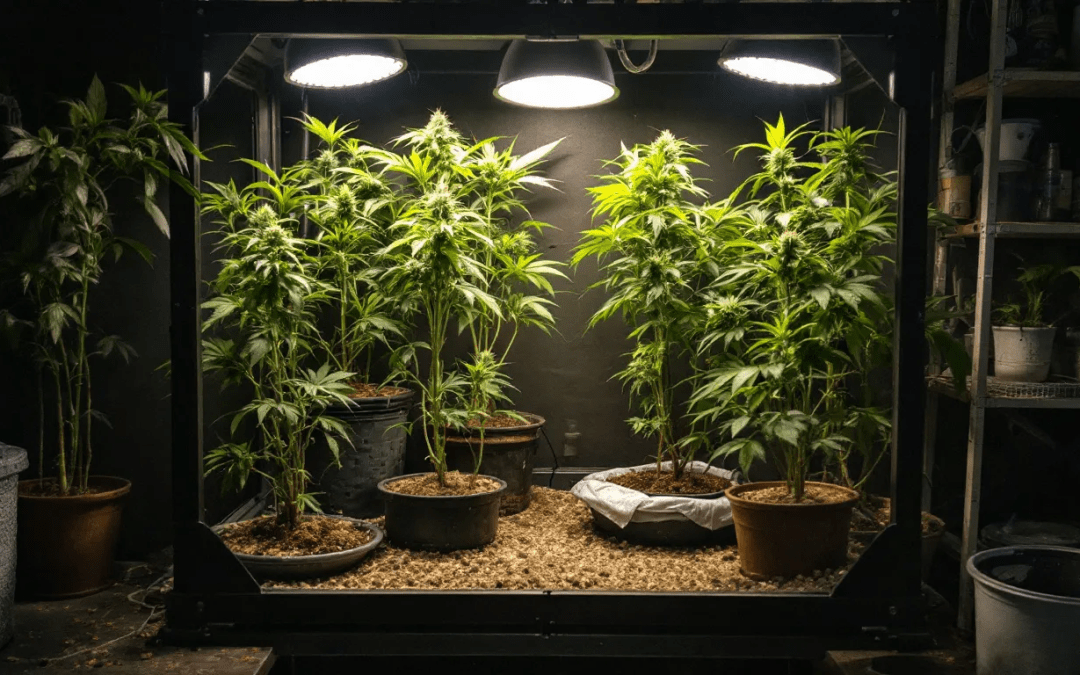
Cannabis Seed Myths Debunked: Separating Fact from Fiction
Key Takeaways
- Cannabis seed viability isn’t determined by appearance or floating tests alone
- Genetics play a more significant role in plant outcomes than growing techniques
- Feminized seeds are not inherently weaker or less stable than regular seeds
- Proper storage can maintain seed viability for 5+ years under optimal conditions
- Seeds from the same strain can produce plants with varying characteristics
In the rapidly evolving cannabis cultivation landscape, misinformation about cannabis seeds spreads as quickly as the plants themselves. Whether you’re a commercial grower, home cultivator, or simply curious about cannabis horticulture, understanding the truth behind common seed myths is essential for making informed decisions. This article separates scientific facts from persistent fiction surrounding cannabis seeds, genetics, and industry marketing claims.
Myth #1: You Can Judge Seed Quality by Appearance Alone

Many cultivators believe they can determine a seed’s viability and genetic quality simply by examining its appearance. This myth suggests that dark, tiger-striped seeds are superior, while pale or greenish seeds are immature and worthless.
The Reality: While appearance can provide some basic information, it’s far from definitive. Research from agricultural universities shows that:
- Seed coloration varies naturally between strains and phenotypes
- Some perfectly viable seeds may appear lighter or lack tiger striping
- Properly matured seeds come in various colors from light tan to nearly black
- Immature seeds tend to be soft and easily crushed, regardless of color
The definitive test of a seed’s quality is whether it germinates successfully and produces a healthy plant—not how it looks. Internal genetic quality simply cannot be determined through visual inspection.
Myth #2: The Float Test Accurately Determines Seed Viability

A common practice among growers is placing seeds in water and discarding those that float, based on the belief that floating seeds are non-viable.
The Reality: While the float test can provide some indication of seed density, it’s not a reliable method for determining viability. Research demonstrates that:
- Some viable seeds may float due to their natural composition
- Some non-viable seeds may sink due to water absorption
- Various cannabis strains naturally produce seeds with different densities
- Environmental factors during seed formation affect density
More reliable germination testing methods include proper germination in quality growing medium or using standardized paper towel germination procedures under controlled temperature and humidity conditions.
Myth #3: Growing Techniques Matter More Than Genetics
A persistent myth suggests that with the right growing techniques, nutrients, and equipment, any cannabis seed can produce exceptional results.
The Reality: While cultivation practices are undeniably important, they can’t fundamentally transform genetic potential. Scientific breeding studies confirm that:
- Genetic factors determine 70-80% of a plant’s potential characteristics
- Environmental factors and growing techniques can only optimize what’s genetically possible
- No amount of cultivation skill can make genetically average seeds produce elite results
- Genetic ceiling is real—plants can only express traits contained in their DNA
This explains why experienced growers prioritize genetic selection first, then optimize growing conditions to fully express that genetic potential.
Myth #4: Feminized Seeds Are Genetically Weaker Than Regular Seeds
Some traditional growers maintain that feminized seeds produce weaker plants more prone to hermaphroditism and genetic issues compared to regular (non-feminized) seeds.
The Reality: Modern feminization techniques have evolved significantly. Contemporary research indicates:
- Properly produced feminized seeds from reputable breeders show no inherent genetic weaknesses
- Modern feminization uses controlled stress techniques or silver thiosulfate rather than harmful chemicals
- Hermaphroditic tendencies are primarily genetic traits passed down from parent plants, not a result of feminization itself
- Today’s feminized seeds undergo multiple testing generations to ensure stability
Stress-induced hermaphroditism can occur in both feminized and regular seed plants when exposed to environmental stressors like light leaks, temperature extremes, or physical damage.
Myth #5: Cannabis Seeds Expire Quickly
Many cultivators believe cannabis seeds remain viable for only a year or two after production.
The Reality: With proper storage, cannabis seeds can remain viable for much longer periods:
- Under optimal conditions (cool, dark, dry, and stable), seeds can remain viable for 5+ years
- Germination rates gradually decline over time rather than suddenly dropping to zero
- Proper refrigeration in airtight containers with desiccants can extend viability to 10+ years
- Different genetic strains have varying natural seed longevity
The key factors affecting seed longevity are temperature stability, humidity control, light exposure, and physical protection from damage.
Myth #6: F1 Hybrids Always Produce Consistent Plants

Many growers believe that F1 hybrid seeds (first-generation crosses between two stable parent lines) always produce identical plants with uniform characteristics.
The Reality: While F1 hybrids do offer greater consistency than later generations, perfect uniformity is a misconception:
- Natural genetic variation exists even among F1 siblings
- Environmental factors influence phenotypic expression
- Different phenotypes can emerge from the same seed batch
- True uniformity requires vegetative cloning, not seed propagation
F1 hybrids do typically show more consistency than F2 or later generations, but some variation should still be expected.
Myth #7: Autoflowering Strains Always Produce Lower Quality Cannabis

A persistent myth suggests that autoflowering varieties inherently produce lower quality cannabis with reduced potency compared to photoperiod strains.
The Reality: Modern autoflowering genetics have evolved dramatically:
- Early autoflower generations (2008-2012) did produce lower cannabinoid levels
- Modern autoflowering strains (post-2015) can produce THC levels comparable to photoperiod varieties
- Breeding programs have successfully maintained terpene profiles in autoflowering versions
- Yield differences have narrowed significantly through selective breeding
Today’s premium autoflowering genetics represent sophisticated breeding combining Cannabis ruderalis with high-quality photoperiod genetics over multiple generations of selective breeding.
Myth #8: All Seeds from the Same Strain Are Genetically Identical
Many novice growers assume all seeds labeled with the same strain name will produce identical plants.
The Reality: Cannabis strain names represent broad categories rather than genetically identical populations:
- Seeds from the same strain batch contain genetic variation
- Different seed banks may sell dramatically different genetic versions of identically named strains
- Without protected genetic patents, strain names are used inconsistently across the industry
- Even stabilized strains exhibit natural variation between individual seeds
This explains why experiences with the “same strain” can vary significantly between growers or seed banks.
Conclusion
The cannabis seed market thrives partly due to persistent myths that confuse beginners and sometimes even experienced growers. By understanding the scientific reality behind these misconceptions, cultivators can make better-informed decisions, set realistic expectations, and achieve more successful outcomes.
As cannabis cultivation continues to professionalize and expand, evidence-based practices will increasingly replace folklore and marketing claims. The future of cannabis cultivation lies not in chasing myths but in understanding the genuine interaction between genetics, environment, and growing practices.
Glossary of Cannabis Seed Terminology
Allele: Alternative forms of a gene that influence how genetic traits are expressed in a plant.
Backcrossing: The process of crossing a hybrid with one of its parent plants to reinforce specific genetic traits.
Breeder’s Pack: Original seeds directly from the breeder, typically containing a larger number of seeds than retail packs.
Dioecious: Plants (like cannabis) that typically produce separate male and female plants.
F1 Hybrid: First-generation cross between two different pure breeding lines.
F2 Generation: The second generation produced by breeding two F1 plants together.
Feminized Seeds: Seeds genetically engineered to produce only female plants.
Genotype: The complete genetic makeup of a cannabis plant.
Hermaphrodite: A plant that develops both male and female reproductive organs.
Heterozygous: Containing different alleles of a particular gene or genes.
Homozygous: Containing identical alleles of a particular gene or genes, leading to consistent trait expression.
IBL (Inbred Line): A strain that has been inbred to produce consistent offspring.
Landrace: Naturally occurring, indigenous cannabis variety that has adapted to its local environment.
Phenotype: The observable characteristics of a cannabis plant resulting from the interaction of its genotype with the environment.
Phenohunting: The process of growing multiple plants from the same seed stock to identify individuals with superior traits.
Regular Seeds: Non-feminized seeds that produce approximately equal numbers of male and female plants.
Stabilized Genetics: Cannabis strains that have been bred over multiple generations to produce consistent traits.
Frequently Asked Questions
How can I tell if cannabis seeds are viable without germinating them?
While no method is 100% accurate without actual germination, viable seeds typically have a hard outer shell, are dark in color (though color varies by strain), and feel firm when gently squeezed. The float test provides limited information but isn’t definitive. The only absolutely reliable viability test is attempting germination under optimal conditions.
Do old cannabis seeds produce weaker plants?
No, older seeds that successfully germinate do not inherently produce weaker plants. While germination rates decline with age, seeds that do germinate typically develop normally. The plant’s strength and quality are determined by genetics and growing conditions, not seed age. However, very old seeds may have slower initial growth during the seedling stage.
Are white or light-colored cannabis seeds always immature?
Not necessarily. While seed color can indicate maturity in some strains, certain cannabis varieties naturally produce lighter-colored seeds even when fully mature. Premature seeds are typically small, fragile, and easily crushed between fingers, regardless of color. Viable light-colored seeds will still have a complete, hard seed coat and proper development.
Why do seeds from the same strain produce different plants?
Cannabis strains are not genetically identical clones but rather populations sharing similar characteristics. Natural genetic variation, different phenotypic expressions, and varying environmental conditions all contribute to differences between plants grown from the same strain’s seeds. True genetic uniformity can only be achieved through cloning, not seed propagation.
Do feminized seeds have a higher chance of becoming hermaphrodites?
Modern, properly produced feminized seeds from reputable breeders do not have inherently higher hermaphroditic tendencies than regular seeds. Hermaphroditism is primarily determined by the genetic stability of the parent plants and environmental stress factors. Low-quality feminized seeds produced using harsh chemical methods may show higher hermaphroditic tendencies, which is why source matters significantly.
Can you tell a strain’s effects from looking at the seeds?
No, it’s impossible to determine a strain’s effects, potency, or chemical profile by examining the seeds. These characteristics are determined by genetics and growing conditions, which cannot be visually assessed from seed appearance. The only way to determine a strain’s effects is to grow it to maturity, properly cure the harvest, and either consume it or have it laboratory tested.
References and Further Reading
- Small, E., & Cronquist, A. (2022). A practical and natural taxonomy for Cannabis. Taxon, 71(2), 207-249. https://doi.org/10.1002/tax.12594
- Salentijn, E. M., Zhang, Q., Amaducci, S., Yang, M., & Trindade, L. M. (2019). New developments in fiber hemp (Cannabis sativa L.) breeding. Industrial Crops and Products, 68, 32-41. https://doi.org/10.1016/j.indcrop.2014.08.011
- Russo, E. B. (2019). The Case for the Entourage Effect and Conventional Breeding of Clinical Cannabis: No “Strain,” No Gain. Frontiers in Plant Science, 9, 1969. https://doi.org/10.3389/fpls.2018.01969
- Olaizola, M. A., Campbell, B. J., Lowe, S. J., & Darling, J. A. (2021). Cannabis Genetics and Genomics: A Call to Action. Plants, 10(9), 1764. https://doi.org/10.3390/plants10091764
- Journal of Cannabis Research. (2021). Special Issue: Cannabis Breeding and Genetics. Journal of Cannabis Research, 3. https://jcannabisresearch.biomedcentral.com/articles/collections/cannabis-breeding-and-genetics
- Clarke, R. C., & Merlin, M. D. (2016). Cannabis: Evolution and Ethnobotany. University of California Press. https://www.ucpress.edu/book/9780520292482/cannabis
- Greene, M. (2020). Testing stability in cannabis indica L. and cannabis ruderalis feminized seeds. Industrial Crops and Products, 154, 112709. https://doi.org/10.1016/j.indcrop.2020.112709
- Davidson, C. G., & Potter, D. J. (2022). The Association between Storage Conditions and Germination Rate in Cannabis sativa L. Seeds. Plants, 11(2), 147. https://doi.org/10.3390/plants11020147