


Bruce Banner Feminised Seeds
From $75.00
We are delighted to offer you Bruce Banner Auto feminized seeds: This is a cult-classic powerhouse strain, delivering exceptional potency (25%+ THC) and solid yields in 8-9 weeks from seed. Easy to grow with reliable auto genetics that handles the Aussie climate beautifully.
Click here for Bruce Banner photoperiod Fast Version and standard photoperiod feminised.
Larger orders often include complimentary seeds, depending on availability.

Germination Guarantee
All batches are double-tested for quality and viability using the paper towel method.

Rapid, local Ozzy delivery
All shipments are tracked- choose express post or regular. Discreet & secure.
Bruce Banner Feminised Seeds
From $75.00
We are delighted to offer you Bruce Banner Auto feminized seeds: This is a cult-classic powerhouse strain, delivering exceptional potency (25%+ THC) and solid yields in 8-9 weeks from seed. Easy to grow with reliable auto genetics that handles the Aussie climate beautifully.
Click here for Bruce Banner photoperiod Fast Version and standard photoperiod feminised.
Larger orders often include complimentary seeds, depending on availability.
Germination Guarantee
All batches are double-tested for quality and viability using the paper towel method.
Rapid, local Ozzy delivery!
All shipments are tracked- choose express post or regular. Discreet & secure.
💥 Bruce Banner Feminized Cannabis Seeds — Key Info
| 🏷️ Original Breeder | Dark Horse Genetics |
| 🧬 Genetics | OG Kush × Strawberry Diesel |
| 🌱 Type | Feminized Photoperiod Sativa-leaning Balanced Hybrid — 60% sativa / 40% indica |
| 🔥 THC / 💧 CBD | THC ~24–29% • CBD <1% |
| ⏱ Flowering Time | ~9–10 weeks (indoor) |
| 🌾 Yield (Guide) | Indoor: 550–650 g/m² • Outdoor: 700–900 g/plant |
| 📏 Height | Tall, vigorous structure with explosive stretch and strong branching |
| 🍓 Flavour & Aroma | Sweet strawberry, diesel fuel, citrus zest, earthy pine |
| 🧪 Terpene Profile | Myrcene • Limonene • Caryophyllene • Pinene |
| 🌤 Outdoor Harvest (AU) | North: late Mar • Mid: early Apr • South: mid Apr |
| 🧪 Handling | Batch-tested at ~22 °C (paper towel method). Stored cold/dry prior to dispatch. Learn how we test seeds here. |
| ⚠️ Legal Notice | Sold strictly as souvenirs/collectibles in accordance with local laws. |
💥 Bruce Banner Feminised Seeds — The Original High-Potency Legend from Dark Horse Genetics
Bruce Banner feminised seeds represent one of the most potent and celebrated cannabis strains of the modern era. Bred by Colorado's Dark Horse Genetics in the early 2010s, this powerhouse combination of OG Kush and Strawberry Diesel quickly earned legendary status—not through marketing hype, but through consistent, measurable performance. With THC levels regularly testing between 24-29% (and some phenotypes exceeding 30%), Bruce Banner redefined expectations for photoperiod potency.
Why Bruce Banner is a cornerstone strain in Australia: This classic photoperiod suits experienced growers who want maximum control over plant size, flowering duration, and final yield. The extended 9-10 week flowering period allows cannabinoid and terpene profiles to fully develop, producing deeply complex effects and flavours that shorter-flowering versions can't quite match. Queensland and Northern NSW growers with long, warm autumns get exceptional outdoor results. Indoor cultivators appreciate the predictable structure and training responsiveness.
The breeding story: Named after Marvel's Hulk alter ego, Bruce Banner earned its title through raw, unrestrained power. Dark Horse Genetics created this strain by crossing two elite parents:
- OG Kush: Legendary West Coast genetics providing diesel fuel aroma, heavy resin production, and deeply relaxing body effects
- Strawberry Diesel: NYC Diesel offspring contributing sweet berry flavours, cerebral clarity, and energizing sativa characteristics
The resulting hybrid captured the best of both lineages: OG Kush's sedative body effects and gas-forward terpenes combined with Strawberry Diesel's mental clarity and fruity sweetness. Bruce Banner quickly topped U.S. High Times Cannabis Cup rankings and became one of the most sought-after genetics in legal markets. Some laboratory tests recorded THC levels above 29%—exceptional numbers even by today's standards, but groundbreaking in the early 2010s.
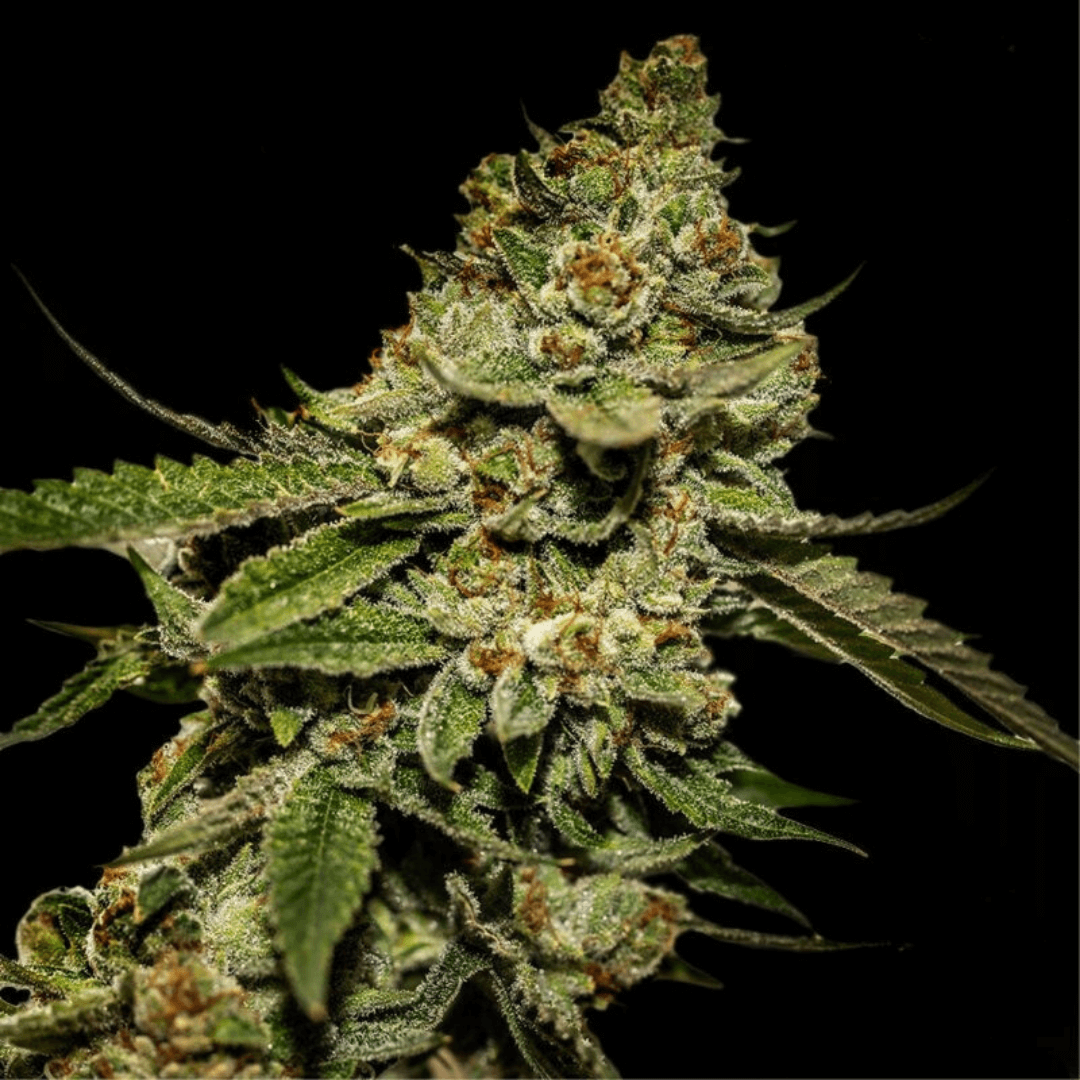
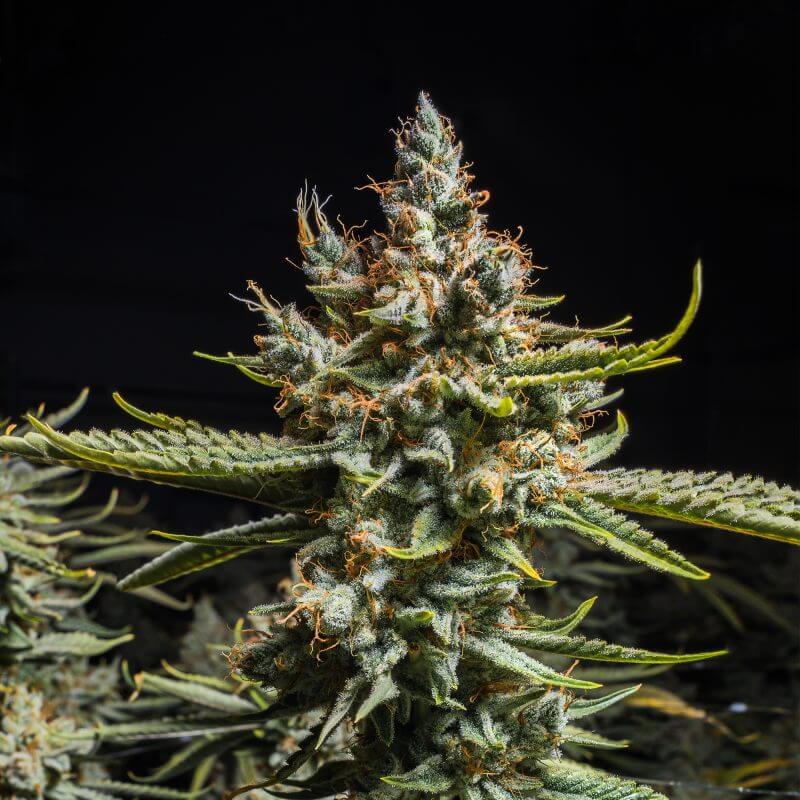
What you get: Rock-solid colas with exceptional density and trichome coverage. The buds display vivid lime-green colouration with fiery orange pistils and a coating of resinous crystals that justify the "Hulk" comparison. The aroma is unmistakable: sweet strawberry candy layered over diesel fuel, with undertones of citrus zest and earthy pine.
Yield potential: 550-650g/m² indoors under proper lighting and training, 700-900g per plant outdoors when given adequate veg time and space. These are substantial yields backed by proven genetics—not marketing claims. The longer flowering period (compared to fast versions or autos) allows buds to fully pack on weight and resin in the final weeks.
Effects profile: Immediate cerebral euphoria with laser-sharp focus and creative energy, followed by progressive physical relaxation that builds without overwhelming sedation. The 60% sativa / 40% indica balance creates versatile effects—functional enough for daytime creativity, powerful enough for evening stress relief. Often described as "mood armour" for its ability to deflect negativity while maintaining productivity.
🔀 Comparing Bruce Banner Versions
Not sure which Bruce Banner is right for your setup?
- Standard Feminised (this page): 9-10 week flower, photoperiod, maximum yield potential, traditional timeline
- Fast Version Feminised: 6-7 week flower, photoperiod, faster harvest, needs 12/12 light flip
- Auto Feminised: 10-11 weeks seed-to-harvest, any light cycle, easiest option, moderate yields
→ Want the classic Bruce Banner experience with maximum control? You're in the right place. Need faster turnaround? Try the Fast Version. Want simple setup? Go Auto.
❤️ What Makes Bruce Banner Feminised Worth Growing
The potency is exceptional and proven. Bruce Banner consistently tests 24-29% THC across multiple grows and laboratories. This isn't theoretical—it's measurable, repeatable performance. Some phenotypes have tested above 30%, though 25-27% is more typical. That level of potency wasn't common when this strain was released, and it remains competitive with modern genetics a decade later.
The longer flowering period produces superior quality. While fast-flowering versions finish in 6-7 weeks, the standard 9-10 week photoperiod allows trichome development to reach full maturity. Cannabinoid profiles become more complex, terpene expression deepens, and resin production maximizes. The difference is noticeable in both laboratory tests and subjective experience—the extra 2-3 weeks matter for quality.
You get full control over plant size and yield. With photoperiod genetics, you decide when to flip to flowering. Want small plants? Veg for 3-4 weeks. Want monsters? Veg for 8-12 weeks. This control allows experienced growers to maximize their specific setup—whether that's a 60cm × 60cm tent or a full outdoor garden with unlimited space.
The structure is ideal for training. Bruce Banner develops strong lateral branching with thick, woody stems that handle topping, supercropping, SCROG, and LST without complaint. The vigorous growth responds well to manipulation, and recovery time is fast. You can shape these plants into whatever form your space requires.
Yields are substantial with proper technique. Indoor growers regularly achieve 550-650g/m² under 600W+ lighting with training. Outdoor plants can produce 700-900g each when given extended veg time (8-12 weeks) and adequate root space (100L+ containers or in-ground). These are photoperiod-caliber yields backed by proven genetics and grower reports.
The effects profile is uniquely balanced. Most high-THC strains lean heavily indica (sedating) or sativa (racy). Bruce Banner delivers both without overwhelming either direction. You get clear-headed euphoria and creative energy that remains functional, followed by physical relaxation that soothes without couch-lock. That versatility across different times of day and activities is rare at this potency level.
It's become a breeding foundation. Bruce Banner's proven genetics have spawned countless crosses and variations (including the Fast Version and Auto). When a strain becomes a parent for other elite genetics, it validates the stability and desirability of the original line. You're growing from proven, time-tested stock.
🌿 Bruce Banner Feminised Effects & Experience
Onset (5-15 minutes): The cerebral effects hit quickly and distinctly. Mental fog clears immediately—thoughts sharpen, creativity sparks, mood lifts substantially. There's an unmistakable euphoric rush without anxiety or paranoia. Energy increases noticeably but stays directed rather than scattered. The sativa-dominant genetics express first with brightness and mental engagement.
Peak (15-45 minutes): This is the "instant mood armour" phase. Stress, negativity, and mental loops interrupt completely. Focus sharpens to laser precision—good for complex tasks, creative work, or engaging conversations. Motivation increases without jitteriness. Social anxiety dissolves. You're present, capable, and optimistic. The mental clarity at this stage is exceptional even among high-THC strains.
Transition (45-90 minutes): Physical effects begin building gradually. The indica genetics start expressing through muscle relaxation and body comfort. Mental clarity remains largely intact, but physical tension releases noticeably. This balance—sharp mind, relaxed body—is where Bruce Banner excels. You're still functional and engaged, just more physically comfortable.
Mid-phase (90-150 minutes): Body relaxation deepens substantially. Physical comfort becomes prominent, though not completely sedating. Motivation to engage in physically demanding tasks decreases, but you're not paralyzed. Creative and mental tasks remain accessible. Appetite typically increases during this phase. The effects are substantial enough to be felt clearly but balanced enough to maintain some functionality.
Late-phase (150+ minutes): Gentle wind-down. Physical relaxation is the dominant sensation. Mental engagement gradually decreases. The couch becomes appealing, though you could move if necessary. Good for passive activities—watching content, listening to music, light reading. The effects taper gradually rather than dropping off sharply.
Duration: 2.5-4 hours total depending on tolerance and consumption method. Experienced users may feel effects for 2-3 hours. Newer users or higher doses can extend to 4+ hours. The comedown is smooth with no harsh crash or irritability.
Potency warning: 24-29% THC is serious. Even experienced cannabis users should approach conservatively—one or two hits to assess response before consuming more. Newer users should treat this with significant respect. A full joint will overwhelm most people. Start small.
Flavour profile: Sweet strawberry candy and citrus on the inhale (Strawberry Diesel parent), diesel fuel and earthy pine on the exhale (OG Kush influence). The terpene combination (myrcene, limonene, caryophyllene, pinene) creates exceptionally smooth, complex smoke. The flavour deepens noticeably with proper 7-14 day flush and 2-4 week cure—patience pays off dramatically with this strain.
Common uses (anecdotal): Creative work and artistic projects, complex problem-solving and focus-heavy tasks, social situations and conversation, stress and anxiety relief without sedation, mood enhancement and depression support, moderate pain relief, daytime productivity with physical comfort. The functional euphoria makes it versatile across contexts.
Best consumption timing: Versatile. Morning/daytime use emphasizes the uplifting, creative effects (use smaller doses). Afternoon/evening use balances mental clarity with physical relaxation (moderate doses). Not ideal for sleep aid—the cerebral effects can keep some users mentally engaged even as the body relaxes.
Tolerance consideration: High-potency strains can build tolerance quickly with daily use. Consider taking tolerance breaks or rotating strains to maintain effectiveness.
🌱 Growing Bruce Banner Feminised Seeds — Complete Guide
Experience level required: Intermediate to advanced. While Bruce Banner is resilient and forgiving with feeding, the significant stretch in early flower requires active height management. The strong aroma demands odour control. New growers can succeed with proper research and preparation, but this isn't the easiest first photoperiod.
Best growing environments: Performs excellently both indoors and outdoors. Indoor growers value the training responsiveness and high yields per square meter. Outdoor growers in warm climates (Queensland, Northern NSW, WA) achieve massive plants with extended veg times. The longer flowering period (9-10 weeks) requires consideration of autumn weather in southern states.
Flowering time: 9-10 weeks from start of 12/12 light cycle. Some phenotypes finish closer to 9 weeks, others push to 10.5 weeks. Watch trichome development rather than calendar dates—harvest when trichomes are 70-80% cloudy with 20-30% amber for balanced effects.
Total grow time: Depends entirely on veg period. Typical timelines:
- Quick indoor cycle: 3-4 weeks veg + 9-10 weeks flower = 12-14 weeks total
- Standard indoor: 6-8 weeks veg + 9-10 weeks flower = 15-18 weeks total
- Extended outdoor: 10-14 weeks veg + 9-10 weeks flower = 19-24 weeks total
Height and stretch characteristics: Tall plants with explosive vertical growth. Expect 100-150% stretch in the first 3 weeks of flower—this is more aggressive than most strains. Indoor plants flipped at 40cm can finish at 100-120cm. Outdoor plants with extended veg easily reach 200-300cm. Height management is not optional—you must top, train, or control stretch actively.
Training strategies (detailed):
Topping: Essential for indoor growing. Top at 4th-6th node during veg to create 2-4 main colas and control height. Bruce Banner recovers from topping in 3-5 days with minimal growth slowdown. Consider topping twice for bushier structure—once at 4th node, then top the resulting branches at their 3rd-4th node.
LST (Low-Stress Training): Tie down branches during veg and early flower to create horizontal growth. Opens canopy for light penetration and controls height. Start LST around week 2-3 of veg and continue adjusting through flower week 2. Bruce Banner's flexible branches respond well without snapping.
SCROG (Screen of Green): Ideal technique for this strain. The vigorous lateral growth fills screen spaces efficiently. Use 10-15cm squares. Veg until screen is 60-70% full, then flip to flower. Weave branches through screen during stretch phase. Can significantly increase yield per square meter.
Supercropping: Advanced technique for emergency height control. Gently crush and bend stems to create 90-degree angles. Bruce Banner's thick stems handle supercropping well. Particularly useful if plants stretch more than expected in early flower. Creates stress that can increase resin production.
Defoliation: Moderate defoliation improves airflow and light penetration. Remove blocking fan leaves in early flower (week 1-2) and again at week 4-5. Don't strip heavily—remove 20-30% of foliage maximum. Bruce Banner's vigorous growth replaces leaves quickly.
Feeding strategy (detailed):
Bruce Banner is a heavy feeder that can handle higher nutrient concentrations than most strains. The extended flowering period requires sustained feeding through late flower.
Vegetative phase:
- Start at 1/2 recommended nutrient strength for first 2 weeks
- Increase to full strength by week 3-4
- Can push to 1.2-1.5x recommended strength if plants show light green colour
- EC range: 1.6-2.0 in hydro/coco systems
- Higher nitrogen (N) for vegetative growth—look for 3-1-2 or similar NPK ratios
- Supplement with CalMag in coco or RO water systems
Early flower (weeks 1-3):
- Transition nutrients—reduce nitrogen, increase phosphorus and potassium
- EC range: 1.8-2.2
- NPK ratios shift to 1-3-2 or 1-2-3
- Maintain CalMag supplementation
- This is peak stretch phase—ensure adequate nitrogen to support explosive growth
Mid-late flower (weeks 4-8):
- Peak feeding period—plants are building bud mass and resin
- EC range: 2.0-2.4 (Bruce Banner can handle high EC without burn)
- Boost potassium (K) significantly—look for PK boosters (0-13-14 or similar)
- Increase magnesium and sulfur to support terpene production
- Some growers add bloom enhancers or carbohydrate supplements
- Monitor for nutrient burn (brown crispy tips)—back off if it appears
Final flush (last 7-14 days):
- Switch to plain pH-adjusted water only
- This removes residual nutrients and improves flavour/smoothness dramatically
- Leaves will yellow naturally—this is desired
- Don't flush too early—wait until trichomes are 50-60% cloudy before starting
Climate and environmental requirements:
Temperature:
- Vegetative: 22-28°C (lights on), 18-22°C (lights off)
- Flowering: 20-26°C (lights on), 17-20°C (lights off)
- Late flower: Cooler temps (18-22°C lights on) can enhance resin and bring out colour
- Avoid temps above 30°C (reduces terpenes) or below 15°C (slows growth)
Humidity:
- Vegetative: 50-65% RH
- Early flower (weeks 1-3): 45-55% RH
- Mid flower (weeks 4-6): 40-50% RH
- Late flower (weeks 7-10): 35-45% RH (lower is better to prevent mould)
- VPD (Vapor Pressure Deficit) considerations: Aim for 0.8-1.2 kPa for optimal growth
Airflow and ventilation:
- Strong air circulation essential—use oscillating fans throughout grow
- Dense bud structure traps moisture—good airflow prevents mould/bud rot
- Exhaust fan sized appropriately for tent/room volume
- Fresh air intake to maintain CO2 levels (or supplement with CO2 for advanced grows)
Light intensity:
- High light tolerance—Bruce Banner thrives under intense lighting
- PPFD targets: 400-600 µmol/m²/s veg, 600-1000 µmol/m²/s flower
- Can handle up to 1200 PPFD with CO2 supplementation
- More light = more yield with this strain (assuming other factors dialed in)
Common issues and solutions:
Excessive stretch: The primary challenge. Solutions: top aggressively, flip to flower earlier (at 30-40cm instead of 50-60cm), use training techniques, consider PGRs like kelp or silica to strengthen stems without chemicals.
Intense aroma: The diesel-strawberry smell becomes extremely strong from week 5 onwards. Carbon filtration is mandatory indoors—undersized filters will not contain the odour. Plan for neighbours and visitors. Outdoor growers need to consider wind patterns and proximity to others.
Bud rot / mould risk: The dense bud structure combined with high resin production can trap moisture. Solutions: keep humidity low in late flower (under 40% if possible), ensure strong airflow, defoliate for air penetration, inspect buds weekly for early signs of rot.
Nutrient deficiencies: More common than toxicity because Bruce Banner is a heavy feeder. Watch for light green/yellowing leaves in mid-flower—this usually indicates nitrogen or magnesium deficiency. Don't be afraid to feed heavily.
Heat stress: The vigorous growth produces lots of foliage that can trap heat. Ensure adequate ventilation and air circulation. Temps above 30°C will reduce terpene production and can cause heat stress (tacoing leaves, stunted growth).
🏠 Indoor Growing (Australia)
Flowering time: 9-10 weeks under 12/12 light cycle
Yield: 550-650g/m² under 600W+ LED or 600-1000W HPS lighting with training
Recommended veg period: 6-8 weeks for optimal yield. Longer veg = bigger plants = more yield, but watch tent height limits given the aggressive stretch.
Height management critical: Top at 4th-6th node. Flip to 12/12 when plants are 30-40cm tall if working with standard 180-200cm tents. The 100-150% stretch will push them to 90-120cm final height. Taller tents (220-240cm) allow flipping at 50-60cm.
Cycles per year: With 9-10 week flower and 6-8 week veg, expect 3 complete cycles annually. This is standard for photoperiods. If speed matters more than maximum quality, consider the Fast Version (5-6 cycles/year).
Container size: 15-25L fabric pots for soil, 10-20L for coco/hydro. Bigger pots support longer veg times and bigger plants. Fabric pots prevent root binding and improve drainage.
Training recommendation: SCROG produces the best yields per square meter. Top once or twice during veg, then train horizontally under screen. Fill screen to 70% before flipping. The lateral growth fills space efficiently.
Odour control mandatory: Size carbon filter for 1.5-2x your tent volume. Replace carbon annually. The smell is intense and will escape undersized or old filters. Negative air pressure in tent helps contain odours.
Popular with Australian indoor growers in: Melbourne, Sydney, Brisbane, Perth, Adelaide. Climate-controlled indoor environments eliminate weather variables and allow year-round growing.
🌿 Outdoor Growing (Southern Hemisphere / Australia)
Harvest windows by region:
- Queensland / Northern NSW: Late March to early April
- Central NSW / ACT / Northern VIC: Early to mid-April
- Victoria / SA / Southern NSW: Mid to late April
- Tasmania: Late April (weather dependent—may need greenhouse protection)
Yield: 700-900g per plant in-ground or large containers (100L+) with 10-14 week veg period. Smaller containers (30-50L) with shorter veg produce 300-500g per plant.
Planting timing: Plant in late October to early November after last frost risk passes. The extended veg period (10-14 weeks) allows plants to reach substantial size before natural flowering triggers in late January/early February as daylight drops below 14 hours.
Site selection:
- Full sun essential—8+ hours direct sunlight minimum, 10-12 hours ideal
- Protection from strong winds (plants get tall and heavy—stake or windbreak needed)
- Good drainage—avoid low-lying areas where water pools
- Privacy considerations—plants can exceed 200cm height
Climate suitability by state:
- Queensland / Northern NSW: Excellent. Warm, long growing season. Main concern is humidity in late flower—ensure good airflow and consider greenhouse with sides that open.
- Central NSW / ACT: Very good. Warm summers, manageable autumn. Harvest usually completes before heavy rains.
- Victoria / SA: Good to moderate. April weather can be unpredictable. Watch forecasts closely in late flower. May need emergency harvest if heavy rain threatens.
- Tasmania: Challenging. Short season and cool April temps. Greenhouse recommended. Fast Version may be better choice for Tasmanian outdoor growers.
- Western Australia: Excellent. Perth and surrounding areas have ideal Mediterranean climate for cannabis. Dry autumns reduce mould risk.
Container vs in-ground:
- In-ground: Maximum size potential (200-300cm height possible). Roots unrestricted. Better water retention. Can't move if weather threatens. Soil quality dependent.
- Large containers (100L+): Portable (with effort), controlled soil quality, easier nutrient management. Size limited by container. Requires more frequent watering. Best compromise for most growers.
- Medium containers (30-50L): Easy to move, manageable plant size (120-160cm), good for balconies/small spaces. Lower yield potential. Needs daily watering in summer.
Weather management:
- Late summer rains: Risk of bud rot increases with moisture on dense flowers. If heavy rain forecasted in late March/early April, consider emergency harvest (even if not quite ready) or move containers under cover.
- Autumn cold snaps: Temps below 10°C stress plants. Monitor forecasts and cover plants overnight if cold snap threatens.
- Strong winds: Heavy colas on tall plants = breakage risk. Stake main stem and major branches by mid-flower. Bamboo stakes or tomato cages work well.
Outdoor training: Top 2-3 times during veg to create bushy structure rather than Christmas tree shape. This improves light penetration and creates multiple main colas. LST less critical outdoors (sun reaches all angles) but can help with wind resistance by keeping plants lower.
Pest management: Caterpillars in late summer/autumn are primary concern for outdoor Australian cannabis. Inspect buds weekly. BT (Bacillus thuringiensis) spray in early flower helps prevent infestations. Remove any caterpillar-damaged buds immediately to prevent spread.
🧠 Jason's Tip — Growing Bruce Banner Standard
The stretch is no joke. I've seen growers flip at 60cm and end up with plants pushing 180cm. If you're in a standard tent (200cm), flip at 35-40cm maximum. Better to flip early and veg a bit longer next run than have plants growing into your lights.
Don't underfeed this strain. I run Bruce Banner at 2.0-2.2 EC in coco through mid-late flower without burn. If your leaves are light green or yellowing in week 5-6 of flower, you're starving the plant. Bump up base nutrients and add CalMag.
The final flush actually matters with Bruce Banner. Run plain water for 10-14 days before harvest. The difference in flavour is dramatic—flushed properly, you get pure strawberry-diesel smoothness. Skip the flush and it tastes harsh and chemical.
Let it finish properly. Don't harvest early because you're impatient. Bruce Banner's last 2 weeks are when trichome density really explodes and terpenes lock in. Harvest when 70-80% of trichomes are cloudy (not clear). The extra week is worth it.
🌿 Real User Experiences — from Grow Diaries & Leafly
⭐⭐⭐⭐⭐ "Absolute powerhouse. The cerebral high is clean and focused, then it melts into your body. I've grown this three times and it's consistent every run." — GrowDiaries user 'BannerKing'
⭐⭐⭐⭐⭐ "Best daytime strain I've found. Keeps me productive and creative without anxiety. The strawberry-fuel taste is incredible when cured properly." — Leafly review
⭐⭐⭐⭐⭐ "Pulled 620g from a 1.2m × 1.2m tent with SCROG. Stretch was intense but manageable with training. Potency tested at 27% THC." — Indoor grower, Melbourne
⭐⭐⭐⭐ "Outdoor in QLD got me 850g per plant. Needed heavy staking in late flower—the colas were massive. Harvested first week of April before the rains." — Queensland outdoor grower
❓ Frequently Asked Questions — Bruce Banner Feminised Seeds
💥 Is this the original Bruce Banner strain?
Yes. This is the classic photoperiod feminised version of the original Bruce Banner genetics (OG Kush × Strawberry Diesel) bred by Dark Horse Genetics. It's the strain that won Cannabis Cup awards and tested above 29% THC in laboratory analysis.
💪 How potent is Bruce Banner really?
Extremely potent. Laboratory tests consistently show 24-29% THC, with some phenotypes exceeding 30%. This is one of the strongest photoperiod strains available. Even experienced users should start conservatively—the effects are powerful and long-lasting.
🌱 Is it beginner-friendly?
Intermediate difficulty. Bruce Banner is forgiving with feeding and responds well to training, but the aggressive stretch requires active height management. The intense aroma demands proper carbon filtration. First-time growers can succeed with research and preparation, but easier strains exist for true beginners.
⏱ How long does flowering take?
9-10 weeks from start of 12/12 light cycle. Some phenotypes finish at 9 weeks, others push to 10.5 weeks. Total grow time depends on veg period—typically 15-18 weeks from seed to harvest for indoor grows (6-8 weeks veg + 9-10 weeks flower).
🏠 Can I grow Bruce Banner indoors in Australia?
Absolutely. It's popular with Australian indoor growers across all states. The main considerations are height management (aggressive stretch) and odour control (very strong smell). Standard 180-200cm tents work fine if you flip to flower at 30-40cm height and use topping/training.
🌞 What about outdoor growing in Australia?
Excellent for outdoor growing in warm climates. Queensland and Northern NSW growers get exceptional results with extended veg periods producing 700-900g plants. Victoria and SA growers should monitor April weather closely—the 9-10 week flowering means harvest happens mid-late April when rain risk increases. Tasmania is challenging due to short season (consider Fast Version for Tasmania).
📏 How tall does it get?
Very tall without training. Expect 100-150% stretch in early flower. Indoor plants flipped at 40cm finish at 80-120cm. Flipped at 60cm they can exceed 150cm. Outdoor plants with extended veg easily reach 200-300cm. Height management through topping is essential indoors and recommended outdoors.
🌾 What yields can I expect?
Indoor: 550-650g/m² under 600W+ LED or HPS with SCROG or training
Outdoor: 700-900g per plant in-ground or 100L+ containers with 10-14 week veg, 300-500g in smaller containers (30-50L)
These are substantial yields that require proper veg time, training, and feeding. Beginner growers should expect lower yields initially.
🍓 What does it smell and taste like?
Sweet strawberry candy and citrus on the inhale, diesel fuel and earthy pine on the exhale. The aroma during growing is intense—expect strong diesel-strawberry smell from week 5 onwards that will escape inadequate carbon filters. The flavour when properly cured (2-4 weeks) is exceptionally smooth and complex.
🔥 How does it compare to the Fast Version?
Very similar in potency, flavour, and effects. Main differences: Standard takes 9-10 weeks to flower vs 6-7 weeks for Fast Version. Standard may produce slightly higher yields with the extended flowering period. Standard allows more time for terpene and cannabinoid development. Choose Fast Version if speed matters; choose Standard if you want traditional photoperiod experience and maximum quality.
📸 Standard vs Fast vs Auto—what's the difference?
Standard Feminised (this page): 9-10 week flower, photoperiod, maximum quality potential, traditional timeline, biggest yields with proper veg.
Fast Version: 6-7 week flower, photoperiod, 25% faster flowering, similar potency and yields.
Auto: 10-11 weeks total from seed, any light schedule, simplest grow, moderate yields (100-200g outdoor).
🌡️ What are ideal growing conditions?
Temperature: 22-28°C veg (day), 20-26°C flower (day), 18-20°C nights
Humidity: 50-65% veg, 45-55% early flower, 40-50% mid flower, 35-45% late flower
Light cycle: 18/6 during veg, 12/12 to initiate flowering
pH: 6.0-6.5 in soil, 5.5-6.0 in coco/hydro
EC/PPM: Can handle 2.0-2.4 EC (1000-1200 PPM) in mid-late flower—this is a heavy feeder
🔝 Should I top it?
Yes, almost mandatory. Top at 4th-6th node during veg to control the aggressive stretch and create multiple main colas. Consider topping twice for bushier structure. Bruce Banner recovers from topping in 3-5 days with minimal slowdown. Without topping, you'll get one tall plant with limited yield distribution.
🌿 What training techniques work best?
SCROG produces the best indoor yields. Topping + LST is also excellent. Supercropping works for emergency height control. Moderate defoliation improves airflow and light penetration. The thick stems and vigorous growth handle training well. Avoid heavy stress during the stretch phase (first 2-3 weeks of flower).
💧 How much should I feed it?
Bruce Banner is a heavy feeder. Start at recommended nutrient strength and increase to 1.2-1.5x by mid-flower. EC can reach 2.0-2.4 without burn in hydro/coco. Watch for light green leaves in mid-flower—this indicates underfeeding (more common than overfeeding with this strain). Boost CalMag and potassium in weeks 4-8 of flower.
⚠️ What are common problems?
Excessive stretch: The primary issue. Solution: top early, flip to flower at lower height (30-40cm indoors), use training.
Intense odour: Very strong from week 5 onwards. Solution: proper carbon filtration sized for 1.5-2x tent volume.
Bud rot risk: Dense buds trap moisture. Solution: low humidity in late flower (under 40%), strong airflow, weekly bud inspections.
Underfeeding: Common in mid-late flower. Solution: don't be conservative with nutrients—this strain can handle heavy feeding.
🔄 Can I clone it?
Excellent for cloning. Bruce Banner clones easily with 80-90% strike rate using standard cloning techniques. Mother plants maintain vigour through multiple clone runs. Clones grow with the same explosive growth characteristics as seed-grown plants. Popular choice for perpetual harvest setups.
🕐 When should I harvest?
Harvest when 70-80% of trichomes are cloudy with 20-30% amber. This provides balanced effects (cerebral + body). Harvesting earlier (mostly cloudy, minimal amber) gives more cerebral effects. Harvesting later (50%+ amber) increases sedation. Use a jeweler's loupe or microscope to check trichomes—don't rely on pistil colour alone.
🌈 Does it show purple colours?
Minimal purple colouration. Bruce Banner typically displays lime-green buds with bright orange pistils and heavy trichome coverage. Some phenotypes show slight purple hues in calyxes if temps drop below 18°C in late flower, but it's not a primary characteristic.
💰 Is it worth growing vs buying Fast Version or Auto?
Depends on priorities:
Choose Standard if: You want maximum quality/potency, don't mind 9-10 week flower, want traditional photoperiod experience, have height to manage stretch.
Choose Fast Version if: Speed matters (6-7 week flower), you're in short outdoor season, you want more cycles per year.
Choose Auto if: You want simplest grow, no light management, first-time grower, limited space.
For experienced growers with proper setup, Standard offers the most rewarding experience.
🌿 What effects can I expect?
Fast cerebral onset with euphoria, creativity, and sharp focus (5-20 minutes). Peak mental clarity and motivation (20-60 minutes). Gradual physical relaxation builds without sedation (60-150 minutes). Balanced mind-body effects—functional and productive but comfortable. Duration: 2.5-4 hours. Best for daytime creativity, stress relief, social situations, or early evening relaxation.
🏆 Why is it called Bruce Banner?
Named after Marvel's Hulk character. The name references both the strain's transformation from manageable veg plant to explosive flowering monster, and its incredible strength (24-29% THC). The lime-green buds with orange pistils also evoke the Hulk's colour scheme. It's a fitting name for one of the most potent strains of its era.
📅 How many harvests per year indoors?
Typically 3 complete cycles annually with 6-8 week veg + 9-10 week flower. Some growers run 4 cycles with shorter veg (4 weeks) and smaller plants. Compare to Fast Version which allows 5-6 cycles per year with 6-7 week flowering.
Related products
-
 AUTO
AUTOAuto Zkittlez Feminized Seeds
$75.00 -

Amnesia Haze Feminized Seeds
From $75.00 -

Northern Lights Feminized Seeds
From $75.00 -
 AUTO
AUTOAuto Gorilla Glue Feminized Seeds
From $75.00 -

Jack Herer Feminized Seeds
From $75.00 -
 AUTO
AUTOAuto Psychedelic (LSD) Feminized Seeds
From $75.00 -
 AUTO
AUTOAuto Northern Lights Feminized Seeds
From $75.00 -
 AUTO
AUTOAuto White Widow Feminized Seeds
From $75.00
Reviews
There are no reviews yet.